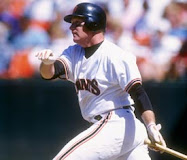
Wow...12 days. Can't really apologize for that long a lay-off, especially considering my history (it would be like Rick Pitino apologizing for another relationship out of wedlock). But, with school being what it is here, and my responsibilities to Seedlings 2 Stars, posting here has been more difficult than usual. Hopefully though, I can get back into the swing of things here at OTF. I will be having a recap of general Minor League performances later this week, and should finish off the rankings for good. Of course, considering my inconsistencies with posting, I will make no guarantees (though I will make guarantees to bitch about how much I'm frustrated with the Brandon Belt situation on Twitter...sorry it couldn't be helped).
Two players who have really jumped out to me to begin the year in 2012 are Juan Perez and Nick Noonan. Both were Top-30 prospects according to Baseball America going into 2011 who fell out of the rankings after lackluster years in Double-A Richmond. However, they have regrouped to have solid starts to begin the 2012 year and one has to wonder if they are in the process of regaining their once-lofty prospect statuses. That being said, are their starts legitimate signs of progress? Or are they just good months that are flashes in the pan?
Let's take a look on the outlook for Perez and Noonan for the remainder of the season.
Juan Perez, Outfielder
Age: 25
Current Team: Richmond Flying Squirrels
2012 numbers: .317 average, .359 OBP, .400 slugging percentage, .759 OPS, 10 runs scored, one home run, three stolen bases, three walks, 14 strikeouts in 64 plate appearances (through 16 games).
Why is Perez's Hot Start Promising?
A late-blooming prospect (Perez didn't break into professional ball until he was 23), Perez has the makings of an Andres Torres-esque player (and I liked Torres a lot when he was a Giant). Despite his diminutive stature (he's five-feet, 11 inches and a 185 pounds), he sports decent pop in his bat (he hit 13 home runs in San Jose in 2010) and good speed on the basepaths (he stole 22 bases on 28 attempts in 2011 in Richmond). Even though he struggled in the transition from the California League to the Eastern League last year (he posted a slash of .256/.303/.381 in 497 plate appearances), he has bounced back in a repeat campaign this year, as he is sporting a slash of .317/.359/.400 through 17 games.
With Gary Brown struggling on the offensive end, Perez has been the main catalyst for the Flying Squirrels offense, as he has scored 10 runs and stolen three bases on four attempts. He also has a home run and two doubles, a sign that the power that he displayed in the California League in 2010 wasn't a complete fluke. While it is still early in the year, the solid start in his second year in the EL, along with a good campaign in Spring Training bodes good things for Perez who fell off the radar after the 2011 season. If he continues to build on this solid start, he could be a candidate to move up to Fresno at some point this year, especially if someone gets injured in the Giants outfield.
What Should Giants Fans Expect from Perez for the Remainder of 2012?
Despite the gaudy slash line, Perez's performance has been far from perfect. The biggest concern has been his eye at the plate, which has been raw and unrefined as a professional. Last year, Perez posted a BB/K ratio of 0.29 and this year hasn't been better, despite his familiarity with Eastern League pitching. His BB/K ratio is currently 0.21, highlighted by 14 strikeouts. Add this with a contact rate of 76 percent, and one has to wonder if Perez will ever be able to make consistent enough contact as a professional to be a legitimate Major League player.
That being said, those aspects were concerns of Torres as a professional. However, pre-injury, Torres was able to be a productive player for the Giants during their 2009 and 2010 campaigns. While Torres had a much more patient eye at the plate than Perez, he was also older (Torres was in his early thirties prior to his breakout) and actually was around the same percentage contact-wise. Sans his 2010 campaign in San Jose where he was caught 15 times on 32 attempts, Perez has sported solid speed and efficiency on the basepaths and could be at the very least a platoon player at the Major League level in addition being a solid pinch-running option off the bench. There still is a long way to go for Perez, but his solid April in Richmond is a promising start for the 25-year-old outfielder.
Nick Noonan, Infielder
Age: 22
Current Team: Fresno Grizzlies
2012 numbers: .333 average, .370 OBP, .381 slugging, .751 OPS, 5 runs scored, 1 stolen base, 3 walks, 4 strikeouts in 46 plate appearances.
Why is Noonan's Hot Start So Promising?
Noonan was once a top prospect who held Chase Utley comparisons until he started struggling at the plate starting in 2009 in San Jose. After two lackluster campaigns in Richmond (his Double-A career slash is .226/.290/.297), the Giants decided to move Noonan up to Triple-A to give him a change of pace and scenery. So far, the move has paid off, as Noonan has put up a .751 OPS in 13 games (his previous high OPS was .727 in 2009 in San Jose).
The biggest improvement for Noonan to begin the 2012 year has been his plate approach, as he is currently sporting a BB/K ratio of 0.75. Noonan has always produced good approaches at the plate, for he posted a BB/K ratio of 0.67 and 0.55 in San Jose and Richmond, respectively in 2011. However, considering his campaigns in San Jose and Richmond were repeats of those levels, the fact that he is carrying his disciplined approach to the next level is a promising sign. Furthermore, Noonan has displayed a strong ability to make contact against Pacific Coast League pitching, as his contact rate currently sits at 90 percent for the year. Considering that his career contact rate in Double-A was 78 percent, this is a nice indicator that Noonan is finally honing his approach and abilities at the plate after so many years of disappointing performances in the minors over his professional career.
What Should Giants Fans Expect from Noonan for the Remainder of 2012?
Despite Noonan's nice start at the plate, his defensive play has been a different story. With Charlie Culberson a mainstay at the keystone position and Conor Gillaspie holding down the hot corner, Noonan has flip flopped between shortstop and third base with the Grizzlies in 2012. However, the results have not been good, as he has committed four errors already and is sporting a fielding percentage of .852. If Noonan continues to hit, it is likely that he will get more playing time and thus more opportunities in the field, which naturally will raise his fielding percentage. That being said, Noonan hasn't showed the Giants brass or Grizzlies' coaching staff that his glove merits regular playing time at a certain position so far this year.
Also, while Noonan is obviously performing much better in Triple-A than in Double-A, one has to wonder if his hot start is a true measure of improvement, or if it is proof of the old Brian Sabean-adage that "Triple-A Pitching isn't very good." While it is typical to see top position prospects see extended time in the PCL or IL (International League), the same doesn't ring true for pitchers, as top pitching prospects spend little to no time at all in Triple-A before they make the jump from Double-A to the Majors. Sure, Noonan may be hitting in Fresno, but he might be doing so against Quad-A pitchers or guys who are simply lifetime Minor Leaguers in the Matt Kinney and Kevin Pucetas mold. Hence, Noonan might be able to sustain the hot start he's built in 2012. Unfortunately, unless his glove work gets better, a solid 2012 campaign might not be a sign that he's ready for the Major Leagues, but rather an example of why PCL stats (especially ones in Fresno) should always be taken with a grain of salt.
Showing posts with label Outfield. Show all posts
Showing posts with label Outfield. Show all posts
Sunday, April 22, 2012

Tuesday, April 3, 2012
OTF Top 30: No. 21-25; Duvall, Correa, Gregorio, Bochy, Galindo
We're winding down with the Top 30, and now we're really delving deeper into the Giants system in terms of finding guys with talent. While a lot of the prospects in this series of the list have talent and some potential, they do carry considerable amount of risk and are still a long ways off from the Major League level. All of the guys are C prospects, so you're probably not going to find them on the Top-15 of many lists (though Gregorio rates high with a lot of scouts and experts because of his youth, size and upside). However, there are a few guys I'm pretty high on in this series whom I think can make major strides with good seasons this year. Don't be surprised to see two-three of these guys rise to C+ or B- grades next year.
No. 21: Adam Duvall, Third Base
Overall Grade: C
Projection: Major League backup; platoon player at the best, could be a career minor leaguer
Summary: When it comes to third base prospects in the Giants system from Louisville, Chris Dominguez gets all the hype. It's understandable. Dominguez mashed in college for four years with the Cardinals, and he was a third round pick in 2009 who sported plus power and arm strength as a prospect. Furthermore, at six-foot, five inches and 225 pounds, he has the size and frame of a player with Major League potential.
And yet, Dominguez may not be the best prospect from Louisville in the Giants system. Adam Duvall, a former teammate of his who took over the hot corner after Dominguez graduated from Louisville in 2009, is quickly catching up to the more ballyhooed Dominguez after a solid 2011 season in the Sally where he earned All-Star honors.
Duvall is an interesting player because he doesn't have the "tools" that Dominguez has. Duvall's got a good frame (six-foot, one inches, and 205 pounds), but it looks diminutive in comparison to his former college teammate. Furthermore, none of Duvall's tools have ever been plus rated by scouts, which explains why he dropped to the Giants' slot in the 11th round of the 2010 Draft. Even Baseball America in their profile on him in their Prospect Handbook for 2012 (they ranked him as the Giants' 28th best prospect) noted that he had average range and arm strength, fringy speed and that his at-bats "aren't likely to be found on an instructional video" (e.g. his swing doesn't impress). In a myriad of ways, Duvall seems to fit the profile of an organizational player at-best.
And yet, his numbers in Augusta were promising, and do flash potential. Yes, he was old for the Sally (22 years old), but so was Dominguez (23 years old), and yet that hasn't prevented scouts and experts from still rating Dominguez as one of the Giants' top 3rd base prospects (Baseball America rated him as the Giants' 16th best prospect this year). Let's take a look at the numbers from their respective seasons in Augusta:
Dominguez (2010): .272/.326/.456 (average/OBP/slugging), 21 home runs, 85 runs scored, 35 walks, 133 strikeouts, 0.26 BB/K ratio in 608 plate appearances.
Duvall (2011): .285/.385/.527 (average/OBP/slugging), 22 home runs, 69 runs scored, 59 walks, 98 walks, 0.60 BB/K ratio in 510 plate appearances.
If one looks at the numbers and considers the age factor (that Duvall broke into the Sally one year earlier than Dominguez), then Duvall's season looks far superior. Not only did Duvall flash power potential (he hit more home runs is almost 100 less at-bats), but he also displayed a better eye at the plate and made better contact against pitchers in the Sally. Of course, Duvall's line isn't perfect by any means (at 19.2 percent, his strikeout rate is still high, especially considering his age), but it definitely adds a little bit to the debate in terms of which former Cardinal is a better prospect at third base.
As good as Duvall's offensive year was, there still are some serious flaws in his game, mostly with his glove. First off, defensively he sports not only average tools, but he also struggled at times with concentration in the field his first full season in professional ball. Last year, he committed 27 errors and posted a fielding percentage of .908, which is very disheartening. He may not have the athletic gifts to be apremium or even an average infielder. That being said, he needs to cut down the errors in 2012 if he wants to be able to stay at the position as he moves up the Giants system.
What to Expect in 2012: Most of Duvall's value as a prospect comes with his bat. He was four for eight on stolen base attempts last year, and he'll be lucky to steal five bags a year considering the reports on his speed and athleticism. Hence, Duvall doesn't offer much upside with his glove or on the basepaths, so if Duvall wants to move through the Giants system, he's going to have to continue to hit. He has a good plate approach, and his power tool seems to be legitimate (Robbie Knopf made some interesting points about his power numbers in Augusta). In addition, his offensive numbers are bound to get better as he moves to the hitter-friendly California League this upcoming season, so that will certainly be a boost to his stock.
That being said, we have seen prospect bash in the lower minors and struggle once they start to face better pitching and hit in more pitcher friendly environments (the Eastern League will be a huge test). While I am not saying Duvall is going to fall into that category, he hasn't done much to prove that he isn't more than a one year wonder. Duvall's campaign in San Jose should be interesting to pay attention to, especially if he gets off to a hot start. If so, I'll be curious to see if the Giants will take the same path with him as they did with Dominguez (move him to Double-A mid-year after he mashed High-A pitching). If that happens (though I think it is unlikely), that should be a real gauge of Duvall's status and projection as a prospect.
No. 22: Hector Correa, right-handed pitcher
Overall grade: C
Projection: Middle innings reliever; perhaps could find himself in a setup role
Summary: Correa was acquired in a trade in 2009 that sent former left-handed bullpen arm Jack Taschner to Florida. At six-foot, three inches and a 175 pounds, Correa has a tall, wiry frame and has flashed some potential, though he is probably destined for middle relief at the Major League level.
Correa went under the radar when he was acquired because he was battling shoulder issues and missed the entire 2009 season due to surgery. However, when he resurfaced in 2010 in Augusta, he dominated the Sally, striking out 58 batters and only walking 16 in 43.2 IP. His split campaign in San Jose and Richmond last year proved his comeback wasn't a fluke, as he continued to excel on the mound in the Cal and Eastern League. In San Jose, he struck out 37 in 42 innings pitched and posted an ERA of 1.93 and a K/BB ratio of 3.08. While his ERA did jump up to 3.20 with the Flying Squirrels, he still showed excellent command in 39.1 IP, posting a K/BB ratio of 2.67.
His tools and arsenal as a pitcher rate well by scouts and experts, as he throws a fastball that sits 91-92 MPH but can touch the mid-90's. While his slider is rated as a "below average" pitch, according to Baseball America, his changeup is considered to be a strong secondary pitch, and many people believe that Correa can succeed with that two pitch arsenal, especially if he remains in the bullpen. Here is what Dr. B of When the Giants Come to Town said in his writeup of Correa this season (he rated him as the Giants' 20th best prospect):
"Baggs did an Organizational Report on him for BA in November and reported that his fastball was in the "mid-90s" and he combined it with a "plus-plus" changeup. The changeup allows him to be effective against LH batters allowing the Giants to stretch him out to 3 and 4 inning stints in Richmond. He could still be stretched all the way out to starter, but I have to say it's more likely he'll end up as a setup man or long reliever in the majors."
Considered a good athlete with a lean, strong frame and plus makeup, Correa certainly has the potential to be a viable pitcher in the Giants bullpen as soon as this season. He was a top prospect in the Marlins system prior to injury, and now that those shoulder issues seem to be a thing of the past, Correa is starting to live up to the expectations that were placed upon him when he was drafted in the fourth round out of Puerto Rico in the 2006 draft.
What to expect in 2012: Correa was placed on the 40-man roster to protect him from the Rule 5 draft, and it seems like it was a good idea. With Dan Runzler probably out for an extended time, Correa could break in and have an impact at the Major League roster as soon as this year. Correa didn't get much time with the Big League roster this Spring, but he did strike out 3 in 2.1 innings pitched. However, his two walks and three hits allowed probably displayed that he could use some seasoning in Fresno to begin the year.
I like what Correa brings to the table, but his limited ceiling as a bullpen arm and prior history of injury issues (as I said though, it looks to be in the past, but you never know) limit me from grading him higher than a C. However, should any of the Giants' bullpen arms falter or suffer injury, Correa could be a strong first option the Giants may resort too. He has been stellar the past couple of years, and at 23 years old, he still has a lot of years and mileage left in the tank.
No. 23: Joan Gregorio, right-handed pitcher
Overall Grade: C
Projection: No. 3-5 starter; could be a long or middle innings reliever
Summary: When it comes to pitchers out of Latin America in the Giants system, probably no other prospect (well...except for maybe Adalberto Mejia) generates as much buzz as Joan Gregorio. At six-foot, seven inches and a 180 pounds, Gregorio is the kind of tall, raw but high-ceiling pitching prospect that most scouts and analysts foam at the mouth for.
Gregorio signed with the Giants out of the Dominican Republic in 2010, and immediately started playing in the Dominican Summer League after signing. While his numbers weren't as impressive in the DSL as Mejia's (but then again, few pitchers did what Mejia did last summer), they still were solid overall and displayed that Gregorio wields a tremendous amount of potential. Gregorio made 14 starts and pitched 74 innings for the Giants' DSL squad, and he held batters at bay, posting a 2.80 ERA, a 1.11 WHIP and 2.41 K/BB ratio. While his strikeout numbers weren't gaudy by any measure (41 strikeouts), his control (17) and command were still impressive for an 18 year old who had just recently signed.
After the strong performance in the DSL, the Giants moved Gregorio to the Arizona Rookie League in 2011 and he did even better in his second partial professional season. Gregorio increased his strikeout rate (to 7.7) without sacrificing much control (his walk rate rose to 2.9), and he posted a stellar 2.30 ERA and 1.18 WHIP in 50 innings pitched and 12 starts in Arizona.
One of Gregorio's strengths as a pitcher, in addition to his control and command, is his ability to induce groundballs. According to Minor League Central, Gregorio posted a GB/FB ratio of 1.14, with a groundball rate of 45 percent. Considering this was his first taste of pitching stateside, the ability to keep the ball on the ground and minimize hard contact (he only gave up a line drive rate of 14.8 percent) bodes good things for his future, especially if he can continue to keep up the stellar strikeout rates and command he displayed in 2011.
John Sickels of Minor League Ball has been high on Gregorio as a prospect in the Giants system going into 2012. Here is what he says about Gregorio in his report:
"He’s hyper-projectable, already throws 89-94 MPH, and may pick up more velocity as he matures. He has a decent curve but is still working on his changeup. He was one of the more promising pitchers in the Arizona Rookie League, but he needs another weapon against left-handed hitters, who hit .333 against him. At this point his youth and projectability are more important than the numbers, but the numbers aren’t bad either."
Of course, as Sickels notes, Gregorio's tools as a pitcher are still works-in-progress, and he's a long way from the Bigs. So, he definitely carries a size-able amount of risk. That being said, the potential is there, and with his long frame and projectable body, Gregorio is far from a polished product as a prospect, which should give the Giants organization and fans a lot of hope for the future with him.
What to expect in 2012: The word on the street is that Gregorio is going to be starting in Augusta, and at 20 years old, that makes sense. He and fellow AZL teammate Clayton Blackburn should make a good 1-2 punch at the top of the rotation in the Sally. As far as what kind of impact Gregorio will have on the mound in his first full season, it's still hard to project because his tools are so raw, but I think Gregorio is trending in the right direction. He's already got some good velocity on the fastball, and as he grows into his body, the velocity will only increase. As of now, reports have him as a two-pitch pitcher, but if he can continue to make strides with his changeup, then he could sport a dangerous arsenal as a middle-of-the-rotation guy. I don't think Gregorio has the upside or potential of a No. 1, but I wouldn't be surprised to see him in the Giants rotation in the future as well.
If his tools develop as planned, then the Giants will have another home-grown arm to stock their rotation/pen with. Of course, we said the same things about Henry Sosa and Merkin Valdez, but Gregorio's size and frame make him one of the more enticing arms the Giants have had from Latin America in the past few years. He's a C prospect now, but I expect him to make nice strides this year in Augusta and make some kind of a jump in grade in 2013.
No. 24: Brett Bochy, left-handed pitcher
Overall Grade: C
Projection: Middle relief with possibility to be a setup guy or spot closer
Summary: Drafted in the 20th round of the Rule 4 draft, a lot of experts and Giants fans took the pick with a grain of salt. After all, Bochy was the son of manager Bruce Bochy, and while he did have a stellar career at Kansas (he posted a 0.78 ERA and 0.78 WHIP in 23 innings with 34 strikeouts as Kansas' closer his final year in college), scouts weren't exactly bursting with praise about Bochy having a future at the Big League level. Many felt that the pick was either a.) done for publicity purposes or b.) done more as a favor to Bruce.
However, since making his debut in Augusta last year, the six-foot, two-inch lefty has turned around some heads in baseball analyst and scout circles, as many people are starting to recognize that he offers more to the table as a prospect than just being Bruce Bochy's son. Pitching primarily out of the bullpen for the Green Jackets, Bochy made 35 appearances and pitched 39 innings in the Sally last year, and finished the season with a 1.38 ERA, 0.77 WHIP and 10 saves.
Bochy's biggest strength as a pitcher is his impeccable command and strikeout ability, which he displayed even at Kansas. In Augusta over the full course of a Minor League season, it was even more evident, as he struck out 53 batters, good for a 12.1 K/9. To make things better, Bochy limited his free passes in the Sally last year (8 total walks), which resulted in him posting a ridiculous 6.63 K/BB ratio. To put things in perspective, the last pitcher who put up K/BB ratios that impressive in the Sally from the Giants organization was Madison Bumgarner, who posted a K/BB ratio of 7.81 in 2008. While Bumgarner's ratio is obviously more impressive because he is a starting pitcher and Bochy is a reliever, it does add some context on how sterling Bochy's numbers were in his first professional season.
If there is anything to knock against Bochy, it may be that his ceiling is limited to a bullpen role at the Major League level, and he may not have the kind of elite stuff to be a closer, either. His arsenal is mainly a fastball/slider combo, with his fastball ranging from 90-93 MPH. His slider also is tough on right handed hitters, according to Sickels in his report on Bochy. Another issue is Bochy's history of arm issues, as he had TJ surgery after blowing out his elbow his last year at Kansas. However, the arm issues didn't seem to be a problem for him at all last season in Augusta.
What to expect in 2012: Because of his age (24 years old) and low ceiling, Bochy could move up quickly this year in the Giants system. The Giants already decided to have him skip High-A San Jose, as he will start the year in Double-A Richmond. Richmond might not be the only destination for him this year, for if his Spring Training was any indicator (he struck out two in an inning of work with the Big League club this Spring), it wouldn't be surprising to see him see some time in Fresno or even the Majors should injuries or ineffectiveness hit the bullpen.
Overall, Bochy could end up being a gem in the rough for this Giants organization. He went from a 20th round pick with arm issues, to a strong reliever with excellent command in the matter of a year's time. The Eastern League will obviously be a step up in competition from the Sally, but if his progress from the beginning of last Spring to this Spring is any indicator, then Giants fans could have a lot more to look forward to from Bruce's son in 2012.
No. 25: Jesus Galindo, outfielder
Overall Grade: C
Projection: Platoon to backup outfielder; could be a starting one if his contact ability improves
Summary: Behind Gary Brown, Galindo probably has the best speed tool set out of any prospect in the Giants system. Last season, he swiped 47 bases on 55 attempts (an 85 percent success rate) in Salem Keizer, his first season stateside (he played the previous two years in the Dominican Summer League). In addition to the stellar stolen base numbers in the Northwest League last year, scouts and coaches have raved about his speed. The biggest endorsement came from Volcanoes manager Tom Trebelhorn who compared Galindo's baserunning ability to Ricky Henderson.
A burner on the basepaths from Venezuela at five-feet, 11-inches and 175 pounds, Galindo sports good athleticism for his size, though he could afford to add some strength to increase his value at the plate. While he has been lauded for his plate discipline (he posted BB/K ratios of 0.76 and 1.17 in 2009 and 2010 in the DSL, respectively, and last year he posted a BB/K ratio of 0.54), his ability to make consistent contact as a hitter has been up for debate. While he did hit .276 last year in the NWL, he struggled to hit for average in the DSL, posting batting averages of .244 and .246 in his two seasons there. Galindo has the ability to make contact, as he posted an 81 percent contact rate a year ago, but he needs to show progress this year that the skills he displayed in 2011 is more of an indicator of what Giants fans should expect from 2012-forward.
Defensively, scouts are high about Galindo's potential, with Rob Gordon of the Minor League Baseball Analyst noting that he covers ground well in center field, and the has a strong enough arm to keep runners honest. Baseball America noted the same things, saying that he maximized his speed by getting good jumps on balls. I'm not sure if Galindo will be a premium defensive outfielder at the next level (it's far too early to tell to be honest), but he certainly has the tools and athleticism to be a strong defender despite his diminutive stature (think Andres Torres-esque).
The main issue with Galindo is his lack of power, as he displayed little last year in the NWL and even less in the DSL. Last year with the Volcanoes, Galindo posted an ISO of .088 and an extra base hit percentage of 21 percent, which are far from impressive. Yes, Galindo has tremendous speed and he's going to have the potential to beat out well-placed groundballs on a regular basis (especially since he's a switch hitter). On that same note though, if he can be able to hit the ball in the gaps, he could be a regular threat to be a 20-plus doubles and 15-plus triples guy on a regular basis. Galindo may never be a home run hitter and with his size, it would be hard for him to project as one too. But, with his speed, if he can garner even a little bit of gap power, then his ceiling as a hitter could be tremendous.
What to expect in 2012: At 21 years old, Galindo could start the year in San Jose, especially with Gary Brown and perhaps Jarrett Parker moving on to Richmond in 2012. It may be wiser to start him in Augusta, simply not to rush him, but he is a bit of an older prospect because he spent a couple of years in the DSL. Wherever he starts at in 2012, Galindo will be an interesting prospect to watch in 2012. He has incredible speed, solid plate discipline and a solid glove in the field. If he can continue to make contact in the Sally or Cal League like he did in the NWL, then the future could look very bright for Galindo and the Giants.
Saturday, March 24, 2012
OTF Top 30: No. 16-20; Oropesa, Kickham, Rosin, Parker, Dominguez
Okay, after a few off-the-road posts, I decided to get back to the rankings. Let's take a look at the 16th-20th prospects on the list. As you can see, the quality is dropping off a little bit, as we're hitting the lower end C+ and middle C range in terms of prospects. Nonetheless, there is some upside with some of these guys, it's just that they come with a lot of warts that prevent me from going higher on them. Of course, a bounce back year, and these guys could gain in their grades, and that is certainly possible with all five of these guys.
No. 16: Ricky Oropesa, First Base
Overall Grade: C+
Projection: Starting first baseman; at worst, pinch hitter off the bench.
Summary: A third round pick by the Giants in the 2011 draft, Oropesa has some big upside as a potential power threat, but carries a size-able amount of risk. A physical specimen at six-foot, three inches and 225 pounds, Oropesa has the look and some of the plus tools of a future home-run mashing first baseman. He hit 40 home runs total in his career at USC and posted a career slugging of .596 and OPS of 1.007 as a collegian. Furthermore, he has had moments where he had just wowed scouts in person, with his most eye-popping feat being a home run he absolutely crushed off of UCLA's Gerrit Cole, the eventual No. 1 pick in last year's draft.
And yet, despite the power and solid, Big-League frame, Oropesa for the most part comes off as a bit of a one-trick pony. The scouting reports on his defense are average at best, he doesn't sport a lot of speed on the basepaths or in the field (pretty much limiting him to first base or a corner outfield position), and he isn't expected to hit for much average as a professional either. Yes, his career collegiate batting average is .331, but he only posted a contact rate of 77 percent as a collegian, and in 2010 in the Cape Cod, he only hit .222 in 153 at-bats with 52 strikeouts to boot.
For better or worse, a lot of Oropesa's stock and projection as a prospect weighs on his ability to hit for power as a professional. Hence, the amount of risk weighing on that one tool really prevents me from thinking he's a Top-15 prospect in the Giants system at this point (and he didn't sign in time to get any time in Rookie Ball or the Northwest League, so that also hurt his rating since he hasn't been exposed to professional pitching yet). That being said, even though he had a down year his junior year at USC (he only hit 7 home runs after belting 13 and 20 his freshman and sophomore seasons, respectively, though I imagine the change in bats had something to do with the regression in power numbers), he did hit a league-high seven home runs in the Cape, so Oropesa certainly has the ability to hit for power with wooden bats.
What to Expect in 2012: Oropesa will always be susceptible to strikeouts because of his long, uppercut swing. That being said, he has a good eye at the plate (career 0.59 BB/K ratio, with it being 0.65 and 0.63 the past two years at USC) and that could make up for the amount of whiffs Giants fans will see in the minors from him. He definitely has Carlos Pena-esque potential, as it seems like his power is legitimate and he could post good OBP numbers that will make up for the low averages (I don't see Oropesa projecting to be more than a .250 hitter in the Majors). Of course, we have seen offensive-heavy collegiate prospects flame out before (Eddy Martinez-Esteve being the biggest recent example), but Oropesa does have some good ceiling, and if he can mash home runs on a consistent basis that are in a similar mold to the one he rocked off Cole in college, then he could make some noise in the Giants system. It is likely that the Giants will take a slower route with him, like power hitting third base prospect Chris Dominguez, and start him off in Augusta. However, he could start off the year in San Jose if he makes an impressive enough impression on the Giants brass this Spring (though with Angel Villalona starting the year in San Jose, that is probably unlikely).
No. 17: Mike Kickham, Left-handed pitcher
Overall Grade: C+
Projection: No. 3-5 starting pitcher
Summary: Mike Kickham entered the Giants as somewhat of a sleeper prospect after being drafted in the 6th round in the 2010 MLB Draft. A polished college pitcher from Missouri State, Kickham has the size and frame of a starting pitcher with Major League potential. Kickham made a lot of noise in the Summer Collegiate League circuit after having a great campaign in the MINK League (Missouri, Iowa, Nebraska, Kansas College summer league) where he went 3-0 with a 0.29 ERA in 24 innings of work. He also struck out 42 batters and only allowed 7 walks for the Sedalia Bombers that summer (good for a K/BB ratio of six). Though his summer in the MINK was cut short due to the Giants drafting him in the sixth round, it was a nice campaign that got Kickham on many prospect experts' radar.
While Kickham's traditional numbers didn't impress in college (he posted a 4-9 record with a 5.25 ERA and 1.36 WHIP), he did show solid command (3.43 K/BB ratio) and ability to rack up strikeouts (9.66 K/9) in 96 innings pitched his sophomore year with the Bears. He did prove to be hittable at times (9.47 H/9), but for the most part, sans the ERA and W-L record, Kickham did have a lot going for him in his last year as a collegian.
In his first full professional season in the Sally, the same problems seemed to hound Kickham in Augusta. He didn't post a great W-L record (not totally his fault, since the Green Jackets were one of the worst offensive teams in the Giants system and the Sally is tough on hitters) and he still allowed a lot of hits (9.0 H/9) in 111.2 innings pitched. However, he transitioned his impeccable command to Single-A (2.78 K/BB ratio), and got better as the year progressed. Dr. B of When the Giants Come to Town said this about Kickham in his Top 50 rankings profile (where Kickham also ranked No. 17):
Kickham was a bit old for the Sally at 22, but he has all the tools you would want from a starting pitcher. He has an enticing frame at six-foot, four-inches and a 190 pounds, and his fastball sits in the 92-94 MPH range according to reports. Also, Kickham sports a curve ball, slider and a changeup, so his four pitch repertoire bodes well for his future as a starting pitcher.
What to Expect in 2012: Kickham most likely will start the year in San Jose, which will be a challenge for him considering the hitter-friendly environments of the California League. Kickham does induce a lot of groundballs (thanks to his breaking pitches), but how he avoids contact will be a big factor for him in terms of whether her progresses or regresses as a prospect in High-A. His strikeouts per nine numbers were solid last year (8.3), but they weren't spectacular by any stretch. Kickham's strong finish last year provides a lot of hope for the future, and with his frame, there is hope that he can gain more velocity as he fills out into his body (which hopefully will help his ability to strike batters). Overall, there is a lot to like about Kickham, and I think he has more upside than an Eric Surkamp, who had amazing command and strikeout ability, but lackluster tools. That being said, Surkamp dominated in the Cal League, and Kickham needs to do the same in 2012 if he wants to really gain steam as a prospect in the Giants system.
No. 18: Seth Rosin, right-handed pitcher
Overall Grade: C+
Projection: No. 4-5 starting pitcher; most likely a bullpen arm, maybe a setup guy
Summary: Another former Green Jacket, Rosin is a powerful right handed arm that struck out guys in bunches in the Sally last season. Much like Kickham, Rosin entered the draft as a polished college arm out of the University of Minnesota. In his last year with the Golden Gophers, the six-foot, five-inch right hander went 9-4 with a 4.72 ERA, 1.09 WHIP and a 95 strikeouts in 103 innings pitched.
Like Kickham, the ERA numbers didn't impress, but Rosin's excellent command in college (7.92 K/BB ratio) prompted the Giants take him in the fourth round of the 2010 draft. After striking out 9 batters and allowing 9 hits in an 11 inning-stint in Salem Keizer in 2010, Rosin had a good year in his first full professional season in Augusta. He appeared in 39 games and made 10 starts with the Green Jackets, pitching 89 innings total in 2011. Despite the inconsistency in roles, he still posted good numbers, as he finished the year with a 3.34 ERA, 1.25 WHIP and a K/BB ratio of 3.10.
As evidenced by him striking out 95 batters in 89 innings, his ability to strike batters out makes Rosin an intriguing prospect. He sports a 92-94 MPH fastball, a a 72-76 MPH curveball and a changeup that sits in the 81-84 MPH, according to a scouting report by John Klima of the Baseball Prospect report. While his curve ball and changeup still need a lot of work, his lively fastball and impeccable command should carry him as a prospect as he moves up in the Giants system.
He has a big frame, but at 235 pounds, his size probably projects him to be more of a bullpen arm rather than a rotation guy. I just don't think he will have the stamina to pitch 150 plus innings in his professional career. Furthermore, his three pitch repertoire also limits his potential to be a consistent play in the rotation. That being said, if he can get into better shape and develop his pitches, he could have end of the rotation or spot-starter potential.
What to Expect in 2012: Rosin will join Green Jacket teammate Kickham in San Jose, most likely starting in the bullpen (though it is possible that he could get an end of the rotation spot). Rosin is a big, powerful arm who has great stuff and even better command. Much like Kickham, he's a bit of an older prospect, but he has held his own as a professional thus far. The Cal League will be a challenge for him, but his command is a bit better than Kickham's at this point, so the transition should be less arduous for Rosin than Kickham. It'll be interesting to see what the Giants do with Rosin (either make him a starter or reliever), but either way, he has the tools to be a player in the Giants pitching staff in a couple of years.
No. 19: Jarrett Parker, Outfielder
Overall Grade: C
Projection: Utility outfielder; maybe a Major League backup
Summary: Parker came into the Giants system with some lofty hype after posting a .333/.428/.593 slash with 10 home runs and 12 stolen bases in 243 at-bats in his final season at the University of Virginia in 2010. The Giants selected the polished, athletic collegian in the second round of the 2010 draft. The selection of Parker, along with first round pick Gary Brown, showed the Giants commitment to acquiring more position prospects who could move quickly in the minor leagues.
Much like Brown, Parker started his first full season in San Jose. Unlike Brown though, Parker struggled in his first year, though his numbers weren't terrible by any means. Parker did flash a lot of speed in his first year, as he stole 20 bases in 25 attempts, and he did display a good eye at the plate, as evidenced by his .360 OBP and 13 percent walk percentage. However, Parker struggled to put the bat on the ball consistently in High-A ball, as he struck out 144 times (a 25.2 percent rate) and posted a contact rate of 70.4 percent.
Hitting for average as a professional may be a struggle for Parker (even in college his contact rate was under 80 percent), and that was evidenced by his .253 average in San Jose. That being said, his plate approach and ability to get on base could maximize his value, especially considering his skill on the basepaths. In terms of power, he did sport some pop at the University of Virginia (26 home runs combined his last two years with the Cavs), and in his first year in San Jose, as evidenced by his 13 home runs and 33 percent extra base hit percentage. His power probably projects more as gap to gap power rather than pure home run power, but with his speed, the ability to hit the ball to the gaps will only maximize his value as a prospect.
Defensively, Parker has been graded as a plus defender, as Jonathan Mayo in his 2010 Draft Day scouting report of Parker said that he had plus defender skills and range to be a good center fielder (though he did note that he had below average arm strength). Statistically though, Parker will have to work on some things, as he did commit 10 errors and posted sub-2 range factors at every position he played in 2011 (though he may have been playing out of position in San Jose, as he mostly played right with Brown in center).
What to Expect in 2012: Parker's stock took a big hit in 2011, though to be honest, he's kind of been on a bit of a downward trend since his phenomenal 2009 where his team bested a Stephen Strasburg-led San Diego State team in the NCAA Regionals (he was rated as the top prospect going into the Cape Cod in 2009 and he struggled in the Cape). Parker will probably begin the year in San Jose again, though that might not be a bad thing, for he will probably play more at his natural position of center field and he could use some more time to hone his approach at the plate and cut down on the strikeouts. Overall, Parker is a great athlete and baserunner, and his careful eye at the plate should produce .340-plus OBPs wherever he should go in the Giants system. If he gets off to a hot start in his second year in the Cal League, it wouldn't be surprising to see him join classmate Brown at Double-A Richmond at some point in 2012. That being said, the Giants will need to see significant progress from Parker in San Jose before they rush him up to Double-A.
No. 20: Chris Dominguez, Third Base
Overall Grade: C
Projection: Utility corner infielder; could be a career minor league player if approach doesn't improve
Summary: A 3rd round pick by the Giants in the 2009 draft, Dominguez came in with some high expectations after mashing at Louisville in college. He was one of the best hitters in the Big East, leading the conference in batting average his last two seasons, while also displaying considerable power as a collegian (he hit 46 home runs combined his last two years, and also posted extra base hit percentages of 39.6 and 43.8 percent his junior and senior years, respectively). Hence, the Giants figured Dominguez would be a fast-moving prospect in their system after playing four years with the Cardinals.
However, Dominguez moved slowly in the Giants system, starting in Augusta his first full year in 2010 (at 23 years old, he was old for the league). While he did flash some home run power potential (he hit 21 home runs in 608 plate appearances), he struggled with pitch recognition and plate discipline with the Green Jackets. Mike Newman of Fangraphs and Scouting the Sally said this about Dominguez in his scouting report following the 2010 season:
Newman noted his plate discipline issues, especially when he saw breaking pitches. Newman said that Dominguez had "significant problems adjusting to breaking pitches; Even below average breaking balls gave him fits." Despite these issue, with his power, size and arm strength, a lot of experts out there were still high on Dominguez after the 2010 season despite his advanced age for the level.
Dominguez made the transition to San Jose in 2011, and predictably (considering the hitter-friendly confines), he did well in the Cal League, posting a slash of .291/.337/.465 with an .802 OPS and 11 home runs in 279 plate appearances. The strong start in San Jose prompted the Giants to promote Dominguez to Richmond, and he got off to a fast start (he was named Eastern League player of the week after hitting .458 with a home run, seven doubles, a triple and eight RBI during the week ending June 26th). However, he struggled as EL pitchers adjusted to him, as he finished the year with a slash of .244/.272/.403 with a .675 OPS and seven home runs in 313 plate appearances in his tenure with the Flying Squirrels.
Tools wise, Dominguez may be the most impressive third base prospect in the Giants system. His power and arm are rated as plus tools by scouts, and at six-foot, three inches and 215 pounds, Dominguez has a big frame and some decent athleticism for his size (though defensively his range is graded as below average). His plate approach seems to be the key to whether or not he will become a future Major League player, as he is known for posting a lot of strikeouts with little walks to counter them (he has a career BB/K ratio of 0.21). Even if he does have "Major-League" power, many wonder if Dominguez will make enough contact as a professional (career minor league contact rate of 74 percent) to ever make use of it.
What to Expect for 2012: At 25 years old, Dominguez is one year away from his "peak" year. So far, he has flashed some promising signs (his San Jose campaign, 21 home runs in the Sally, his fast start in Richmond), but for the most part, the negatives of his game (lackluster plate approach, below-average defensive skills, older age for levels played) have outweighed the positives in my mind. Tools-wise, as stated before, he may be better than any other third base prospect in the Giants system (and I'm including Conor Gillaspie). However, I just don't know if he has the plate discipline to adjust to better pitching. His BB/K ratio was an atrocious 0.12 in Richmond last year, and his contact rate was also sub-average at 74 percent. To me, that isn't the sign of a replacement level Major League player, let alone a Major League starting one. Dominguez most likely will start again at Double-A to improve his approach, but he will need to make major strides in his second year in the Eastern League. If he can improve and be more patient at the plate, he could salvage his status a little bit, but I would say at his age, the chips are heavily stacked against him.
No. 16: Ricky Oropesa, First Base
Overall Grade: C+
Projection: Starting first baseman; at worst, pinch hitter off the bench.
Summary: A third round pick by the Giants in the 2011 draft, Oropesa has some big upside as a potential power threat, but carries a size-able amount of risk. A physical specimen at six-foot, three inches and 225 pounds, Oropesa has the look and some of the plus tools of a future home-run mashing first baseman. He hit 40 home runs total in his career at USC and posted a career slugging of .596 and OPS of 1.007 as a collegian. Furthermore, he has had moments where he had just wowed scouts in person, with his most eye-popping feat being a home run he absolutely crushed off of UCLA's Gerrit Cole, the eventual No. 1 pick in last year's draft.
And yet, despite the power and solid, Big-League frame, Oropesa for the most part comes off as a bit of a one-trick pony. The scouting reports on his defense are average at best, he doesn't sport a lot of speed on the basepaths or in the field (pretty much limiting him to first base or a corner outfield position), and he isn't expected to hit for much average as a professional either. Yes, his career collegiate batting average is .331, but he only posted a contact rate of 77 percent as a collegian, and in 2010 in the Cape Cod, he only hit .222 in 153 at-bats with 52 strikeouts to boot.
For better or worse, a lot of Oropesa's stock and projection as a prospect weighs on his ability to hit for power as a professional. Hence, the amount of risk weighing on that one tool really prevents me from thinking he's a Top-15 prospect in the Giants system at this point (and he didn't sign in time to get any time in Rookie Ball or the Northwest League, so that also hurt his rating since he hasn't been exposed to professional pitching yet). That being said, even though he had a down year his junior year at USC (he only hit 7 home runs after belting 13 and 20 his freshman and sophomore seasons, respectively, though I imagine the change in bats had something to do with the regression in power numbers), he did hit a league-high seven home runs in the Cape, so Oropesa certainly has the ability to hit for power with wooden bats.
What to Expect in 2012: Oropesa will always be susceptible to strikeouts because of his long, uppercut swing. That being said, he has a good eye at the plate (career 0.59 BB/K ratio, with it being 0.65 and 0.63 the past two years at USC) and that could make up for the amount of whiffs Giants fans will see in the minors from him. He definitely has Carlos Pena-esque potential, as it seems like his power is legitimate and he could post good OBP numbers that will make up for the low averages (I don't see Oropesa projecting to be more than a .250 hitter in the Majors). Of course, we have seen offensive-heavy collegiate prospects flame out before (Eddy Martinez-Esteve being the biggest recent example), but Oropesa does have some good ceiling, and if he can mash home runs on a consistent basis that are in a similar mold to the one he rocked off Cole in college, then he could make some noise in the Giants system. It is likely that the Giants will take a slower route with him, like power hitting third base prospect Chris Dominguez, and start him off in Augusta. However, he could start off the year in San Jose if he makes an impressive enough impression on the Giants brass this Spring (though with Angel Villalona starting the year in San Jose, that is probably unlikely).
No. 17: Mike Kickham, Left-handed pitcher
Overall Grade: C+
Projection: No. 3-5 starting pitcher
Summary: Mike Kickham entered the Giants as somewhat of a sleeper prospect after being drafted in the 6th round in the 2010 MLB Draft. A polished college pitcher from Missouri State, Kickham has the size and frame of a starting pitcher with Major League potential. Kickham made a lot of noise in the Summer Collegiate League circuit after having a great campaign in the MINK League (Missouri, Iowa, Nebraska, Kansas College summer league) where he went 3-0 with a 0.29 ERA in 24 innings of work. He also struck out 42 batters and only allowed 7 walks for the Sedalia Bombers that summer (good for a K/BB ratio of six). Though his summer in the MINK was cut short due to the Giants drafting him in the sixth round, it was a nice campaign that got Kickham on many prospect experts' radar.
While Kickham's traditional numbers didn't impress in college (he posted a 4-9 record with a 5.25 ERA and 1.36 WHIP), he did show solid command (3.43 K/BB ratio) and ability to rack up strikeouts (9.66 K/9) in 96 innings pitched his sophomore year with the Bears. He did prove to be hittable at times (9.47 H/9), but for the most part, sans the ERA and W-L record, Kickham did have a lot going for him in his last year as a collegian.
In his first full professional season in the Sally, the same problems seemed to hound Kickham in Augusta. He didn't post a great W-L record (not totally his fault, since the Green Jackets were one of the worst offensive teams in the Giants system and the Sally is tough on hitters) and he still allowed a lot of hits (9.0 H/9) in 111.2 innings pitched. However, he transitioned his impeccable command to Single-A (2.78 K/BB ratio), and got better as the year progressed. Dr. B of When the Giants Come to Town said this about Kickham in his Top 50 rankings profile (where Kickham also ranked No. 17):
"Mike Kickham continued a pattern from college of posting peripheral numbers that look much better than his ERA. What's encouraging about Kickham's performance for Augusta is he got progressively stronger as the season went along. Over his last 10 starts, he went 4-5, 3.25, 55.1 IP, 13 BB, 40 K, GO/AO=2.36. He really turned it on over his last 6 starts starting August 5: 3-3, 2.23, 36.3 IP, 5 BB, 25 K."
Kickham was a bit old for the Sally at 22, but he has all the tools you would want from a starting pitcher. He has an enticing frame at six-foot, four-inches and a 190 pounds, and his fastball sits in the 92-94 MPH range according to reports. Also, Kickham sports a curve ball, slider and a changeup, so his four pitch repertoire bodes well for his future as a starting pitcher.
What to Expect in 2012: Kickham most likely will start the year in San Jose, which will be a challenge for him considering the hitter-friendly environments of the California League. Kickham does induce a lot of groundballs (thanks to his breaking pitches), but how he avoids contact will be a big factor for him in terms of whether her progresses or regresses as a prospect in High-A. His strikeouts per nine numbers were solid last year (8.3), but they weren't spectacular by any stretch. Kickham's strong finish last year provides a lot of hope for the future, and with his frame, there is hope that he can gain more velocity as he fills out into his body (which hopefully will help his ability to strike batters). Overall, there is a lot to like about Kickham, and I think he has more upside than an Eric Surkamp, who had amazing command and strikeout ability, but lackluster tools. That being said, Surkamp dominated in the Cal League, and Kickham needs to do the same in 2012 if he wants to really gain steam as a prospect in the Giants system.
No. 18: Seth Rosin, right-handed pitcher
Overall Grade: C+
Projection: No. 4-5 starting pitcher; most likely a bullpen arm, maybe a setup guy
Summary: Another former Green Jacket, Rosin is a powerful right handed arm that struck out guys in bunches in the Sally last season. Much like Kickham, Rosin entered the draft as a polished college arm out of the University of Minnesota. In his last year with the Golden Gophers, the six-foot, five-inch right hander went 9-4 with a 4.72 ERA, 1.09 WHIP and a 95 strikeouts in 103 innings pitched.
Like Kickham, the ERA numbers didn't impress, but Rosin's excellent command in college (7.92 K/BB ratio) prompted the Giants take him in the fourth round of the 2010 draft. After striking out 9 batters and allowing 9 hits in an 11 inning-stint in Salem Keizer in 2010, Rosin had a good year in his first full professional season in Augusta. He appeared in 39 games and made 10 starts with the Green Jackets, pitching 89 innings total in 2011. Despite the inconsistency in roles, he still posted good numbers, as he finished the year with a 3.34 ERA, 1.25 WHIP and a K/BB ratio of 3.10.
As evidenced by him striking out 95 batters in 89 innings, his ability to strike batters out makes Rosin an intriguing prospect. He sports a 92-94 MPH fastball, a a 72-76 MPH curveball and a changeup that sits in the 81-84 MPH, according to a scouting report by John Klima of the Baseball Prospect report. While his curve ball and changeup still need a lot of work, his lively fastball and impeccable command should carry him as a prospect as he moves up in the Giants system.
He has a big frame, but at 235 pounds, his size probably projects him to be more of a bullpen arm rather than a rotation guy. I just don't think he will have the stamina to pitch 150 plus innings in his professional career. Furthermore, his three pitch repertoire also limits his potential to be a consistent play in the rotation. That being said, if he can get into better shape and develop his pitches, he could have end of the rotation or spot-starter potential.
What to Expect in 2012: Rosin will join Green Jacket teammate Kickham in San Jose, most likely starting in the bullpen (though it is possible that he could get an end of the rotation spot). Rosin is a big, powerful arm who has great stuff and even better command. Much like Kickham, he's a bit of an older prospect, but he has held his own as a professional thus far. The Cal League will be a challenge for him, but his command is a bit better than Kickham's at this point, so the transition should be less arduous for Rosin than Kickham. It'll be interesting to see what the Giants do with Rosin (either make him a starter or reliever), but either way, he has the tools to be a player in the Giants pitching staff in a couple of years.
No. 19: Jarrett Parker, Outfielder
Overall Grade: C
Projection: Utility outfielder; maybe a Major League backup
Summary: Parker came into the Giants system with some lofty hype after posting a .333/.428/.593 slash with 10 home runs and 12 stolen bases in 243 at-bats in his final season at the University of Virginia in 2010. The Giants selected the polished, athletic collegian in the second round of the 2010 draft. The selection of Parker, along with first round pick Gary Brown, showed the Giants commitment to acquiring more position prospects who could move quickly in the minor leagues.
Much like Brown, Parker started his first full season in San Jose. Unlike Brown though, Parker struggled in his first year, though his numbers weren't terrible by any means. Parker did flash a lot of speed in his first year, as he stole 20 bases in 25 attempts, and he did display a good eye at the plate, as evidenced by his .360 OBP and 13 percent walk percentage. However, Parker struggled to put the bat on the ball consistently in High-A ball, as he struck out 144 times (a 25.2 percent rate) and posted a contact rate of 70.4 percent.
Hitting for average as a professional may be a struggle for Parker (even in college his contact rate was under 80 percent), and that was evidenced by his .253 average in San Jose. That being said, his plate approach and ability to get on base could maximize his value, especially considering his skill on the basepaths. In terms of power, he did sport some pop at the University of Virginia (26 home runs combined his last two years with the Cavs), and in his first year in San Jose, as evidenced by his 13 home runs and 33 percent extra base hit percentage. His power probably projects more as gap to gap power rather than pure home run power, but with his speed, the ability to hit the ball to the gaps will only maximize his value as a prospect.
Defensively, Parker has been graded as a plus defender, as Jonathan Mayo in his 2010 Draft Day scouting report of Parker said that he had plus defender skills and range to be a good center fielder (though he did note that he had below average arm strength). Statistically though, Parker will have to work on some things, as he did commit 10 errors and posted sub-2 range factors at every position he played in 2011 (though he may have been playing out of position in San Jose, as he mostly played right with Brown in center).
What to Expect in 2012: Parker's stock took a big hit in 2011, though to be honest, he's kind of been on a bit of a downward trend since his phenomenal 2009 where his team bested a Stephen Strasburg-led San Diego State team in the NCAA Regionals (he was rated as the top prospect going into the Cape Cod in 2009 and he struggled in the Cape). Parker will probably begin the year in San Jose again, though that might not be a bad thing, for he will probably play more at his natural position of center field and he could use some more time to hone his approach at the plate and cut down on the strikeouts. Overall, Parker is a great athlete and baserunner, and his careful eye at the plate should produce .340-plus OBPs wherever he should go in the Giants system. If he gets off to a hot start in his second year in the Cal League, it wouldn't be surprising to see him join classmate Brown at Double-A Richmond at some point in 2012. That being said, the Giants will need to see significant progress from Parker in San Jose before they rush him up to Double-A.
No. 20: Chris Dominguez, Third Base
Overall Grade: C
Projection: Utility corner infielder; could be a career minor league player if approach doesn't improve
Summary: A 3rd round pick by the Giants in the 2009 draft, Dominguez came in with some high expectations after mashing at Louisville in college. He was one of the best hitters in the Big East, leading the conference in batting average his last two seasons, while also displaying considerable power as a collegian (he hit 46 home runs combined his last two years, and also posted extra base hit percentages of 39.6 and 43.8 percent his junior and senior years, respectively). Hence, the Giants figured Dominguez would be a fast-moving prospect in their system after playing four years with the Cardinals.
However, Dominguez moved slowly in the Giants system, starting in Augusta his first full year in 2010 (at 23 years old, he was old for the league). While he did flash some home run power potential (he hit 21 home runs in 608 plate appearances), he struggled with pitch recognition and plate discipline with the Green Jackets. Mike Newman of Fangraphs and Scouting the Sally said this about Dominguez in his scouting report following the 2010 season:
"After watching him play, I referred back to a scouting report on Dominguez by Frankie Piliere back in 2008 to find little had changed in the two years since that report was written. Dominguez seemed like the same player he was as a junior in college which leaves me questioning his ability to adjust at a more advanced age than the average “Sally” prospect."
Newman noted his plate discipline issues, especially when he saw breaking pitches. Newman said that Dominguez had "significant problems adjusting to breaking pitches; Even below average breaking balls gave him fits." Despite these issue, with his power, size and arm strength, a lot of experts out there were still high on Dominguez after the 2010 season despite his advanced age for the level.
Dominguez made the transition to San Jose in 2011, and predictably (considering the hitter-friendly confines), he did well in the Cal League, posting a slash of .291/.337/.465 with an .802 OPS and 11 home runs in 279 plate appearances. The strong start in San Jose prompted the Giants to promote Dominguez to Richmond, and he got off to a fast start (he was named Eastern League player of the week after hitting .458 with a home run, seven doubles, a triple and eight RBI during the week ending June 26th). However, he struggled as EL pitchers adjusted to him, as he finished the year with a slash of .244/.272/.403 with a .675 OPS and seven home runs in 313 plate appearances in his tenure with the Flying Squirrels.
Tools wise, Dominguez may be the most impressive third base prospect in the Giants system. His power and arm are rated as plus tools by scouts, and at six-foot, three inches and 215 pounds, Dominguez has a big frame and some decent athleticism for his size (though defensively his range is graded as below average). His plate approach seems to be the key to whether or not he will become a future Major League player, as he is known for posting a lot of strikeouts with little walks to counter them (he has a career BB/K ratio of 0.21). Even if he does have "Major-League" power, many wonder if Dominguez will make enough contact as a professional (career minor league contact rate of 74 percent) to ever make use of it.
What to Expect for 2012: At 25 years old, Dominguez is one year away from his "peak" year. So far, he has flashed some promising signs (his San Jose campaign, 21 home runs in the Sally, his fast start in Richmond), but for the most part, the negatives of his game (lackluster plate approach, below-average defensive skills, older age for levels played) have outweighed the positives in my mind. Tools-wise, as stated before, he may be better than any other third base prospect in the Giants system (and I'm including Conor Gillaspie). However, I just don't know if he has the plate discipline to adjust to better pitching. His BB/K ratio was an atrocious 0.12 in Richmond last year, and his contact rate was also sub-average at 74 percent. To me, that isn't the sign of a replacement level Major League player, let alone a Major League starting one. Dominguez most likely will start again at Double-A to improve his approach, but he will need to make major strides in his second year in the Eastern League. If he can improve and be more patient at the plate, he could salvage his status a little bit, but I would say at his age, the chips are heavily stacked against him.
Friday, March 23, 2012
Prospect Highlight: Wendell Fairley, OF
With the recent news of former No. 1 overall pick Matt Bush being involved in another alcohol-induced incident, it got me thinking "Who are some high round picks in the Giants system that have really fallen off the past couple of seasons?" The two names that came to mind were Wendell Fairley and Michael Main (whom I'll be covering in another post). Bush has had serious makeup problems since he was drafted, and to be honest, while he has flashed good numbers as a converted pitcher (he used to play shortstop, but hit so poorly the Padres decided to switch him positions), I think his makeup problems (specifically alcohol issues) will prevent him from reaching even a modicum of his potential.
(On a side note: I don't understand why this guy has been given so many chances at this point in his career. This was a guy who was arrested at a high school because he showed up drunk, threatened high school kids and then was caught on video camera screaming and crying hysterically as police arrested him. Why would any team touch him, let alone two teams with very smart general managers in the driver's seats? (Though to be fair, Toronto booted him after he broke their zero-tolerance policy they agreed upon when he signed with the Jays; at this point, I think Tampa is probably going to follow suit, especially since they already have some heat on them from acquiring Josh Lueke, a pitcher who allegedly raped someone. Having Lueke, and a guy who apparently hit and run a 72-year-old man on a motorcycle while drunk on the same roster would be a PR nightmare, and Tampa has enough problems drawing fans to the park.)
But, to my knowledge, Fairley and Main's issues have simply been ineffectiveness at the professional level, so at least they have that going for them, unlike Bush. That being said, they did come as highly touted picks, and they have hardly lived up to their Draft Day press clippings during their minor league careers so far. Can 2012 be a break out for the both of them, where they finally capture at least SOME of the hype that made them such highly merited first round choices? Or are these two probably destined to be fringe prospects in the Billy Rowell-mold?
Let's take a look at Fairley in this post. I'll try to take a stab at Main in one of the next ones sometime this weekend.
Wendell Fairley, outfielder
Age: 24
Minor League service time: Three years.
Highest level played: Double-A (Richmond)
Career minor league stat line: .263 average, .347 OBP, .334 slugging, .681 OPS, 167 runs scored, eight home runs, 24 stolen bases in 367 games and 1,419 plate appearances.
Overall Grade: C-/D+ (Leaning more toward latter grade though)
Projection: Backup outfielder; maybe career minor league player.
Why Has Fairley Been Disappointing?
When drafted in the Giants' pick-heavy 2007 draft, many felt that the Giants got a good steal with Fairley in the 29th slot. Keith Law remarked that Fairley had middle-of-the-first round potential in the draft, but went lower because of signability and some makeup issues (apparently, he had a kid when he was a senior in high school, which to be honest, isn't really all that uncommon with a lot of athletes). A lot of the reports on Fairley were very sterling, as scouts raved about his "five tool" potential as well his athleticism. According to OGC's draft day profile on Fairley, scouts remarked that he had "the ability to hit for average and plus power" and that he was a "plus runner" and had defensive skills "perfect for center field."
However, there were some concerns about Fairley's game from people, even on draft day. For starters, Fairley was a two sport athlete in high school who also concentrated heavily on football (he was widely recruited by colleges as a wide receiver), and hence, he wasn't as widely known by scouts because of his dual-sport commitments. Also, while sporting "five tool" potential, many experts and people in the Giants organization (even Brian Sabean) admitted that he was very raw and that it would take some time for him to develop into those tools. Still, despite some concerns, the vibe surrounding Fairley's selection was overall very positive, as said in OGC's post:
Despite the lofty praise and excitement, Fairley's high point seemed to be draft day and it's been downhill since. He held his own in 52 games in the Arizona Rookie League in 2008, posting a .363 wOBA, but his wOBA was mostly helped by a .388 OBP and a BB/K ratio of 0.70. In terms of actually hitting the ball, his numbers were very mediocre, as he hit only .259 and posted a slugging of .337 with only two home runs in 238 plate appearances. So, while Fairley did show a good approach at the plate his first season in Rookie Ball, his lackluster ability to hit for average or show any power in Arizona was a bit of a warning sign.
All that came into fruition in his first two full years of professional ball. In Single-A Augusta in 2009, he posted a slash of .243/.323/.333 in 390 plate appearances. Not only did he show little ability to hit for average or power in the Sally (only one more home run despite 152 more plate appearances), but he didn't showcase any of the speed that made scouts grade him a "plus runner" on draft day (only two stolen bases on six attempts). While he did pick it up offensively in San Jose in 2010, improving his slash to .292/.362/.343 in 440 plate appearances, the complete lack of power (one home run all year) and questionable baserunning skills (10 stolen bases on 16 attempts) made him an afterthought in most Giants prospects lists.
The Giants had him repeat the year in San Jose in 2011, and though he struggled in his second Cal League campaign (he posted a .245/.329/.317 slash in 242 plate appearances), the Giants still promoted him to Richmond toward the end of the year. Despite the change to the pitcher-friendly environments of the Eastern League, Fairley actually performed a lot better in the EL in 2011 than in the CL, posting a slash of .265/.321/.337 with a .657 OPS in 109 plate appearances. Still though, 2011 provided more of the same: a lot of empty singles and not much extra on the basepaths (only five stolen bases the whole year).
When you look at him in person, Fairley seems to have an athletic presence, but he doesn't 'wow' you in the way a typical "five tool" type would. He's not blazing, his frame isn't incredibly strong looking, and his swing is very constricted and illustrates why he has never posted a slugging in the .400 range over his career. He has a slap hitter's swing that makes him a groundball machine. One would hope that management and instruction has tried to work with him on this, but after four years, one has to wonder how much has been taught and how much has changed. From what I've seen from when he first started playing professional ball, not a lot has progressed in terms of swing mechanics, which makes me think Fairley's power ceiling and ability to hit extra base hits will sort of stay where it is (i.e. very low).
Is There Still Hope for Fairley?
To be honest, Fairley is one of those prospects that's really hanging on the edge right now in terms of projection. If I have to guess where he ends up, I would probably say he's a career minor leaguer with maybe a backup or utility role in the outfield being his ceiling at this point. He doesn't hit for average, doesn't hit for power, doesn't steal bases, doesn't play excellent defense (he projects more as a corner infielder at this point) and doesn't exactly have the best eye at the plate (though he does seem to adjust with more exposure to pitching, as his BB/K ratio improved in his second year in San Jose). All those are factors that are heavily working against his potential and chances in terms of being a Major League player.
However, to be honest, his slash lines haven't been as bad as I initially thought, and Giants fans had to expect Fairley to struggle like this to start out his career. He was so raw when he was drafted that to expect him to come out and mash would be foolish.Yes, the power and speed hasn't developed as well as hoped, but the averages and OBP numbers still give glimmers of hope that he can have some kind of utility for the Giants organization in the future. The glimmer is small and unlikely to project into anything, but to say Fairley is done at 24 years old and after only four seasons (including only 34 games in Double-A) would be a bit rash at this point.
There is a lot for Fairley to overcome. To be honest, there are a lot more outfield prospects in the lower minors levels of the Giants system who are younger and with more upside than Fairley at this point, so he has to do a lot to hold them. Minor injuries have seemed to take its toll on Fairley over his career, as was the case last year where he was limited to only 95 games. So, if Fairley can stay healthy and be somewhat effective in Richmond again, there is hope that he can rebound his status as a prospect in 2012. He won't jump up on any Top 30 lists going into 2013, but if he can have a bounce back year where he can post a .270/.340/.380-esque slash, then Fairley will suddenly be an interesting prospect again in the Giants system and not just the "first round" bust he's been known as the past couple of seasons.
(On a side note: I don't understand why this guy has been given so many chances at this point in his career. This was a guy who was arrested at a high school because he showed up drunk, threatened high school kids and then was caught on video camera screaming and crying hysterically as police arrested him. Why would any team touch him, let alone two teams with very smart general managers in the driver's seats? (Though to be fair, Toronto booted him after he broke their zero-tolerance policy they agreed upon when he signed with the Jays; at this point, I think Tampa is probably going to follow suit, especially since they already have some heat on them from acquiring Josh Lueke, a pitcher who allegedly raped someone. Having Lueke, and a guy who apparently hit and run a 72-year-old man on a motorcycle while drunk on the same roster would be a PR nightmare, and Tampa has enough problems drawing fans to the park.)
But, to my knowledge, Fairley and Main's issues have simply been ineffectiveness at the professional level, so at least they have that going for them, unlike Bush. That being said, they did come as highly touted picks, and they have hardly lived up to their Draft Day press clippings during their minor league careers so far. Can 2012 be a break out for the both of them, where they finally capture at least SOME of the hype that made them such highly merited first round choices? Or are these two probably destined to be fringe prospects in the Billy Rowell-mold?
Let's take a look at Fairley in this post. I'll try to take a stab at Main in one of the next ones sometime this weekend.
Wendell Fairley, outfielder
Age: 24
Minor League service time: Three years.
Highest level played: Double-A (Richmond)
Career minor league stat line: .263 average, .347 OBP, .334 slugging, .681 OPS, 167 runs scored, eight home runs, 24 stolen bases in 367 games and 1,419 plate appearances.
Overall Grade: C-/D+ (Leaning more toward latter grade though)
Projection: Backup outfielder; maybe career minor league player.
Why Has Fairley Been Disappointing?
When drafted in the Giants' pick-heavy 2007 draft, many felt that the Giants got a good steal with Fairley in the 29th slot. Keith Law remarked that Fairley had middle-of-the-first round potential in the draft, but went lower because of signability and some makeup issues (apparently, he had a kid when he was a senior in high school, which to be honest, isn't really all that uncommon with a lot of athletes). A lot of the reports on Fairley were very sterling, as scouts raved about his "five tool" potential as well his athleticism. According to OGC's draft day profile on Fairley, scouts remarked that he had "the ability to hit for average and plus power" and that he was a "plus runner" and had defensive skills "perfect for center field."
However, there were some concerns about Fairley's game from people, even on draft day. For starters, Fairley was a two sport athlete in high school who also concentrated heavily on football (he was widely recruited by colleges as a wide receiver), and hence, he wasn't as widely known by scouts because of his dual-sport commitments. Also, while sporting "five tool" potential, many experts and people in the Giants organization (even Brian Sabean) admitted that he was very raw and that it would take some time for him to develop into those tools. Still, despite some concerns, the vibe surrounding Fairley's selection was overall very positive, as said in OGC's post:
"He sounds like the best position prospect that we have had in ages (well, at least before Villalona; won't they make a nice pair of call-ups in 4-6 years, or less?) and he helps makes up for the fact that we passed up a few premier position talents in Dominguez, Heyward, and Mills, particularly Heyward since I've seen a number of descriptions of him being remniscent of Willie McCovey. He's noted as a Top 10-15 pick by talent so he's equivalent enough to them to satisfy me - and I do like Bumgarner and Alderson and the fact that Sabean and Tidrow both noted that they are on the fast track and could advance to the majors in as short as 2 years, so despite them not being college players, they could provide return to the Giants in perhaps even a shorter timeframe, few prospects make the majors in 6 years, let alone 2 years. And there's no way the Giants would have gotten anyone as good as Bumgarner in the 29th pick had they selected any of those three hitters."
Despite the lofty praise and excitement, Fairley's high point seemed to be draft day and it's been downhill since. He held his own in 52 games in the Arizona Rookie League in 2008, posting a .363 wOBA, but his wOBA was mostly helped by a .388 OBP and a BB/K ratio of 0.70. In terms of actually hitting the ball, his numbers were very mediocre, as he hit only .259 and posted a slugging of .337 with only two home runs in 238 plate appearances. So, while Fairley did show a good approach at the plate his first season in Rookie Ball, his lackluster ability to hit for average or show any power in Arizona was a bit of a warning sign.
All that came into fruition in his first two full years of professional ball. In Single-A Augusta in 2009, he posted a slash of .243/.323/.333 in 390 plate appearances. Not only did he show little ability to hit for average or power in the Sally (only one more home run despite 152 more plate appearances), but he didn't showcase any of the speed that made scouts grade him a "plus runner" on draft day (only two stolen bases on six attempts). While he did pick it up offensively in San Jose in 2010, improving his slash to .292/.362/.343 in 440 plate appearances, the complete lack of power (one home run all year) and questionable baserunning skills (10 stolen bases on 16 attempts) made him an afterthought in most Giants prospects lists.
The Giants had him repeat the year in San Jose in 2011, and though he struggled in his second Cal League campaign (he posted a .245/.329/.317 slash in 242 plate appearances), the Giants still promoted him to Richmond toward the end of the year. Despite the change to the pitcher-friendly environments of the Eastern League, Fairley actually performed a lot better in the EL in 2011 than in the CL, posting a slash of .265/.321/.337 with a .657 OPS in 109 plate appearances. Still though, 2011 provided more of the same: a lot of empty singles and not much extra on the basepaths (only five stolen bases the whole year).
When you look at him in person, Fairley seems to have an athletic presence, but he doesn't 'wow' you in the way a typical "five tool" type would. He's not blazing, his frame isn't incredibly strong looking, and his swing is very constricted and illustrates why he has never posted a slugging in the .400 range over his career. He has a slap hitter's swing that makes him a groundball machine. One would hope that management and instruction has tried to work with him on this, but after four years, one has to wonder how much has been taught and how much has changed. From what I've seen from when he first started playing professional ball, not a lot has progressed in terms of swing mechanics, which makes me think Fairley's power ceiling and ability to hit extra base hits will sort of stay where it is (i.e. very low).
Is There Still Hope for Fairley?
To be honest, Fairley is one of those prospects that's really hanging on the edge right now in terms of projection. If I have to guess where he ends up, I would probably say he's a career minor leaguer with maybe a backup or utility role in the outfield being his ceiling at this point. He doesn't hit for average, doesn't hit for power, doesn't steal bases, doesn't play excellent defense (he projects more as a corner infielder at this point) and doesn't exactly have the best eye at the plate (though he does seem to adjust with more exposure to pitching, as his BB/K ratio improved in his second year in San Jose). All those are factors that are heavily working against his potential and chances in terms of being a Major League player.
However, to be honest, his slash lines haven't been as bad as I initially thought, and Giants fans had to expect Fairley to struggle like this to start out his career. He was so raw when he was drafted that to expect him to come out and mash would be foolish.Yes, the power and speed hasn't developed as well as hoped, but the averages and OBP numbers still give glimmers of hope that he can have some kind of utility for the Giants organization in the future. The glimmer is small and unlikely to project into anything, but to say Fairley is done at 24 years old and after only four seasons (including only 34 games in Double-A) would be a bit rash at this point.
There is a lot for Fairley to overcome. To be honest, there are a lot more outfield prospects in the lower minors levels of the Giants system who are younger and with more upside than Fairley at this point, so he has to do a lot to hold them. Minor injuries have seemed to take its toll on Fairley over his career, as was the case last year where he was limited to only 95 games. So, if Fairley can stay healthy and be somewhat effective in Richmond again, there is hope that he can rebound his status as a prospect in 2012. He won't jump up on any Top 30 lists going into 2013, but if he can have a bounce back year where he can post a .270/.340/.380-esque slash, then Fairley will suddenly be an interesting prospect again in the Giants system and not just the "first round" bust he's been known as the past couple of seasons.
Monday, February 27, 2012
OTF Top 30: No. 7, Francisco Peguero, OF
No. 7: Francisco Peguero, outfielder
Age: 23
Country: Dominican Republic
Signed: 2006
2011 Regular Season numbers: .324 average, .387 OBP, .441 Slugging, .828 OPS, .387 wOBA, 125 wRC+, 12 runs scored, 2 home runs, 4 stolen bases (High-A). .309 average, .318 OBP, .446 Slugging, .763 OPS, .340 wOBA, 109 wRC+, 34 runs scored, 5 home runs, 8 stolen bases (Double-A).
2011 Winter League numbers: .264 average, .312 OBP, .345 slugging, .657 OPS, 0.29 BB/K ratio, 5 runs scored, 1 home run, 3 stolen bases (Dominican Winter League).
Why you should know about Peguero in 2012?
Behind Gary Brown, Peguero rates as the Giants' best outfield prospect. Unlike Brown, Peguero may be ready for the big leagues as soon as this season. He already completed Double-A, and held his own with the bat (albeit with flaws). Furthermore, Peguero has five tool potential as a player, with stellar defensive abilities (he sports solid range and arm strength) as well as good speed on the basepaths. However, the projections on Peguero vary amongst analysts and scouts. Some believe he has the potential to be a very good Major League player. Some on the other hand, don't believe Peguero's free-swinging approach will translate very well to the next level. Either way, 2012 will be a very interesting year for the Dominican outfielder, especially if (and most likely when) he gets a call up to the Big League club.
What are Peguero's strengths as a prospect?
Peguero's strength is his bat, and he has showcased impressive hitting skills at every Minor League level he has played at since signing out of the Dominican Republic in 2006. He sports a minor league career batting average of .312 and has posted an average contact rate of 85.2 the past five stops from 2009-2011 (which included Salem-Keizer, Augusta, San Jose, and Richmond). To make things better, Peguero's power has improved as he has gotten older and started to fill out his 5-feet, 11-inches frame. In 2010 in 510 at-bats, he posted a career high .488 slugging and .159 ISO in the California League with San Jose, and last year in the Eastern League, he posted a .137 ISO along with a 26 percent extra base hit percentage (only one percent lower than his extra base hit percentage in San Jose in 2010). Considering the Eastern League tends to suppress hitters' power, Peguero's ability to show some pop was pretty impressive, especially since it was his debut campaign in Double-A.
However, hitting isn't the only strength of Peguero's, as he sports strong abilities on the basepaths (Rob Gordon of the MiLBA graded his speed as a four-plus out of five) and in the field (his defense was also graded as a four-plus). Though he only stole 12 bases last year between High-A and Double-A, Peguero was recovering from a knee injury, so the regression in stolen bases was to be expected. However, in a fully healthy season in 2010, he stole 40 bags and a combined 22 between Salem Keizer and Augusta in 2009. While he may not be a 30 stolen base guy by any stretch of the imagination, he does have 15-20 potential, especially with his power maturing and knee starting to recover.
From a scouting standpoint, analysts and professional scouts love the tools Peguero brings to the table. Some scouts make the Vlad Guerrero comparison often, due to his free-swinging nature, ability to make contact and rocket arm in the outfield (Baseball America graded him as having the best outfield arm in the Giants system). While I think the Guerrero comparison is a tad over-optimistic, he is impressive to watch on tape and on the field (I got a chance to watch him in San Jose in a short stint he had in the Cal League in 2011). Furthermore, Jonathan Mayo of MLB.com was especially glowing of Peguero, as he rated him the No. 2 prospect in the Giants system and 99th prospect overall. Here's what Mayo said in his scouting report of Peguero:
Where could Peguero struggle as a prospect?
The biggest issue for Peguero is his plate approach, which frankly isn't very good. Yes, he makes consistent contact and doesn't strike out a lot. That being said, Peguero doesn't draw any walks, and that's putting it nicely. His career BB/K ratio is 0.23, and he has only drawn 80 walks in 2106 plate appearances in the Minor Leagues (yes, you read that right). Last year in Richmond, he only garnered five walks in 296 plate appearances (which is 1.7 percent).
Of course, having a lack of walks at the professional level isn't necessarily a bad thing. Guerrero and Pablo Sandoval never drew a lot of walks in their Minor League careers either. That being said, to compare within the organization, Sandoval did post 97 walks in 1924 plate appearances in the Minors, and even his plate approach was questioned by some. The fact that a notorious free-swinging prospect like Sandoval drew 17 more walks in almost 200 less plate appearances than Peguero should be a big warning sign about Peguero's plate approach. He did get away with it in the lower levels, and he was successful in Richmond, so there is hope that his plus-hit tool will carry him as a professional. However, it will be interesting to see how he will fare once he starts to face better pitching and once teams get better scouting reports on him. If his BABIP dips, his numbers could take a catastrophic hit, especially considering his offensive production is so heavily weighted on him hitting for high average.
Another miniscule issue one could find with Peguero is what position he should play. While he has played center field most of his career, he moved to right field due to injury in 2011. While he profiles well there defensively (especially considering AT&T's dimensions, which require athletic right fielders), he may not hit for enough power at the corner outfield positions. Furthermore, with Gary Brown rating just as high, if not better defensively (at least in terms of range), Peguero could find himself stuck behind or moving around out-of-place when Brown catches up with him. I think Peguero would be ideal at right for the Giants (just because so much is demanded from right fielders defensively at AT&T), but his "tweener" outfielder status could present a problem in the future.
Grades on Peguero's tools:
Hitting for average/contact ability: 19/20 (I really love Peguero's hit tool. His contact rates have been consistently stellar, and he has hit for high average everywhere he's played. His swing is short and smooth, and despite the aggressiveness, his bat just doesn't miss the ball often. To me, that's just a huge plus in his favor, for it's not easy to replicate High-A offensive numbers in Double-A.)
Plate Approach: 12/20 (He gets killed heavily here, and it's the reason why he only profiles as a B prospect in my book. The BB/K ratios are atrocious and even for a free swinger, the lack of walks is disturbing and a huge red flag. Do I think he can improve the approach? Certainly, but he is already going to be 24 next season and after a season in Double-A, I don't know how much instruction will help his approach at this point. I'm not trying to be pessimistic of course, but at this point in a player's career, usually a player's approach is what it is, and his approach is not a blueprint for consistent success at the Major League level.)
Power: 16/20 (It's still developing, but Peguero's power is maturing to the point where he really does profile as a legitimate five-tool player. I don't think he'll be a 20-plus home run hitter, as his career high was 10 in 2010 in the hitter-friendly California League, but he certainly will be a threat for high slugging numbers and a lot of doubles and triples simply due to his speed. I think if he can hone his approach at the plate even a little bit, he could be a 10-15 home run guy at the Major League level. If not, then he probably profiles more as an 8-12 home run hitter.)
Speed: 18/20 (I'm curious to see how his speed will fare post-knee injury, but for the most part, Peguero's speed is a plus tool in his arsenal. 40 stolen bases in 2010 is nothing to shrug at, and he certainly has 20 stolen base potential at the next level. Furthermore, he has showed a strong knack for stretching out extra base hits, as his plus-20 percent extra base hit rates in Augusta, San Jose and Richmond have illustrated.)
Defense: 18/20 (He may be a bit of a tweener, but his tools fit well in AT&T park. His arm isn't as strong as Schierholtz's but it's close and still above average nonetheless. As with his abilities on the basepaths, I wonder how his knee injury will affect his fielding in the future, but there weren't any major issues in San Jose or Richmond last year and the reports were good on his play in center in the Dominican Winter League this past off-season. He may not be a Gold Glover, but he has the range, athleticism and arm to be a solid defender for years to come.)
Health/Makeup/Intangibles: 15/20 (The knee injury he suffered prior to 2011 is a big warning sign, simply because you never know how those will turn out. Some are just temporary set backs, some tend to linger over the years. Time will only tell how his knee holds up and how it will affect his skills. Another issue is the fact that the Giants have progressed Peguero slowly in the system, as he has repeated almost every level in his Minor League career. Granted, that's not a bad thing, and Peguero signed young enough to where repeating didn't hinder his development. Still, at 24, Peguero's time to break into the Majors is now. If he doesn't make the Majors at some point in 2012, it would be a tremendous disappointment and set back for him as a prospect.)
Overall grade: B
Projection: Starting Major League outfielder; at the very worst, a utility outfielder.
Summary: To me, Peguero resembles an Austin Jackson-esque player. He has solid tools, including speed and defense, but the offense is a huge question mark simply because of the "swing first, walk never" approach (e.g. Shawon Dunston's dream). Peguero's offensive production is always going to be heavily reliant on his BABIP, and as Jackson showed last season, a regression in the BABIP could mean a huge regression in production. Granted, a Jackson-esque player isn't a bad thing to have (he was a runner up for the Rookie of the Year award in 2010), but to think Peguero is going to be a sure-thing outfielder at the Major League level isn't for certain. 2012 is going to be a make or break year for Peguero. If he continues to hit wherever he starts (I am guessing Fresno, but I wouldn't be surprised to see him start in Richmond just considering how slowly they have progressed him), then he may have a bright future as a potential starting outfielder for the Giants starting in 2013. However, if that BABIP regresses...then well...it's not going to look good for Peguero, as he is just going to profile as that free-swinging outfielder who'll put up great Minor League numbers, but just can't hack it at the Major League level against elite pitching.
Age: 23
Country: Dominican Republic
Signed: 2006
2011 Regular Season numbers: .324 average, .387 OBP, .441 Slugging, .828 OPS, .387 wOBA, 125 wRC+, 12 runs scored, 2 home runs, 4 stolen bases (High-A). .309 average, .318 OBP, .446 Slugging, .763 OPS, .340 wOBA, 109 wRC+, 34 runs scored, 5 home runs, 8 stolen bases (Double-A).
2011 Winter League numbers: .264 average, .312 OBP, .345 slugging, .657 OPS, 0.29 BB/K ratio, 5 runs scored, 1 home run, 3 stolen bases (Dominican Winter League).
Why you should know about Peguero in 2012?
Behind Gary Brown, Peguero rates as the Giants' best outfield prospect. Unlike Brown, Peguero may be ready for the big leagues as soon as this season. He already completed Double-A, and held his own with the bat (albeit with flaws). Furthermore, Peguero has five tool potential as a player, with stellar defensive abilities (he sports solid range and arm strength) as well as good speed on the basepaths. However, the projections on Peguero vary amongst analysts and scouts. Some believe he has the potential to be a very good Major League player. Some on the other hand, don't believe Peguero's free-swinging approach will translate very well to the next level. Either way, 2012 will be a very interesting year for the Dominican outfielder, especially if (and most likely when) he gets a call up to the Big League club.
What are Peguero's strengths as a prospect?
Peguero's strength is his bat, and he has showcased impressive hitting skills at every Minor League level he has played at since signing out of the Dominican Republic in 2006. He sports a minor league career batting average of .312 and has posted an average contact rate of 85.2 the past five stops from 2009-2011 (which included Salem-Keizer, Augusta, San Jose, and Richmond). To make things better, Peguero's power has improved as he has gotten older and started to fill out his 5-feet, 11-inches frame. In 2010 in 510 at-bats, he posted a career high .488 slugging and .159 ISO in the California League with San Jose, and last year in the Eastern League, he posted a .137 ISO along with a 26 percent extra base hit percentage (only one percent lower than his extra base hit percentage in San Jose in 2010). Considering the Eastern League tends to suppress hitters' power, Peguero's ability to show some pop was pretty impressive, especially since it was his debut campaign in Double-A.
However, hitting isn't the only strength of Peguero's, as he sports strong abilities on the basepaths (Rob Gordon of the MiLBA graded his speed as a four-plus out of five) and in the field (his defense was also graded as a four-plus). Though he only stole 12 bases last year between High-A and Double-A, Peguero was recovering from a knee injury, so the regression in stolen bases was to be expected. However, in a fully healthy season in 2010, he stole 40 bags and a combined 22 between Salem Keizer and Augusta in 2009. While he may not be a 30 stolen base guy by any stretch of the imagination, he does have 15-20 potential, especially with his power maturing and knee starting to recover.
From a scouting standpoint, analysts and professional scouts love the tools Peguero brings to the table. Some scouts make the Vlad Guerrero comparison often, due to his free-swinging nature, ability to make contact and rocket arm in the outfield (Baseball America graded him as having the best outfield arm in the Giants system). While I think the Guerrero comparison is a tad over-optimistic, he is impressive to watch on tape and on the field (I got a chance to watch him in San Jose in a short stint he had in the Cal League in 2011). Furthermore, Jonathan Mayo of MLB.com was especially glowing of Peguero, as he rated him the No. 2 prospect in the Giants system and 99th prospect overall. Here's what Mayo said in his scouting report of Peguero:
"Peguero has tools galore and tries to use them with an all-or-nothing style. He’s very aggressive at the plate, a free swinger who doesn’t walk at all but also doesn’t strike out, making contact with anything and everything. He runs the bases the same way, and he has the speed to be a basestealing threat. His power hasn’t really shown up in games consistently yet, but he’s got pop in his bat for sure. He moved over to right field last year, partially because he was coming back from a knee injury. His strong arm works well there, but he was back in center field in the Dominican this winter."
Where could Peguero struggle as a prospect?
The biggest issue for Peguero is his plate approach, which frankly isn't very good. Yes, he makes consistent contact and doesn't strike out a lot. That being said, Peguero doesn't draw any walks, and that's putting it nicely. His career BB/K ratio is 0.23, and he has only drawn 80 walks in 2106 plate appearances in the Minor Leagues (yes, you read that right). Last year in Richmond, he only garnered five walks in 296 plate appearances (which is 1.7 percent).
Of course, having a lack of walks at the professional level isn't necessarily a bad thing. Guerrero and Pablo Sandoval never drew a lot of walks in their Minor League careers either. That being said, to compare within the organization, Sandoval did post 97 walks in 1924 plate appearances in the Minors, and even his plate approach was questioned by some. The fact that a notorious free-swinging prospect like Sandoval drew 17 more walks in almost 200 less plate appearances than Peguero should be a big warning sign about Peguero's plate approach. He did get away with it in the lower levels, and he was successful in Richmond, so there is hope that his plus-hit tool will carry him as a professional. However, it will be interesting to see how he will fare once he starts to face better pitching and once teams get better scouting reports on him. If his BABIP dips, his numbers could take a catastrophic hit, especially considering his offensive production is so heavily weighted on him hitting for high average.
Another miniscule issue one could find with Peguero is what position he should play. While he has played center field most of his career, he moved to right field due to injury in 2011. While he profiles well there defensively (especially considering AT&T's dimensions, which require athletic right fielders), he may not hit for enough power at the corner outfield positions. Furthermore, with Gary Brown rating just as high, if not better defensively (at least in terms of range), Peguero could find himself stuck behind or moving around out-of-place when Brown catches up with him. I think Peguero would be ideal at right for the Giants (just because so much is demanded from right fielders defensively at AT&T), but his "tweener" outfielder status could present a problem in the future.
Grades on Peguero's tools:
Hitting for average/contact ability: 19/20 (I really love Peguero's hit tool. His contact rates have been consistently stellar, and he has hit for high average everywhere he's played. His swing is short and smooth, and despite the aggressiveness, his bat just doesn't miss the ball often. To me, that's just a huge plus in his favor, for it's not easy to replicate High-A offensive numbers in Double-A.)
Plate Approach: 12/20 (He gets killed heavily here, and it's the reason why he only profiles as a B prospect in my book. The BB/K ratios are atrocious and even for a free swinger, the lack of walks is disturbing and a huge red flag. Do I think he can improve the approach? Certainly, but he is already going to be 24 next season and after a season in Double-A, I don't know how much instruction will help his approach at this point. I'm not trying to be pessimistic of course, but at this point in a player's career, usually a player's approach is what it is, and his approach is not a blueprint for consistent success at the Major League level.)
Power: 16/20 (It's still developing, but Peguero's power is maturing to the point where he really does profile as a legitimate five-tool player. I don't think he'll be a 20-plus home run hitter, as his career high was 10 in 2010 in the hitter-friendly California League, but he certainly will be a threat for high slugging numbers and a lot of doubles and triples simply due to his speed. I think if he can hone his approach at the plate even a little bit, he could be a 10-15 home run guy at the Major League level. If not, then he probably profiles more as an 8-12 home run hitter.)
Speed: 18/20 (I'm curious to see how his speed will fare post-knee injury, but for the most part, Peguero's speed is a plus tool in his arsenal. 40 stolen bases in 2010 is nothing to shrug at, and he certainly has 20 stolen base potential at the next level. Furthermore, he has showed a strong knack for stretching out extra base hits, as his plus-20 percent extra base hit rates in Augusta, San Jose and Richmond have illustrated.)
Defense: 18/20 (He may be a bit of a tweener, but his tools fit well in AT&T park. His arm isn't as strong as Schierholtz's but it's close and still above average nonetheless. As with his abilities on the basepaths, I wonder how his knee injury will affect his fielding in the future, but there weren't any major issues in San Jose or Richmond last year and the reports were good on his play in center in the Dominican Winter League this past off-season. He may not be a Gold Glover, but he has the range, athleticism and arm to be a solid defender for years to come.)
Health/Makeup/Intangibles: 15/20 (The knee injury he suffered prior to 2011 is a big warning sign, simply because you never know how those will turn out. Some are just temporary set backs, some tend to linger over the years. Time will only tell how his knee holds up and how it will affect his skills. Another issue is the fact that the Giants have progressed Peguero slowly in the system, as he has repeated almost every level in his Minor League career. Granted, that's not a bad thing, and Peguero signed young enough to where repeating didn't hinder his development. Still, at 24, Peguero's time to break into the Majors is now. If he doesn't make the Majors at some point in 2012, it would be a tremendous disappointment and set back for him as a prospect.)
Overall grade: B
Projection: Starting Major League outfielder; at the very worst, a utility outfielder.
Summary: To me, Peguero resembles an Austin Jackson-esque player. He has solid tools, including speed and defense, but the offense is a huge question mark simply because of the "swing first, walk never" approach (e.g. Shawon Dunston's dream). Peguero's offensive production is always going to be heavily reliant on his BABIP, and as Jackson showed last season, a regression in the BABIP could mean a huge regression in production. Granted, a Jackson-esque player isn't a bad thing to have (he was a runner up for the Rookie of the Year award in 2010), but to think Peguero is going to be a sure-thing outfielder at the Major League level isn't for certain. 2012 is going to be a make or break year for Peguero. If he continues to hit wherever he starts (I am guessing Fresno, but I wouldn't be surprised to see him start in Richmond just considering how slowly they have progressed him), then he may have a bright future as a potential starting outfielder for the Giants starting in 2013. However, if that BABIP regresses...then well...it's not going to look good for Peguero, as he is just going to profile as that free-swinging outfielder who'll put up great Minor League numbers, but just can't hack it at the Major League level against elite pitching.
Wednesday, February 15, 2012
OTF Top 30: No. 1, Gary Brown, OF
There has been a huge delay in posts. I know consistency has been something of a problem in the past, but I had some things at work that got in the way and it was hard to find time to really sit down and write. Now though, I have a little free time, so I should be able to start posting. I will get back to the 2007 prospect retrospective later, but I wanted to get through the profiles first before Spring Training. So, without further delay, here's the first profile in the Top 30.
No.1: Gary Brown, Outfielder
Age: 23 years old
Drafted: First Round (24th overall) in 2010 Draft
College: Cal State Fullerton
2011 regular season numbers: .336 average, .407 OBP, .519 slugging, .925 OPS, .411 wOBA, 140 wRC+, 115 runs scored, 14 home runs, 53 stolen bases (High-A)
2011 Fall League/Winter League numbers: .220 average, .278 OBP, .300 slugging, .578 OPS, .266 wOBA, 40 wRC+, 6 runs scored, 1 home run, 2 stolen bases (AFL)
Why You Should Know About Brown in 2012:
Brown is the consensus top prospect in the Giants system and for good reason. He had an absolutely phenomenal year in the California League in his first full professional year. While he had a stellar career at baseball powerhouse Cal State Fullerton, many baseball experts felt Brown was a bit of a reach at the 24th slot in the 2010 draft. However, after last year, not only did he help change the minds of a lot of those naysayers, but he also became valuable to the point where the Giants were willing to trade former Top 10 pick Zack Wheeler in the Carlos Beltran deal over Brown.
What Are Brown's Strengths as a Prospect?
Brown's speed is his calling card and his plus tool as a prospect. Brown recorded a 3.80 time down the first line according to scouts, which is absolutely blazing (4.00 is usually a plus score), and last year in San Jose, Brown did steal 53 bags to boot. However, while the speed on the basepaths is nice, Brown was known for being a solid contact hitter (he posted a 94 percent contact rate in his last year at Fullerton) and in San Jose he proved much of the same as he posted an above .300 batting average and a contact rate of 86 percent. Furthermore, he also showed some gap to gap power, as he hit 34 doubles, 13 triples and 14 home runs in 638 plate appearances in San Jose in 2012 (which added up to a sterling .519 slugging).
Offensively, Brown's bat turned a lot of heads in 2011, and rightfully so. His speed, contact ability, and surprising power (especially to the gaps) make him an ideal leadoff hitter for the Giants in the future (currently Angel Pagan is slotted in the spot and he's only on a one year contract). However, defensively, Brown also rates very strong and he seems to be more than capable of handling the dimensions of AT&T's spacious park. Brown posted a 2.25 RF/G and a .989 fielding percentage in 2011. He also recorded 16 assists, not bad considering scouts rate his arm as average at best. That being said, he does have excellent range in the outfield, and has an aggressive mindset in the field as well (though at times it can be an enemy as he overplays some balls...that will get better with more experience though and is correctable). MLB Prospect Portal.com was very high on his defensive potential, as they rated his defense a 55 now, but with 70 potential (on a 20-80 scale).
Where Might Brown Struggle?
Though he had very good college numbers, Brown hasn't done anything to disprove the notion that he isn't anything more than a "California League" wonder. Now, like I said, his college numbers were very good, he has excellent tools, and his California League campaign looks incredible all across the board. That being said, he did not have a very good year statistically in Rookie ball or the Northwest League in 2010 (he posted batting averages under .200 and wOBA's of .311 and .225, respectively). In addition, his 2011 AFL campaign was extremely underwhelming offensively (.220 average, .266 wOBA). While those numbers are simply too small of samples to really hold against him (99 plate appearances total between those three stints), there will be immense pressure on Brown to perform in Richmond, especially since a lot of Giants fans envision him as the Giants starting center fielder in 2013. A lot of hitters have struggled in the transition from the California League to the Eastern League, and hence, their development stagnated along with their bats. I don't think Brown will fall in that category (as I mentioned in this earlier post), but it is something to think about as a Giants fan.
The only real concern about Brown (other than his arm strength, which is graded as mostly average by scouts; but he's a centerfielder and it's fine for his position) is probably his plate approach, which was much maligned going into the 2010 draft. Basically, Brown doesn't walk very much. It isn't Francisco Peguero-bad, but he's not going to be piling up the free passes either. Last year, he showed a lot of improvement from his college numbers (he only drew 9 walks in 210 at-bats in 2010 with the Titans), as he garnered 46 bases on balls (a 7.4 percent walk rate) and a BB/K ratio of 0.60. That being said, in the AFL, he only drew 1 walk in 55 plate appearances (a 1.8 percent rate), a bit of a regression from his solid approach in San Jose (though as stated before, it's a small sample). One of the plus aspects of Brown's game is not only his ability to make contact, but his speed. Though he could be a little more selective on the basepaths (he was caught 19 times last year), 53 stolen bases is nothing to shrug about. Brown could be one of the Giants' best stolen base threats in a long time (better than even Andres Torres, who had great speed, but did not accumulate a lot of stolen bases). However, if he struggles to get walks and recognize pitches, it's going to limit his value, because that speed will be on the bench rather than on the basepaths. (Though as I've said in my earlier post about Brown, his sneaky value comes in his HBP numbers, which make his BB/K ratios even better when you add them in to the ratio; so that could be something that could make up for the lack of walks).
A nitpicky thing I have read a lot of scouts complain about is Brown's mechanics in the batter's box. A lot of scouts feel he has too much movement pre-swing, and that it makes them wonder if his noisy mechanics will hinder him as he climbs up the system and faces better pitching. To be honest, yes, I think Brown in the batter's box looks ugly. I don't like all the movement with his legs (he twitches his back leg a lot) and he does at times show cases of "happy feet" (where he's moving his feet in the batter's box prior to the swing), though it doesn't seem as bad as it was in college. That being said, I think that concern about Brown is down the ladder with me, perhaps even a non-issue to be frank. Once Brown gets loaded up for his swing, everything looks good, and he gets out of the batter's box fast for a right handed hitter. From what I've seen, none of his quirkiness does anything to hinder his approach or swing. Is it the prettiest swing in the world? Probably not. But is it effective? Absolutely, and until it ceases to be effective, I'll consider the "noise" pre-swing as a minimal issue at best.
Grades on Brown's Tools:
Hitting for Average/Contact Ability: 18/20 (He was good in college and made strides last year; I think he should be a mid-80 percent contact hitter who'll threaten the .300 mark on an annual basis).
Plate Approach: 17/20 (Showed good discipline in 2011, but before I grade it in the A-minus range, I want to see him transition that for a second straight year).
Power: 16/20 (Depends how you view power; if it's big flies, than he's got C-grade power at best; if it's gap to gap power, Brown has a ton of potential, and this grade could go up next year if he can hold up his gap to gap power in the Eastern League in 2012).
Speed: 20/20 (Gary Brown is FAST. Enough said.)
Defense: 18/20 (Big knock is his average arm, but his range and aggressiveness make up for it; as a center fielder, I think he could have big-play, Gold Glove potential).
Health/Makeup/Intangibles: 19/20 (No major injury issues and did play 131 games last year in San Jose; seems like an upstanding guy too, which doesn't help you a ton as a prospect, but it's better than being a jerk, which seems to hurt you more than one would think as a prospect; either way, he seems like he could easily fit with other baby faces like Madison Bumgarner, Buster Posey, and Brandon Belt at the Big League level).
Overall Grade: A-minus.
Projection: Starting Center Fielder at the minimum, could have big-time contributor/All-Star potential.
Summary: I like Brown a lot, which is why I graded him as an A-minus prospect (I know Sickels graded him as a B-plus). I think Brown has some plus tools (speed being the obvious one) and some tools that could get better with more and more exposure to professional pitching. To be honest, it's hard to find a lot of flaws with Brown's tool set or abilities. Sure, he had a bit of a slump mid-season that probably prevented an earlier callup, but the overall numbers don't lie: Brown was simply phenomenal in the California League. Of course, we've been down this road before with "phenomenal" California League performers. Yet with his tool set and potential, I think Brown will not only be successful next year in Richmond, but at the Big League level as well.
No.1: Gary Brown, Outfielder
Age: 23 years old
Drafted: First Round (24th overall) in 2010 Draft
College: Cal State Fullerton
2011 regular season numbers: .336 average, .407 OBP, .519 slugging, .925 OPS, .411 wOBA, 140 wRC+, 115 runs scored, 14 home runs, 53 stolen bases (High-A)
2011 Fall League/Winter League numbers: .220 average, .278 OBP, .300 slugging, .578 OPS, .266 wOBA, 40 wRC+, 6 runs scored, 1 home run, 2 stolen bases (AFL)
Why You Should Know About Brown in 2012:
Brown is the consensus top prospect in the Giants system and for good reason. He had an absolutely phenomenal year in the California League in his first full professional year. While he had a stellar career at baseball powerhouse Cal State Fullerton, many baseball experts felt Brown was a bit of a reach at the 24th slot in the 2010 draft. However, after last year, not only did he help change the minds of a lot of those naysayers, but he also became valuable to the point where the Giants were willing to trade former Top 10 pick Zack Wheeler in the Carlos Beltran deal over Brown.
What Are Brown's Strengths as a Prospect?
Brown's speed is his calling card and his plus tool as a prospect. Brown recorded a 3.80 time down the first line according to scouts, which is absolutely blazing (4.00 is usually a plus score), and last year in San Jose, Brown did steal 53 bags to boot. However, while the speed on the basepaths is nice, Brown was known for being a solid contact hitter (he posted a 94 percent contact rate in his last year at Fullerton) and in San Jose he proved much of the same as he posted an above .300 batting average and a contact rate of 86 percent. Furthermore, he also showed some gap to gap power, as he hit 34 doubles, 13 triples and 14 home runs in 638 plate appearances in San Jose in 2012 (which added up to a sterling .519 slugging).
Offensively, Brown's bat turned a lot of heads in 2011, and rightfully so. His speed, contact ability, and surprising power (especially to the gaps) make him an ideal leadoff hitter for the Giants in the future (currently Angel Pagan is slotted in the spot and he's only on a one year contract). However, defensively, Brown also rates very strong and he seems to be more than capable of handling the dimensions of AT&T's spacious park. Brown posted a 2.25 RF/G and a .989 fielding percentage in 2011. He also recorded 16 assists, not bad considering scouts rate his arm as average at best. That being said, he does have excellent range in the outfield, and has an aggressive mindset in the field as well (though at times it can be an enemy as he overplays some balls...that will get better with more experience though and is correctable). MLB Prospect Portal.com was very high on his defensive potential, as they rated his defense a 55 now, but with 70 potential (on a 20-80 scale).
Where Might Brown Struggle?
Though he had very good college numbers, Brown hasn't done anything to disprove the notion that he isn't anything more than a "California League" wonder. Now, like I said, his college numbers were very good, he has excellent tools, and his California League campaign looks incredible all across the board. That being said, he did not have a very good year statistically in Rookie ball or the Northwest League in 2010 (he posted batting averages under .200 and wOBA's of .311 and .225, respectively). In addition, his 2011 AFL campaign was extremely underwhelming offensively (.220 average, .266 wOBA). While those numbers are simply too small of samples to really hold against him (99 plate appearances total between those three stints), there will be immense pressure on Brown to perform in Richmond, especially since a lot of Giants fans envision him as the Giants starting center fielder in 2013. A lot of hitters have struggled in the transition from the California League to the Eastern League, and hence, their development stagnated along with their bats. I don't think Brown will fall in that category (as I mentioned in this earlier post), but it is something to think about as a Giants fan.
The only real concern about Brown (other than his arm strength, which is graded as mostly average by scouts; but he's a centerfielder and it's fine for his position) is probably his plate approach, which was much maligned going into the 2010 draft. Basically, Brown doesn't walk very much. It isn't Francisco Peguero-bad, but he's not going to be piling up the free passes either. Last year, he showed a lot of improvement from his college numbers (he only drew 9 walks in 210 at-bats in 2010 with the Titans), as he garnered 46 bases on balls (a 7.4 percent walk rate) and a BB/K ratio of 0.60. That being said, in the AFL, he only drew 1 walk in 55 plate appearances (a 1.8 percent rate), a bit of a regression from his solid approach in San Jose (though as stated before, it's a small sample). One of the plus aspects of Brown's game is not only his ability to make contact, but his speed. Though he could be a little more selective on the basepaths (he was caught 19 times last year), 53 stolen bases is nothing to shrug about. Brown could be one of the Giants' best stolen base threats in a long time (better than even Andres Torres, who had great speed, but did not accumulate a lot of stolen bases). However, if he struggles to get walks and recognize pitches, it's going to limit his value, because that speed will be on the bench rather than on the basepaths. (Though as I've said in my earlier post about Brown, his sneaky value comes in his HBP numbers, which make his BB/K ratios even better when you add them in to the ratio; so that could be something that could make up for the lack of walks).
A nitpicky thing I have read a lot of scouts complain about is Brown's mechanics in the batter's box. A lot of scouts feel he has too much movement pre-swing, and that it makes them wonder if his noisy mechanics will hinder him as he climbs up the system and faces better pitching. To be honest, yes, I think Brown in the batter's box looks ugly. I don't like all the movement with his legs (he twitches his back leg a lot) and he does at times show cases of "happy feet" (where he's moving his feet in the batter's box prior to the swing), though it doesn't seem as bad as it was in college. That being said, I think that concern about Brown is down the ladder with me, perhaps even a non-issue to be frank. Once Brown gets loaded up for his swing, everything looks good, and he gets out of the batter's box fast for a right handed hitter. From what I've seen, none of his quirkiness does anything to hinder his approach or swing. Is it the prettiest swing in the world? Probably not. But is it effective? Absolutely, and until it ceases to be effective, I'll consider the "noise" pre-swing as a minimal issue at best.
Grades on Brown's Tools:
Hitting for Average/Contact Ability: 18/20 (He was good in college and made strides last year; I think he should be a mid-80 percent contact hitter who'll threaten the .300 mark on an annual basis).
Plate Approach: 17/20 (Showed good discipline in 2011, but before I grade it in the A-minus range, I want to see him transition that for a second straight year).
Power: 16/20 (Depends how you view power; if it's big flies, than he's got C-grade power at best; if it's gap to gap power, Brown has a ton of potential, and this grade could go up next year if he can hold up his gap to gap power in the Eastern League in 2012).
Speed: 20/20 (Gary Brown is FAST. Enough said.)
Defense: 18/20 (Big knock is his average arm, but his range and aggressiveness make up for it; as a center fielder, I think he could have big-play, Gold Glove potential).
Health/Makeup/Intangibles: 19/20 (No major injury issues and did play 131 games last year in San Jose; seems like an upstanding guy too, which doesn't help you a ton as a prospect, but it's better than being a jerk, which seems to hurt you more than one would think as a prospect; either way, he seems like he could easily fit with other baby faces like Madison Bumgarner, Buster Posey, and Brandon Belt at the Big League level).
Overall Grade: A-minus.
Projection: Starting Center Fielder at the minimum, could have big-time contributor/All-Star potential.
Summary: I like Brown a lot, which is why I graded him as an A-minus prospect (I know Sickels graded him as a B-plus). I think Brown has some plus tools (speed being the obvious one) and some tools that could get better with more and more exposure to professional pitching. To be honest, it's hard to find a lot of flaws with Brown's tool set or abilities. Sure, he had a bit of a slump mid-season that probably prevented an earlier callup, but the overall numbers don't lie: Brown was simply phenomenal in the California League. Of course, we've been down this road before with "phenomenal" California League performers. Yet with his tool set and potential, I think Brown will not only be successful next year in Richmond, but at the Big League level as well.
Monday, January 16, 2012
Graduate Profile: Can 2012 Be Brandon Belt's Big-League Breakthrough?
The consensus No.1 prospect in the Giants system in almost every publication last year, Brandon Belt not only unexpectedly made the Opening Day active roster, but he also started at first base against the Dodgers in the Giants initial game of the 2011 season. Of course, the starting spot was more out of necessity (Cody Ross was on the Disabled List to begin the year) rather than want (he was expected to begin the year in Triple-A), but nonetheless, Belt's big league debut was received with about as much fervor as previous top prospects Buster Posey and Madison Bumgarner.
Belt's first season in the majors was a mixed bag of sorts. In his second game of the year, Belt blasted a deep center field home run at Dodger Stadium, and he showed glimpses of power (he hit nine home runs) and a patient eye at the plate (he posted a walk percentage of 9.6 percent) in 209 plate appearances. However, it was obvious that Belt's plate approach proved to be his own worst enemy at times, as he whiffed 57 times, good for a 23.7 strikeout percentage. Furthermore, he struggled to make hard contact consistently, as his line drive percentage was only 13.8 percent.
When Belt was demoted back to Fresno on April 20th, Belt regained the form that made him such a top prospect after his 2010 season. He posted a .309 average, .975 OPS, and .422 wOBA with the Grizzlies in 212 plate appearances, and he also added eight home runs and sported a BB/K ratio of 0.89 (highlighted by a 19.8 walk percentage). It was obvious that Belt was simply too good of a hitter for Pacific Coast League pitching, but in multiple callups, Belt struggled to find consistent playing time and he just could never get it together. Hence, due to lack of playing time and at-bats, Belt finished his big-league year with a .314 wOBA and a 98 wRC+ (runs created above average, with 100 being the average).
2012 will be an interesting year, because Belt has graduated as a prospect and it's most likely that he will start the year on the Big League roster and could vie for a playing spot in the outfield along with Melky Cabrera and Nate Schierholtz. Though Belt is probably a better defensive player than Huff at first base, Huff's veteran status, manager Bruce Bochy's affinity for such players, and Huff's contract (he's got one more year worth 10 million dollars; slam your head against the desk Giants fans) probably will regulate Belt to backup status at the position.
Still, despite the obstacles Belt will face in terms of playing time in 2012, his chances should be much better, especially with Ross and Pat Burrell no longer Giants. Furthermore, I think Giants fans can expect a much better performance at the plate in Belt's second year. I'll point to a few reasons:
1.) He suffered from a very low BABIP in 2011.
--I would be surprised if Belt sported a BABIP similar to the .273 mark he had a year ago (the league average is .295). He hit a lot of groundballs in 2011 (42.3 percent GB rate), which was probably due to his anxiousness at the plate as a rookie with a lot of expectations. He had a 49.2 percent swing percentage and swung out of the strike zone 30.1 percent of the time. Belt's MO in the minors has always been his patience (.457 minor league OBP), so I think he'll probably hover more toward league average in swing percentage (46.2 percent), especially now that he is more familiar with Major League pitching and is more aware of his limitations (his contact rate was 77.7 percent and his swinging strike percentage was 10.5 percent). With a more selective approach, it isn't hard to think that Belt will get his BABIP back to above league average and perhaps in the .330-.360 mark (his minor league BABIP average was .405), which undoubtedly will result in a better slash line in 2012.
2.) More playing time.
--As noted earlier in the post, Belt will have a lot less competition (though I do wish he would play at first base over Huff). It's probably for certain that Angel Pagan and Melky Cabrera will have regular spots in the outfield, but Schierholtz is by no means cemented in his position (though defensively he is by far the Giants best outfielder). Belt may not start on Opening Day, but if Schierholtz struggles offensively, and if Belt can get off to a hot start, then it simply isn't out of the question that he could play himself into a permanent outfield position by mid-late May or early June. With consistent at-bats, it is likely Belt will play better at the Major League level, since on a talent-level alone he is probably the second or third best outfielder on the Giants roster offensively.
3.) Less pressure to perform.
--After Belt hit that homer against the Dodgers, an insurmountable amount of pressure and expectation was heaped on him. With Posey winning the Rookie of the Year award in 2010, many Giants fans and baseball analysts probably expected Belt to follow in the same footsteps as Posey and compete for the award in 2011. However, Posey had a lot more time in the minors before his callup in comparison to Belt, and additionally, Belt was rushed to the majors due to injury. I don't think the Giants brass really expected to callup Belt in 2011 until May or June, and the callup most likely stalled his development a little. Of course, the slight stall wasn't a bad thing by any measure since Belt still has youth on his side (he was 23 last year and he will be 24 come April). However, now that all the ROY hoopla is done with and Belt is a little more under the radar than a year ago, it is likely that Belt will be more comfortable at the Big League level, especially at the plate.
Overall, there is still a lot of hope that Belt can live up to his Top Prospect status, and there is strong consensus among the baseball blog and analyst circles that Belt will undoubtedly top the numbers he posted a year ago barring injury. Bill James projects Belt to sport a .363 wOBA and a .266/.358/.840 slash line, and though RotoChamp is a little more conservative their .348 wOBA and .251/.335/.800 slash line projection is still a vast improvement from last year and certainly will be welcomed by a Giants team that is desperate need of offense after they clunked a year ago, and lost Carlos Beltran due to Free Agency.
As for my projection? I think Belt will hover in that .250-.270 average line with an OBP around .340-.360 and an OPS of .810-.840. I think the power he has is legit (as evidenced by his 15.8 percent HR/FB ratio) and he will have a better idea at the plate, which probably means more line drives and walks and less groundballs and strikeouts. Of course, he is most likely always going to be a guy that is going to have strikeout percentages in the 20-25 percent range and probably be a sub-.300 average hitter, but if he continues to be an 8-12 percent walk rate guy and sport a .350 plus OBP, then Giants fans and management will be more than happy.
Undoubtedly, it will be interesting to see how the outfield competition pans out, which we will only know come and after Spring Training. That being said, the opportunity to succeed is a lot brighter for Belt than a year ago. While he may not make a total breakthrough, I think he'll have an impact at the plate in 2012, which will mean good things for Belt and the Giants in the following years, especially after Huff comes off the books (and thus, Belt can move back to his natural position at first base).
Belt's first season in the majors was a mixed bag of sorts. In his second game of the year, Belt blasted a deep center field home run at Dodger Stadium, and he showed glimpses of power (he hit nine home runs) and a patient eye at the plate (he posted a walk percentage of 9.6 percent) in 209 plate appearances. However, it was obvious that Belt's plate approach proved to be his own worst enemy at times, as he whiffed 57 times, good for a 23.7 strikeout percentage. Furthermore, he struggled to make hard contact consistently, as his line drive percentage was only 13.8 percent.
When Belt was demoted back to Fresno on April 20th, Belt regained the form that made him such a top prospect after his 2010 season. He posted a .309 average, .975 OPS, and .422 wOBA with the Grizzlies in 212 plate appearances, and he also added eight home runs and sported a BB/K ratio of 0.89 (highlighted by a 19.8 walk percentage). It was obvious that Belt was simply too good of a hitter for Pacific Coast League pitching, but in multiple callups, Belt struggled to find consistent playing time and he just could never get it together. Hence, due to lack of playing time and at-bats, Belt finished his big-league year with a .314 wOBA and a 98 wRC+ (runs created above average, with 100 being the average).
2012 will be an interesting year, because Belt has graduated as a prospect and it's most likely that he will start the year on the Big League roster and could vie for a playing spot in the outfield along with Melky Cabrera and Nate Schierholtz. Though Belt is probably a better defensive player than Huff at first base, Huff's veteran status, manager Bruce Bochy's affinity for such players, and Huff's contract (he's got one more year worth 10 million dollars; slam your head against the desk Giants fans) probably will regulate Belt to backup status at the position.
Still, despite the obstacles Belt will face in terms of playing time in 2012, his chances should be much better, especially with Ross and Pat Burrell no longer Giants. Furthermore, I think Giants fans can expect a much better performance at the plate in Belt's second year. I'll point to a few reasons:
1.) He suffered from a very low BABIP in 2011.
--I would be surprised if Belt sported a BABIP similar to the .273 mark he had a year ago (the league average is .295). He hit a lot of groundballs in 2011 (42.3 percent GB rate), which was probably due to his anxiousness at the plate as a rookie with a lot of expectations. He had a 49.2 percent swing percentage and swung out of the strike zone 30.1 percent of the time. Belt's MO in the minors has always been his patience (.457 minor league OBP), so I think he'll probably hover more toward league average in swing percentage (46.2 percent), especially now that he is more familiar with Major League pitching and is more aware of his limitations (his contact rate was 77.7 percent and his swinging strike percentage was 10.5 percent). With a more selective approach, it isn't hard to think that Belt will get his BABIP back to above league average and perhaps in the .330-.360 mark (his minor league BABIP average was .405), which undoubtedly will result in a better slash line in 2012.
2.) More playing time.
--As noted earlier in the post, Belt will have a lot less competition (though I do wish he would play at first base over Huff). It's probably for certain that Angel Pagan and Melky Cabrera will have regular spots in the outfield, but Schierholtz is by no means cemented in his position (though defensively he is by far the Giants best outfielder). Belt may not start on Opening Day, but if Schierholtz struggles offensively, and if Belt can get off to a hot start, then it simply isn't out of the question that he could play himself into a permanent outfield position by mid-late May or early June. With consistent at-bats, it is likely Belt will play better at the Major League level, since on a talent-level alone he is probably the second or third best outfielder on the Giants roster offensively.
3.) Less pressure to perform.
--After Belt hit that homer against the Dodgers, an insurmountable amount of pressure and expectation was heaped on him. With Posey winning the Rookie of the Year award in 2010, many Giants fans and baseball analysts probably expected Belt to follow in the same footsteps as Posey and compete for the award in 2011. However, Posey had a lot more time in the minors before his callup in comparison to Belt, and additionally, Belt was rushed to the majors due to injury. I don't think the Giants brass really expected to callup Belt in 2011 until May or June, and the callup most likely stalled his development a little. Of course, the slight stall wasn't a bad thing by any measure since Belt still has youth on his side (he was 23 last year and he will be 24 come April). However, now that all the ROY hoopla is done with and Belt is a little more under the radar than a year ago, it is likely that Belt will be more comfortable at the Big League level, especially at the plate.
Overall, there is still a lot of hope that Belt can live up to his Top Prospect status, and there is strong consensus among the baseball blog and analyst circles that Belt will undoubtedly top the numbers he posted a year ago barring injury. Bill James projects Belt to sport a .363 wOBA and a .266/.358/.840 slash line, and though RotoChamp is a little more conservative their .348 wOBA and .251/.335/.800 slash line projection is still a vast improvement from last year and certainly will be welcomed by a Giants team that is desperate need of offense after they clunked a year ago, and lost Carlos Beltran due to Free Agency.
As for my projection? I think Belt will hover in that .250-.270 average line with an OBP around .340-.360 and an OPS of .810-.840. I think the power he has is legit (as evidenced by his 15.8 percent HR/FB ratio) and he will have a better idea at the plate, which probably means more line drives and walks and less groundballs and strikeouts. Of course, he is most likely always going to be a guy that is going to have strikeout percentages in the 20-25 percent range and probably be a sub-.300 average hitter, but if he continues to be an 8-12 percent walk rate guy and sport a .350 plus OBP, then Giants fans and management will be more than happy.
Undoubtedly, it will be interesting to see how the outfield competition pans out, which we will only know come and after Spring Training. That being said, the opportunity to succeed is a lot brighter for Belt than a year ago. While he may not make a total breakthrough, I think he'll have an impact at the plate in 2012, which will mean good things for Belt and the Giants in the following years, especially after Huff comes off the books (and thus, Belt can move back to his natural position at first base).
Saturday, January 14, 2012
Will Gary Brown's Offense Survive the Move to the Eastern League?
No question about it, outfielder Gary Brown is the Giants' top prospect in the system and it isn't really close. Brown, the Giants' first round pick in the 2010 draft, had a killer year in the California League, as he posted a batting average of .336, an on-base percentage of .407 and an OPS of .925 in 131 games and 638 plate appearances in San Jose. While the home runs were nice for a guy with leadoff potential (14), his speed (his calling card when he was drafted), was on full display in the Cal League as he had 13 triples and stole 53 bases on 72 attempts.
Without a doubt, offensively, it was a banner year for Brown, but as most Giants fans know, High-A tends to be a banner year for most position prospects in the Giants system due to the hitter-friendly environments of the California League. The big question now will be how his bat will transition to the Eastern League where he will not only face better pitching, but hitting environments that favor the pitchers considerably so.
If you don't believe me, let's take a look at two formerly touted outfield prospects who mashed in High-A, but took dips the following years in Richmond: Thomas Neal and Roger Kieschnick.
2009 was a coming out party for Neal, as he posted a solid .242 ISO in San Jose, thanks to 22 home runs and a slugging percentage of .579. Neal, not previously a highly touted prospect in the Giants system (he was a 36th round draft pick out of junior college), climbed up the boards after his monster year, as Fangraphs had him listed as the the third best prospect in the Giants system in 2010 after Buster Posey and Madison Bumgarner (quite good company). In addition to the power numbers, a lot of analysts were high on Neal because of his improved approach at the plate in San Jose, as his BB/K ratio went up from 0.47 in 2008 in Augusta to 0.66 in SJ (he posted a BB percentage of 11.6 percent and a K percentage of 17.5 percent). Fangraphs writer Marc Hulet said this about Neal in his 2010 Giants write-up.
Neal's impressive 2009 performance merited a Spring Training invite in 2010, but the transition to the Eastern league proved to be a challenge for the 23-year-old from Riverside Junior College. Despite having 26 more plate appearances in 2010, his home run total dipped to 12 and his ISO fell to .149 (and consequently his wOBA tumbled almost a 100 points to .359). Also, he seemed to struggle against the better pitching as well, as his BB/K ratio fell to 0.49, with the walk rate taking the biggest hit, as it dropped to 7.9 percent, the lowest percentage since 2006, his first year in pro ball. While the numbers were not bad by any measure on a hitting standpoint, considering he was the third-best prospect in the Giants system, and his calling card was his bat (especially the power), the regression was a bit of a disappointment for Giants fans who envisioned him a future corner outfielder for the Giants in 2012 or 2013.
Things seemed to only get worse for Neal in 2011 (though it started well with him getting put on the 40-man roster), as his power continued to wilt even in the Pacific Coast League, as his ISO and wOBA fell to .114 and .336, respectively. Even worse, he looked even more lost at the plate with the Grizzlies than with the Flying Squirrels, as he had a 0.26 BB/K rate in 239 plate appearances, amplified by a 20.9 strikeout percentage, the second highest percentage in his career. Neal's decline from top-prospect to most likely a utility outfielder made him expendable to the Giants brass, as he was traded in a mid-season deal for middle infielder Orlando Cabrera (any time you get traded for a player like Cabrera, it means that management doesn't think much of you).
As for Kieschnick, his tumble in the Eastern League is much more evident, though to be honest, injuries have had a part in the hindering of his development. Much like Neal, Kieschnick went bonkers in the Cal League in 2009, as he hit 23 home runs and posted an ISO of .236 and an OPS of .876 in 563 plate appearances. Considering it was his first year of professional ball, there was a lot of hopes that the third round pick out of Texas Tech could be a better-hitting Nate Schierholtz in the future (his calling card was his rocket arm). Hulet of Fangraphs ranked him as the Giants' 5th best prospect in 2010, and remarked this in his report:
However, Kieschnick's tumble in Double-A was even more dramatic than Neal's. Due to injury, he only had 246 plate appearances and posted a measly .251 average, .298 wOBA and .673 OPS. His home run total fell to four and he had only 15 extra base hits during the injury-shortened campaign. Consequently, he tumbled out of the rankings in 2011 and earned himself a second tour of duty in the Eastern League in 2011. Unfortunately, things did not get better despite a healthier year (he had 501 plate appearances). He hit only .255 and posted a OPS of .737 in his second season with the Flying Squirrles and his ISO remained pedestrian at .174. He did hit 16 home runs and had 22 doubles and five triples, but for the most part, the achillies heel of his game, his plate approach, still did not improve, as he posted a 0.28 BB/K ratio (amplified by a 24.2 percent strikeout rate, a career high) in 2011.
Granted, Kieschnick's flaw as a player has been his inability to make consistent contact (his strikeout percentage in his three pro seasons have been 23.1, 22.4, and 24.2 percent), while not drawing walks to make up for it (his career walk percentage is 6.83). So, in many ways, the Eastern League struggles were probably more predictable than Neal's. That being said, Kieschnick is a prime example of a guy who probably got lifted a little too high in the rankings for a one year sample in a league that obviously hides a lot of hitter's flaws.
As for Brown, is he going to have a similar tumble to Neal and Kieschnick? It's hard to say (because you never know about injuries), but I would say Brown has a lot more going for him than both guys. For starters, Brown is and always was a top prospect, as he was drafted in the first round. He was a top-5 guy in the Giants system last year before his season in San Jose, while Neal and Kieschnick were relatively under-the-radar prospects whose profiles got boosted thanks to impressive (though obviously inflated) Cal League campaigns.
Secondly, Brown's calling card isn't "home-run" power like Neal and Kieschnick. Rather, the strongest part of his game is his speed, and that should be able to transition to the Eastern League, even despite the pitcher friendly confines around the league. Last year, Brown hit 34 doubles and an insane 13 triples in 638 plate appearances. Neal and Kieschnick may have hit more home runs (22 and 23 respectively compared to Brown's 14), but their extra base hits minus home runs don't compare to Brown (Neal had 45 and Kieschnick 27 to Brown's 47; and it must be noted that Neal had 41 doubles, so if you look at it, Brown had more triples than Kieschnick and Neal did combined in 2009). Without question, I would be surprised if Brown launched 14 home runs in Richmond, but while that total will go down, I think he will still manage to post good slugging percentages, because his speed is such a plus-tool.
Of course, the plate approach has people a little worried about Brown and his transition to Double-A. While his BB/K ratio was solid (0.60 in 2011), his walk rates leave a little to be desired. He only posted a 7.2 percent walk rate in San Jose, and in a short stint in the Arizona Fall League before the 2011 campaign, he only drew one (that's right ONE) walk in 55 plate appearances. That being said, he doesn't strikeout a lot either (12.7 percent strikeout rate a year ago), so he's a guy that can make contact consistently, something you couldn't say of Neal and Kieschnick in their tenures in High-A.
Another sneaky factor that could work in Brown's favor is his toughness, as evidenced by his HBP count, which was 23 last year. Add that to his walk total and BB+HBP/K ratio jumps to 0.90. Granted, I don't know if that is a sustainable number, especially as he moves up and faces better and better pitching, but it shows that Brown has an aggressive approach at the plate and that he is willing to get on base any way necessary, which is definitely a plus in his favor.
Overall, I like Brown a lot, and if he can continue to progress in Double-A at the plate like he did in High-A, then it is very likely to think that he could push for a starting job in the Giants outfield in 2013 (he's probably blocked this year due to Angel Pagan and Melky Cabrera). In my opinion, the home run power most likely will take a dip, but he's probably an 8-15 home run guy at the majors anyways, so that shouldn't be too much of an alarm. His speed on the basepaths, his ability to stretch hits and make consistent contact should bode him well at the plate in Richmond, and I don't think Giants fans will see the dramatic drop off from Brown in 2012 like former outfield prospects Neal and Kieschnick in 2010.
Without a doubt, offensively, it was a banner year for Brown, but as most Giants fans know, High-A tends to be a banner year for most position prospects in the Giants system due to the hitter-friendly environments of the California League. The big question now will be how his bat will transition to the Eastern League where he will not only face better pitching, but hitting environments that favor the pitchers considerably so.
If you don't believe me, let's take a look at two formerly touted outfield prospects who mashed in High-A, but took dips the following years in Richmond: Thomas Neal and Roger Kieschnick.
2009 was a coming out party for Neal, as he posted a solid .242 ISO in San Jose, thanks to 22 home runs and a slugging percentage of .579. Neal, not previously a highly touted prospect in the Giants system (he was a 36th round draft pick out of junior college), climbed up the boards after his monster year, as Fangraphs had him listed as the the third best prospect in the Giants system in 2010 after Buster Posey and Madison Bumgarner (quite good company). In addition to the power numbers, a lot of analysts were high on Neal because of his improved approach at the plate in San Jose, as his BB/K ratio went up from 0.47 in 2008 in Augusta to 0.66 in SJ (he posted a BB percentage of 11.6 percent and a K percentage of 17.5 percent). Fangraphs writer Marc Hulet said this about Neal in his 2010 Giants write-up.
"In fairness, his ’09 numbers may have been helped by a good hitting environment. Even so, the 22-year-old outfielder hit .337/.431/.579 in 475 at-bats. His ISO rate jumped from .168 in low-A in ’08 to .242 in high-A in ’09. Neal has also shown solid patience at the plate over the past three seasons, topping out at 11.6 BB% this past year. He did a nice job of trimming his strikeout rate by 4% over ’08′s 24.1%. It will be hard for Neal to improve upon his .444 wOBA from ’09 but he has the talent to be a star corner outfielder for the Giants."
Neal's impressive 2009 performance merited a Spring Training invite in 2010, but the transition to the Eastern league proved to be a challenge for the 23-year-old from Riverside Junior College. Despite having 26 more plate appearances in 2010, his home run total dipped to 12 and his ISO fell to .149 (and consequently his wOBA tumbled almost a 100 points to .359). Also, he seemed to struggle against the better pitching as well, as his BB/K ratio fell to 0.49, with the walk rate taking the biggest hit, as it dropped to 7.9 percent, the lowest percentage since 2006, his first year in pro ball. While the numbers were not bad by any measure on a hitting standpoint, considering he was the third-best prospect in the Giants system, and his calling card was his bat (especially the power), the regression was a bit of a disappointment for Giants fans who envisioned him a future corner outfielder for the Giants in 2012 or 2013.
Things seemed to only get worse for Neal in 2011 (though it started well with him getting put on the 40-man roster), as his power continued to wilt even in the Pacific Coast League, as his ISO and wOBA fell to .114 and .336, respectively. Even worse, he looked even more lost at the plate with the Grizzlies than with the Flying Squirrels, as he had a 0.26 BB/K rate in 239 plate appearances, amplified by a 20.9 strikeout percentage, the second highest percentage in his career. Neal's decline from top-prospect to most likely a utility outfielder made him expendable to the Giants brass, as he was traded in a mid-season deal for middle infielder Orlando Cabrera (any time you get traded for a player like Cabrera, it means that management doesn't think much of you).
As for Kieschnick, his tumble in the Eastern League is much more evident, though to be honest, injuries have had a part in the hindering of his development. Much like Neal, Kieschnick went bonkers in the Cal League in 2009, as he hit 23 home runs and posted an ISO of .236 and an OPS of .876 in 563 plate appearances. Considering it was his first year of professional ball, there was a lot of hopes that the third round pick out of Texas Tech could be a better-hitting Nate Schierholtz in the future (his calling card was his rocket arm). Hulet of Fangraphs ranked him as the Giants' 5th best prospect in 2010, and remarked this in his report:
"The left-handed hitter did a nice job of handling southpaws by posting a .933 OPS on the heels of a .400 BABIP. His OPS against right-handers was .832. Kieschnick is a hustler on the base paths and in the field despite average speed. He also has the arm strength for right field."
However, Kieschnick's tumble in Double-A was even more dramatic than Neal's. Due to injury, he only had 246 plate appearances and posted a measly .251 average, .298 wOBA and .673 OPS. His home run total fell to four and he had only 15 extra base hits during the injury-shortened campaign. Consequently, he tumbled out of the rankings in 2011 and earned himself a second tour of duty in the Eastern League in 2011. Unfortunately, things did not get better despite a healthier year (he had 501 plate appearances). He hit only .255 and posted a OPS of .737 in his second season with the Flying Squirrles and his ISO remained pedestrian at .174. He did hit 16 home runs and had 22 doubles and five triples, but for the most part, the achillies heel of his game, his plate approach, still did not improve, as he posted a 0.28 BB/K ratio (amplified by a 24.2 percent strikeout rate, a career high) in 2011.
Granted, Kieschnick's flaw as a player has been his inability to make consistent contact (his strikeout percentage in his three pro seasons have been 23.1, 22.4, and 24.2 percent), while not drawing walks to make up for it (his career walk percentage is 6.83). So, in many ways, the Eastern League struggles were probably more predictable than Neal's. That being said, Kieschnick is a prime example of a guy who probably got lifted a little too high in the rankings for a one year sample in a league that obviously hides a lot of hitter's flaws.
As for Brown, is he going to have a similar tumble to Neal and Kieschnick? It's hard to say (because you never know about injuries), but I would say Brown has a lot more going for him than both guys. For starters, Brown is and always was a top prospect, as he was drafted in the first round. He was a top-5 guy in the Giants system last year before his season in San Jose, while Neal and Kieschnick were relatively under-the-radar prospects whose profiles got boosted thanks to impressive (though obviously inflated) Cal League campaigns.
Secondly, Brown's calling card isn't "home-run" power like Neal and Kieschnick. Rather, the strongest part of his game is his speed, and that should be able to transition to the Eastern League, even despite the pitcher friendly confines around the league. Last year, Brown hit 34 doubles and an insane 13 triples in 638 plate appearances. Neal and Kieschnick may have hit more home runs (22 and 23 respectively compared to Brown's 14), but their extra base hits minus home runs don't compare to Brown (Neal had 45 and Kieschnick 27 to Brown's 47; and it must be noted that Neal had 41 doubles, so if you look at it, Brown had more triples than Kieschnick and Neal did combined in 2009). Without question, I would be surprised if Brown launched 14 home runs in Richmond, but while that total will go down, I think he will still manage to post good slugging percentages, because his speed is such a plus-tool.
Of course, the plate approach has people a little worried about Brown and his transition to Double-A. While his BB/K ratio was solid (0.60 in 2011), his walk rates leave a little to be desired. He only posted a 7.2 percent walk rate in San Jose, and in a short stint in the Arizona Fall League before the 2011 campaign, he only drew one (that's right ONE) walk in 55 plate appearances. That being said, he doesn't strikeout a lot either (12.7 percent strikeout rate a year ago), so he's a guy that can make contact consistently, something you couldn't say of Neal and Kieschnick in their tenures in High-A.
Another sneaky factor that could work in Brown's favor is his toughness, as evidenced by his HBP count, which was 23 last year. Add that to his walk total and BB+HBP/K ratio jumps to 0.90. Granted, I don't know if that is a sustainable number, especially as he moves up and faces better and better pitching, but it shows that Brown has an aggressive approach at the plate and that he is willing to get on base any way necessary, which is definitely a plus in his favor.
Overall, I like Brown a lot, and if he can continue to progress in Double-A at the plate like he did in High-A, then it is very likely to think that he could push for a starting job in the Giants outfield in 2013 (he's probably blocked this year due to Angel Pagan and Melky Cabrera). In my opinion, the home run power most likely will take a dip, but he's probably an 8-15 home run guy at the majors anyways, so that shouldn't be too much of an alarm. His speed on the basepaths, his ability to stretch hits and make consistent contact should bode him well at the plate in Richmond, and I don't think Giants fans will see the dramatic drop off from Brown in 2012 like former outfield prospects Neal and Kieschnick in 2010.
Subscribe to:
Posts (Atom)

 Posts
Posts