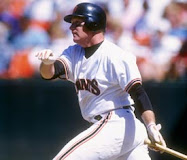
With Opening Day happening across the Minor League yesterday, I figured it would be good to take a look at what Giants fans could expect from the teams in the Giants organization. I'm going to start with the lower levels first and move my way up. Since the Arizona Rookie League, the Northwest League and Dominican Summer League don't start until later in the season, I'm going to start with the Giants' Sally team, the Augusta Green Jackets.
2011 Recap:
It was a tale of two seasons for the Green Jackets, as they got off to a slow start in 2011. They finished the first half 31-39, good for fifth place in the Southern Division. However, a couple of roster moves and some better play sparked them in the second half, as they finished with the best record in the Southern Division after the break at 39-29. While they still finished behind the Savannah Sand Gants (the Mets organization) in the overall standings, the 70-68 record was still a promising end for a team that had its share of struggles in the beginning of the year.
The Green Jackets relied on their pitching as they finished sixth best in the league in runs allowed per game at 4.43 and fourth in ERA at 3.70. Shawn Sanford, Stan Rogers and Mike Kickham provided good production at the top of the rotation, as they each threw over 100 innings and posted ERA numbers of 2.55, 2.91, and 4.11, respectively. Seth Rosin proved to be an excellent spot starter for the Green Jackets, as he struck out 93 batters in 89 innings pitched while posting an ERA of 3.34 and a WHIP of 1.25. The bullpen also got a bounce back season from Edward Concepcion, who struck out 62 batters in 52.1 IP. While Concepcion still sports control issues (his K/BB ratio was 1.72), the performance was a nice sign for a prospect whose stock took a serious drop in 2010.
Offensively, Augusta struggled to score runs, as they finished fifth-worst in the Sally in runs scored per game at 4.43 and fourth-worst in OPS at .693. Despite the lackluster team showing, the Green Jackets did have some position players who made solid contributions during the 2011 season.
Though overshadowed by Chris Dominguez since college (they both were third basemen from the University of Louisville), Adam Duvall had a breakout year, posting a .285/.385/.527 slash with a team leading .917 OPS and 22 home runs. Outfielder Ryan Lollis also had a solid 80-game stint before he made the move to San Jose, as he posted a slash of .314/.393/.422 with an OPS of .816. While he struggled at the end of the year to post a pedestrian .650 OPS, Carlos Willoughby was a catalyst for the most part at the top of the order, as he showed a patient approach at the plate (.343 OBP, 0.73 BB/K ratio) and some speed on the basepaths (a team-high 33 stolen bases). Though he is repeating the year in Augusta, Willoughby is somebody to keep an eye on, especially to start the year.
Who Should Giants Fans Watch Out for at the Plate?
The outfield will be intriguing as Chuckie Jones, Brett Krill and Shawn Payne will look to be the regular starting outfield during the 2012 season. Jones is a super-athlete with plus power, arm strength and speed tools (a lot of scouts have made Matt Kemp comparisons because of his background), but he has struggled to make contact over the course of his Minor League career (61 percent contact rate in Salem Keizer a year ago). Krill was a low-round pick in the Giants' 2010 Draft (25th round), but he is coming off a sensational campaign with the Volcanoes where he put up a slash of .304/.350/.488 along with six home runs and four stolen bases in 226 plate appearances. Payne is a toolsy-outfielder who has "Fred Lewis" potential, as he sports a patient approach at the plate, and good speed and instincts on the basepaths (though he doesn't sport a lot of raw power, as he hit no home runs a year ago). Payne put up a slash of .306/.431/.394 and stole 21 bases on 27 attempts in 195 plate appearances in the NWL last year.
In addition to Willoughby, shortstop Kelby Tomlinson will be an infielder to watch out for this year in Augusta. Baseball America rated Tomlinson with the best speed tool set and the best athleticism out of any Giants draft pick in the 2011 draft (the Giants selected him in the 12th round). Tomlinson however is not just all tools, as he roped pitching in the Arizona Rookie League last year. He posted a slash of .357/.417/.543 in 156 plate appearances. While he doesn't sport "home run power", Tomlinson has showed a strong ability to stretch out hits, as he hit 10 doubles, 5 triples and two home runs in the AZL. He does have to improve his concentration in the field if he wants to continue to stick at shortstop (10 errors, .924 fielding percentage last year), but scouts note that he has the tools and potential to be an above-average defensive shortstop as he moves up the system.
Who Should Giants Fans Watch Out for on the Mound?
The strength of the Green Jackets' roster is in the rotation, as there will be many arms to watch out for in Augusta in 2012. The roster is filled with projectable, high-ceiling arms who not only could be impact prospects in the Giants system, but could help make this Green Jackets team competitive in the Sally Southern conference.
In terms of starting pitching, Clayton Blackburn, Kyle Crick and Adalberto Mejia will anchor the top of the rotation. Blackburn started on Opening Day for the Jackets and performed well as he struck out six and walked zero while allowing four hits in 4.2 innings pitched. Blackburn is a big (six-foot, three-inches, 220 pounds) powerful arm that showed impeccable command in the Arizona Rookie League as an 18 year old. Crick also shares a similar profile to Blackburn, as he is a powerful prep arm out of Texas who was the Giants' supplemental round pick in the 2011 draft. Crick has more control and command issues than Blackburn at this point in his career (he walked eight and allowed nine hits in seven innings pitched in the Arizona Rookie League last year), but he is only 19 years old, was rated more highly by scouts than Blackburn out of high school, and still has a lot of time for development on the mound.
Mejia is a big surprise to make the Green Jackets roster, as many figured Joan Gregorio would be starting the year in Augusta instead of Mejia. However, though this is Mejia's first exposure Stateside, he was absolutely dominant in the Dominican Summer League in 2011. He struck out 71 and walked only eight batters in 76 innings pitched, and he finished the year with the DSL Giants with a 5-2 record and 1.42 ERA. It'll be interesting to see how Mejia fares in the Sally as a raw 18-year-old (he'll turn 19 in June) out of the Dominican, but he has the size (six-foot, three-inches and 195 pounds) and skills to project as a good starting pitching prospect not only this year, but for years to come.
Some sleepers in the Giants' pitching rotation are Demondre Arnold, Bryce Bandilla and Chris Marlowe, all picks in the Giants' 2011 draft. Arnold is a raw right hander out of junior college, but scouts have noted his impressive stuff and his strong performance last year in the Arizona Rookie League bullpen. In 26.2 IP, Arnold struck out 32 batters, allowed 16 hits and 8 walks as a nineteen year old. While he is expected to be in the Green Jackets bullpen, his excellent command and strikeout ability should make him a solid late innings option for the Green Jackets in 2012.
Bandilla and Marlowe are college prospects who come out of Arizona and Oklahoma State, respectively. While control has been an issue for them in their college careers, they have excellent stuff and strikeout potential, and could be fast risers in the Giants system, especially if they stay in the pen. Marlowe could compete for the setup or closer's position with Arnold, while Bandilla could be the first left-handed pitcher out of the pen in the late innings. While they didn't get much playing time after signing (Bandilla didn't play while Marlowe threw only three innings in the AZL; he did strike out five in three innings of work though), they do offer some upside and will be interesting arms to watch. If they do well, don't be surprised to see a second half promotion for both of these guys in the second half of the year.
What Should We Expect from the Green Jackets in 2012?
The Green Jackets have a solid pitching staff that could carry them, especially in the beginning of the year. While the offense has some interesting players with strong tools (Jones, especially), I would be surprised to see the Green Jackets surpass their offensive production from a year ago, especially with their main run producer, Duvall, now playing in San Jose. However, if Willoughby can have a year that was more similar to his first half and not his second half, than the Green Jackets might be able to muster enough offense, especially with a pitching staff that sports so much potential. I don't know if Augusta will be able to compete for a Sally title, but they certainly have the potential to be a dark horse, especially if guys like Jones and Tomlinson can back up their prospect hype with solid seasons at the plate in the Sally.
Showing posts with label Kyle Crick. Show all posts
Showing posts with label Kyle Crick. Show all posts
Friday, April 6, 2012

Tuesday, February 28, 2012
OTF Top 30: No. 8, Kyle Crick, RHP
No. 8: Kyle Crick, right-handed pitcher
Age: 19
Drafted: 16th pick in the Supplemental First Round (49th overall) in the 2011 MLB Draft
High School: Sherman High School (Texas)
2011 Regular Season numbers: 7 games, 7.0 innings pitched, 9 hits allowed, 8 runs allowed, 8 walks, 8 strikeouts, 6.43 ERA, 2.43 WHIP, 4.77 FIP, 1.00 BB/K ratio (Arizona Rookie League).
2011 Fall/Winter League numbers: None
Why you should know about Crick in 2012:
A heralded prep arm in a prep-heavy pitching class in the 2011 draft, Crick went to the Giants' slot at No. 49. The pick was heralded by some analysts, including ESPN's Keith Law, who gave the Giants high marks for the selection (and remember, he lambasted the Joe Panik pick in the first round). Considering how thin the pitching ranks are with the graduation Madison Bumgarner in 2010 and the trade of Zack Wheeler in 2011, Crick has the most potential out of any current pitching prospect in the Giants system. Of course, Crick is still very young and only pitched seven innings in a limited Rookie League campaign in 2011. While the brief stint in the AZL didn't impress statistically, he's still a projectable pitcher with a high ceiling and a lot of time for development. If he can take to the Giants' pitching instruction (and all signs point that he will), then he will certainly be on a lot of baseball analysts' radar in 2013.
What are Crick's Strengths as a Prospect?
The reports on Crick prior to the 2011 draft were very stellar, as John Klima of the Baseball Prospect Report (formerly Baseball Beginnings) had a lot of sterling things to say about Cricks' performances in high school (he saw him in person twice). At the time, Crick was committed to go and play ball at TCU, but Klima pointed out at the time that he had the potential to be a very high draft pick in the 2011 draft. Here's what Klima said in his scouting report:
Klima gave him an OFP of 54, with his fastball and slider earning 50/65 and 40/55 grades respectively. His control was a bit of concern in Klima's reports, as he only graded it a 30/55, but Klima was very high on Crick's mechanics, noting that his "arm smooth through back, body sometimes out in front of arm, arm catches up, gets extension and balanced landings."
For the most part, a lot of the reports on Crick's were very similar to Klima's. Crick pretty much slipped to the Giants' supplemental slot due to a bevy of talented pitching going in the first round (including prep arms Henry Owens, Joe Ross and Robert Stephenson). Crick dominated in high school, going 7-2 with a 1.11 ERA in 13 starts as a senior, and the remarks he got from his high school coach were also glowing as well:
Of course, high school numbers and coaches' remarks always have to be taken with a grain of salt (what is his coach going to say? "Oh he sucks! The Giants made a huge mistake!"), but Crick seems to be a prospect with real potential. Even if you don't look at the velocity and grades on his pitches, his size alone (six-foot, three inches, 225 pounds) makes him an interesting prospect and gives him potential for a lot of velocity. And when you watch him on tape, there is a lot to like about his pitching motion, as he has a smooth delivery and seems to hide the ball well.
Furthermore, the fact that Crick got some playing experience after signing was a huge plus in his favor. While it wasn't the best stint, it was more professional experience than what other draft picks Andrew Susac or Ricky Oropesa or Josh Osich garnered last year (they had none). The exposure to professional pitching, hitting and instruction from last year's stint undoubtedly will make it a smoother transition for him in 2012, especially considering all the "draft hoopla" has worn off since his stint.
Where might Crick struggle?
Crick is years away from reaching his peak, and his stint in the Arizona Rookie League showed that. He struggled with control and command, as he gave up eight walks, nine hits and eight runs in seven innings of work in Arizona. Of course, he was just 18 years old and just coming off signing a $900 K signing bonus, so it is likely that he may have either been a little distracted or overwhelmed when he made his professional debut in 2011.
Still, Crick's control is always going to be an issue. As noted before, it was one of his lower grades in Klima's scouting report, and if he wants to have a career as a starting pitcher, he needs to be able to get those issues resolved, even if it is at a gradual pace. If he continues to walk hitters at the high rate he displayed in the AZL last year, then his career as a starter might be short, which in turn, would be a massive hit to his status as a prospect.
While Crick has a solid fastball and slider combination, he still needs work on his third and fourth pitches. He does sport a change and split finger fastball, but they haven't graded out as impressive pitches by any stretch of the imagination. With instruction, I am hopeful that he'll be able to hone a third pitch and at least make a fourth pitch average or slightly below. That being said, that might take a couple of seasons before we see the result of that instruction pay off, especially considering it will be his first full year as a professional in 2012, and he will just be learning how to pitch in general.
One the main weaknesses that has been noted about Crick is his strength and stamina as a pitcher, as it was a bit of a question mark in high school. While his stamina wasn't noted as poor by any measure, he only pitched 13 games in high school, so he has to get acclimated quickly to a full professional season. With his size and already solid frame (225 pounds), his conditioning will be important. If he doesn't stay in shape, it won't be hard to see his frame get out of control and hurt his stamina. While I think he's still young enough to stay in the current shape he's in, and I think management will keep a close eye on Crick (simply due to their investment in him). A pitcher's condition and stamina are always important aspects to keep tabs on, especially as they are breaking into the professional level and getting accustomed to the habits it takes to be a Major League pitcher (let's just say very few pitchers can get away with the Livan Hernandez Diet Plan).
Grades on Crick's tools:
Fastball: 17/20 (Solid now, but with the potential to grade much higher as he gets older and more developed as a pitcher. Currently his fastball goes in the 89-93 MPH range and comfortably in the 90-92 MPH range according to Klima. But, as noted before, his size gives him room for potential, as it could sit in the 93-95 MPH range in the next year or two.)
Slider: 17/20 (His best secondary pitch, Crick's slider ranges from 81-83 MPH and has good movement and a hard bite, according to Klima. If his fastball continues to keep or gain velocity, then I could see this pitch being even more effective in the future.)
Changeup/Split Finger: 13/20 (The reports are nothing special on these two pitches. His changeup, according to reports, is 80-81 MPH but is pretty straight. As for his split, it has a hard drop and sits in the 81 MPH range. If he wants to hold his own as a starting pitcher prospect, he's going to need to develop one or even both of these pitches.)
Mechanics: 17/20 (Klima was high on his mechanics, and on tape, his delivery and motion look pretty clean. He has fluid movement and moves quickly to the plate. Also, I like the way his motion disguises the ball, which only makes things look faster and harder to hit for batters. I bet there will be some tweaks done by the pitching staffs in the Giants organization, but Crick gives them a solid foundation to work with).
Command/Control: 13/20 (Klima noted that he had some work to do with his control, and his Rookie League stats showed that. Furthermore, he learned quickly that he isn't simply going to dominate hitters as easily as he did in Texas High School ball. I think his struggles with command and control are correctable, but he has a lot to work on in 2012.)
Ceiling: 17/20 (With the combination of his fastball/power slider combo, Crick already profiles as a solid Major League pitcher. Whether or not he will become a mainstay in the Giants' rotation depends on how well he develops his third and fourth pitches. If he that development happens, he could be a starting pitcher with a No. 2 ceiling. If not, then he's probably destined for the bullpen.)
Health/Makeup/Intangibles: 18/20 (He's gotten high remarks from the organization (John Barr was very high on Crick after they drafted him) as well as from the scouting community, and he signed early enough to at least get some work in the Rookie League before the 2011 season ended. Crick still has a long road to go as a prospect, and as we have seen in the past, the road of a pitching prospect is often an unpredictable one. But right now, it seems like Crick is on the right path for success.)
Overall Grade: B-
Projection: Starting Major League pitcher. Best case: No. 2 starter. Worst case: Middle innings reliever.
Summary: I'm conservative with the Crick grade because a.) He's barely out of high school and b.) his Rookie League stint wasn't all the impressive (though it was a VERY small sample). That being said, I do think Crick can progress to be a B or B+ pitching prospect in the near future. He sports impressive size and tools, and the Giants have an excellent track record when it comes to developing pitching in their minor league system. Crick has the kind of raw skills and size that Matt Cain sported when he was drafted out of high school in the 2002 draft. Am I saying he's going to be a carbon copy of Cain? Of course not, but he has that potential, and if he pans out and develops in the Minors, then I think he could project to be a Cain-esque pitcher for the Giants in the future.
Age: 19
Drafted: 16th pick in the Supplemental First Round (49th overall) in the 2011 MLB Draft
High School: Sherman High School (Texas)
2011 Regular Season numbers: 7 games, 7.0 innings pitched, 9 hits allowed, 8 runs allowed, 8 walks, 8 strikeouts, 6.43 ERA, 2.43 WHIP, 4.77 FIP, 1.00 BB/K ratio (Arizona Rookie League).
2011 Fall/Winter League numbers: None
Why you should know about Crick in 2012:
A heralded prep arm in a prep-heavy pitching class in the 2011 draft, Crick went to the Giants' slot at No. 49. The pick was heralded by some analysts, including ESPN's Keith Law, who gave the Giants high marks for the selection (and remember, he lambasted the Joe Panik pick in the first round). Considering how thin the pitching ranks are with the graduation Madison Bumgarner in 2010 and the trade of Zack Wheeler in 2011, Crick has the most potential out of any current pitching prospect in the Giants system. Of course, Crick is still very young and only pitched seven innings in a limited Rookie League campaign in 2011. While the brief stint in the AZL didn't impress statistically, he's still a projectable pitcher with a high ceiling and a lot of time for development. If he can take to the Giants' pitching instruction (and all signs point that he will), then he will certainly be on a lot of baseball analysts' radar in 2013.
What are Crick's Strengths as a Prospect?
The reports on Crick prior to the 2011 draft were very stellar, as John Klima of the Baseball Prospect Report (formerly Baseball Beginnings) had a lot of sterling things to say about Cricks' performances in high school (he saw him in person twice). At the time, Crick was committed to go and play ball at TCU, but Klima pointed out at the time that he had the potential to be a very high draft pick in the 2011 draft. Here's what Klima said in his scouting report:
"I had a brief look at Texas right-hander Kyle Crick over the summer. I liked him. Yes, I did. So did TCU, who scooped some of the other Texas schools to land his commitment. I have a sneaky feeling that the draft might play a role for this guy, but as time and experience have taught us, you never know which way a guy goes until after the dust settles...
Strengths: FB 89-93, comfortable 90-92, hard downhill with tail, heavy ball. Can reach back for a little more and elevate when needed. SL 81-83 with hard bite, go-to weapon. Hard and late. Split 81 with hard drop. Straight CHG 80-81, assume those weren’t flat sliders, secondary SL 72-73 with drop."
Klima gave him an OFP of 54, with his fastball and slider earning 50/65 and 40/55 grades respectively. His control was a bit of concern in Klima's reports, as he only graded it a 30/55, but Klima was very high on Crick's mechanics, noting that his "arm smooth through back, body sometimes out in front of arm, arm catches up, gets extension and balanced landings."
For the most part, a lot of the reports on Crick's were very similar to Klima's. Crick pretty much slipped to the Giants' supplemental slot due to a bevy of talented pitching going in the first round (including prep arms Henry Owens, Joe Ross and Robert Stephenson). Crick dominated in high school, going 7-2 with a 1.11 ERA in 13 starts as a senior, and the remarks he got from his high school coach were also glowing as well:
"He's got the most powerful arm I've ever coached," Senato told the Texas Herald Democrat. "He's got a lot of upside -- he's not a polished product at all. His changeup's going to be better, and he's got more velocity in his arm. He can get to 97 or 98 mph at some point."
Of course, high school numbers and coaches' remarks always have to be taken with a grain of salt (what is his coach going to say? "Oh he sucks! The Giants made a huge mistake!"), but Crick seems to be a prospect with real potential. Even if you don't look at the velocity and grades on his pitches, his size alone (six-foot, three inches, 225 pounds) makes him an interesting prospect and gives him potential for a lot of velocity. And when you watch him on tape, there is a lot to like about his pitching motion, as he has a smooth delivery and seems to hide the ball well.
Furthermore, the fact that Crick got some playing experience after signing was a huge plus in his favor. While it wasn't the best stint, it was more professional experience than what other draft picks Andrew Susac or Ricky Oropesa or Josh Osich garnered last year (they had none). The exposure to professional pitching, hitting and instruction from last year's stint undoubtedly will make it a smoother transition for him in 2012, especially considering all the "draft hoopla" has worn off since his stint.
Where might Crick struggle?
Crick is years away from reaching his peak, and his stint in the Arizona Rookie League showed that. He struggled with control and command, as he gave up eight walks, nine hits and eight runs in seven innings of work in Arizona. Of course, he was just 18 years old and just coming off signing a $900 K signing bonus, so it is likely that he may have either been a little distracted or overwhelmed when he made his professional debut in 2011.
Still, Crick's control is always going to be an issue. As noted before, it was one of his lower grades in Klima's scouting report, and if he wants to have a career as a starting pitcher, he needs to be able to get those issues resolved, even if it is at a gradual pace. If he continues to walk hitters at the high rate he displayed in the AZL last year, then his career as a starter might be short, which in turn, would be a massive hit to his status as a prospect.
While Crick has a solid fastball and slider combination, he still needs work on his third and fourth pitches. He does sport a change and split finger fastball, but they haven't graded out as impressive pitches by any stretch of the imagination. With instruction, I am hopeful that he'll be able to hone a third pitch and at least make a fourth pitch average or slightly below. That being said, that might take a couple of seasons before we see the result of that instruction pay off, especially considering it will be his first full year as a professional in 2012, and he will just be learning how to pitch in general.
One the main weaknesses that has been noted about Crick is his strength and stamina as a pitcher, as it was a bit of a question mark in high school. While his stamina wasn't noted as poor by any measure, he only pitched 13 games in high school, so he has to get acclimated quickly to a full professional season. With his size and already solid frame (225 pounds), his conditioning will be important. If he doesn't stay in shape, it won't be hard to see his frame get out of control and hurt his stamina. While I think he's still young enough to stay in the current shape he's in, and I think management will keep a close eye on Crick (simply due to their investment in him). A pitcher's condition and stamina are always important aspects to keep tabs on, especially as they are breaking into the professional level and getting accustomed to the habits it takes to be a Major League pitcher (let's just say very few pitchers can get away with the Livan Hernandez Diet Plan).
Grades on Crick's tools:
Fastball: 17/20 (Solid now, but with the potential to grade much higher as he gets older and more developed as a pitcher. Currently his fastball goes in the 89-93 MPH range and comfortably in the 90-92 MPH range according to Klima. But, as noted before, his size gives him room for potential, as it could sit in the 93-95 MPH range in the next year or two.)
Slider: 17/20 (His best secondary pitch, Crick's slider ranges from 81-83 MPH and has good movement and a hard bite, according to Klima. If his fastball continues to keep or gain velocity, then I could see this pitch being even more effective in the future.)
Changeup/Split Finger: 13/20 (The reports are nothing special on these two pitches. His changeup, according to reports, is 80-81 MPH but is pretty straight. As for his split, it has a hard drop and sits in the 81 MPH range. If he wants to hold his own as a starting pitcher prospect, he's going to need to develop one or even both of these pitches.)
Mechanics: 17/20 (Klima was high on his mechanics, and on tape, his delivery and motion look pretty clean. He has fluid movement and moves quickly to the plate. Also, I like the way his motion disguises the ball, which only makes things look faster and harder to hit for batters. I bet there will be some tweaks done by the pitching staffs in the Giants organization, but Crick gives them a solid foundation to work with).
Command/Control: 13/20 (Klima noted that he had some work to do with his control, and his Rookie League stats showed that. Furthermore, he learned quickly that he isn't simply going to dominate hitters as easily as he did in Texas High School ball. I think his struggles with command and control are correctable, but he has a lot to work on in 2012.)
Ceiling: 17/20 (With the combination of his fastball/power slider combo, Crick already profiles as a solid Major League pitcher. Whether or not he will become a mainstay in the Giants' rotation depends on how well he develops his third and fourth pitches. If he that development happens, he could be a starting pitcher with a No. 2 ceiling. If not, then he's probably destined for the bullpen.)
Health/Makeup/Intangibles: 18/20 (He's gotten high remarks from the organization (John Barr was very high on Crick after they drafted him) as well as from the scouting community, and he signed early enough to at least get some work in the Rookie League before the 2011 season ended. Crick still has a long road to go as a prospect, and as we have seen in the past, the road of a pitching prospect is often an unpredictable one. But right now, it seems like Crick is on the right path for success.)
Overall Grade: B-
Projection: Starting Major League pitcher. Best case: No. 2 starter. Worst case: Middle innings reliever.
Summary: I'm conservative with the Crick grade because a.) He's barely out of high school and b.) his Rookie League stint wasn't all the impressive (though it was a VERY small sample). That being said, I do think Crick can progress to be a B or B+ pitching prospect in the near future. He sports impressive size and tools, and the Giants have an excellent track record when it comes to developing pitching in their minor league system. Crick has the kind of raw skills and size that Matt Cain sported when he was drafted out of high school in the 2002 draft. Am I saying he's going to be a carbon copy of Cain? Of course not, but he has that potential, and if he pans out and develops in the Minors, then I think he could project to be a Cain-esque pitcher for the Giants in the future.
Monday, June 6, 2011
Giants Select SS Joe Panik at No. 29 and RHP Kyle Crick at No. 49
Sorry this is late, but I had some commitments tonight and I couldn't get to the post until now. Good thing I did though, as it gave me some time to reflect on the picks.
Joe Panik, SS, St. John's University (NY)
For some reasons, St. John has been really active in my life these past five months. A girl I dated had parents who went to St. John's, St. John's quickly became my favorite team in College Basketball because of their hard-nosed play and Steve Lavin, Gonzaga played St. John's in the NCAA Tourney and the Zags played their best basketball game of the year, and now the Giants used their 29th pick on the Red Storm infielder. Wow...if I didn't turn down St. John's out of high school (it was one of four colleges I was considering), I would be really stoked to be a Johnnie alum right now.
Anyways, back on the subject, well...from a statistical standpoint, Panik looks very good. He showed very good strike zone recognition in college, as he posted BB/K ratios of 1.81, 2.24 and 1.83 in his three years with the Johnnies. Furthermore, he put up averages of .332, .374 and .398 in his three collegiate seasons. The most surprising aspect of Panik's game was his pop for a middle infielder, as he posted slugging percentages of .513, .621 and .642 and hit a total of 25 home runs in 640 at-bats.
However, the big question about Panik is how he can do against better competition and how his power and hitting will translate when he starts hitting with wood bats. Panik played a year in the Cape Cod in 2010, and while he did well at the plate (he hit .276 with a .384 OBP in 145 at-bats), his power didn't translate as he posted a slugging percentage of .372 and only had 10 extra bases hits (eight doubles and two home runs).
In terms of his defense, he had garnered good reports from scouts, though he doesn't seem to be rated as highly as Brandon Crawford or Ehire Adrianza when they broke into professional ball. Here's is what Matt Grabusky said about Panik in his scouting report on MLB Draft Guide.com:
A lot of experts still felt though the Giants reached with Panik at 29, and that they could have gotten him at their slot in the supplemental round, or even perhaps as late as the second round. Keith Law on his twitter called Panik a "reach" and that he was a "utility" type. I would wait and see how he does when he makes the transition to the Northwest League this year before I would give him such a "label", but I do feel like the Giants could have gotten a higher ceiling high school arm at No. 29 (Henry Owens for example) and then got Panik at No. 49 in the supplemental round.
Of course, this has been a trend for the Giants recently in drafts (e.g. "reaching for players in the first round"), but it's a strategy that's paid off. Last year, Gary Brown was a projected supplemental/second round pick, and he went in the Giants' first round slot. Safe to say, he's made the pick pay off as evidenced by his performance in San Jose this year. Hopefully the same can be true for Panik.
Kyle Crick, RHP, Sherman HS (TX)
Crick is a projectable power arm that fits the characteristics of former Giants HS draft picks: he's big (225 pounds), he's tall (six-foot, three-inches), and he throws gas, though he has to do some work on his secondary stuff. Thankfully, considering Crick's age, the Giants have the time to be patient with him, and he could be a nice project that could develop well in the Giants system. Matt Cain, Madison Bumgarner and Zack Wheeler are prime examples of physically gifted HS pitchers that succeeded in the Giants system, and there's no reason to think that Crick can join that club if he stays healthy.
Crick according to John Klima of Baseball Beginnings earned an OFP grade of 54 in his scouting report. The best aspect of Crick's repertoire, according Klima, is his fastball, which was graded a 50 out of 65. His slider was his next best pitch, which was graded a 40 out of 55 and his change and split were graded a decent 30 out of 50. Crick's control still needs some work (Klima graded his control a 30 out of 50), but it's obvious that he has a good tool set and some nice potential as a pitcher.
Furthermore, Klima was encouraged by his mechanics and delivery, noting that his delivery was good and that his "arm smooth through back, body sometimes out in front of arm, arm catches up, gets extension and balanced landings." Here's what Klima said about his strengths as a pitcher:
For a supplemental pick, Crick has the tools and frame to be a very good pitcher. Of course, he's young, and he will take some time to develop, since he's a high school kid and not a high profile pitcher like some recent HS pitcher picks like Bumgarner and Wheeler (who were both Top-10 first round picks). That being said, there is a lot to like, and if he can develop his control and secondary stuff in the instructional league and low minors in his first couple of years, then Crick could be a high upside pick that could add to the shallow pitching depth in the Giants system.
Joe Panik, SS, St. John's University (NY)
For some reasons, St. John has been really active in my life these past five months. A girl I dated had parents who went to St. John's, St. John's quickly became my favorite team in College Basketball because of their hard-nosed play and Steve Lavin, Gonzaga played St. John's in the NCAA Tourney and the Zags played their best basketball game of the year, and now the Giants used their 29th pick on the Red Storm infielder. Wow...if I didn't turn down St. John's out of high school (it was one of four colleges I was considering), I would be really stoked to be a Johnnie alum right now.
Anyways, back on the subject, well...from a statistical standpoint, Panik looks very good. He showed very good strike zone recognition in college, as he posted BB/K ratios of 1.81, 2.24 and 1.83 in his three years with the Johnnies. Furthermore, he put up averages of .332, .374 and .398 in his three collegiate seasons. The most surprising aspect of Panik's game was his pop for a middle infielder, as he posted slugging percentages of .513, .621 and .642 and hit a total of 25 home runs in 640 at-bats.
However, the big question about Panik is how he can do against better competition and how his power and hitting will translate when he starts hitting with wood bats. Panik played a year in the Cape Cod in 2010, and while he did well at the plate (he hit .276 with a .384 OBP in 145 at-bats), his power didn't translate as he posted a slugging percentage of .372 and only had 10 extra bases hits (eight doubles and two home runs).
In terms of his defense, he had garnered good reports from scouts, though he doesn't seem to be rated as highly as Brandon Crawford or Ehire Adrianza when they broke into professional ball. Here's is what Matt Grabusky said about Panik in his scouting report on MLB Draft Guide.com:
"In the field, Panik has good range and soft hands. His arm is average, which leads some to see his future at second base. Whether he remains at short or slides over to second, Panik has the ability to be a high on base guy and solid fielder at the next level."
A lot of experts still felt though the Giants reached with Panik at 29, and that they could have gotten him at their slot in the supplemental round, or even perhaps as late as the second round. Keith Law on his twitter called Panik a "reach" and that he was a "utility" type. I would wait and see how he does when he makes the transition to the Northwest League this year before I would give him such a "label", but I do feel like the Giants could have gotten a higher ceiling high school arm at No. 29 (Henry Owens for example) and then got Panik at No. 49 in the supplemental round.
Of course, this has been a trend for the Giants recently in drafts (e.g. "reaching for players in the first round"), but it's a strategy that's paid off. Last year, Gary Brown was a projected supplemental/second round pick, and he went in the Giants' first round slot. Safe to say, he's made the pick pay off as evidenced by his performance in San Jose this year. Hopefully the same can be true for Panik.
Kyle Crick, RHP, Sherman HS (TX)
Crick is a projectable power arm that fits the characteristics of former Giants HS draft picks: he's big (225 pounds), he's tall (six-foot, three-inches), and he throws gas, though he has to do some work on his secondary stuff. Thankfully, considering Crick's age, the Giants have the time to be patient with him, and he could be a nice project that could develop well in the Giants system. Matt Cain, Madison Bumgarner and Zack Wheeler are prime examples of physically gifted HS pitchers that succeeded in the Giants system, and there's no reason to think that Crick can join that club if he stays healthy.
Crick according to John Klima of Baseball Beginnings earned an OFP grade of 54 in his scouting report. The best aspect of Crick's repertoire, according Klima, is his fastball, which was graded a 50 out of 65. His slider was his next best pitch, which was graded a 40 out of 55 and his change and split were graded a decent 30 out of 50. Crick's control still needs some work (Klima graded his control a 30 out of 50), but it's obvious that he has a good tool set and some nice potential as a pitcher.
Furthermore, Klima was encouraged by his mechanics and delivery, noting that his delivery was good and that his "arm smooth through back, body sometimes out in front of arm, arm catches up, gets extension and balanced landings." Here's what Klima said about his strengths as a pitcher:
"FB 89-93, comfortable 90-92, hard downhill with tail, heavy ball. Can reach back for a little more and elevate when needed. SL 81-83 with hard bite, go-to weapon. Hard and late. Split 81 with hard drop. Straight CHG 80-81, assume those weren’t flat sliders, secondary SL 72-73 with drop."
For a supplemental pick, Crick has the tools and frame to be a very good pitcher. Of course, he's young, and he will take some time to develop, since he's a high school kid and not a high profile pitcher like some recent HS pitcher picks like Bumgarner and Wheeler (who were both Top-10 first round picks). That being said, there is a lot to like, and if he can develop his control and secondary stuff in the instructional league and low minors in his first couple of years, then Crick could be a high upside pick that could add to the shallow pitching depth in the Giants system.
Subscribe to:
Posts (Atom)

 Posts
Posts