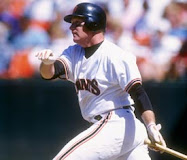
So it's been 11 days since my last post. It's been a weird month, and it's been hard to just find time to really sit down and post (not to mention tweet). For the sake of time interests, I've decided to streamline the rankings profiles a bit now. First off, I would like to have as many of the rankings up before Opening Day. Secondly, when you get deeper and deeper in the rankings, less and less information is available, so it's harder to come up with as in-depth profiles like the ones in the Top-10.
Hopefully, the posting will be a little more consistent from here on out.
No. 11: Charlie Culberson, Second Base
Overall Grade: C+
Projection: Utility infielder; at best, starting second base. At worst, career backup.
Summary: Culberson, the former supplemental round pick (2007 Draft), has had an up and down career as an infielder in the Giants system. Originally drafted as a shortstop, inconsistent defense forced a move from the position after the 2008 season in Augusta (he ended up playing third base in 2009 with the Green Jackets, until he ended up settling at Second Base in San Jose). The main problem with Culberson's defense is that he is too error prone, as he committed 75 errors in between his two campaigns in the Sally in 2009 and 2010. That being said, the move to second base has been worthwhile, as he has only committed 28 errors the past two years at the Keystone in San Jose and Richmond, which has improved his fielding percentages to .975 and .978 the past two years (in comparison, his fielding percentages in Augusta were .901 and .900, respectively).
Offensively, things started slow for Culberson, as the Sally seemed to overwhelm him as a hitter just out of high school. In two stints with the Green Jackets, he posted OPS numbers of .599 and .598, and he displayed little power (312.5 average slugging in Augusta), ability to hit for average (.240 batting average in two seasons in Single-A) and a poor approach at the plate (0.31 average BB/K ratio in Augusta). Much like fellow 2007 pick Wendell Fairley, many people felt that Culberson simply didn't have the offensive skills to project into a Major League player.
However, in 2010, Culberson broke out in all kinds of ways in the California League. He improved defensively with the transition to second base, becoming at least average defensively at the position. The biggest improvement though came offensively, as he hit 16 home runs, and posted a slash of .290/.334/.457 in 503 at-bats in San Jose. While the plate approach was still skeptical (0.33 BB/K ratio), the increased power (career high .167 ISO) as well as speed on the basepaths (25 stolen bases), gave some scouts and experts that Culberson could have 20-20 home run-stolen base potential in the mold of Dustin Pedroia, or at the very least 15-15 potential.
Of course, as mentioned before on this blog, Cal League stats always have to be taken with a grain of salt. While he did follow up his Cal League dominance with an excellent showing in the Arizona Fall League (he posted a .366/.394/.591 slash with two home runs and 21 runs scored in 99 plate appearances with the Scorpions), the Eastern League pitching proved to be dominating for him to replicate his High-A numbers. He regressed to post a slash of .259/.287/.382 in 553 at-bats, and his plate approach suffered, as he posted a BB/K ratio of 0.17, a career low.
While some would write off Culberson completely, I was actually a little comforted in some ways by his 2011 campaign in Richmond, and still hold some hope that he can turn into a good Major League player in a year or two. First off, he was still two years younger than the competition in the Eastern League (average hitter's age is 24), and while is power regressed, it didn't fall off a cliff like some hitters who make the transition from the Cal to the Eastern League. He still hit 10 home runs, and his ISO only dipped 44 points, not terrible considering his previous high ISO in the Sally was .085. He also made the Eastern League All-Star team, an honor that displayed that his season wasn't downright terrible by any stretch of the imagination.
What to Expect in 2012: It's tough to gauge where Culberson will be in 2012. An early injury in the beginning of work outs has kept him out of Spring Training so far, and it's likely that he won't be ready until the end of Spring Training as well. There was some hope that with a good Spring, Culberson could have made the transition to Triple-A to start the year. Now, it looks like he'll be in extended Spring Training and most likely starting out the year in Double-A again. While starting out in Double-A could be a good thing, Culberson needs to make some kind of transition upward this year, either to Triple-A (the most likely scenario) or to the Majors. The latter is probably a stretch, especially when you consider Mike Fontenot, Ryan Theirot and Emmanuel Burriss are ahead of him on the organizational depth chart at the Major League and Triple-A level. However, there needs to be a sign of improvement and a leap of some sort for Culberson as a prospect in 2012. While he is still only 23 years old, this will be his sixth full season as a professional. If he cannot build off the campaign in Richmond a year ago, it's probably likely to think that Culberson won't amount to much at the Major League level. If he does, then he and Joe Panik could be battling for the keystone position when Sanchez leaves town.
No. 12: Conor Gillaspie, Third Base
Overall Grade: C+
Projection: Utility infielder/outfielder; could start at third base or a corner outfield position in right situation.
Summary: Originally a highly heralded supplemental round pick in the 2008 draft (he was the Giants' second pick after Buster Posey), Gillaspie's career has started slow, but really picked up the past two seasons. After getting a peek at the Major League level in 2008 shortly after being drafted (a Major League callup was written into his contract in order for him to sign at a lower bonus), Gillaspie struggled in all areas of his game in 2009 in San Jose. He committed 27 errors at third base in 116 games, and he only posted a slash of .286/.364/.386 in 530 plate appearances. Despite the hitter-friendly environments, Gillaspie displayed little to no power ability in his first full year, as he only hit four home runs and posted a measly ISO of .100.
While the lack of power or defensive ability hurt his stock greatly in 2009, he did display a solid eye at the plate (0.81 BB/K ratio) and a strong ability to make contact (86 percent contact rate). When he made the transition to the Eastern League in 2010, he was able to transition those skills for the most part. While his BB/K ratio dipped a little, it still remained above average at 0.55, and his contact percentage remained unchanged at 86 percent. Furthermore, one of the reasons for the dip in BB/K ratio was he increased his aggressiveness at the plate, which resulted in a lower walk rate (from 10 to 7 percent), but increased power (.132 ISO). In fact, he doubled his home run total from the Cal League in the Eastern League (from 4 to 8), and his slugging and OPS numbers both improved from San Jose as well (to .420 and .757). Considering most prospects' power numbers go the opposite direction in the transition from the CL to the EL, the improvement was a promising sign that Gillaspie wasn't finished yet.
2011 proved to be Gillaspie's best year as a professional, as he posted his best overall numbers as a Minor Leaguer in Fresno. He hit 11 home runs and posted a slash of .297/.391/.453 with an OPS of .844. His contact rate dipped to 82 percent, but he posted career highs in walk percentage at 13 percent, BB/K ratio at 0.84, and ISO at .157. His stellar campaign with the Grizzlies earned him a callup to the Big Leagues, and he held his own in 19 at-bats, posting a slash of .263/.333/.421 with two walks, only one strikeout, and five hits, including an inside the park home run.
What to Expect in 2012: Gillaspie doesn't hold much room for projection at 24 years old. He is a polished offensive player that displays a strong ability to make contact and a great eye at the plate. However, while his power has started to develop since that lackluster 2009 campaign in San Jose, his upside probably remains at 10-15 home runs a year, and he doesn't offer much speed on the basepaths or athleticism on the field to boot. This proves to be a problem, because defensively, he doesn't really project to be more than a corner infielder or outfielder, and he certainly doesn't have the power tool set to justify consistent playing time at the positions. Gillaspie could be a player in the Bill Mueller-mold (corner infielder who gets on-base and hits for average despite wielding below-average power for their position), but those kinds of players tend to be very rare, and get even fewer opportunities. At the same time, Gillaspie most likely will (and should) get some more playing time at the Major League level in 2012 (though, most likely, he will start the year in Fresno barring injury to someone this Spring). Hopefully, he'll get some more playing time at other positions in Triple-A to maximize his value when he gets the call up some point this year.
No. 13: Adalberto Mejia, Left-handed pitcher
Overall grade: C+
Projection: No. 2-3 starting pitcher.
Summary: A Dominican bonus baby who was signed for $350,000 in 2011 by scout Pablo Peguero (who was also responsible for signing outfielders Francisco Peguero and Rafael Rodriguez), Mejia is still a project of sorts who is a long ways away in terms of being fully developed. Furthermore, while he does offer some upside, at his age and where he's at in his professional career, he still carries considerable risk as a prospect (Baseball America, which ranked him 26 in their prospect handbook, graded his risk factor as extreme).
However, Mejia simply dominated as a pitcher in the Dominican Summer League, most likely earning himself a ticket to the Arizona Rookie League and/or Short-Season Salem Keizer this year. While DSL stats can't be taken too seriously (any rookie league numbers should always be taken with a grain of salt), Mejia displayed impeccable control for an 18 year old who had just signed that season. He only allowed eight walks in 76 innings pitched, good for a walk percentage of 0.9 and a K/BB ratio of 8.9. Just to compare, Joan Gregorio, a right handed prospect who has been ranked higher than Mejia on most lists, allowed nine more walks (17) in two less innings pitched when he threw in the DSL in 2011, and posted a K/BB ratio 6.5 points lower than Mejia (2.4). So, while the numbers can't be weighted too heavily, one can't dismiss Mejia's advanced approach completely either.
Tools wise, Mejia is still raw, as he throws a fastball that goes in the 87-91 MPH range that touches 92 MPH. Furthermore, he has a decent changeup and is working on his slider, which right now is still more of a slurve, according to reports from Baseball America. That being said, he is still 18 and growing into his Six-foot, three inch frame. As he gets older and exposed to more professional instruction when he makes the transition stateside, it is likely that his pitching repertoire and ability will get better. His approach has already received good marks, so the Giants will be starting with an already solid foundation.
What to Expect in 2012: Mejia is still years away from the Big Leagues, and with most Latin American prospects, his future could go either way. Just judging from his numbers and the early reports, Mejia has that upside to be a No. 2 or No. 3 starter, though he probably doesn't have the front line stuff or size to be a No.1 (though as stated before, he could gain more velocity as he continues to develop physically). I expect the Giants to take things conservatively with Mejia, and I don't really see him pitching beyond the Northwest League in 2012. However, if he continues to transition his command and control to the states, I wouldn't be surprised to see him be more of a riser in more prospect lists going into 2013.
No. 14 Clayton Blackburn, right-handed pitcher
Overall Grade: C+
Projection: No. 2/3 Starter; reliever at worst
Summary: Drafted in the 16th round of the 2011 draft, the prep arm out of Oklahoma (the same state that produced top picks Dylan Bundy and Archie Bradley in the 2011 draft) probably had the biggest pitching breakout out of the Giants' picks in 2011 (Joe Panik had the biggest breakout overall).
After signing, Blackburn made his debut in the Arizona Rookie League, and much like Mejia in the DSL, Blackburn displayed impeccable command and control for an 18 year old. In 33 innings pitched, he struck out 30 and walked only 3 batters total. (That's right, Three!) In addition, he only gave up 4.6 hits per nine innings and posted a BB/K ratio of 10. While it was only a 33 inning sample in Rookie ball, the stellar campaign had a lot of experts around the web and league wondering why Blackburn didn't go higher in the 2011 draft (though to be fair to other teams, it did seem like he was for sure going to honor his commitment to the University of Oklahoma going into the draft).
At six-foot, three inches and 220 pounds, his frame hints at front line rotation potential, or at the very least, middle of the rotation status. He has a four pitch arsenal, sporting a 90-93 MPH fastball, a good curve ball, and a slider and changeup, according to Rob Gordon of the MiLBA. Furthermore, while he didn't blow hitters away totally in his stint, Blackburn has excellent life on his pitches, and induces groundballs at an impressive rate (his GO/AO was 2.58 in 2011).
The main concern right now with Blackburn seems to be his size, for at 220 pounds, he is a bit on the heavy side, and isn't particularly athletic. Baseball America notes that he'll have to watch his conditioning in order to maintain and build stamina as a starting pitcher, especially as he makes the transition to full-season ball.
What to Expect in 2012: Blackburn is a big, young, high-ceiling arm that fits the mold of many former pitching prospects in the Giants organization (i.e. Matt Cain, Madison Bumgarner). While he doesn't have the upside of supplemental round pick Kyle Crick, Blackburn is a legitimate pitching prospect who has an advanced feel and repertoire for somebody his age. He most likely will begin the year in Low-A Augusta, which probably is the right track for him considering his youth. As noted before, his conditioning and stamina will be key things to keep an eye on in 2012, for a lot of his value is tied to him being a starter. If he can't keep the stamina to be a starting pitcher over a full year, his stock will take a hit. That being said, I am confident that he will stay in shape, and he could have a solid year in the Green Jackets' rotation in 2012.
No. 15: Josh Osich, Left-handed pitcher
Overall grade: C+
Projection: No. 4-5 starter; reliever
Summary: A sixth round pick, Osich had the makings of a first or second round draft choice going into the 2011 draft. However, Tommy John surgery in 2010, and arm concerns at the end of his 2011 season at Oregon State, scared off a lot of teams, and the Giants came in and swooped him up in the sixth round. Though he didn't play professionally last year, Osich did sign for $450,000 and passed a physical, so as of now, everything points to Osich being healthy and ready for the 2012 season.
As a pitcher, Osich had stretches of dominance during his time with the Beavers. He threw a no-hitter against powerhouse UCLA in 2011, and struck out 79 batters in 76.4 innings pitched his junior season. While he did post an ERA of 3.64 in 2011, his BB/K ratio remained decent at 2.32, and he only allowed 62 hits the entire year as well. Considering this was his first year coming off TJ surgery, and he couldn't really throw his breaking stuff due to the surgery, the numbers were a promising sign.
Right now, the big dilemma for the Giants is whether to break in Osich as a reliever or starter. Though he started in college and has starting potential, his injury concerns (he was pulled from an NCAA regional game in 2011 after one inning) probably will regulate Osich to the bullpen at least initially. Osich sports a three pitch arsenal, with a 92-95 MPH fastball that has been rated as four plus by Rob Gordon, and a slider and changeup. Baseball America noted that he didn't throw the slider very much last year due to injury concerns, and hence, that could have been the reason it wasn't graded very highly or very effective in 2011. Now that he has had a full year of play since TJ, it wouldn't be surprising to see his breaking stuff, especially his slider, become a more valuable part of his arsenal as a professional.
What to Expect in 2012: I am a big fan of Osich. I did a profile write-up on him going into the 2012 draft pick, and I thought he was worth spending a second round pick on, if available. The fact that the Giants got him in the sixth round to me is a steal (though as noted, we did spend second round money on him with his signing bonus). The health issues are a concern of course, but Osich has very good stuff and I think his secondary pitches will be even better now that he will be two years removed from TJ surgery that cost him his 2010 college season. I think the Giants will take things slow with him and start him in the bullpen, and in the Sally, just to be on the safe side. Though to be frank, I also wouldn't be surprised to see him pitch in High-A ball, simply due to his status as a high-round, college prospect.
Showing posts with label Conor Gillaspie. Show all posts
Showing posts with label Conor Gillaspie. Show all posts
Friday, March 16, 2012

Thursday, January 19, 2012
Stats vs. Scouts: Comparing Conor Gillaspie and Chris Dominguez
As I lead up to the OTF Top-30, I am going to do a brief series where I look at two players who share the same position in the Giants system. The key part of this analysis is that they are contrasting players in the way scouts and stat-guys look at them. One guy will be more valuable according to scouting reports, while the other player may not be as highly heralded by scouts, but will have better numbers than the player he is being compared to.
The first two players that popped into my mind were a pair of third basemen: Conor Gillaspie and Chris Dominguez.
I hope to make this an on-going series, but with things a changing all the time, who knows how long this will go. Hopefully, I can get four or five comparisons for Giants fans and fellow writers to chew on before I start my rankings.
Why the Stats Guys like Gillaspie
Gillaspie was pretty heralded coming out of Wichita State in the 2008 Rule 4 draft. He was a first round supplemental pick who went in the Giants' slot at No. 37 and though he didn't hit for a ton of power for the Shockers, many analysts liked him as a "Bill Mueller-esque" player who could hit for high average and get on-base well despite missing that power tool set for a corner infielder.
Amazingly, Gillaspie was put on the 40-man roster in his first year of professional ball in 2008 and actually had a cup of coffee for the Giants where he had seven plate appearances at the Big League level. Gillaspie wasn't overly impressive in his short 18 game stint in Salem Keizer in 2008 (he posted a .338 wOBA with a .268/.350/.674 slash line), but he showed good contact skills and a solid eye at the plate in his professional debut, as he sported a 0.69 BB/K ratio with the Volcanoes. Many believed that due to his status as a prospect (he was a high draft pick out of college) and his plate patience and contact skills, Gillaspie would be fast tracked to the Major League level, perhaps seeing a longer callup in 2009 and competing for a job in 2010.
Unfortunately, some things hurt Gillaspie in 2009. For starters, Pablo Sandoval, formerly a catching prospect in the Giants system, came on with authority in 2009 at third base, pretty much serving as a road block for Gillaspie getting called up. Additionally, Gillaspie didn't set the world on fire in the hitter-friendly California League, as he posted a slash line of .286/.364/.750 in 530 plate appearances for San Jose, good for a a .341 wOBA. Gillaspie didn't show much power at all, as evidenced by only having 37 extra base hits (including only four home runs) and the reports on his defense weren't stellar at all. Dr. B of When the Giants Come to Town said this about Gillaspie in his scouting report for the 2010 prospect list, where he actually saw Gillaspie in person (he ranked Gillaspie no. 18 in his Top-50 in 2010).
Scouts have said many of the same things: that he doesn't have a great arm, that his range is nothing special, and that he just isn't a natural fielder or athlete. This makes Gillaspie's status as a prospect difficult to handle because it doesn't seem like he's the kind of player that the Giants brass could move around the field. He probably could play third and maybe first, but even if you're moving him to first, you're sacrificing a lot power for the position, and there are a lot better options to play at first before Gillaspie (Brandon Belt being the main one).
In Double-A in 2010, Gillaspie did bounce back a little from his disappointing Cal League campaign, holding his own in the pitcher-friendly confines of the Eastern League. Amazingly, he did show more power in Richmond than he did in San Jose, as his ISO went up from .100 in the CL to .132 in 540 plate appearances in the EL, but his slash line (.287/.335/.754) still remained underwhelming for a former first round pick (though he was a supplemental round pick to be fair).
Last year though, being mostly written off by most Giants Top Prospect lists, Gillaspie had a bit of a renaissance at the plate, as he really came on strong in the Pacific Coast League with the Grizzlies. He hit 11 home runs and posted a .157 ISO in 503 plate appearances, both Minor League career highs (that's not counting the .292 ISO he posted in the Arizona Fall league, but considering he only had 80 plate appearances and he was mostly facing rookies and second year guys, I don't take that sample very seriously). He finished his 2011 campaign with the Grizzlies with a slash line of .297/.389/.842 and his solid performance in Fresno earned him a callup to the Giants where he garnered 21 plate appearances (he hit .263 and had an inside the park home run; the best part of his callup was his ability to make contact and show a good eye at the plate, as he drew two walks and only struck out once).
I think why a lot of stat guys would be high on Gillaspie is due to his strong contact abilities, as evidenced by his consistently strong BB/K ratios in the minors. In his extended stints in San Jose, Richmond and Fresno, Gillaspie posted ratios of 0.81, 0.55 and 0.84, respectively, and he's never had a strikeout rate over 16.3 percent (his first year in pro ball in Salem Keizer). Coupled with a bit of a power renaissance in Richmond and especially Fresno, Gillaspie is a "stats" darling of sorts, as many envision him as poor man's Bill Mueller who could consistently be a .280-300 hitter and .340-380 OBP guy in the Majors if given ample playing time.
However, a lot of scouts simply just aren't all that into Gillaspie. He doesn't have a standout tool other than his ability to make contact. He doesn't hit for much power (though that has been getting more developed since his Cal League campaign), he has never hit for incredibly high average, and his defensive tools are rated average at best. With Sandoval beating him in upside in almost every imaginable tool category possible, Gillaspie just seems like a bench player to a lot of scouts, and even if he wasn't blocked Pablo, he maybe would be a utility infielder at best in their eyes. Other than the OBP and BB/K ratios, nothing really jumps out with Gillaspie to most scouts.
So where do I stand on Gillaspie? I love his contact skills and I think his ability to get on base will serve him well at the Major League level. It's not like he's hitting .240 with a .360 OBP and putting up egregious strikeout numbers. Furthermore, he's gotten better at the plate as he's moved up the system, so that has to count for something.
Yet there are a couple of problems with Gillaspie. First off, if you had to say what Gillaspie's plus tool was, it would be difficult to be say, and you could argue that he might not have any. It's obviously not his speed, power, defense or base-running, so the only possible plus tool he could have has a prospect is hitting for average. But that's the thing: though the wOBA and OBP stats are nice, Gillaspie has not really hit for high average at any stop in the minors, with the highest batting average he has posted being .297 (last year with the Grizzlies). Can you really say a guy has plus "hitting for average" tool if he's never hit for .300 at all from High-A to Triple-A? To me, that concerns me, because even the guy he's constantly compared to (Bill Mueller) hit for average in the minors (career batting average of .306 in the minors in comparison to Gillaspie's .288) and it's hard to imagine a guy who hasn't hit over .300 in the minors suddenly be able to do so in the Majors. I'm not saying it's impossible (you never know with how much BABIP fluctuates and the scarcity of batted ball rate information in the minors), just that it's very unlikely.
Another challenge for Gillaspie reaching the Majors may just be out of his hands, as Sandoval is simply just a mainstay at the position and you can't put Gillaspie (or even Sandoval for that measure) anywhere else due to his lack of athleticism and mediocre defense. At this point, Gillaspie's future with the Giants, despite his good numbers, may be as a utility infielder or trade fodder (though I could see him producing good value on a team that may give him an extended shot).
Why the Scouts like Dominguez
Dominguez is an older prospect of sorts. The highest level he has played at is Double-A, and he's already 25 years old, so the time span for Dominguez as a prospect is ticking away quickly (much like Gillaspie). Dominguez also was moved along slowly in the Giants system (he spent his first full professional season in Single-A, Augusta, which is not typical for most higher profile prospects out of college, as they usually start in San Jose), so that didn't do him any favors as well.
Nonetheless, despite the slow progression up the Giants minor league ladder, scouts have had some affinity with Dominguez for two reasons: his power and his arm. As a prospect, Dominguez has two plus tool sets which many scouts believe can transition to the Major League level. Additionally, with his size (six-foot, three inches, and 215 pounds), he has all the characteristics of a big league player, especially a corner infielder.
Dominguez burst on the scene in his debut season in 2009 after being drafted by the Giants in the third round. After signing quickly, he was able to play in 47 games in Salem Keizer and in 198 plate appearances he posted a slash line of .254/.298/.740 and a wOBA of .343 (he also had a wOBA of .415 in a stint in the Arizona Rookie League, but that was only a nine game, 40 plate appearance sample). While the averages and walk numbers (4.5 walk percentage, 0.16 BB/K ratio) were concerning, Dominguez displayed impressive power in the Northwest League, as he hit nine home runs and sported an ISO of .188.
Because he still had a lot to work on as a hitter after his Volcano campaign, the Giants brass opted to move him up to only Augusta rather than San Jose in 2010 in hope that he would develop more as a hitter. He spent the whole year with the Green Jackets in the Sally and did improve in many ways. His slash line in 608 plate appearances improved to .272/.326/.782 and his BB/K ratio and wOBA both rose to 0.26 and .351, respectively. While the improvements weren't dramatic, his numbers, especially his power ones (.184 ISO, .456 slugging and 21 home runs) did give some Giants fans some hope. However, his older age in the league did put some analysts back and prevent them from ranking him as a higher prospect, as Mike Newman remarked on a post he wrote for "Scouting the Sally."
Last year, the Giants moved a little quicker on Dominguez as he played half the year in San Jose, and the second half in Richmond in the Eastern League. While he didn't go HAM with his power like some Giants fans would have hoped (the California League tends to be a launching pad for hitters), he still hit 11 home runs and posted a .174 ISO, .802 OPS and .355 wOBA in 279 plate appearances.
The strong showing in San Jose earned Dominguez a call up to Richmond and though he got off to a hot start (he had two home runs and eight doubles in his first 12 games with the Flying Squirrels), he tailed off and look overwhelmed at the end of the year in the Eastern League, as he finished the Double-A campaign with a .244/.272/.675 slash line. While Double-A is usually hard on hitters, Dominguez's plate approach did garner him many fans, as he posted a BB/K ratio of 0.12, highlighted by a 2.8 percent walk rate.
The age is a concern for Dominguez and though his 2011 campaign in Richmond wasn't terrible by any sorts, he certainly needs to improve next year at the plate if he wants to continue to be seen as a prospect with some high ceiling tools (remember, according to Piliere's scouting report, Dominguez's power and arm were both graded a 70 on a 20-80 scale). Yet there is some optimism with Dominguez, as Jonathan Mayo ranked him No. 8 in his Giants Top 10 prospect list this year (though to be fair, he hasn't included recent draftees, so it's likely he would tumble out of the top 10 if he included guys like Joe Panik, Kyle Crick and Andrew Susac), so it is entirely possible that Dominguez is capable of having a breakout year or at least something similar to what he did in Augusta in 2010 or San Jose in 2011.
I have never really been too high on Dominguez as a prospect in comparison to other Giants fans and writers. For starters, I think he's pretty old and he doesn't have much room to develop. From what I hear, have read and have seen on tape, he seems to be pretty much what he is: a big, athletic guy with some raw power and a great arm, but not much else. I could see him being able to dominate in the Minors after so many seasons there, but my gut instinct tells me that I don't see him doing much at the Major League level, if anything at all simply because I think his low-walk, high strikeout approach simply won't cut it at the Major League level, and it hasn't improved much, if at all, as he's moved up the system.
And then I read things like this...(hat tip to Dr. B of When the Giants Come to Town).
As a baseball fan (and I'm sure most scouts feel the same way), one can never write off a guy with a plus tool, especially power. For every Mike Jacobs out there (plus power tool guy who flopped), there is a Mark Reynolds whose plus tool carves them out a decent Major League career and one big season. Dominguez does not just have one, but TWO plus tools. Sure, his other tool sets (speed, fielding, hitting for average) may be below average or below average at best, but when you have two tool sets rated a 70 by scouts, well...you just can't shrug that off. It means that the potential is there, and Dominguez has certainly flashed his power potential throughout his minor league career. He just hasn't put it together on a consistent basis.
Will he put it together to the point where he could be a serviceable Major League player? Right now, I, (and I think most scouts and analysts would agree) that he has a lot going against him. But, if he does put it together...
Well, let's just say a lot of scouts, analysts (and even myself) won't be all that surprised if he finds some Big League success.
The first two players that popped into my mind were a pair of third basemen: Conor Gillaspie and Chris Dominguez.
I hope to make this an on-going series, but with things a changing all the time, who knows how long this will go. Hopefully, I can get four or five comparisons for Giants fans and fellow writers to chew on before I start my rankings.
Why the Stats Guys like Gillaspie
Gillaspie was pretty heralded coming out of Wichita State in the 2008 Rule 4 draft. He was a first round supplemental pick who went in the Giants' slot at No. 37 and though he didn't hit for a ton of power for the Shockers, many analysts liked him as a "Bill Mueller-esque" player who could hit for high average and get on-base well despite missing that power tool set for a corner infielder.
Amazingly, Gillaspie was put on the 40-man roster in his first year of professional ball in 2008 and actually had a cup of coffee for the Giants where he had seven plate appearances at the Big League level. Gillaspie wasn't overly impressive in his short 18 game stint in Salem Keizer in 2008 (he posted a .338 wOBA with a .268/.350/.674 slash line), but he showed good contact skills and a solid eye at the plate in his professional debut, as he sported a 0.69 BB/K ratio with the Volcanoes. Many believed that due to his status as a prospect (he was a high draft pick out of college) and his plate patience and contact skills, Gillaspie would be fast tracked to the Major League level, perhaps seeing a longer callup in 2009 and competing for a job in 2010.
Unfortunately, some things hurt Gillaspie in 2009. For starters, Pablo Sandoval, formerly a catching prospect in the Giants system, came on with authority in 2009 at third base, pretty much serving as a road block for Gillaspie getting called up. Additionally, Gillaspie didn't set the world on fire in the hitter-friendly California League, as he posted a slash line of .286/.364/.750 in 530 plate appearances for San Jose, good for a a .341 wOBA. Gillaspie didn't show much power at all, as evidenced by only having 37 extra base hits (including only four home runs) and the reports on his defense weren't stellar at all. Dr. B of When the Giants Come to Town said this about Gillaspie in his scouting report for the 2010 prospect list, where he actually saw Gillaspie in person (he ranked Gillaspie no. 18 in his Top-50 in 2010).
"The most worrisome part of his game is on defense. He looks quite awkward at 3B and appears to struggle to make routine throws. The 3'rd time I saw him, he made several routine plays without incident and looked a bit more confident. He reportedly voluntarily went to Arizona Instructionals in the fall to work on his defense, so maybe it will come around."
Scouts have said many of the same things: that he doesn't have a great arm, that his range is nothing special, and that he just isn't a natural fielder or athlete. This makes Gillaspie's status as a prospect difficult to handle because it doesn't seem like he's the kind of player that the Giants brass could move around the field. He probably could play third and maybe first, but even if you're moving him to first, you're sacrificing a lot power for the position, and there are a lot better options to play at first before Gillaspie (Brandon Belt being the main one).
In Double-A in 2010, Gillaspie did bounce back a little from his disappointing Cal League campaign, holding his own in the pitcher-friendly confines of the Eastern League. Amazingly, he did show more power in Richmond than he did in San Jose, as his ISO went up from .100 in the CL to .132 in 540 plate appearances in the EL, but his slash line (.287/.335/.754) still remained underwhelming for a former first round pick (though he was a supplemental round pick to be fair).
Last year though, being mostly written off by most Giants Top Prospect lists, Gillaspie had a bit of a renaissance at the plate, as he really came on strong in the Pacific Coast League with the Grizzlies. He hit 11 home runs and posted a .157 ISO in 503 plate appearances, both Minor League career highs (that's not counting the .292 ISO he posted in the Arizona Fall league, but considering he only had 80 plate appearances and he was mostly facing rookies and second year guys, I don't take that sample very seriously). He finished his 2011 campaign with the Grizzlies with a slash line of .297/.389/.842 and his solid performance in Fresno earned him a callup to the Giants where he garnered 21 plate appearances (he hit .263 and had an inside the park home run; the best part of his callup was his ability to make contact and show a good eye at the plate, as he drew two walks and only struck out once).
I think why a lot of stat guys would be high on Gillaspie is due to his strong contact abilities, as evidenced by his consistently strong BB/K ratios in the minors. In his extended stints in San Jose, Richmond and Fresno, Gillaspie posted ratios of 0.81, 0.55 and 0.84, respectively, and he's never had a strikeout rate over 16.3 percent (his first year in pro ball in Salem Keizer). Coupled with a bit of a power renaissance in Richmond and especially Fresno, Gillaspie is a "stats" darling of sorts, as many envision him as poor man's Bill Mueller who could consistently be a .280-300 hitter and .340-380 OBP guy in the Majors if given ample playing time.
However, a lot of scouts simply just aren't all that into Gillaspie. He doesn't have a standout tool other than his ability to make contact. He doesn't hit for much power (though that has been getting more developed since his Cal League campaign), he has never hit for incredibly high average, and his defensive tools are rated average at best. With Sandoval beating him in upside in almost every imaginable tool category possible, Gillaspie just seems like a bench player to a lot of scouts, and even if he wasn't blocked Pablo, he maybe would be a utility infielder at best in their eyes. Other than the OBP and BB/K ratios, nothing really jumps out with Gillaspie to most scouts.
So where do I stand on Gillaspie? I love his contact skills and I think his ability to get on base will serve him well at the Major League level. It's not like he's hitting .240 with a .360 OBP and putting up egregious strikeout numbers. Furthermore, he's gotten better at the plate as he's moved up the system, so that has to count for something.
Yet there are a couple of problems with Gillaspie. First off, if you had to say what Gillaspie's plus tool was, it would be difficult to be say, and you could argue that he might not have any. It's obviously not his speed, power, defense or base-running, so the only possible plus tool he could have has a prospect is hitting for average. But that's the thing: though the wOBA and OBP stats are nice, Gillaspie has not really hit for high average at any stop in the minors, with the highest batting average he has posted being .297 (last year with the Grizzlies). Can you really say a guy has plus "hitting for average" tool if he's never hit for .300 at all from High-A to Triple-A? To me, that concerns me, because even the guy he's constantly compared to (Bill Mueller) hit for average in the minors (career batting average of .306 in the minors in comparison to Gillaspie's .288) and it's hard to imagine a guy who hasn't hit over .300 in the minors suddenly be able to do so in the Majors. I'm not saying it's impossible (you never know with how much BABIP fluctuates and the scarcity of batted ball rate information in the minors), just that it's very unlikely.
Another challenge for Gillaspie reaching the Majors may just be out of his hands, as Sandoval is simply just a mainstay at the position and you can't put Gillaspie (or even Sandoval for that measure) anywhere else due to his lack of athleticism and mediocre defense. At this point, Gillaspie's future with the Giants, despite his good numbers, may be as a utility infielder or trade fodder (though I could see him producing good value on a team that may give him an extended shot).
Why the Scouts like Dominguez
Dominguez is an older prospect of sorts. The highest level he has played at is Double-A, and he's already 25 years old, so the time span for Dominguez as a prospect is ticking away quickly (much like Gillaspie). Dominguez also was moved along slowly in the Giants system (he spent his first full professional season in Single-A, Augusta, which is not typical for most higher profile prospects out of college, as they usually start in San Jose), so that didn't do him any favors as well.
Nonetheless, despite the slow progression up the Giants minor league ladder, scouts have had some affinity with Dominguez for two reasons: his power and his arm. As a prospect, Dominguez has two plus tool sets which many scouts believe can transition to the Major League level. Additionally, with his size (six-foot, three inches, and 215 pounds), he has all the characteristics of a big league player, especially a corner infielder.
Dominguez burst on the scene in his debut season in 2009 after being drafted by the Giants in the third round. After signing quickly, he was able to play in 47 games in Salem Keizer and in 198 plate appearances he posted a slash line of .254/.298/.740 and a wOBA of .343 (he also had a wOBA of .415 in a stint in the Arizona Rookie League, but that was only a nine game, 40 plate appearance sample). While the averages and walk numbers (4.5 walk percentage, 0.16 BB/K ratio) were concerning, Dominguez displayed impressive power in the Northwest League, as he hit nine home runs and sported an ISO of .188.
Because he still had a lot to work on as a hitter after his Volcano campaign, the Giants brass opted to move him up to only Augusta rather than San Jose in 2010 in hope that he would develop more as a hitter. He spent the whole year with the Green Jackets in the Sally and did improve in many ways. His slash line in 608 plate appearances improved to .272/.326/.782 and his BB/K ratio and wOBA both rose to 0.26 and .351, respectively. While the improvements weren't dramatic, his numbers, especially his power ones (.184 ISO, .456 slugging and 21 home runs) did give some Giants fans some hope. However, his older age in the league did put some analysts back and prevent them from ranking him as a higher prospect, as Mike Newman remarked on a post he wrote for "Scouting the Sally."
"After watching him play, I referred back to a scouting report on Dominguez by Frankie Piliere back in 2008 to find little had changed in the two years since that report was written. Dominguez seemed like the same player he was as a junior in college which leaves me questioning his ability to adjust at a more advanced age than the average “Sally” prospect...
...At 19, I wouldn’t be concerned about his progress or lack thereof yet. But at 24, Dominguez needs to mash his way through High-A and finish the season doing the like in Double-A for me to really take him seriously as a prospect. Unfortunately for Dominguez, I suspect he will hit a buzzsaw in Bridgeport against pitchers who can spin a breaking pitch with any consistency whatsoever, dooming him to organizational status."
Last year, the Giants moved a little quicker on Dominguez as he played half the year in San Jose, and the second half in Richmond in the Eastern League. While he didn't go HAM with his power like some Giants fans would have hoped (the California League tends to be a launching pad for hitters), he still hit 11 home runs and posted a .174 ISO, .802 OPS and .355 wOBA in 279 plate appearances.
The strong showing in San Jose earned Dominguez a call up to Richmond and though he got off to a hot start (he had two home runs and eight doubles in his first 12 games with the Flying Squirrels), he tailed off and look overwhelmed at the end of the year in the Eastern League, as he finished the Double-A campaign with a .244/.272/.675 slash line. While Double-A is usually hard on hitters, Dominguez's plate approach did garner him many fans, as he posted a BB/K ratio of 0.12, highlighted by a 2.8 percent walk rate.
The age is a concern for Dominguez and though his 2011 campaign in Richmond wasn't terrible by any sorts, he certainly needs to improve next year at the plate if he wants to continue to be seen as a prospect with some high ceiling tools (remember, according to Piliere's scouting report, Dominguez's power and arm were both graded a 70 on a 20-80 scale). Yet there is some optimism with Dominguez, as Jonathan Mayo ranked him No. 8 in his Giants Top 10 prospect list this year (though to be fair, he hasn't included recent draftees, so it's likely he would tumble out of the top 10 if he included guys like Joe Panik, Kyle Crick and Andrew Susac), so it is entirely possible that Dominguez is capable of having a breakout year or at least something similar to what he did in Augusta in 2010 or San Jose in 2011.
I have never really been too high on Dominguez as a prospect in comparison to other Giants fans and writers. For starters, I think he's pretty old and he doesn't have much room to develop. From what I hear, have read and have seen on tape, he seems to be pretty much what he is: a big, athletic guy with some raw power and a great arm, but not much else. I could see him being able to dominate in the Minors after so many seasons there, but my gut instinct tells me that I don't see him doing much at the Major League level, if anything at all simply because I think his low-walk, high strikeout approach simply won't cut it at the Major League level, and it hasn't improved much, if at all, as he's moved up the system.
And then I read things like this...(hat tip to Dr. B of When the Giants Come to Town).
"My lasting recollection of Chris Dominguez from the SJ Giants game I saw early last year in Lake Elsinore is not so much the 2 HR's he hit in the game, but his physical presence. Chris is a big man, but he looks even bigger on the field. I mean, he really did look like a man playing with a bunch of boys out there. Chris Dominguez is a bit of an enigma in the making. I don't think anyone in the GIants system has more raw power, including Tommy Joseph. The big question is whether Chris will ever make enough contact to harness that power."
As a baseball fan (and I'm sure most scouts feel the same way), one can never write off a guy with a plus tool, especially power. For every Mike Jacobs out there (plus power tool guy who flopped), there is a Mark Reynolds whose plus tool carves them out a decent Major League career and one big season. Dominguez does not just have one, but TWO plus tools. Sure, his other tool sets (speed, fielding, hitting for average) may be below average or below average at best, but when you have two tool sets rated a 70 by scouts, well...you just can't shrug that off. It means that the potential is there, and Dominguez has certainly flashed his power potential throughout his minor league career. He just hasn't put it together on a consistent basis.
Will he put it together to the point where he could be a serviceable Major League player? Right now, I, (and I think most scouts and analysts would agree) that he has a lot going against him. But, if he does put it together...
Well, let's just say a lot of scouts, analysts (and even myself) won't be all that surprised if he finds some Big League success.
Sunday, May 8, 2011
OTF's 32 Most Interesting Prospects: No. 23, Conor Gillaspie, 3B
Conor Gillaspie's road as a prospect has become an up and down rollercoaster of sorts. Drafted in the supplemental round of the 2008 draft, Gillaspie came with some hype when he was drafted out of Wichita State. In his junior year with the Shockers, Gillaspie hit .419 with an 1.197 OPS. He smacked 11 home runs, drove in 82 RBI, scored 71 runs and stole 16 bases on 18 attempts. With the selection of Gillaspie and Buster Posey as their first two picks of the draft, many Giants fans felt that the Giants brass had two players on their hands that were well-developed and close to being Major League-ready very soon.
Gillaspie got on the fast track in the Giants system. He was placed on the Giants 40-man roster his first year in professional baseball and after 24 games and 105 plate appearances in Rookie League and the Northwest League, he got a late season callup when the Giants expanded the roster. While his tenure with the big league club was a brief one (he had only seven plate appearances), he still managed to get a hit and two walks. The feeling amongst Giants fans was that if Gillaspie could have a solid year in the minors in 2009 and move up quickly, he would be called up again and perhaps given a more extended shot.
Unfortunately, his 2009 didn't go as stellar as many expected. While Gillaspie didn't strike out much (14.5 strikeout percentage) and showcased a good plate approach in San Jose (he had a BB/K ratio of 0.81), he didn't show any power (.100 ISO, .756 OPS) and he had a lot of issues defensively (.908 fielding percentage; 2.29 RF/G). Considering the California League is considered a hitter's league, Gillaspie's lack of extra base hits was a bit surprising. Sure, nobody expected him to be a 20-home run hitter or 1.197 OPS hitter like he was in college, but Giants fans and management expected more considering how polished a hitter he was in college.
Despite the down year in San Jose, Gillaspie made some progress last year in the Eastern League. He showcased a little bit more power, as his slugging, OPS and ISO numbers all improved (his slugging went up to .420, his OPS was .754 and his ISO was .132, all improvement from the previous seasons) despite playing in a pitcher's league and park. Furthermore, his defensive skills improved as well, as his fielding percentage (.946) and range (2.46) went up as well. The only real concern about Gillaspie was the fact that he didn't draw as many walks in Richmond. After walking 55 times in 2009, he only garnered 37 free passes in 10 more plate appearances in Double-A. That being said, he did double his home runs (eight in comparison to four), quadrupled his triples (eight in comparison to two), and garnered more total bases (206 to 181), so his lack of walks was more than made up for. Furthermore, he still was able to make contact consistently, as his strikeout percentage actually went down in Double-A (from 14.5 to 13.6 percent), so his BB/K ratio wasn't affected too badly (0.55, which is still good).
Minor League Ball blogger and prospect analyst John Sickels had some good things to say about Gillaspie after his improvement in the Eastern League in 2010.
"Jumping up to Double-A Richmond this year, he hit .287/.335/.420, which doesn't look much better on the surface. His OPS improved a bit to +3 percent. However, Richmond is sort of the opposite of High Desert: it's a tough environment. He hit just .253/.303/.378 at home, but a much more impressive .320/.365/.460 on the road, which is more like what the Giants were looking for when they drafted him out of Wichita State...
I still don't know if Gillaspie will have enough of a bat to be a regular third baseman, but he made enough progress to go from a Grade C to a C+."
This year, Gillaspie earned a promotion to Fresno and he is producing good numbers going into today's game. He is continuing to improve his power (he has a .422 slugging and a .780 OPS), and his defensive abilities are still developing (career high 2.74 RF/G this year in the PCL). Also, his OBP and BB/K ratio have gotten back to his San Jose levels (.358 OBP; 0.78 BB/K ratio), so it seems like he's finally getting everything all together offensively now at Triple-A. The scouting reports have also been good on Gillaspie, as reports say he's been hitting a lot of line drives with the Grizzlies, which is a good sign.
The problem with Gillaspie may just be the fact that he plays at a position where more power is expected. Third basemen are expected to be major run producers and right now, Gillaspie hasn't necessarily showcased the power in the minors that makes scouts or analysts think he'd be worthy of being an everyday Major League third baseman. I would counter with the fact that his plate approach, good contact ability and ability to get on base make him a viable option to any MLB club, and he could be an everyday third baseman (or at worst, a utility infielder) on the right team. We have seen players like Daric Barton and Bill Mueller become very solid Big League contributors despite lacking power at positions where power is traditionally expected (i.e., third base and first base).
I think Gillaspie will need to be flexible with his position if he wants to break in with the Giants anytime soon, which I think is possible (though there are issues and questions in terms of his ability to perhaps play second base; a position where many Giants fans felt he might need to move to). Furthermore, if he can continue his development defensively, he may allow Pablo Sandoval to move to first, considering Sandoval has had defensive issues in the past (however, Sandoval is in shape and has played solid defensively this year, though Sandoval's erratic arm may prevent him from playing the position long term). The only problem with this scenario is first baseman Brandon Belt, who would keep Sandoval at third. If Belt breaks into the Majors again soon (which is highly likely considering how well he is hitting in Fresno), then it will be a challenge to find Gillaspie in the Giants lineup.
Gillaspie's stock has been a little erratic over the course of his minor league career, and I don't know if he'll be a major contributor to this Giants team mainly because of the solidity at the third base, and even second base position with Sandoval and Freddy Sanchez. That being said, Gillaspie has rebounded nicely after a disappointing 2009 in San Jose, and he certainly is more than capable of developing into the "Bill Mueller-esque" player that many scouts and expected envisioned him to be when he was drafted in 2008.
Sunday, April 25, 2010
The Early Season Struggles of Thomas Neal in Richmond
Richmond is a team loaded with talent. Just look at the roster (especially offensively) from top to bottom, and there will be a lot of names that will jump out at you. Darren Ford, Conor Gillaspie, Nick Noonan, Brandon Crawford, Roger Kieschnick, Thomas Neal, etc. Most of the players on this Flying Squirrles roster tore it up in the California League for the San Jose Giants, arguably the best team in Minor League Baseball in 2009.
Well, how's it going for these former California League studs?
At this point, the results haven't been too hot.
Darren Ford is putting up solid average numbers (.286 average, .723 OPS), but he is tied for the team lead in strikeouts (15) and hasn't been that efficient on the base paths (only four stolen bases on seven tries). Gillaspie is showing some power (three home runs; .738 OPS), but defensively he continues to prove that third base is a bad fit (three errors). Crawford got off to a hot start, but has cooled dramatically (he is hitting .222 with a .661 OPS). Noonan continues to show his age (e.g. that he still is far from ready from the Major League level) and Kieschnick is proving to be a strikeout machine (15) without the homers (zero) or walks (three) to back it up.
The most startling start, however? That honor belongs, unfortunately, to Neal.
Neal on paper looks awful. His batting average is .203 and while his OBP isn't too awful (.311), his slugging numbers have been less than thrilling (.359 slugging, .670 OPS).
To put things into perspective, Neal posted a slugging percentage of .579 and an OPS of 1.010 in 2009 in Advanced Single-A. He hasn't posted an OPS below .800 since his first season in rookie ball, where he posted a .664 OPS in Arizona.
What gives?
In all honesty, it is tough to tell at this point. Despite, the average looking bad, Neal's plate patience has been solid for the most part. If you compare his BB/K ratio (0.57) so far to guys like Ford (0.13), Kieschnick (0.20) and Crawford (0.40), Neal does not look so bad. One of the big compliments about Neal's offensive ability was his improved plate patience in San Jose last year (he posted a BB/K ratio of 0.66). The same seems to be true this year. He still is drawing a good amount of walks despite the lofty strikeout totals, which is something you can't necessarily say of guys like Kieschnick and Ford.
What has really killed Neal so far this season has been the obvious categories. His average looks awful, as does his RBI totals (only six), and considering Gillaspie has hit more home runs in comparison (three to two), which was far from the case last year in San Jose (Neal hit 22 home runs; Gillaspie hit four), it is easy to see why a lot of Giants fans may be starting to panic about Neal's potential (especially with John Bowker continuing to underwhelm at the Major League level).
In my opinion? I think the lack of big-time power numbers early this season shouldn't be too big of a concern. Neal is still accumulating bases (his 23 TB is third-most on the team), and he is still drawing a good amount of walks, so overall, there should be no reason for Giants fans to panic. He just hasn't had a lot of things fall for him so far, which is bound to change as the season progresses. In my mind, high-strikeout, low-walk guys like Ford or Kieschnick are a much bigger worry to me than Neal at this point.
So what should Giants fans think about Neal? He is still a Top-5 prospect in the Giants system, despite this slow start and disappointing Spring Training. I think fans had illusions that he would be a guaranteed call up this season when I think that was unfair. He is still a year away, minimum, from reaching the big-leagues. I have felt that about him since the end of last year, despite the eye-popping numbers he put up in the California League.
There are a lot of things to worry about on this Richmond team (Is Gillaspie and Crawford going to reach their potential? Can Kieschnick's power come back?), but just keep this in mind: Neal is fine and will be fine as the season progresses.
Well, how's it going for these former California League studs?
At this point, the results haven't been too hot.
Darren Ford is putting up solid average numbers (.286 average, .723 OPS), but he is tied for the team lead in strikeouts (15) and hasn't been that efficient on the base paths (only four stolen bases on seven tries). Gillaspie is showing some power (three home runs; .738 OPS), but defensively he continues to prove that third base is a bad fit (three errors). Crawford got off to a hot start, but has cooled dramatically (he is hitting .222 with a .661 OPS). Noonan continues to show his age (e.g. that he still is far from ready from the Major League level) and Kieschnick is proving to be a strikeout machine (15) without the homers (zero) or walks (three) to back it up.
The most startling start, however? That honor belongs, unfortunately, to Neal.
Neal on paper looks awful. His batting average is .203 and while his OBP isn't too awful (.311), his slugging numbers have been less than thrilling (.359 slugging, .670 OPS).
To put things into perspective, Neal posted a slugging percentage of .579 and an OPS of 1.010 in 2009 in Advanced Single-A. He hasn't posted an OPS below .800 since his first season in rookie ball, where he posted a .664 OPS in Arizona.
What gives?
In all honesty, it is tough to tell at this point. Despite, the average looking bad, Neal's plate patience has been solid for the most part. If you compare his BB/K ratio (0.57) so far to guys like Ford (0.13), Kieschnick (0.20) and Crawford (0.40), Neal does not look so bad. One of the big compliments about Neal's offensive ability was his improved plate patience in San Jose last year (he posted a BB/K ratio of 0.66). The same seems to be true this year. He still is drawing a good amount of walks despite the lofty strikeout totals, which is something you can't necessarily say of guys like Kieschnick and Ford.
What has really killed Neal so far this season has been the obvious categories. His average looks awful, as does his RBI totals (only six), and considering Gillaspie has hit more home runs in comparison (three to two), which was far from the case last year in San Jose (Neal hit 22 home runs; Gillaspie hit four), it is easy to see why a lot of Giants fans may be starting to panic about Neal's potential (especially with John Bowker continuing to underwhelm at the Major League level).
In my opinion? I think the lack of big-time power numbers early this season shouldn't be too big of a concern. Neal is still accumulating bases (his 23 TB is third-most on the team), and he is still drawing a good amount of walks, so overall, there should be no reason for Giants fans to panic. He just hasn't had a lot of things fall for him so far, which is bound to change as the season progresses. In my mind, high-strikeout, low-walk guys like Ford or Kieschnick are a much bigger worry to me than Neal at this point.
So what should Giants fans think about Neal? He is still a Top-5 prospect in the Giants system, despite this slow start and disappointing Spring Training. I think fans had illusions that he would be a guaranteed call up this season when I think that was unfair. He is still a year away, minimum, from reaching the big-leagues. I have felt that about him since the end of last year, despite the eye-popping numbers he put up in the California League.
There are a lot of things to worry about on this Richmond team (Is Gillaspie and Crawford going to reach their potential? Can Kieschnick's power come back?), but just keep this in mind: Neal is fine and will be fine as the season progresses.
Tuesday, February 9, 2010
Under the Radar? Three Giants Prospects To Pay Attention to in 2010
Madison Bumgarner. Buster Posey. Thomas Neal. Zach Wheeler. Dan Runzler. Waldis Joaquin.
When it comes to rookies/prospects currently on the forty-man roster breaking out next season (be it at the Major League or Minor League level), those six are on every Giants fan and baseball expert's list.
However, they shouldn't be the only ones people should be looking forward to this Spring.
Conor Gillaspie, Darren Ford and Henry Sosa are three guys that could turn some heads in 2010 in the Minors.
At this moment, the three guys are still at least a year or two away from contributing at the Major League level. That being said, they are talented players that should be paid attention to should injury or mediocrity strike the current veterans on the Giants' 40-man roster. Are there red flags with Gillaspie, Ford and Sosa? Of course, but if you look at their profiles a little closer, they all have potential of being real breakout stars for the Giants in 2011 or beyond.
Here are the down-lows on the three potential "breakout" prospects:
Conor Gillaspie
2009 statistics in San Jose: 126 (G), 469 (AB), 530 (PA), 134 (H), 97 (1B), 31 (2B), 2 (3B), 4 (HR), 62 (R), 67 (RBI), 55 (BB), 2 (IBB), 68 (SO), 3 (HBP), 6 (GDP), 2 (SB), 3 (CS), .286 (AVG), .364 (OBP), .386 (OPS), .750 (OPS).
Last season, the Giants put Gillaspie on the 40-man roster even though he had only 32 games of professional experience prior to the 2009 season (he had played eight games with the Giants in 2008 and 24 games between rookie and short-season Single-A). At the time, it was deemed a questionable decision. Gillaspie certainly wasn't ready to contribute to the Major Leagues last year, and it showed in San Jose.
However, though Gillaspie didn't wow everyone in 2009 like many thought he would when he was the Giants' second pick of the 2008 MLB Draft (behind Buster Posey), he is capable of breaking out in Double-A or even Triple-A in 2010.
Why such optimistic thoughts about a guy deemed a "tumbler" by commenters on Fangraphs? Gillaspie's plate patience numbers are very promising.
Gillaspie posted a 10.4 percent walk rate in 2009 in San Jose and also sported a 0.81 BB/K ratio. Why is that such a big deal? Well, if you look at the Giants roster last year, only two guys sported BB/K ratios above 0.70 (Kevin Frandsen, who had a 0.75 ratio, and Ryan Garko, who had a 0.90).
Furthermore, Gillaspie's strikeout rate wasn't terrible at 14.5 percent last season, and it certainly was an improvement from the 18.3 percent strikeout rate he sported in Salem-Kaizer in 2008.
Now, there are still some red flags with Gillaspie's game. He doesn't hit for ANY power it seems (as evidenced by a .386 slugging and .100 ISO) and his defense at third base is very questionable. Also, he isn't exactly a burner on the basepaths either, so he doesn't maximize his ability to get on base.
That being said, if you watch Gillaspie's swing during this Minor League Spring Training game in 2009, he does have a very good looking swing. You can tell that he will have trouble getting a lot of pop behind balls (it seems very short, compact), but it isn't unfathomable to think that his batting style could mirror a Bill Mueller-esque player (whom many experts have compared him to since he was drafted). That isn't exactly a bad thing, especially considering Mueller had a career batting average of .291 and OBP of .373.
Will Gillaspie reach those heights? Maybe, maybe not. At the very least though, I think Gillaspie could put up very similar batting numbers to a guy like Nate Schierholtz (I think their swings are very similar), only with less power, but more plate patience.
Gillaspie will probably never be high ceiling guy. He just doesn't have the power to do so. At the very least though, he is capable of being a solid everyday player in the future, which isn't necessarily a bad thing. If his career path was personified in a woman, it would probably not be as hot as Jessica Alba, and look more like Julia Stiles. It won't be smoking or jaw-dropping, but you won't be able to really complain with the the overall profile in the end.
Darren Ford
2009 statistics with San Jose: 101 (G), 441 (PA), 380 (AB), 81 (R), 114 (H), 17 (2B), 9 (3B), 9 (HR), 50 (RBI), 35 (SB), 12 (CS), 49 (BB), 97 (SO), .300 (AVG), .386 (OBP), .463 (SLG), .849 (OPS).
Ford was one of the centerpieces when the Giants traded Ray Durham to Milwaukee in 2008. So far, there is a lot to like about Ford. He's fast and can steal a base (he stole 69 in Single-A in 2006 and 67 in two levels of Single-A in 2007 and 62 in two levels of Single-A in 2008). Granted, his stolen base numbers went down to 35 in 2009, but still, he shows a great knack on the basepaths, something that is greatly needed on a Giants roster that just lost their leading stolen base man (Randy Winn).
However, there is one major question mark with Ford: he has spent the last three years in Single-A. That is never a good sign, especially when the guy is 24-years-old and was drafted out of high school.
Still, Ford offers a lot of potential despite a slow start breaking into professional ball. His batting approach has greatly improved since his first year in rookie ball in 2005. While not traditionally a power-hitting player, his OPS was the second-highest of his career in San Jose in 2009 (he posted a .902 OPS in West Virginia in 2007). Additionally, Ford has maintained an ability to get on base well. Since 2005, he has only had one season where his OPS was below .350 (in 2008, where in two levels of play it was .329).
If anything, if Rajai Davis and Fred Lewis were able to make a baby ("Junior"-style), the player would look a lot like Ford. He has the base-stealing ability of Davis, but has the run-scoring potential of Lewis as evidenced by Ford's OBP numbers. Granted, Ford still has to prove this at higher levels in the Minors. Single-A in all reality is just Single-A.
Nonetheless, if Ford capitalizes on the success he had in San Jose in Double-A or even Triple-A, then it wouldn't be surprising to see Ford get a call-up in August or September.
Henry Sosa:
2009 statistics with Connecticut: 6-0 (W-L), 2.36 (ERA), 14 (G), 14 (GS), 72.1 (IP), 298 (BF), 61 (H), 22 (R), 19 (ER), 4 (HR), 25 (BB), 44 (SO).
Sosa is an interesting case because his health is such an issue. He's coming off an arm injury in 2008, and had his season shortened in 2009 because of arm fatigue (e.g. his arm wasn't healthy after surgery in 2008).
So, Sosa's stats are hard to gauge because it's obvious it's not the Sosa that pitched in the Futures Game at Yankee Stadium in 2008. His 5.47 strikeout rate and 1.76 BB/K ratio in Double-A last season aren't exactly numbers of a player dubbed one of the most underrated prospects in baseball by Baseball Intellect in 2008.
Then again, maybe the Sosa we saw last year should be one Giants fans should be expecting in the future. After all, arm injuries are incredibly unpredictable things, and we have seen them derail promising pitchers' career (Jesse Foppert comes to mind).
Yet, let's just say Sosa is close to be his 2008 self pre-injury. Let's just say he's recovered fully after shutting it down early in 2009. What can Giants fans expect from Sosa in 2010?
In my mind, with those factors, a lot.
Sosa not only has a good arm, but he looks to have good makeup as well. Unlike some fireballers who come into the league only able to last a few innings, Sosa is a legitimate starting pitcher with gas. He posted incredible WHIP numbers at his first two levels of play (0.99 in rookie ball and 0.89 in Single-A) and even last year, despite battling arm fatigue, his WHIP was very respectable at 1.19.
And, Sosa has also improved gradually with his command and control. Until his arm injury, Sosa was able to strike guys out with great proficiency (he had 11.41, 8.85, 11.03 and 9.27 strikeout rates in various levels from rookie to advanced Single-A from 2006 to 2007), but he still had problems walking guys.
In his first two years of professional ball, he had mediocre walk rate numbers at 3.34 and 3.63 in 2006 rookie level, 2007 Single-A respectively. Then his walk rate skyrocketed in San Jose in 2007 to 5.09, which produced a BB/K ratio of 2.17.
Since 2008, he started to clean up his command issues a little bit. His walk rate was only 2.88, and he had a 3.22 K/BB ratio in 2008. And, though his BB/K ratio was the lowest of his professional career in 2009, his walk rates weren't the problem. In 2009, he posted a 3.11 walk rate, the second-lowest of his career.
With the Giants rotation in solid shape for 2009, Sosa most likely will not be needed unless the most drastic of circumstances happen (think The Simpsons when all of Montgomery Burns' free agents for his company softball team had something happen to them prior to the championship game). However, Sosa will be very interesting to watch in the minors this season.
If he shows that his arm problems are a thing of the past this Spring, Sosa will be a very enticing pitching option for the Giants in late-2010 or 2011.
When it comes to rookies/prospects currently on the forty-man roster breaking out next season (be it at the Major League or Minor League level), those six are on every Giants fan and baseball expert's list.
However, they shouldn't be the only ones people should be looking forward to this Spring.
Conor Gillaspie, Darren Ford and Henry Sosa are three guys that could turn some heads in 2010 in the Minors.
At this moment, the three guys are still at least a year or two away from contributing at the Major League level. That being said, they are talented players that should be paid attention to should injury or mediocrity strike the current veterans on the Giants' 40-man roster. Are there red flags with Gillaspie, Ford and Sosa? Of course, but if you look at their profiles a little closer, they all have potential of being real breakout stars for the Giants in 2011 or beyond.
Here are the down-lows on the three potential "breakout" prospects:
Conor Gillaspie
2009 statistics in San Jose: 126 (G), 469 (AB), 530 (PA), 134 (H), 97 (1B), 31 (2B), 2 (3B), 4 (HR), 62 (R), 67 (RBI), 55 (BB), 2 (IBB), 68 (SO), 3 (HBP), 6 (GDP), 2 (SB), 3 (CS), .286 (AVG), .364 (OBP), .386 (OPS), .750 (OPS).
Last season, the Giants put Gillaspie on the 40-man roster even though he had only 32 games of professional experience prior to the 2009 season (he had played eight games with the Giants in 2008 and 24 games between rookie and short-season Single-A). At the time, it was deemed a questionable decision. Gillaspie certainly wasn't ready to contribute to the Major Leagues last year, and it showed in San Jose.
However, though Gillaspie didn't wow everyone in 2009 like many thought he would when he was the Giants' second pick of the 2008 MLB Draft (behind Buster Posey), he is capable of breaking out in Double-A or even Triple-A in 2010.
Why such optimistic thoughts about a guy deemed a "tumbler" by commenters on Fangraphs? Gillaspie's plate patience numbers are very promising.
Gillaspie posted a 10.4 percent walk rate in 2009 in San Jose and also sported a 0.81 BB/K ratio. Why is that such a big deal? Well, if you look at the Giants roster last year, only two guys sported BB/K ratios above 0.70 (Kevin Frandsen, who had a 0.75 ratio, and Ryan Garko, who had a 0.90).
Furthermore, Gillaspie's strikeout rate wasn't terrible at 14.5 percent last season, and it certainly was an improvement from the 18.3 percent strikeout rate he sported in Salem-Kaizer in 2008.
Now, there are still some red flags with Gillaspie's game. He doesn't hit for ANY power it seems (as evidenced by a .386 slugging and .100 ISO) and his defense at third base is very questionable. Also, he isn't exactly a burner on the basepaths either, so he doesn't maximize his ability to get on base.
That being said, if you watch Gillaspie's swing during this Minor League Spring Training game in 2009, he does have a very good looking swing. You can tell that he will have trouble getting a lot of pop behind balls (it seems very short, compact), but it isn't unfathomable to think that his batting style could mirror a Bill Mueller-esque player (whom many experts have compared him to since he was drafted). That isn't exactly a bad thing, especially considering Mueller had a career batting average of .291 and OBP of .373.
Will Gillaspie reach those heights? Maybe, maybe not. At the very least though, I think Gillaspie could put up very similar batting numbers to a guy like Nate Schierholtz (I think their swings are very similar), only with less power, but more plate patience.
Gillaspie will probably never be high ceiling guy. He just doesn't have the power to do so. At the very least though, he is capable of being a solid everyday player in the future, which isn't necessarily a bad thing. If his career path was personified in a woman, it would probably not be as hot as Jessica Alba, and look more like Julia Stiles. It won't be smoking or jaw-dropping, but you won't be able to really complain with the the overall profile in the end.
Darren Ford
2009 statistics with San Jose: 101 (G), 441 (PA), 380 (AB), 81 (R), 114 (H), 17 (2B), 9 (3B), 9 (HR), 50 (RBI), 35 (SB), 12 (CS), 49 (BB), 97 (SO), .300 (AVG), .386 (OBP), .463 (SLG), .849 (OPS).
Ford was one of the centerpieces when the Giants traded Ray Durham to Milwaukee in 2008. So far, there is a lot to like about Ford. He's fast and can steal a base (he stole 69 in Single-A in 2006 and 67 in two levels of Single-A in 2007 and 62 in two levels of Single-A in 2008). Granted, his stolen base numbers went down to 35 in 2009, but still, he shows a great knack on the basepaths, something that is greatly needed on a Giants roster that just lost their leading stolen base man (Randy Winn).
However, there is one major question mark with Ford: he has spent the last three years in Single-A. That is never a good sign, especially when the guy is 24-years-old and was drafted out of high school.
Still, Ford offers a lot of potential despite a slow start breaking into professional ball. His batting approach has greatly improved since his first year in rookie ball in 2005. While not traditionally a power-hitting player, his OPS was the second-highest of his career in San Jose in 2009 (he posted a .902 OPS in West Virginia in 2007). Additionally, Ford has maintained an ability to get on base well. Since 2005, he has only had one season where his OPS was below .350 (in 2008, where in two levels of play it was .329).
If anything, if Rajai Davis and Fred Lewis were able to make a baby ("Junior"-style), the player would look a lot like Ford. He has the base-stealing ability of Davis, but has the run-scoring potential of Lewis as evidenced by Ford's OBP numbers. Granted, Ford still has to prove this at higher levels in the Minors. Single-A in all reality is just Single-A.
Nonetheless, if Ford capitalizes on the success he had in San Jose in Double-A or even Triple-A, then it wouldn't be surprising to see Ford get a call-up in August or September.
Henry Sosa:
2009 statistics with Connecticut: 6-0 (W-L), 2.36 (ERA), 14 (G), 14 (GS), 72.1 (IP), 298 (BF), 61 (H), 22 (R), 19 (ER), 4 (HR), 25 (BB), 44 (SO).
Sosa is an interesting case because his health is such an issue. He's coming off an arm injury in 2008, and had his season shortened in 2009 because of arm fatigue (e.g. his arm wasn't healthy after surgery in 2008).
So, Sosa's stats are hard to gauge because it's obvious it's not the Sosa that pitched in the Futures Game at Yankee Stadium in 2008. His 5.47 strikeout rate and 1.76 BB/K ratio in Double-A last season aren't exactly numbers of a player dubbed one of the most underrated prospects in baseball by Baseball Intellect in 2008.
Then again, maybe the Sosa we saw last year should be one Giants fans should be expecting in the future. After all, arm injuries are incredibly unpredictable things, and we have seen them derail promising pitchers' career (Jesse Foppert comes to mind).
Yet, let's just say Sosa is close to be his 2008 self pre-injury. Let's just say he's recovered fully after shutting it down early in 2009. What can Giants fans expect from Sosa in 2010?
In my mind, with those factors, a lot.
Sosa not only has a good arm, but he looks to have good makeup as well. Unlike some fireballers who come into the league only able to last a few innings, Sosa is a legitimate starting pitcher with gas. He posted incredible WHIP numbers at his first two levels of play (0.99 in rookie ball and 0.89 in Single-A) and even last year, despite battling arm fatigue, his WHIP was very respectable at 1.19.
And, Sosa has also improved gradually with his command and control. Until his arm injury, Sosa was able to strike guys out with great proficiency (he had 11.41, 8.85, 11.03 and 9.27 strikeout rates in various levels from rookie to advanced Single-A from 2006 to 2007), but he still had problems walking guys.
In his first two years of professional ball, he had mediocre walk rate numbers at 3.34 and 3.63 in 2006 rookie level, 2007 Single-A respectively. Then his walk rate skyrocketed in San Jose in 2007 to 5.09, which produced a BB/K ratio of 2.17.
Since 2008, he started to clean up his command issues a little bit. His walk rate was only 2.88, and he had a 3.22 K/BB ratio in 2008. And, though his BB/K ratio was the lowest of his professional career in 2009, his walk rates weren't the problem. In 2009, he posted a 3.11 walk rate, the second-lowest of his career.
With the Giants rotation in solid shape for 2009, Sosa most likely will not be needed unless the most drastic of circumstances happen (think The Simpsons when all of Montgomery Burns' free agents for his company softball team had something happen to them prior to the championship game). However, Sosa will be very interesting to watch in the minors this season.
If he shows that his arm problems are a thing of the past this Spring, Sosa will be a very enticing pitching option for the Giants in late-2010 or 2011.
Subscribe to:
Posts (Atom)

 Posts
Posts