Showing posts with label John Bowker. Show all posts

Sunday, February 26, 2012

What Giants Fans (Mostly Myself) Learned from "Bowkermania!"

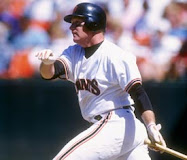
(Photo courtesy of Crazy Crabbers.com)

In 2009, John Bowker burst onto the Giants fan scene like no other. He became pretty much the "favorite son" of Giants fans and bloggers everywhere, who came up with terms like "Bowkermania!" and "Free Bowker!"

Of course, there was some interest in the free-swinging lefty in 2008, who got off to a torrid start with the Giants where he hit eight home runs in the first three months of play, and posted a slash of .325/.373/.584 in the month of June. However, a down July sent him to the bench, and for the remainder of the year in 2008, Bowker was pretty much an afterthought in the Giants organization.

But 2009 was the real jump off for Bowker, and it all started with that 2009 season of his in the Pacific Coast League.

Bowker put up incredible numbers in the PCL as a 25 year old, posting a slash of .342/.451/.596 with an OPS of 1.047 in 450 plate appearances with the Fresno Grizzlies. Yes, the 21 home runs were impressive, as was the OPS, but what really turned a lot of Giants fans' heads around (especially the stat heavy guys) was Bowker's suddenly honed approach at the plate.

Prior to 2009, Bowker's approach at the plate profiled as one of a free-swinging power hitter who struck out a good amount and didn't draw a lot of walks to boot. In 2007 in San Jose, he posted an OPS of .762 but only sported a meager BB/K ratio of 0.37. In 2008, his power numbers jumped in Connecticut despite the pitcher-friendly environments of the Eastern League, as he hit 22 home runs and posted an OPS of .886 in 587 plate appearances with the Defenders. Unfortunately, despite the jump in power, the approach at the plate didn't get much better, as he finished the year with a BB/K ratio of 0.40. While Bowker certainly had the potential to hit with power at the Big League level (and he flashed that in his short campaign in 2008), many people believed that his approach at the plate would prevent him from achieving consistent success as a Major League player.

In 2009 though, that all changed as his BB/K ratio suddenly spiked to 1.16. That's right. He improved his BB/K ratio by 76 points from Double-A Connecticut and 90 points from his brief stint with the Giants (his BB/K ratio was 0.26 in San Francisco). Bowker suddenly went from an outfielder with utility potential to starting potential, perhaps even All-Star potential.

Or so that's what all of us Giants fans wanted to believe.

In reality, we should have tempered the expectations.

As Grant Brisbee eloquently put it in this piece on the McCovey Chronicles, Bowker was such a beloved figure amongst Giants fans because he was the kind of player offensively in Fresno that was the polar opposite of what Giants fans were seeing on a daily basis in the outfield. Randy Winn had no patience at the plate and added minimal power to boot. Fred Lewis was a strikeout machine. Aaron Rowand couldn't lay off balls in the dirt to save his life. Eugenio Velez was Eugenio Velez. With his unbelievable numbers in Triple-A, Giants fans felt that if they could even get a modicum of that production at the Big League level, then he would be an upgrade over whatever the Giants had trotting out in the outfield in 2009.

Alas, he couldn't translate his impressive numbers as a Grizzly to the Major League club. In a short cup of coffee (73 plate appearances), Bowker put up a .194 average, .620 OPS and a BB/K ratio of 0.22 (actually worse than his 2008 call up). He looked less like the guy who was dominating PCL pitchers like Barry Bonds, and more like the guy in July of 2008 who didn't have a clue at the plate.

It didn't stop Giants fans like us though from believing in Bowkermania. Giants fans (including myself) pointed out a myriad of reasons why the skills didn't translate from Triple-A to the Major Leagues. He wasn't getting enough at-bats. The hitting philosophy under Carney Lansford didn't suit his style. The organization was putting too much pressure on Bowker to produce right away, and not enough on guys like Winn or Velez.

To be honest, the Giants did everything they could to give Bowker the job in 2010. They hired Hensely Meulens from Fresno as the Giants hitting coach, and they didn't bring back Winn. Furthermore, they made the competition between Bowker and Nate Schierholtz for the starting right field job in Spring Training, and after out-performing Nate in Spring Training, they handed the right field position to Bowker on Opening Day.

And still, Bowker couldn't produce. After a 90 plate appearance and .207/.254/.356 campaign as the Giants' right fielder, the Giants organization sent him down to Fresno and then included him in a trade package that eventually netted them lefty-specialist Javier Lopez from Pittsburgh. In the span of a year, Bowkermania in San Francisco was done, and two years later, Bowkermania was finished in Major League Baseball, as Bowker was released from the Phillies after last season to pursue a career in Japan (he signed with the Yomiuri Giants).

Bowker isn't the only example of Giants fans over-hoping for a prospect. Kevin Frandsen, Lance Niekro, Todd Linden, Jesse Foppert, Jerome Williams, Merkin Valdez, and Dante Powell are all examples of prospects Giants fans have had high hopes for, only to see them flail at the MLB level. After Bowker and the creation of this blog, Bowkermania taught me four things:


1.) Look at skills, not stats...and look at those skills at all levels, not just one.

Ron Shandler is a big proponent of this in his forecast. Though it is mostly referring to fantasy baseball purposes, the same rings true for prospects. You have to look at what his tools are and how they translate into the numbers, and not just the numbers themselves (or even the tools themselves, because as we know, some guys sport tremendous tools but can't back it up into good numbers). In addition, I would add onto this by saying that looking at all the "skill-related" numbers at all levels is equally important. Bowker didn't really flash any plate patience until he got to Fresno. His BB/K ratio and walk numbers were pedestrian at best from the Northwest League to the Eastern League. At the end of the day, one year of good plate patience is just that: one good year. Add that with the fact that he didn't show that at the Major League level, and Bowker pretty much proved to be the player we all thought he would be pre-2009: a free swinging lefty with some pop, but not a lot of discipline.

2.) Position is key.

If Bowker was a third baseman or catcher, perhaps the Giants would have had more patience with him. That being said, with a glut of outfielders such as Rowand, Mark Derosa, Nate Schierholtz, etc., Bowker didn't have much room for error. Add that with the mid-season signing of Pat Burrell and the writing was pretty much on the wall for Bowker. That is why, in my mind, position is such a key thing for prospects. It's the reason why a guy like Pablo Sandoval loses value if he moves from third to first base or if Tommy Joseph moves from catcher to first base. As first baseman, those guys not only struggle to compete with others at the position around the league, but they even pale in their own organization, as Brandon Belt is far superior to them defensively and perhaps offensively. Bowker was a corner outfielder whose lone "strength" was his bat, and when he didn't show that bat at the Big League level, he became expendable because there is usually a lot of depth in organizations when it comes to outfielders.

3.) Pay attention to trends in the leagues.

Brian Sabean said in an interview once that Triple-A pitching "wasn't very good." While he was referring to Buster Posey and he came off as condescending, Sabean has a point. Triple-A pitching isn't good. For the most part, Triple-A pitchers are journeyman who can't find a spot on the 25-man roster or prospects who have struggled at the Major League level and are taking some time for seasoning or to work on some things. Triple-A pitchers have some kind of flaw one way or the other, and one can't automatically believe that one's Triple-A numbers will automatically translate (even partially) to the Big League level. The California League is the same issue, as the environments greatly favor hitters, much like the Pacific Coast League. As for the Eastern League, the environments tend to favor pitchers, and one has to take some pitchers' numbers (mostly ERA for example) with a grain of salt. Hence, when it comes to evaluating prospects, one just can't look at one sample and say that's the recipe for success. There has to be a consistent showing of success from level to level.

4.) Age-related-to-league performance is huge.

In many ways, Bowker going to Fresno is lose-lose. He had 350 plate appearances in San Francisco the previous year. If he succeeded, then well, he was 25 and he had almost 3/4 of a season of experience at the Big League level. He is supposed to succeed. If he flops, then he probably wasn't that good of a prospect if he can't dominate Triple-A pitching at age 25. Now, if Bowker was 22 or 23 and putting up the numbers he was in 2009, that would be a different story. But he wasn't and as a result, Giants fans probably should have tempered their expectations. This isn't just specific to Bowker of course, and it should be applied to all prospects in any professional system. If a guy is younger than the competition and producing, then that's a good sign. If he's older than the competition, then it's a red flag. If he's repeating levels, that's also a red flag as well, especially if he has good numbers. Age-related-to-league is probably one of the most important things any baseball fan could look at when it comes to evaluating prospects. Bowker's older age and the fact that he was repeating Triple-A should have had more of us Giants fans on our toes.


As stated before, Bowker isn't the only example of a "prospect getting hype but not living up to it." Myriads of organizations can claim almost hundreds of players who failed to live up to the hype in the past decade alone. Sure, there are exceptions to the rule. There are guys like Bowker who take a while to develop and then burst onto the scene at the Major League level. Mike Morse and Jose Bautista are examples of players who took longer than expected in the Minors, showed inconsistency at the Minor and Major League level and have now become everyday players. That being said, those are the exceptions, not the standards.

Did Bowker have a chance to be that exception? Of course, he did. I still feel he had a very good power tool set for a corner outfielder. But as with most prospects in his situation, the chips were stacked against him and as it is most of the time with prospects, the odds won out. For every Buster Posey, there's four to five Bowkers out there that don't live up to the "hype" generated by fans.

At least Giants fans (and myself) are better off now for understanding that the "hype machine" doesn't always strike gold with everyone.

Friday, November 12, 2010

Is Jesus Guzman the Second-Coming of John Bowker?

If anything, there was probably one guy who didn't like the Giants winning the World Series this year. I'm not saying he wasn't happy for the guys or the organization, but rather, he was probably disappointed because their win probably put the lid in terms of him playing next year with the Giants.

That person was Jesus Guzman.

Could Guzman be a good player? I don't know. His minor league numbers (.885 and .886 OPS; 16 home runs and 18 home runs in 2009 and 2010 in Fresno) aren't extremely impressive, but they're solid and he did show improvement from 2009 to 2010 in the Pacific Coast League (his K/9 rate dropped from 18.3 to 15.1 percent and his BB/K ratio improved from 0.45 to 0.56). Of course, Guzman has no Major League numbers to fall back on (.250 average, .500 OPS in 20 plate appearances) and his defense isn't exactly heralded (he played five different positions last year, and the best one for him was DH). Despite this, Guzman still remains an interesting player who is still young enough (he's 26 years old) to have some kind of career at the big league level.

But then again, we said the same thing about John Bowker and Todd Linden.

The comparison between Bowker and Guzman is very interesting. Granted, Guzman broke into professional ball earlier than Bowker (Bowker played college ball at Long Beach State; while Guzman was playing ball in Venezuela at 17 years old), but they are pretty similar career-wise in terms of minor league numbers.

Both had big seasons in Double-A ball (Bowker posted an .886 OPS in Connecticut in 2007; Guzman had a .948 OPS in 2008 for Midland, the A's Double-A affiliate). Both had down initial campaigns in Triple-A (Bowker struggled in his brief time in Fresno in 2008, though that was probably affected by the fact that he played most of the year in the Big Leagues; Guzman struggled down the stretch in 2008 with Sacramento, posting only a .649 OPS in 65 plate appearances). And both rebounded to have solid seasons in Triple-A the following year (Bowker had a ridiculous 1.047 OPS, while Guzman posted a very commendable .885 OPS).

So is Guzman on that Bowker track? (e.g. a prolonged stint in the minors without ever having a solid chance to prove himself at the Major League level?) Most likely. When your team wins the World Series, you don't rebuild and take a waiver on guys like Guzman. You re-load with free agents or stick with the guys who got you there (and the latter is a very strong possibility if I know Brian Sabean).

That being said, I think Guzman has a bit more upside than Bowker simply because he has had a better history in terms of plate patience. Guzman has only posted a BB/K ratio under 0.45 once in his career (his 2008 in Sacramento). As for Bowker, sans his ridiculous 1.16 BB/K ratio in 2009, plate patience was always an issue for him (he never had a BB/K ratio above 0.40 at any level prior to 2009). Yes, Bowker showed more power in the minors (only 11 less home runs than Guzman in almost 1000 fewer at-bats), but I'll take a guy with better plate discipline any day. Don't get me wrong. I liked Bowker. I rooted for him to succeed with the Giants hard. But, unlike Bowker, I think a decent Major League career isn't a stretch for Guzman.

It just won't be with the Giants.

Wednesday, June 16, 2010

Bowker, Schierholtz, Ishikawa, Burriss: What Does the Future Hold for These Giants?

If you're a Giants fan, take a guess the average age of the position players currently on the active roster...

If you guessed 29.4 years old, then you are correct (and John Nash from "A Beautiful Mind"-esque in math as well...congrats).

That isn't exactly young, especially when you consider the fact that most of the guys that bring that average age under 30 sit on the bench. Case in point: last night, the only players in the lineup under 30 years of age were Pablo Sandoval and Buster Posey.

Now, this isn't exactly breaking ground. Giants fans have been used to Bruce Bochy's "Play the Vets At All Costs" mentality since 2007 when he first came on as manager. Some of the young guys have been solid under Bochy's tenure, and some haven't. That being said, there are some guys with solid potential, and some young guys that may just not be good enough for the big league level (ala Joe Borchard...he's tearing up Fresno, I know, but believe me, he is a Quad-A player).

John Bowker, Nate Schierholtz, Travis Ishikawa and Emmanuel Burriss are those players still with potential (whether you want to believe it or not...I'm saying it).

Of course, who knows if these four will get many opportunities this year. As a matter of fact, chances are, with the roster as veteran-stocked as it is, they probably won't get much, if any opportunities for regular playing time this year unless some injuries happen.

Yet, in terms of next season, these four arbitration-eligible players in 2012 should have some opportunities to play come Spring Training and I'll give you reasons why for each player.


John Bowker, outfielder, 26 years old.
Major League Stats: .303 average, .863 OPS in 552 games.
Major League Stats: .238 average, .678 OPS in 183 games.

What can I say about John Bowker? It's hard really. After being sent down to Fresno to make room for Pat Burrell, his 2010 season has been a bit of a disappointment. He tore up the Pacific Coast League last year, posting a .342 average, a 1.047 OPS and also hit 21 home runs in 450 plate appearances with the Grizzlies. Furthermore, he got off to a resounding start in Spring Training, hitting .312 with six home runs in 77 AB, which led him to getting the starting right fielder's position on Opening Day over Nate Schierholtz.

Unfortunately, the 2010 regular season has been anything but kind to Bowker. In 90 plate appearances this year, Bowker posted a .207 average, a .609 OPS and a .262 wOBA (his projected wOBA prior to the season was .350 according CHONE projections).To make matters worse, he didn't seem to transition the plate patience he showed in Fresno in 2009 to the big league level these first few months of Major League play. Bowker's 0.26 BB/K ratio (compounded by a 28 percent strikeout rate) is a far cry from the 1.16 BB/K ratio he sported with the Grizzlies (though, to look at it optimistically, it is better than the 0.22 ratio he had in 2009 at the Major League level).

However, despite the poor start, there is hope for Bowker.

First off, look at what he's doing in Fresno right now. In 10 games and 46 plate appearances with the Grizzlies, Bowker has hit four home runs and posted a batting average of .390 and an OPS of 1.166. Bowker is hitting the ball hard and hitting the ball with confidence, something you couldn't say he was doing in the Majors this year.

It is possible to think that Bowker will develop the confidence he needs in Fresno and will transition that to the Majors the next time he is called up. Then again, Giants fans thought that would happen this year (but Giants fans also thought he would get more of a chance as well).

Second, if you look at Bowker's plate discipline numbers, he has shown improvement, which is comforting. He has swung at less pitches outside the strike zone (22.5 percent, which is down 25.9 percent in 2009), and he is making better contact as well (his contact rate is up from 72.3 percent in 2009 to 78.7 percent this year).

The big problem for Bowker in the Majors? He is hitting more groundballs and he has struggled to find holes. His GB/FB ratio is abnormally high at 1.63 (he was under one the past two years in the Majors) and his BABIP is low at .241.

That being said, the numbers aren't as bad as they look. Despite only having a flyball rate of 31.1 percent this year, his HR/FB percentage is 15.8 percent (the highest it's been since he's been in the Majors). Additionally, his line drive percentage sits at 18 percent, an improvement from 2009 when it was 14 percent.

Prediction for Bowker in 2011

The outfield situation is very touchy for next year. Aubrey Huff will be a free agent, but considering how well he has played this year, it wouldn't be a surprise to see Brian Sabean re-up him for another year, which would hurt Bowker's chances of playing. Second, Thomas Neal, Roger Kieschnick and Darren Ford waiting on the horizon don't make things easier, especially considering how much is invested in them. Bowker certainly has the opportunity to break out as expected, especially if he can continue to gain confidence at the plate, which is what he needs after such a horrid start this year. However, if he can't produce at the Major League level soon, it won't be surprising to see the Giants cut him loose ala Fred Lewis-style.


Nate Schierholtz, outfielder, 26 years old.
Minor League Stats: .308 average, .871 OPS in 627 games.
Major League Stats: .281 average, .732 OPS in 230 games.

I admit, it has take me a while to come to terms with Schierholtz. I love him defensively and his numbers certainly back him up (career 20.9 UZR). Prior to 2010 though, I wasn't too big a fan of him offensively. He was an extremely free-swinger (he had O-Swing percentages of 34.7 and 34.9 percent in 2008 and 2009) and I didn't think he had the power (.133 ISO in 2009) to back up his lack of plate patience (0.28 BB/K ratio in 2009).

In 2010 though, Schierholtz has changed himself offensively. The power still isn't there (.107 ISO this year), but he has become much more disciplined at the plate. His O-Swing currently sits at 29.1 percent, not exactly great, but a great improvement considering it was never under 34 percent in his time in the Majors.

What sticks out the most for Schierholtz is his BB/K ratio and BB percentage, which have greatly improved. His BB/K ratio is currently 0.76 and his BB percentage is 9.4 percent. How has he improved these percentages from 2009? In addition to swinging less outside the strike zone, he has made better contact at the plate as well. In 2009, he only made contact 77.7 percent of the time. In 2010? That percentage is 84.6 percent, four points above the league average.

Now, Schierholtz doesn't hit the ball in the air, which is a bit deflating considering his ability to make contact. His GB/FB ratio sits at 1.61 this year and his line drive percentage is 18.1 percent. The line drive percentage is disappointing considering the past two years it was above 20 percent.

And, not only has Schierholtz dropped in terms of hitting flyballs this year (his FB rate sits at 31.4 percent), but he hasn't been very effective in making those flyballs count. His HR/FB percentage is three percent.

To put that HR/FB percentage in perspective, only Freddy Sanchez (who doesn't have a homer this year) has a lower HR/FB ratio of Giants hitters with 50 or more plate appearances.


Prediction for Schierholtz in 2011

Schierholtz deserves regular playing time and he should get it in 2011. With Mark Derosa's health a serious question, Schierholtz could have a shot to finally capture the job that probably should have been his this year. After all, he has done nothing to merit losing his job. His offensive numbers aren't eye-popping, but they aren't detrimental either (his wRC+ is 98, only two points below league average). However, when you add it along with his defensive value, it makes sense why Schierholtz has a WAR of 1.1 this year (which accumulates to $4.2 million dollars according to Fangraphs).


Travis Ishikawa, first baseman, 26 years old.
Minor League stats: .261 average, .808 OPS in 707 games.
Major League stats: .264 average, .739 OPS in 204 games.

Ishikawa has been up and down in his tenure with the Giants. Like Schierholtz, he has earned his keep on the Giants roster because of his defensive value. Last year, he led all defenders on the Giants with a 10.2 UZR. Furthermore, he also pelted nine home runs, which gave him a HR/FB percentage of 10.2 in 2009.

Unfortunately, he has tended to frustrate Giants fans more often than not the past three years as a Giant. Despite having a walk percentage of 8.7 and 8.3 percent in 2008 and 2009, he only had BB/K ratios of 0.33 and 0.34, respectively. Furthermore, his wOBA in 2009 (.313) was disappointing considering the promise he showed in 2008 with the Giants (when his wOBA was .337) and in Fresno (his wOBA was .445 with the Grizzlies in 2008).

Like many Giants hitters, Ishikawa swings a lot outside the strike zone (he has a career O-swing percentage of 27.9 percent). Unlike some Giants free-swingers, Ishikawa doesn't make contact enough to justify it. His career contact rate is 73.1 percent (the league average is usually around 80 percent).

This year, Ishikawa has shown improvement. His BB/K ratio is up to 0.50 and he has showed some power (.844 OPS; .367 wOBA) in his 32 plate appearances.

But as a Giants fan you have to realize that it's only 32 plate appearances. That is way too small a sample to come to any realistic projection. And the worst part? He probably won't get many more plate appearances anytime soon.

Prediction for Ishikawa in 2011

Out of the four guys listed, the future looks the most bleak for Ishikawa. He's great defensively, but he seems to be behind a lot of guys on this Giants roster. Barring an injury to Huff and someone else, Ishikawa is regulated to backup duty because he is out of minor league options. I wouldn't be surprised to see him designated for assignment either this year or next season, which is a shame because he certainly wasn't too bad in 2009.


Emmanuel Burriss, second base/shortstop, 26 years old.
Minor League Stats: .282 average, .679 OPS in 228 games.
Major League Stats: .262 average, .629 OPS in 156 games.

Burriss is probably the biggest wild card of the four. He is very interesting because of his situation alone.

In 2008, he was pretty much rushed to the big leagues because a.) Omar Vizquel was fighting age and ineffectiveness and b.) Brian Bocock was only other shortstop in their organization. So, Burriss was called up in 2008 despite being 23 years old and only having played as high as Advanced Single-A.

Surprisingly, Burriss didn't do too badly. In 95 games in 2008, Burriss tole 13 bases and hit .283 with an OBP of .357 and a BB/K ratio of 0.96. While he didn't show much power (.046 ISO) and his average was a little deceptive of his offensive success (.316 wOBA and 91 wRC+), the start in 2008 definitely was a step in the right direction for the Giants' 2006 first round draft pick.

Unfortunately, in 2009, despite a stellar spring training that earned him the starting second baseman position over Kevin Frandsen, Burriss struggled. While he still stole a decent amount of bases (11), many of his other offensive statistics fell drastically from 2008, including average (.238), OBP (.292), BB/K ratio (0.41), wOBA (.258) and wRC+ (52). Also, Burriss was inconsistent defensively, as evidenced by his UZR numbers in 2009 (minus-3.9 UZR/150 in 2009 at second base).

Since he was demoted to Fresno in 2009, not only has Burriss struggled to regain his 2008 form, but he also struggled with injury. He injured his foot shortly after being called down to the Grizzlies and missed most of the remainder of the 2009 season. When he arrived in Spring Training, he injured his foot early and was immediately put on the disabled list to start the season.

Though he is still on the disabled list, Burriss is already back in action, playing a few rehab games in San Jose before being called up to Fresno on June 14th.

Even if Burriss is able to come back healthy, this year may be a wash for him. The infield is already crowded with Juan Uribe, Freddy Sanchez, Edgar Renteria Matt Downs, and Ryan Rohlinger all vying for spots and playing time. In all likelihood, Burriss will probably spend the remainder of the year in Fresno, which isn't necessarily a bad thing considering he's only played in 31 games above Advanced Single-A prior to this season.

That being said, can Burriss still contribute? He will certainly have an opportunity next year. Renteria and Uribe will be free agents next season, so the starting shortstop position will definitely be up for grabs if those two aren't re-signed (though Uribe could be re-signed). And, if he can have a solid season in the Pacific Coast League, he may be able to convince the Giants brass that 2009 was a sophomore slump rather than an indicator of things to come.

Burriss definitely has a lot to offer. He certainly is fast (24 stolen bases at the Major League level) and has defensive potential (he had a 15.7 UZR/150 in 2008 at second base). Furthermore, he can make contact really well at the plate, as evidenced by his career 87.5 percent contact rate.

Unfortunately, Burriss' defensive inconsistencies (his career UZR/150 at shortstop is minus-17.7) as well as his questionable plate discipline in 2009 (28.5 O-Swing percentage) and lack of power in the Majors (career 0.38 ISO) and minors (career 0.65 ISO) don't exactly make Giants fans feel confident that he can be a long-lasting solution at the Major League level. Also, with higher end infield prospects Brandon Crawford, Conor Gillaspie, Nick Noonan, and Ehire Adrianza waiting on the horizon, Burriss may not get long to show what he can offer at a starting infielder position.

Prediction for Burriss in 2011

If Burriss is healthy (and that's a big "if"), then it isn't impossible to think that he can nab the starting shortstop position if Renteria and Uribe leave town. The potential is there, and I think Burriss is enough of a fan favorite that Giants fans could rally behind. His ability to make contact is promising, and with the relative lack of speed on this roster, Burriss offers a much needed quality.

Of course, Burriss needs to polish up his game on both ends. He has the ability to be a very good defensive player, but it seems, according to UZR, that he may be a tad overrated. Also, while he has an ability to make contact consistently, swinging outside the strike zone as much as he did last season certainly isn't going to help his cause.

He could go any way, and that's what makes him so interesting, and so hard to predict. Let's hope Burriss can improve in Fresno this year, and in 2011, be the player Giants fans and management hoped he would develop into after he made a splash in 2008.

Friday, May 14, 2010

Aaron Rowand No Longer A Viable Leadoff Option for the Giants

Aaron Rowand may have a good year and capitalize on that "Great every three years" cycle a lot of Giants fans have bought into. Baseball fans saw it in 2004 in Chicago (.388 wOBA) and in 2007 in Philadelphia (.382 wOBA). Maybe Giants fans will see something similar from Rowand in 2010.

He's off to a good, though not great start so far. While Rowand has hit four home runs this year in 95 plate appearances, his batting average dipped to .266 after tonight's 8-2 win over the Houston Astros and his OBP fell to .310.

Rowand may still have a breakout year for the Giants. That being said, I don't believe that "big" season will happen with him batting leadoff for this team.

First off, Rowand isn't and never was a leadoff hitter. The Giants panicked and gave him the spot because, after Spring Training ended, they had no other reasonable options at leadoff. As Giants fans, we could live with Rowand batting first simply because nobody else looked better in comparison. (Seriously, Edgar Renteria and his .307 OBP in 2009 was perhaps the second best option to bat leadoff on Opening Day).

However, this isn't Opening Day anymore. The Giants have just finished game 26 of the season. Is it the midway point? No, but it certainly has been long enough to tell what has been working and what hasn't this year for the Giants.

Rowand certainly fits in the latter category.

First off, leadoff hitters need to have one of two things in order to be effective:

1.) Tremendous speed or base stealing ability.
2.) A high propensity to draw walks or get on-base.

In terms of point number one, speed can make up for a hitter's poor plate discipline. Look at Willy Taveras, who has a career OBP of .320 and a career walk percentage of 5.1 percent. Why did he bat leadoff for every team he played for in his career until this season? Because Taveras stole over 30 bases from 2005-2008, and 25 bases in 2009 (and to put it in perspective, he had a .275 OBP for the Reds in 2009).

Rowand doesn't have that speed. Rowand has only 60 stolen bases in his career. Taveras had 68 stolen bases in 2008 ALONE.

So, if Rowand can't steal bases, he must be a good on-base guy, right? A "milk the pitcher and draw some walks" guy in the mold of Kosuke Fukudome?

Not exactly either.

Rowand has a career average walk percentage of 5.7 percent. This season, he has been below his career average, as evidenced by his 3.2 percent walk percentage so far in 2010. Now, while his strikeout rate is 17.8 percent, the first time it has been under 20 percent since 2007, his BB/K ratio is still far from impressive at 0.19. Rowand's BB/K ratios the past two years in San Francisco haven't been much better either, as it was 0.24 last year and 0.35 in 2008 (the league average is usually around 0.50).

Also, the big knock on Rowand has been his plate discipline, and this year he has showed more of the same. After swinging at 32.7 percent of pitches outside the strike zone last season (seven points more than the league average), he has been even worse this year, swinging at 42.8 percent of pitches outside the strike zone.

Therefore, Rowand does not fit either category in terms of being a successful leadoff hitter. I know manager Bruce Bochy likes Rowand, and wants Rowand to get comfortable at a spot in the lineup, but leadoff simply isn't it. The more Rowand bats leadoff for the Giants, the less chance they have of making the playoffs. I do not think any Giants fan can argue with that sentiment.

So who do the Giants bat at leadoff?

I suggest two scenarios.

1.) Andres Torres (the main one).
2.) Nate Schierholtz (the secondary one).

In terms of the first option, it makes the most sense. Torres, who has stepped up this year and proved that 2009 wasn't a fluke so far, fits both categories of a successful leadoff hitter. He has good speed (he has four stolen bases this year) and he has shown a strong ability to draw walks and get on base as well (he has a 14.8 percent walk percentage, a 1.00 BB/K ratio and a .398 OBP). Furthermore, unlike Rowand, Torres has proven to be patient in the batter's box. While Torres has cut down on his swings at the plate this year (42.8 percent swing percentage), he has swung at less pitches outside the strike zone (20.6 percent).

Torres not only deserves to be batting leadoff whenever he is in the lineup, but he deserves more playing time as well. While taking playing time away from Rowand will be a challenge, if unrealistic (simply because of his contract and clout with Bochy and Sabean), he certainly deserves to be playing more games in left field, especially if Mark Derosa's wrist doesn't fully recover this year.

However, while I agree that he deserves to be playing MORE, I do not think he should be the permanent left fielder for the remainder of the year. If anything, some kind of platoon needs to be worked out with John Bowker in left field. Bowker still has potential. His walk rate is the highest its been in his Major League career (9.2 percent) and his HR/FB rate (15.4 percent) shows that he has power potential. BowkerwOBA and 27.6 percent strikeout percentage don't help), but with Derosa hurt, this should be an opportunity for Giants management to give Bowker more at-bats.

The best scenario, in my mind, would be for some kind of 60-40 split (or at the very least, 70-30) between Torres and Bowker in terms of playing time in left field with Derosa out and likely heading to the DL. If they don't do it now, they might as well just send Bowker to Fresno because he isn't going to get any other opportunities considering how crowded this outfield is.

If Bowker does get the opportunity of playing every few days (and that's a big IF), then Schierholtz (who has earned the starting right field job after a great start) should bat leadoff for the Giants when Bowker is starting in left.

Schierholtz isn't a typical leadoff hitter. Unlike Rowand though, he has shown improvement this year in drawing walks and being more patient at the plate. His walk percentage is 7.4 percent this year and his BB/K ratio is 0.70 (it was 0.28 last year and 0.38 in 2008). Additionally, he has been more efficient at the plate, swinging at less pitches outside the strikezone (26 percent, a nine point drop from the previous season), while making better contact to boot (85.9 percent contact rate; an 8.2 percent improvement from 2009).

Surprisingly, Schierholtz has some speed as well. This year he has stolen three bases in four attempts. (He had only three stolen bases all of last year!) It wouldn't be surprising to see Schierholtz to steal 10-15 bases this year if given regular playing time. Is that Taveras base stealing ability? No, but it's efficient, and certainly better than what Rowand has to offer.

The Giants solution at leadoff? Drop Rowand in the lineup (six or seven would be a great fit), make Torres the leadoff when he's in the lineup, and when Bowker is replacing him in left field every few days or so, move Schierholtz up to the one spot.

It sounds easy enough, and there is a prime opportunity to instill this plan with Derosa going to be on the shelf.

The main question though is whether or not Bochy and Sabean will have the moxie to make the move. (Knowing Bochy and his history as Giants manager, my gut says no...unfortunately.)

Tuesday, April 27, 2010

Trying to Understand John Bowker, "MLB-Version"

I really, really like John Bowker. I admit that. I like him more than Nate Schierholtz (though nothing against Nate, it's like comparing Penelope Cruz and Salma Hayek; I just like Penelope and Bowker a little more), which is why I petitioned him for the starting right field position and supported manager Bruce Bochy's call on Opening Day.

Why do I like him? I'm not really sure. Maybe he's from Sacramento, and being a Sacramento-resident, I feel obligated to support my own. Maybe I like the power potential he showed when he burst on the scene in 2008.

However, despite my gravitation toward Bowker, I have to admit one thing: Bowker hasn't really impressed too much at the Major League level.

In 2008, Bowker put up solid numbers, hitting 10 home runs and driving in 43 RBI in 350 plate appearances with the Giants. His OBP (.300), OPS (.703) or wOBA (.307) weren't that impressive, but I think the 10 home runs gave some Giants fans hope that Bowker was on the cusp of being at least a solid, regularly-contributing player to the Giants roster in a couple of years.

One of the main beefs about Bowker at the time was his plate approach. In 2008 with the Giants, Bowker had a BB/K ratio of 0.26, which in all honesty is not very good. Thus, if Bowker was going to contribute at the next level, he needed to improve his eye at the plate and cut down the strikeouts or at the very least, up the walk numbers and ability to get on-base.

Surprisingly, in 2009 in Fresno, Bowker did that and more.

After never posting a BB/K ratio higher than 0.40 at any professional level prior to 2009, Bowker was incredible in Fresno. People talk about the home runs (21), the OPS (1.047) or the average (.342), but the most eye-popping statistic in my mind was Bowker's 1.16 BB/K ratio (an 86 point improvement from the previous season, which is equivalent to Robert Downey's career jump after 2005).

Everybody, including myself, was convinced. Bowker was set and ready for the Major League level.

However, he struggled in his callup in 2009, and looked far from comfortable in the batter's box for the Giants. In 73 plate appearances, Bowker hit .194, posted an OPS of .620 and sported a wOBA of .277. And, unlike 2008, he didn't add much power either. He had only six extra-base hits (including two home runs).

The worst part of it all for Bowker though happened to be his dip in his BB/K ratio. After putting up unbelievable numbers in 2009 in Fresno, he didn't seem to be any better from the 2008 version Giants fans saw in San Francisco. His BB/K ratio in 2009 with the Giants was 0.22 (compounded by a strikeout rate of 26.9 percent).

Then again though, us Bowker defenders tried not to fret too much. We pointed out to the small sample in the Major Leagues as reason to not completely jump ship on him. We pointed out that the large sample in Fresno was for real, and with Hensley Meulens (the Fresno hitting coach in 2009) taking over the Giants hitting coach position in 2010, Bowker was ready to break out.

Despite a solid Spring Training, Bowker continues to show more of the same.

In 45 plate appearances in 2010, Bowker is hitting .186 with a .525 OPS and a wOBA of .222. His BB/K ratio is almost laughable at 0.17 and his strikeout rate (27.9 percent) is almost six points higher than it was in 2008.

None of it makes sense. This was supposed to be Bowker's year. Everything was in place: the hitting coach, the starting gig, the "nothing to prove" factor in Fresno.

And yet, here we are again, with Bowker most likely heading down to Fresno once Freddy Sanchez returns off the Disabled List.

What is wrong with Bowker? What made him such a stud in 2009 in Triple-A? Why does he look like Albert Pujols in the Pacific Coast League, but in the Majors, he seems to swing at every breaking ball in the dirt?

At this point, I don't understand, and many Giants fans do not either. Yes, he is somewhat getting better. He swings at less pitches outside the strike zone (24.6 percent) in comparison to his first Major League stint in 2008 (when it was 32.3 percent). He has made better contact this year (76.7 percent) than last year (72.2) percent. He hasn't hit many flyballs (his FB percentage is 29.0 percent this year), but he makes those flyballs count (11.1 percent HR/FB ratio).

Bowker is getting there. He hasn't made the progress or had the luck we Giants fans hoped for this year, but Bowker is a better hitter now than he was in 2008. The numbers prove it.

However, with Bochy as manager, and average defensive skills, Bowker doesn't look like he has much time to prove to the Giants that he is the guy to be playing everyday for Orange and Black. Giants management and fans seem to be more in favor of other outfielders like Schierholtz and Torres, and in many ways, you can't blame them. Schierholtz is hitting well (.819 OPS, .370 wOBA, and 0.60 BB/K ratio) and Torres provides a ton of defensive value. Those are two things you can't necessarily say Bowker possesses at this moment.

As a Giants and Bowker fan, I hope he can gets his way out of this mess. I hope his BABIP (currently .233) rises and he can finally look better on paper for the Giants fans who constantly point to his average and other conventional stats (RBI!) as reasons why he is a bust.

Bowker is not a bust...yet. He just needs to catch some breaks.

Or at least that is what I'm telling myself now.

Saturday, February 6, 2010

Schierholtz the Man in Right for the Giants Now, but Don't Count Out Bowker

I expected it anyway, but now I'm making it official: I'm accepting the fact that Nate Schierholtz will be the starting right fielder for the San Francisco Giants on Opening Day. Yes, I have questioned Schierholtz's ability to play right field every day for the Giants, but for the most part I'm fine with the decision by manager Bruce Bochy. Randy Winn is gone, and Schierholtz is the best defensive and offensive replacement. He has no minor league options on his contract left either, and thus, deserves his shot to play every day at the Major League level.

However, should Schierholtz falter to start off the 2010 season, Giants fans should immediately be looking at one guy to replace him: John Bowker.

Now, I understand Bowker had a terrible 2009 with the Giants and that he cooled off in 2008 after putting up solid numbers to start off his Major League career. Furthermore, even though Bowker wasn't terrible defensively for the Giants in the outfield in 2009 (he had a 3.3 UZR in the outfield last season), he certainly can't compare with Schierholtz with the glove (he had a 5.1 UZR last season).

Offensively though, Bowker could provide more upside than Schierholtz next season. And, considering the team is in need of players to step up around Pablo Sandoval, that aspect of Bowker's game should be greatly considered by Bochy next season.

First off, if you look at the projections, Bowker surprisingly fares much better than Schierholtz in 2010. According to CHONE projections (which was deemed competitive in comparison to Bill James projections by some), Bowker is expected to do better in Schierholtz in nearly every category. CHONE projects him to hit more home runs (15 to Schierholtz's 11), more RBI (62 to 49), score more runs (57 to 50), draw more walks (43 to 19), have a higher OPS (.805 to .782), and accumulate more runs above average based on wOBA (8.3 to 3.8).

Now, I understand projections are only projections (after all, CHONE did expect Sandoval to hit under 20 home runs next season). That being said, I think there are a couple of factors that could make Bowker's projections a reality next season, should he be given a chance to play regularly.

1.) Hensley Meulens was named the Giants' hitting coach this off-season.

For those who don't know "Bam-Bam," he was the hitting coach in Fresno last season. Why is that such a big deal? Well, Bowker put up unbelievable stats at the plate last season in 104 games with the Grizzlies. Bowker hit .342 with 21 home runs, 83 RBI, and scored 82 runs, had a 1.047 OPS, a .447 wOBA (weighted on-base average) and accumulated 41.3 runs above average based on wOBA in 2009 at Triple-A.

Yet the biggest stats of importance in Bowker's case last year in Fresno? A 16.4 percent walk rate, a 17.5 strikeout rate and a 1.16 BB/K rate. He never had a BB/K rate over 0.40 at any level until last year in Fresno.

And who was the guy that helped Bowker become a more selective and better hitter at the dish (not to mention earn "Triple-A Player of the Year" honors)? That honor belongs to Meulens. To make things better, chances are he will continue to work with and help Bowker transition that Triple-A success to the Major Leagues, now that he's the Giants' hitting coach in 2010.

Granted, those numbers are at Triple-A, and if anybody remembers, Todd Linden hit 30 home runs and posted a 1.120 OPS in 2005 at the Triple-A level.

That being said, even in his best season at Triple-A in 2008, Schierholtz only posted a 0.41 BB/K ratio. Thus, though Schierholtz could hit for power at the Triple-A level (he hit 18 homers in 2008 and had an OPS of .958), his free-hacking approach certainly doesn't bode well for success at the MLB level, especially after 2009 where he posted a pedestrian 0.28 BB/K ratio and .702 OPS.

There is also one more reason why Bowker could prove to be a valuable asset to the Giants outfield in 2010 over Schierholtz:

2.) Bowker's HR/FB percentage

Now, Bowker's HR/FB (home run to flyball ratio) was nothing special at 9.1 percent, but it looks really good in comparison to Schierholtz, who had a HR/FB ratio of 6.2 percent in 2009.

To put it in perspective, Schierholtz had a lower HR/FB percentage than Eugenio Velez and Fred Lewis (that's right, Giants fans' favorite whipping boy).

What does this mean? It means that Bowker has a better potential to hit with more power than Schierholtz (as did Velez and Lewis in 2009), and with a team devoid of "power hitters" around Sandoval (unless you consider Bengie Molina and Aubrey Huff to be decent power hitters), the Giants need all the offensive production they can get. With Bowker, the Giants' lineup has a home-run potential. With Schierholtz, chances are they will just get groundballs (as evidenced by his 44.6 groundball percentage and 1.28 GB/FB ratio in 2009).

Now, I know everyone will say "that's just one season" in terms of comparing the HR/FB ratios between Bowker and Schierholtz. However, if you look at 2008, the numbers are even more in Bowker's favor. In 2008, Bowker had a 10.5 percent HR/FB percentage. Schierholtz? He only had a 6.3 percent HR/FB percentage.

Just to make it known, I'm not hoping for Schierholtz to fail as the Giants right fielder. There is a lot to like about Schierholtz: he's incredible defensively, and he's a gamer. The latter quality probably isn't so important (since Aaron Rowand is technically a "gamer" too), but the former definitely is. If there's anything Giants fans took for granted in 2009, it was Randy Winn's defense. AT&T Park's right field is a killer position to play, and Winn made it look easy (his 9.6 UZR and 16.5 fielding runs above average based on UZR proved that in 2009). Schierholtz not only is capable of handling the position as well as Winn, but he might do better because he has a better arm than Winn.

That being said, aside from his defense, I do feel Schierholtz is a limited player with the bat. He doesn't provide power and he doesn't have enough plate patience to make up for his lack of power. On the flip side, Bowker provides so much more upside with his bat, and with a new hitting coach for the Giants (one that knows Bowker's strengths and weaknesses inside and out) and a better opportunity for regular playing time in 2010, it isn't impossible think that Bowker can put up numbers closer to his 2009 in Fresno rather than his 2009 with the Giants.

Sure, Schierholtz is the fan-favorite for now, but if the Giants really want to improve their offense in 2010, Bowker may prove to be the better option overall. If Bowker has a solid Spring Training, don't be surprised to see Schierholtz feel the heat if he struggles out of the gate next season.

Tuesday, January 12, 2010

On the Fringe: Where Do Five San Francisco Giants Players Stand?

From Bleacher Report

With new additions Aubrey Huff and Mark DeRosa signed, and Freddy Sanchez and Juan Uribe re-signed this offseason by San Francisco Giants General Manager Brian Sabean, the Giants seem to be a brand new team offensively going into next year.

Granted, while these signings seem to blend into Sabean's unending trend of signing veterans that are perhaps on the decline of their careers, on paper, the acquisitions done by Sabean and his management team have to be considered an improvement (I guess).

That being said, these latest moves make things very interesting come this Spring Training for five players who will be on the fringe of making the 25-man roster, perhaps even the 40-man roster: Eugenio Velez, Fred Lewis, John Bowker, Travis Ishikawa and Andres Torres.


Case No. 1: Eugenio Velez. Position: LF, UTL


Eugenio Velez had a solid start after his call-up in late July. However, after being moved permanently to the leadoff position, and seeing playing time everyday, he effectively cooled off and put up rather mediocre stats.

Last season, Velez finished with five home runs, a .267 batting average, and a .708 OPS. While Velez did have 11 stolen bases, he was caught five times, not a good percentage for a base-stealer.

According to Velez's Bill James and CHONE projections for next season, the lanky 27-year-old from the Dominican Republic, most likely will not improve much upon his numbers from a season ago.

CHONE only projects a four point improvement in his OPS, and Bill James actually believes his OPS will drop seven points. And this is also considering that Velez's OPS is pretty awful to being with, especially for a guy expected to bat leadoff.

The only shining grace? Velez is expected to improve his BB/K ratio in both projections. In Bill James, he is expected to improve by 10 points, while he is expected to improve by five points according CHONE. Granted, at 0.29 last year, Velez really has nowhere to go but up.

As far as Velez's future with the Giants? It doesn't look good. DeRosa made things bad, but Huff makes things almost impossible for Velez to continue his playing career in San Francisco.

Prediction: If he has a great (and key word: GREAT) Spring Training, then maybe he could make the roster. However, unless DeRosa gets hurt or Huff falls off the face of the earth, Velez most likely will be gone by May at the latest.


Case No. 2: Fred Lewis. Position: LF


Fred Lewis' future was already in heavy doubt last season, when Nate Schierholtz's surprisingly good offensive numbers in May put him on the bench. Furthermore, he lost even more ground when Velez put up his hot streak in late July and early August.

That being said, Lewis seems to be one of their best outfield options mainly for one reason: his OBP.

The Giants ranked last in OBP last year, and according to Jack Moore of Fangraphs, Lewis may be the Giants' best option when it comes to offense. Lewis had a .348 OBP last year, and according to Bill James and CHONE projections, he is expected to put up a .351 and .344 OBP, respectively.

Couple that with increases in his stolen bases (BJ projects him to steal 13 bases, CHONE projects 11, both projections up from the eight he had last year) and home runs (BJ and CHONE have him at seven and eight, respectively) and Lewis seems to be an enticing option.

However, the Huff signing definitely seems to put a wrench in Lewis' future. With Huff most likely playing first base (unless Bud Selig decides to add the DH in the National League), DeRosa probably will get bumped into left field.

That leaves a unique backup situation in Left Field among Lewis, Velez, John Bowker and Andres Torres. Bowker most likely will go to Triple-A to start the season, and Torres may be better utilized in Center as a backup to Rowand. Thus, the battle is between Velez and Lewis.

If you go by last year, Velez probably will gain more favor by some fans because of his spectacular couple of weeks when he was on fire. That being said, if you are a more knowledgeable fan, Lewis should be the go-to guy because of his consistency.

He wasn't awful, but he wasn't fantastic by any measure. The main question is which aspect is manager Bruce Bochy more impressed with: Velez's brief, spectacular play? Or Lewis' slightly above average consistency?

Prediction: Lewis most likely will get the boot unless he has a great Spring Training. Unlike Velez, there probably is actually a decent market for Lewis (because of his plate patience and decent speed), and it wouldn't be surprising to see the Giants get some return on Lewis by or right before the end of Spring Training.

Whatever happens, seeing Lewis in a Giants uniform by Opening Day isn't a strong possibility.


Case No. 3: John Bowker. Position: OF, 1B


Bowker is coming off a pretty lousy stint last season at the Major League level. He hit .194, posted a .620 OPS and a 0.22 BB/K ratio in 31 games last year with the Giants. However, Bowker is coming off an impressive campaign in Fresno last season where he hit .342, with 21 home runs, and posted a 1.047 OPS and 1.16 BB/K ratio. Basically. Bowker was the best player in the Giants Triple-A team, and he did this all in 104 games as well.

Therefore, that begs Giants fans to ask this question: is Bowker another Todd Linden, a guy who can hit 30 home runs in Triple-A, but do jack at the Major League level? Or is he a player that just needs the right opportunity to show what he can do?

Bowker has shown some success with the Giants. In 2008, he got off to a hot start and hit 10 home runs in a 111 games. That being said, he has really struggled in terms of plate patience. While his BB/K numbers were incredible last year in Fresno, they still were mediocre in 2008 at 0.26.

There is no question Bowker has some pop with the bat. In addition, there is no question that Bowker really doesn't have much else to prove at the Minor League level. However, the question is will he get a shot next year? Or will he continue to only be able to knock Triple-A pitching out of the park. He can play all three outfield positions (though left is really his only position), not to mention first base, but with all those positions already filled to the brim, Bowker might not get the opportunity unless somebody get injured.

Prediction: Bowker could get a shot, but only if somebody ahead of him such as Huff or Derosa fails miserably first. At that point, the season will be already lost, so who knows what could happen to Bowker.


Case No. 4: Travis Ishikawa. Position: 1B


Ishikawa is screwed. Plain and simple. With the Derosa signing, there was already widespread thought that Pablo Sandoval was going to move to first base to allow room for Derosa to play third. Now with Huff on the team, Sandoval will not only play third, but he most likely will play backup at first when Huff needs a spell.

The only role it seems Ishikawa will have on the Giants will be in terms of a defensive replacement. That is quite a shame considering the progress Ishikawa made as a Giant last year.

Last year, despite a putrid start and awful road numbers, he put up nine home runs, and a .715 OPS in 120 games last year in San Francisco. And if that isn't enough, his projections are pretty generous. Bill James projects him to hit 13 home runs, drive in 56 RBI, post a .772 RBI and improve his BB/K ratio to 0.44 (10 points). CHONE projects similar home run numbers (13) and RBI totals (50) and also projects him to make a massive jump in his OPS (.762), though not so much in terms of his BB/K ratio (only 0.35, a one point improvement).

I know Ishikawa is going to be a high strikeout guy. And, though he improved throughout the course of his year, he probably won't ever be a high walk guy either. That being said, Ishikawa's power most likely will improve (mainly because he can't put up putrid road numbers again like he did last year) and you can't really put up a true number of how valuable he is defensively.

Too bad Bochy doesn't know that.

Prediction: Huff's signing almost guarantees Ishikawa starting out in Triple-A Fresno. Only if Huff and Derosa falter simultaneously will Ishikawa get a serious shot at the starting job in 2010, and that probably won't come until mid-season. I mean, Bochy hit Molina in the cleanup despite his sub. 300 OBP.


Case No. 5: Andres Torres. Position: OF


Torres was an incredible surprise last year for the Giants. Despite not playing at the Major League level since 2005, Torres put up a .876 OPS, and stole six bases (and only got caught once). Furthermore, he hit .270 and six home runs in only 75 games, and a 170 plate appearances. This was a guy that had only one career home run at the Major League level prior to 2009.

So, it's safe to say, 2009 was a bit of a breakout season for the tiny, speedy Torres.

However, the question is whether or not he can do it again?

So far, the projections aren't optimistic that he will be able to build on his surprising 2009 season. First off, he's not exactly young (he'll be 32 next season) and he has such a small sample at the Major League level prior to 2009. Bill James predicts that he will have drops in batting average, OBP, and OPS (from. 270 to .264, .343 to .330, and .876 to .731, respectively). CHONE is even more pessimistic. They expect a 22 point dip in average (to .248), a 163 point drop in OPS (.713) and nearly double the amount of strikeouts (from 45 to 87).

The only optimistic stats concerning Torres projections? Similar home run numbers from a year ago (both BJ and CHONE project him to hit six home runs) and an increase in his BB/K ratio (from 0.36 in 2009 to 0.39 and 0.37 in 2010 according to BJ and CHONE respectively).

Granted, the offense may not be Torres most endearing quality. Torres is an incredible defender that was made to cover the sparse outfield at AT&T Park. Furthermore, with six stolen bases and getting caught only once, Torres is not only a speedy base stealer, but he's an efficient one to boot, a quality that makes him a more enticing commodity than Velez, who isn't nearly as efficient.

Prediction: With an ability to play left and center, and with Aaron Rowand on thin ice after an atrocious year last season, Torres is a safe bet to make the squad in 2010. At the very least, he will fill a Dave Roberts "ala 2004 with the Boston Red Sox" role where he will be used as a late inning defensive reserve and pinch hitter for the Giants.