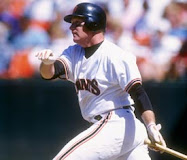
This is a post I originally wrote for "The Crazy Crabbers," A Giants-centric blog I occasionally contribute to. You can read the original post here. (Support Scott and his work; he's got a great thing going at TCC.)
The excitement surrounding Darren Ford's callup has been an interesting one. His speed has helped the Giants win games, and has made him a minor celebrity in San Francisco Giant fans twitter circles (type in #darrenfordissofast and you'll get a bunch of "Chuck Norris-esque" lines).
Furthermore, his speed and athleticism have also convinced a lot of Giants fans, bloggers, writers and talk show callers that he is worthy of some extended playing time on the Major League roster (e.g. beyond a pinch runner).
I would say that would be a mistake...for now.
To be honest, I am as big a fan of Ford as the next Giants fan. He has been one of the more interesting players in the Giants system since he was acquired in the Ray Durham trade in 2008. That being said, here are a few reasons why Ford should be sent back down to Fresno when Andres Torres is finally healthy and comes off the disabled list (which looks to be soon).
1.) The outfield is too crowded for Ford to get much playing time: When Torres and Mark Derosa come off the DL, the outfield will be logjammed with those two, Pat Burrell, Aaron Rowand, Nate Schierholtz, and Cody Ross. That's six outfielders competing for three spots. There's no way Ford can compete, simply because he doesn't have the pedigree those other outfielders have. Athletically, you could argue he may be the best of the bunch. But baseball is not just a game of athleticism, and that unfortunately leaves Ford as the odd man out here.
2.) Torres is the better option: Giants fans have complained about the Giants' "station-to-station" approach and I can admit, it can be frustrating to watch. With Torres returning though off the DL, the Giants will have that speed threat they have missed so dearly the past few weeks. Furthermore, Torres has proven himself at the Major League level, while Ford still has a long way to go (he only has 11 plate appearances in the Majors). For a team looking to repeat as NL West Division champions and perhaps World Series champions, the Giants need to go with the proven commodity and Torres is that, while Ford is not.
3.) Ford still has to prove himself and develop more in the minors: Ford was feasting on Pacific Coast League pitchers before his callup (he had 10 hits, 1 home run, 6 runs scored, 6 RBI, and 7 SB in 7 games and 33 plate appearances), but to be honest, that was such a small sample and he didn't exactly tear the Eastern League apart (.313 wOBA, 37 stolen bases, 0.37 BB/K ratio). The biggest problem of Ford's in the minors has been his strikeout problems as he has accumulated 665 strikeouts in 2,569 at-bats over seven seasons in the minors (which accumulates to a 25.9 strikeout percentage). That is not a good quality for Ford to have, especially considering he hasn't advanced above Double-A until this year (I'm not counting his callup to the Giants when they expanded their roster last year) and he is expected to be a leadoff hitter. Even though he has a decent walk rate in the minors (10.3 percent), it is still not high enough to make up for his high volume of strikeouts (0.46 BB/K ratio).
I think Ford could compete for a spot in the Giants lineup eventually. I just don't believe it's this year (and that's not a bad thing considering he's only 25 years old). Ford would benefit from a full season in the PCL, where he could continue to develop his plate approach and tools (base stealing and speed, especially), and gain confidence by playing every day. If he builds on the momentum from his hot start with the Grizzlies (he needs to excel in the PCL over a full course of the year) and hype he's received from Giants fans, he certainly could compete for a spot in the starting lineup next Spring when a couple of spots open up in the Giants outfield (Ross, Burrell and Derosa will all be free agents and I can guarantee at least two, probably all three, will not be re-signed by the Giants).
Showing posts with label Darren Ford. Show all posts
Showing posts with label Darren Ford. Show all posts
Sunday, May 8, 2011

Wednesday, April 20, 2011
Callup Profile: Darren Ford, Outfielder
With Andres Torres hitting the DL on April 10th, the Giants called up Darren Ford, the speedy outfielder who spent the last season in the Eastern League with Richmond and started off the year in the Pacific Coast League with Fresno. Ford had gotten off to a good start with the Grizzlies, as he was batting .323 with a .848 OPS in 33 plate appearances to start off the year. Additionally, he had scored six runs, had two doubles, a home run and seven stolen bases on seven attempts in his seven game start in Triple-A, so it's safe to say he was deserving of the callup.
In all reality though, Ford is mostly likely due for a cup of coffee callup with the Giants until Torres returns off the Disabled List. Though Ford offers a nice speed skill set for the Giants and can cover some ground in the outfield (he had a 2.44 RF/G last year with the Flying Squirrels), the Giants outfield is crowded already with Aaron Rowand, Nate Schierholtz, Pat Burrell, Mark Derosa and Cody Ross (who was just activated off the DL today with Brandon Belt being optioned to Fresno...more on this later). Furthermore, Ford probably needs a year of Triple-A under his belt before he can get some serious consideration for playing time in the Giants outfield. After a solid season in San Jose in 2009 where he hit .300, posted an .843 OPS and stole 35 bases (albeit he was old for the level at 23), he kind of cooled off in the Eastern League, as his average and OPS fell to .251 and .680, respectively. While he still showcased some base-stealing ability (he swiped 37 bases), Ford really wasn't considered a factor for the 25-man roster going into Spring Training this year.
Strengths
Weaknesses
Outlook for 2011
Ford is still a raw talent in the Fred Lewis-mold (And I liked Lewis). He has a lot of athleticism, but he doesn't exactly have a lot of power and his athleticism seems to carry him to success more often than not. That may work at lower levels such as A-ball, but when you get to higher levels of play, that doesn't seem to work quite as often. While his campaign in Richmond was a bit disappointing considering how well he hit in San Jose, it wasn't surprising or all that discouraging considering the jump to Double-A (and the Eastern League) has always been unkind to hitters (case in point, his BABIP dipped to .314 after he had a .379 BABIP in San Jose the year before).
Ford's ceiling as a prospect may not be very high, and not just this year (I don't expect him to play very much unless Torres' injury really persists), but in the long-run as well (but that's understandable considering he was an 18th round pick). That being said, considering speed is definitely a need for this Giants roster, Ford could be an interesting prospect who could make a run for some playing time in the outfield in the future, especially when the roster clears up after Ross, Burrell, Rowand and Derosa's contracts expire in the next couple of years.
In all reality though, Ford is mostly likely due for a cup of coffee callup with the Giants until Torres returns off the Disabled List. Though Ford offers a nice speed skill set for the Giants and can cover some ground in the outfield (he had a 2.44 RF/G last year with the Flying Squirrels), the Giants outfield is crowded already with Aaron Rowand, Nate Schierholtz, Pat Burrell, Mark Derosa and Cody Ross (who was just activated off the DL today with Brandon Belt being optioned to Fresno...more on this later). Furthermore, Ford probably needs a year of Triple-A under his belt before he can get some serious consideration for playing time in the Giants outfield. After a solid season in San Jose in 2009 where he hit .300, posted an .843 OPS and stole 35 bases (albeit he was old for the level at 23), he kind of cooled off in the Eastern League, as his average and OPS fell to .251 and .680, respectively. While he still showcased some base-stealing ability (he swiped 37 bases), Ford really wasn't considered a factor for the 25-man roster going into Spring Training this year.
Strengths
- Ford can steal bases, though he probably could be more efficient at it (he was caught stealing 27 times in 2009 and 2010). With Torres really the only base stealing threat, Ford offers a much-needed skill set to this Giants roster.
- Ford showcases decent plate patience. From 2007-2009, he posted walker percentages over 10 at every level he played at and in Richmond, his walk percentage was 7.6 percent. While his BB/K ratio dipped a bit (0.37) from his impressive 2009 (0.51), Ford always has shown a decent difference between his batting average and OBP at every level he's played at.
- With outfielders like Burrell and perhaps Huff (though he's probably going back to first when Brandon Belt eventually gets sent down to Fresno), there is definitely a need on the corners to cover ground, especially when Torres isn't in the lineup. While he's not on Torres' level, Ford has earned good reports as a solid outfielder who can cover ground at any outfield position. Considering AT&T's dimensions, his defensive ability and athleticism is definitely a plus.
Weaknesses
- While his walk numbers have been solid, he does strike out a lot for a leadoff guy. He struck out a 106 times in 2010 and 97 times in 2009. In 2008, in a combined stint in San Jose and Brevard County (he was in the Brewers' system before he was acquired by the Giants in the Ray Durham deal), he whiffed a 130 times. Yes, Ford is patient at the plate, but he needs to neutralize his strikeouts a bit, especially considering how his walk percentage dipped in the jump from A-plus ball to Double-A.
- Much like any leadoff hitter, Ford doesn't showcase much power. However, he doesn't get many extra base hits either, as his slugging percentage has only been over .400 once at any level he's played at in the minors (that was in 2009 when he slugged .465 in a hitter's park in San Jose). While his slap-hitting style isn't necessarily a bad thing, with his speed set, you wish he could total more bags with his hits.
Outlook for 2011
Ford is still a raw talent in the Fred Lewis-mold (And I liked Lewis). He has a lot of athleticism, but he doesn't exactly have a lot of power and his athleticism seems to carry him to success more often than not. That may work at lower levels such as A-ball, but when you get to higher levels of play, that doesn't seem to work quite as often. While his campaign in Richmond was a bit disappointing considering how well he hit in San Jose, it wasn't surprising or all that discouraging considering the jump to Double-A (and the Eastern League) has always been unkind to hitters (case in point, his BABIP dipped to .314 after he had a .379 BABIP in San Jose the year before).
Ford's ceiling as a prospect may not be very high, and not just this year (I don't expect him to play very much unless Torres' injury really persists), but in the long-run as well (but that's understandable considering he was an 18th round pick). That being said, considering speed is definitely a need for this Giants roster, Ford could be an interesting prospect who could make a run for some playing time in the outfield in the future, especially when the roster clears up after Ross, Burrell, Rowand and Derosa's contracts expire in the next couple of years.
Tuesday, May 25, 2010
Scarce Six: A Look at the African-American Players in the Giants Organization
I just realized this fact after I saw Emmanuel Burriss get transferred to the 60-day Disabled List on May 22 to make room for Santiago Casilla: the Giants haven't had one African-American player take the field for them this year. Burriss has been hurt and on the disabled list all season, and Fred Lewis, the only other African-American player on the 25-man active roster this Spring, was traded away to Toronto shortly after the season began.
In my mind, this is incredible, and may be the first year in a long time that the Giants have not had an African-American player take the field in a Giants uniform. I mean, this is a franchise that has housed great African-American players like Willie Mays, Monte Irvin, Hank Thompson, Willie McCovey, Bobby Bonds, Jeffrey Leonard, Kevin Mitchell, Ellis Burks, Reggie Sanders, Kenny Lofton (for a half-season anyways), Ray Durham, and of course, Barry Bonds.
Now, I don't think you can blame this one on the Giants organization or use the racism card on Bill Neukom or Brian Sabean (though I wish we could because it would get Sabean fired). The lack of African-American ballplayers on the Giants roster is simply a reality of the game nowadays. It's not just the Giants that lack African-American players, a lot of teams are. Last year, in a tweet, Bill Simmons joked that the Red Sox "had more Jewish guys on their team than African-Americans." Hence, anybody claiming the Giants as a "racist" organization may have a hard argument to make.
That being said, the organization isn't completely bare of talented African American players. Let's take a look at the African-American players in the Giants organization and how soon (or if) they will see playing time in a San Francisco Giants uniform.
Emmanuel Burriss, 2B/SS
Stats this season: None (Has been on Disabled List all year due to a foot injury).
Burriss has plenty of experience on this Giants team and may be the only African-American player in the Giants organization that could play for the Giants this year. Burriss is coming off a foot injury this Spring, which is disheartening mainly because the strongest aspect of his game is his speed (he stole 11 bases last year in 61 games). Burriss doesn't have much power (.046 and .030 ISO the past two seasons), but he had a very strong BB/K ratio in 2008 (0.96) and he has a strong propensity to make contact at the plate (career 87.6 percent contact rate in the Majors). Burriss isn't a bad defender, but his UZR suggests that he may not be as good as advertised (minus-17.7 UZR/150 at shortstop in 2008; minus-3.9 UZR/150 at second base last year).
The biggest roadblock to Burriss' path in the Majors this year (other than his injury) may be the crowded Giants infield. With Juan Uribe, Freddy Sanchez, Edgar Renteria, and Matt Downs all vying for playing position at second base and shortstop, there just may not be any room for Burriss at the Major League level this season. In all likelihood, when he comes back, Burris will be playing most (if not all) of the year in Fresno, which isn't necessarily a bad thing considering he's only played 21 total games above the Advanced Single-A level.
Darren Ford, OF
Stats this season: .247 average, .319 OBP, .673 OPS, 19 R, 14 SB in 38 games in Richmond (Double-A).
Darren Ford turned some heads after a strong year in San Jose in 2009 (.384 wOBA, 81 runs scored, 35 stolen bases) and a surprising Spring Training (11 hits, 11 runs scored in 22 at-bats). While Ford did not make the active, 25-man roster (tough to justify that one when the highest level he played before Spring Training was Advanced Single-A), it was safe to say that Ford earned his spot on the Giants' 40-man roster after Spring Training ended.
So far in 2010, the results have been mixed for Ford. While he has stolen 14 bases, Ford hasn't hit particularly well in the Eastern League for the Flying Squirrels. Granted, this isn't necessarily too big a deal (the Eastern League is known to be a pitcher's league), but the 23.3 percent strikeout percentage and 9.1 walk percentage (he also sports a 0.42 BB/K ratio; almost a ten point dip from 2009) certainly don't make you as a Giants fan feel particularly hopeful that he will get a callup anytime soon.
Ford's speed definitely is attractive, especially considering the Giants' only legitimate stolen base threat is Andres Torres at this point. However, unless he's able to really turn it around, it's safe to say that the soonest Ford will be up with the Giants will be in 2011.
Thomas Neal, OF
Stats this season: .263 average, .332 OBP, .706 OPS, 3 HR, 23 RBI, 15 R, 5 SB in 44 games in Richmond (Double-A).
The hype around Thomas Neal amplified after a breakout year in San Jose last season. In the California League last year, Neal hit 22 HR, scored 102 runs and posted an OPS 1.010 and a wOBA .444 in 129 games. The performance had such an impact on the Giants brass and media that it earned him a non-roster invite to Spring Training, and a spot in the Top-Five of every Giants Prospect Rankings publication, blog or Web site.
However, this year has been anything but kind to Neal. After a disappointing, short Spring Training stint (Neal has only two hits in 11 at-bats), Neal hasn't necessarily been showing the power he displayed in the California League in 2009. This year, he has hit only three home runs and his slugging percentage sits at .374 (his slugging hasn't been under .444 since his first stint in the Northwest League).
The biggest concern with Neal though has to be his plate patience, which has been a bit questionable this season. After posting walk percentages over 9.5 percent the last three years, Neal currently has a walk percentage of 7.1 percent. This has affected his BB/K ratio, which currently sits at 0.37 (last year in San Jose it was 0.66).
Neal eventually is going to see more balls drop for hits. That's just the reality of the game and playing in the Eastern League. However, he has to improve his plate patience if he wants to live up to that billing of being a Top-Five prospect in the Giants organization.
Wendell Fairley, OF
Stats this season: .283 average, .367 OBP, .677 OPS, 15 RBI, 2 SB in 33 games in San Jose (Advanced Single-A).
Fairley was a first-round pick for the Giants in the 2007 first-year player draft. However, despite his draft position, many draft experts felt he was picked in the first round for cost reasons rather than his talent (the Giants had four first round picks in 2007).
Like many experts have predicted, Fairley has disappointed in his tenure in the Giants organization. While he posted a solid wOBA (.363) and BB/K ratio in (0.70) in Arizona Rookie League in 2008, he tumbled greatly in his first season in the South Atlantic League with the Greenjackets in 2009. Fairley went down in wOBA (.307), average (.243), stolen bases (only two stolen bases in six attempts), and BB/K ratio (0.35). And he did this with an improvement in BABIP (it jumped from .308 in 2008 to .338 in 2009).
However, things have turned around a little bit for Fairley in 2010. He started the year off well, holding his own in Spring Training as a non-roster invitee (he had two hits in five at-bats). He has transitioned that strong impression to a pretty solid year so far in San Jose. While he may not hit for power (his slugging is very underwhelming at .310), his ability to get on-base (.367 OBP) has some Giants fans and management people turning their heads a little bit.
Fairley could use some more refinement at the plate (his BB/K ratio is 0.33). That being said, considering how well he has played lately (he is hitting .324 in his last 10 games), it isn't out of the question to think that Fairley can continue to progress in the California League, and improve in his power and plate patience categories. If he is able to build upon this recent hot streak, it will definitely help him shed that "Tumbler" label he's been tagged with since 2008.
James Simmons, OF
Stats this season: .227 average, .299 OBP, .670 OPS, 7 SB, 9 RBI in 33 games in San Jose (Advanced Single-A).
I really don't know much about Simmons, and I don't think many Giants fans do either. Simmons was a 24th round draft pick in the 2005 MLB amateur draft and came out of Vernon Junior College in Texas. He hasn't been listed in any of the Giants Top Prospects lists, and he has only played in the Arizona Rookie League and the South Atlantic League in addition to the California League (where he currently plays).
What can I tell you about Simmons? He has some athleticism, and has the ability to steal a base. In 2008, he stole 25 bases for Augusta. Last year, he stole 15 bases while doing another tour of duty for the Greenjackets, but he only got caught once. This year, he has been similarly effective, with seven stolen bases on eight tries.
Despite that solid baserunning ability however, Simmons hasn't showed much with the bat. This year he is hitting .227 in San Jose, and the same has been true throughout his four years in the minors. He really jumped onto the scene in 2006, posting a .360 wOBA in Rookie League, but for the next two years he didn't have a wOBA over .292 at any level (he bounced around from Augusta to San Jose). In 2009, he picked it up and posted a wOBA of .343, but considering that it was his third go-around in Augusta, those numbers have to be taken with a grain of salt.
So, what kind of hopes can Giants fans have for a guy like Simmons? Not much, really. But then again, he was a 24th round draft pick, so it makes sense why you can't expect too much from the guy.
Evan Crawford, OF
Stats this season: .273 average, .355 OBP, .718 OPS, 22 R, 9 SB in 42 games in San Jose (Single-A).
Crawford was the Giants' ninth round pick in the 2009 first year player draft. For some reason, I have a lot of hope for this kid (he seems to have a good head on his shoulders). He played three seasons at Indiana University, and had a solid campaign in 2009, posting an .847 OPS and 27 stolen bases. Immediately after he was drafted, Crawford head to Arizona Rookie League, where he hit .273, scored 14 runs and stole nine bases in 16 games. When he was promoted Salem Keizer of the Northwest League, Crawford played even better, posting a .316 average and a wOBA of .381.
Now, it's tough to tell how good Crawford's Volcanoes campaign really was. While his wOBA was high, as was his OBP (.375), there were some concerning numbers. For starters, his BABIP was .412, which is extremely high and probably means he was extremely luck when it came to finding hits (which isn't sustainable, especially as you advance through the minor league system). Second, his BB/K ratio wasn't exactly impressive at 0.30. A high strikeout percentage (26.3 percent) most likely happened to be the culprit of his mediocre BB/K ratio, though he seems to be a player that strikes out a lot in general (he had a 22.7 percent strikeout rate in Arizona Rookie League).
This year, he began the year in Augusta and for the most part, it has been solid. He hasn't showed much power (.364 slugging), but that's been true since his college days (he hit only four home runs total at Indiana). Additionally, while he still shows a lot of speed (nine stolen bases) and he certainly can get on-base (.355 OBP), the strikeouts (37 in 165 at-bats, which is a 22.7 percent strikeout rate) still are a bit of a concern. To look at it on the bright side, at least Crawford is now getting better at drawing walks. This year, he has drawn 18 walks (9.8 percent walk percentage) and has a BB/K ratio of 0.49 (which is 19 points higher than his BB/K ratio in Salem-Keizer).
Crawford may be a year or two away from even sniffing the Giants roster. However, this kid certainly has under-the-radar talent, and considering his improvement in plate discipline this year with Greenjackets, I wouldn't be surprised if he continues to progress and surprise as a ballplayer as he moves up through the Giants farm system.
In my mind, this is incredible, and may be the first year in a long time that the Giants have not had an African-American player take the field in a Giants uniform. I mean, this is a franchise that has housed great African-American players like Willie Mays, Monte Irvin, Hank Thompson, Willie McCovey, Bobby Bonds, Jeffrey Leonard, Kevin Mitchell, Ellis Burks, Reggie Sanders, Kenny Lofton (for a half-season anyways), Ray Durham, and of course, Barry Bonds.
Now, I don't think you can blame this one on the Giants organization or use the racism card on Bill Neukom or Brian Sabean (though I wish we could because it would get Sabean fired). The lack of African-American ballplayers on the Giants roster is simply a reality of the game nowadays. It's not just the Giants that lack African-American players, a lot of teams are. Last year, in a tweet, Bill Simmons joked that the Red Sox "had more Jewish guys on their team than African-Americans." Hence, anybody claiming the Giants as a "racist" organization may have a hard argument to make.
That being said, the organization isn't completely bare of talented African American players. Let's take a look at the African-American players in the Giants organization and how soon (or if) they will see playing time in a San Francisco Giants uniform.
Emmanuel Burriss, 2B/SS
Stats this season: None (Has been on Disabled List all year due to a foot injury).
Burriss has plenty of experience on this Giants team and may be the only African-American player in the Giants organization that could play for the Giants this year. Burriss is coming off a foot injury this Spring, which is disheartening mainly because the strongest aspect of his game is his speed (he stole 11 bases last year in 61 games). Burriss doesn't have much power (.046 and .030 ISO the past two seasons), but he had a very strong BB/K ratio in 2008 (0.96) and he has a strong propensity to make contact at the plate (career 87.6 percent contact rate in the Majors). Burriss isn't a bad defender, but his UZR suggests that he may not be as good as advertised (minus-17.7 UZR/150 at shortstop in 2008; minus-3.9 UZR/150 at second base last year).
The biggest roadblock to Burriss' path in the Majors this year (other than his injury) may be the crowded Giants infield. With Juan Uribe, Freddy Sanchez, Edgar Renteria, and Matt Downs all vying for playing position at second base and shortstop, there just may not be any room for Burriss at the Major League level this season. In all likelihood, when he comes back, Burris will be playing most (if not all) of the year in Fresno, which isn't necessarily a bad thing considering he's only played 21 total games above the Advanced Single-A level.
Darren Ford, OF
Stats this season: .247 average, .319 OBP, .673 OPS, 19 R, 14 SB in 38 games in Richmond (Double-A).
Darren Ford turned some heads after a strong year in San Jose in 2009 (.384 wOBA, 81 runs scored, 35 stolen bases) and a surprising Spring Training (11 hits, 11 runs scored in 22 at-bats). While Ford did not make the active, 25-man roster (tough to justify that one when the highest level he played before Spring Training was Advanced Single-A), it was safe to say that Ford earned his spot on the Giants' 40-man roster after Spring Training ended.
So far in 2010, the results have been mixed for Ford. While he has stolen 14 bases, Ford hasn't hit particularly well in the Eastern League for the Flying Squirrels. Granted, this isn't necessarily too big a deal (the Eastern League is known to be a pitcher's league), but the 23.3 percent strikeout percentage and 9.1 walk percentage (he also sports a 0.42 BB/K ratio; almost a ten point dip from 2009) certainly don't make you as a Giants fan feel particularly hopeful that he will get a callup anytime soon.
Ford's speed definitely is attractive, especially considering the Giants' only legitimate stolen base threat is Andres Torres at this point. However, unless he's able to really turn it around, it's safe to say that the soonest Ford will be up with the Giants will be in 2011.
Thomas Neal, OF
Stats this season: .263 average, .332 OBP, .706 OPS, 3 HR, 23 RBI, 15 R, 5 SB in 44 games in Richmond (Double-A).
The hype around Thomas Neal amplified after a breakout year in San Jose last season. In the California League last year, Neal hit 22 HR, scored 102 runs and posted an OPS 1.010 and a wOBA .444 in 129 games. The performance had such an impact on the Giants brass and media that it earned him a non-roster invite to Spring Training, and a spot in the Top-Five of every Giants Prospect Rankings publication, blog or Web site.
However, this year has been anything but kind to Neal. After a disappointing, short Spring Training stint (Neal has only two hits in 11 at-bats), Neal hasn't necessarily been showing the power he displayed in the California League in 2009. This year, he has hit only three home runs and his slugging percentage sits at .374 (his slugging hasn't been under .444 since his first stint in the Northwest League).
The biggest concern with Neal though has to be his plate patience, which has been a bit questionable this season. After posting walk percentages over 9.5 percent the last three years, Neal currently has a walk percentage of 7.1 percent. This has affected his BB/K ratio, which currently sits at 0.37 (last year in San Jose it was 0.66).
Neal eventually is going to see more balls drop for hits. That's just the reality of the game and playing in the Eastern League. However, he has to improve his plate patience if he wants to live up to that billing of being a Top-Five prospect in the Giants organization.
Wendell Fairley, OF
Stats this season: .283 average, .367 OBP, .677 OPS, 15 RBI, 2 SB in 33 games in San Jose (Advanced Single-A).
Fairley was a first-round pick for the Giants in the 2007 first-year player draft. However, despite his draft position, many draft experts felt he was picked in the first round for cost reasons rather than his talent (the Giants had four first round picks in 2007).
Like many experts have predicted, Fairley has disappointed in his tenure in the Giants organization. While he posted a solid wOBA (.363) and BB/K ratio in (0.70) in Arizona Rookie League in 2008, he tumbled greatly in his first season in the South Atlantic League with the Greenjackets in 2009. Fairley went down in wOBA (.307), average (.243), stolen bases (only two stolen bases in six attempts), and BB/K ratio (0.35). And he did this with an improvement in BABIP (it jumped from .308 in 2008 to .338 in 2009).
However, things have turned around a little bit for Fairley in 2010. He started the year off well, holding his own in Spring Training as a non-roster invitee (he had two hits in five at-bats). He has transitioned that strong impression to a pretty solid year so far in San Jose. While he may not hit for power (his slugging is very underwhelming at .310), his ability to get on-base (.367 OBP) has some Giants fans and management people turning their heads a little bit.
Fairley could use some more refinement at the plate (his BB/K ratio is 0.33). That being said, considering how well he has played lately (he is hitting .324 in his last 10 games), it isn't out of the question to think that Fairley can continue to progress in the California League, and improve in his power and plate patience categories. If he is able to build upon this recent hot streak, it will definitely help him shed that "Tumbler" label he's been tagged with since 2008.
James Simmons, OF
Stats this season: .227 average, .299 OBP, .670 OPS, 7 SB, 9 RBI in 33 games in San Jose (Advanced Single-A).
I really don't know much about Simmons, and I don't think many Giants fans do either. Simmons was a 24th round draft pick in the 2005 MLB amateur draft and came out of Vernon Junior College in Texas. He hasn't been listed in any of the Giants Top Prospects lists, and he has only played in the Arizona Rookie League and the South Atlantic League in addition to the California League (where he currently plays).
What can I tell you about Simmons? He has some athleticism, and has the ability to steal a base. In 2008, he stole 25 bases for Augusta. Last year, he stole 15 bases while doing another tour of duty for the Greenjackets, but he only got caught once. This year, he has been similarly effective, with seven stolen bases on eight tries.
Despite that solid baserunning ability however, Simmons hasn't showed much with the bat. This year he is hitting .227 in San Jose, and the same has been true throughout his four years in the minors. He really jumped onto the scene in 2006, posting a .360 wOBA in Rookie League, but for the next two years he didn't have a wOBA over .292 at any level (he bounced around from Augusta to San Jose). In 2009, he picked it up and posted a wOBA of .343, but considering that it was his third go-around in Augusta, those numbers have to be taken with a grain of salt.
So, what kind of hopes can Giants fans have for a guy like Simmons? Not much, really. But then again, he was a 24th round draft pick, so it makes sense why you can't expect too much from the guy.
Evan Crawford, OF
Stats this season: .273 average, .355 OBP, .718 OPS, 22 R, 9 SB in 42 games in San Jose (Single-A).
Crawford was the Giants' ninth round pick in the 2009 first year player draft. For some reason, I have a lot of hope for this kid (he seems to have a good head on his shoulders). He played three seasons at Indiana University, and had a solid campaign in 2009, posting an .847 OPS and 27 stolen bases. Immediately after he was drafted, Crawford head to Arizona Rookie League, where he hit .273, scored 14 runs and stole nine bases in 16 games. When he was promoted Salem Keizer of the Northwest League, Crawford played even better, posting a .316 average and a wOBA of .381.
Now, it's tough to tell how good Crawford's Volcanoes campaign really was. While his wOBA was high, as was his OBP (.375), there were some concerning numbers. For starters, his BABIP was .412, which is extremely high and probably means he was extremely luck when it came to finding hits (which isn't sustainable, especially as you advance through the minor league system). Second, his BB/K ratio wasn't exactly impressive at 0.30. A high strikeout percentage (26.3 percent) most likely happened to be the culprit of his mediocre BB/K ratio, though he seems to be a player that strikes out a lot in general (he had a 22.7 percent strikeout rate in Arizona Rookie League).
This year, he began the year in Augusta and for the most part, it has been solid. He hasn't showed much power (.364 slugging), but that's been true since his college days (he hit only four home runs total at Indiana). Additionally, while he still shows a lot of speed (nine stolen bases) and he certainly can get on-base (.355 OBP), the strikeouts (37 in 165 at-bats, which is a 22.7 percent strikeout rate) still are a bit of a concern. To look at it on the bright side, at least Crawford is now getting better at drawing walks. This year, he has drawn 18 walks (9.8 percent walk percentage) and has a BB/K ratio of 0.49 (which is 19 points higher than his BB/K ratio in Salem-Keizer).
Crawford may be a year or two away from even sniffing the Giants roster. However, this kid certainly has under-the-radar talent, and considering his improvement in plate discipline this year with Greenjackets, I wouldn't be surprised if he continues to progress and surprise as a ballplayer as he moves up through the Giants farm system.
Sunday, April 25, 2010
The Early Season Struggles of Thomas Neal in Richmond
Richmond is a team loaded with talent. Just look at the roster (especially offensively) from top to bottom, and there will be a lot of names that will jump out at you. Darren Ford, Conor Gillaspie, Nick Noonan, Brandon Crawford, Roger Kieschnick, Thomas Neal, etc. Most of the players on this Flying Squirrles roster tore it up in the California League for the San Jose Giants, arguably the best team in Minor League Baseball in 2009.
Well, how's it going for these former California League studs?
At this point, the results haven't been too hot.
Darren Ford is putting up solid average numbers (.286 average, .723 OPS), but he is tied for the team lead in strikeouts (15) and hasn't been that efficient on the base paths (only four stolen bases on seven tries). Gillaspie is showing some power (three home runs; .738 OPS), but defensively he continues to prove that third base is a bad fit (three errors). Crawford got off to a hot start, but has cooled dramatically (he is hitting .222 with a .661 OPS). Noonan continues to show his age (e.g. that he still is far from ready from the Major League level) and Kieschnick is proving to be a strikeout machine (15) without the homers (zero) or walks (three) to back it up.
The most startling start, however? That honor belongs, unfortunately, to Neal.
Neal on paper looks awful. His batting average is .203 and while his OBP isn't too awful (.311), his slugging numbers have been less than thrilling (.359 slugging, .670 OPS).
To put things into perspective, Neal posted a slugging percentage of .579 and an OPS of 1.010 in 2009 in Advanced Single-A. He hasn't posted an OPS below .800 since his first season in rookie ball, where he posted a .664 OPS in Arizona.
What gives?
In all honesty, it is tough to tell at this point. Despite, the average looking bad, Neal's plate patience has been solid for the most part. If you compare his BB/K ratio (0.57) so far to guys like Ford (0.13), Kieschnick (0.20) and Crawford (0.40), Neal does not look so bad. One of the big compliments about Neal's offensive ability was his improved plate patience in San Jose last year (he posted a BB/K ratio of 0.66). The same seems to be true this year. He still is drawing a good amount of walks despite the lofty strikeout totals, which is something you can't necessarily say of guys like Kieschnick and Ford.
What has really killed Neal so far this season has been the obvious categories. His average looks awful, as does his RBI totals (only six), and considering Gillaspie has hit more home runs in comparison (three to two), which was far from the case last year in San Jose (Neal hit 22 home runs; Gillaspie hit four), it is easy to see why a lot of Giants fans may be starting to panic about Neal's potential (especially with John Bowker continuing to underwhelm at the Major League level).
In my opinion? I think the lack of big-time power numbers early this season shouldn't be too big of a concern. Neal is still accumulating bases (his 23 TB is third-most on the team), and he is still drawing a good amount of walks, so overall, there should be no reason for Giants fans to panic. He just hasn't had a lot of things fall for him so far, which is bound to change as the season progresses. In my mind, high-strikeout, low-walk guys like Ford or Kieschnick are a much bigger worry to me than Neal at this point.
So what should Giants fans think about Neal? He is still a Top-5 prospect in the Giants system, despite this slow start and disappointing Spring Training. I think fans had illusions that he would be a guaranteed call up this season when I think that was unfair. He is still a year away, minimum, from reaching the big-leagues. I have felt that about him since the end of last year, despite the eye-popping numbers he put up in the California League.
There are a lot of things to worry about on this Richmond team (Is Gillaspie and Crawford going to reach their potential? Can Kieschnick's power come back?), but just keep this in mind: Neal is fine and will be fine as the season progresses.
Well, how's it going for these former California League studs?
At this point, the results haven't been too hot.
Darren Ford is putting up solid average numbers (.286 average, .723 OPS), but he is tied for the team lead in strikeouts (15) and hasn't been that efficient on the base paths (only four stolen bases on seven tries). Gillaspie is showing some power (three home runs; .738 OPS), but defensively he continues to prove that third base is a bad fit (three errors). Crawford got off to a hot start, but has cooled dramatically (he is hitting .222 with a .661 OPS). Noonan continues to show his age (e.g. that he still is far from ready from the Major League level) and Kieschnick is proving to be a strikeout machine (15) without the homers (zero) or walks (three) to back it up.
The most startling start, however? That honor belongs, unfortunately, to Neal.
Neal on paper looks awful. His batting average is .203 and while his OBP isn't too awful (.311), his slugging numbers have been less than thrilling (.359 slugging, .670 OPS).
To put things into perspective, Neal posted a slugging percentage of .579 and an OPS of 1.010 in 2009 in Advanced Single-A. He hasn't posted an OPS below .800 since his first season in rookie ball, where he posted a .664 OPS in Arizona.
What gives?
In all honesty, it is tough to tell at this point. Despite, the average looking bad, Neal's plate patience has been solid for the most part. If you compare his BB/K ratio (0.57) so far to guys like Ford (0.13), Kieschnick (0.20) and Crawford (0.40), Neal does not look so bad. One of the big compliments about Neal's offensive ability was his improved plate patience in San Jose last year (he posted a BB/K ratio of 0.66). The same seems to be true this year. He still is drawing a good amount of walks despite the lofty strikeout totals, which is something you can't necessarily say of guys like Kieschnick and Ford.
What has really killed Neal so far this season has been the obvious categories. His average looks awful, as does his RBI totals (only six), and considering Gillaspie has hit more home runs in comparison (three to two), which was far from the case last year in San Jose (Neal hit 22 home runs; Gillaspie hit four), it is easy to see why a lot of Giants fans may be starting to panic about Neal's potential (especially with John Bowker continuing to underwhelm at the Major League level).
In my opinion? I think the lack of big-time power numbers early this season shouldn't be too big of a concern. Neal is still accumulating bases (his 23 TB is third-most on the team), and he is still drawing a good amount of walks, so overall, there should be no reason for Giants fans to panic. He just hasn't had a lot of things fall for him so far, which is bound to change as the season progresses. In my mind, high-strikeout, low-walk guys like Ford or Kieschnick are a much bigger worry to me than Neal at this point.
So what should Giants fans think about Neal? He is still a Top-5 prospect in the Giants system, despite this slow start and disappointing Spring Training. I think fans had illusions that he would be a guaranteed call up this season when I think that was unfair. He is still a year away, minimum, from reaching the big-leagues. I have felt that about him since the end of last year, despite the eye-popping numbers he put up in the California League.
There are a lot of things to worry about on this Richmond team (Is Gillaspie and Crawford going to reach their potential? Can Kieschnick's power come back?), but just keep this in mind: Neal is fine and will be fine as the season progresses.
Tuesday, March 9, 2010
Peguero or Ford: Which CF Prospect Has a Brighter Future for the Giants?
The fact of the matter is this for Giants fans: Aaron Rowand is going to be the Giants center fielder on Opening Day, and he most likely is going to bat leadoff unless one of three things happen:
1.) Mark DeRosa gets hurt again this Spring Training and is unable to play on Opening Day, which forces manager Bruce Bochy to play either Eugenio Velez or Andres Torres in left field (who would be slotted in at leadoff because of their speed).
2.) Velez goes nuts this Spring Training (entirely possible) and Bochy somehow is convinced that despite his negative UZR at the position, Velez can start second base. So, Bochy plugs in Velez at second over Uribe (because Freddy Sanchez, the "$12 Million Man" will miss Opening Day) and consequently at leadoff despite his .308 OBP last season.
3.) Rowand gets hurt sometime during Spring Training and Torres, Rowand's backup, gets the nod on Opening Day. Because of Torres' speed, Bochy gives him the leadoff spot.
Overall, only one of the options I like, and even then, I don't like it all that much (I don't think it's very hard to guess which option it is). That being said, when talking about Rowand, a very important notion does come up concerning the center fielder:
Who do the Giants have in the farm system to replace him or succeed him?
Right now, there basically are two candidates:
Francisco Peguero and Darren Ford.
Both centerfielder prospects are on the 40-man roster heading into the 2010 season and are currently playing in Spring Training games down in Scottsdale with the Major League team at this moment. There is a lot of promise and hype surrounding the two speedy centerfielders, especially after their solid 2009 campaigns in the minor leagues.
Yet, as we know, two players can't play the same position. So, which prospect is better? Which prospect should Giants fans be expecting to start in center field when Rowand (and his ridiculous contract) finally leave San Francisco?
Let's take a more in-depth look at the two young outfielders.
Why Giants Fans Should Expect Big Things from Peguero:
Peguero, a Top 10 prospect in the Giants system according to some experts, is being touted as a "Pablo Sandoval Without the Power But More Speed"-esque hitter, and you know what? It makes a lot of sense. Peguero, who will be only 22 in June, is a heck of a hitter and he sure proved last season in Salem-Keizer and Augusta.
In 17 games with the Volcanoes last year, Peguero hit .394, and posted a .421 OBP, a .435 wOBA and an .886 OPS. Furthermore, he also stole seven bases and didn't get caught once. In Augusta, Peguero also performed admirably. In 58 games, he hit .340, and posted a .359 OBP, a .367 wOBA, and a .796 OPS (not bad considering he only had a .437 slugging percentage).
Peguero is an accomplished base stealer who has shown promise on the basepaths since his rookie season. In 2008, the then 20-year-old stole a combined 25 bases (10 in the Arizona Rookie League and 15 in Single-A Augusta) while only getting caught four times (an 86.2 percent success rate).
In addition to being a solid base stealer, Peguero is also a tough out at the plate. Last season in the Northwest League, pitchers were only able to strike Peguero out 12.7 percent of the time, and in Single-A, Peguero only struck out 16.7 percent of the time. While the numbers aren't extraordinary, they are an improvement from his rookie season. In 2008 in Arizona and Augusta, Peguero struck out 21.3 and 23.9 percent of the time, respectively. Thus, 2009 showed that Peguero made strides in terms of honing his plate discipline.
Peguero also proved to be a solid defender in 2009. In both levels, he averaged a 2.43 RF/G. His RF/G was 11 points higher than Ford's RF/G in San Jose in 2009 (and Peguero also made one less error and one more double play than Ford as well).
Why Peguero May Not Be the Answer for Giants Fans:
As good a hitter as Peguero is in terms of making contact, there are some serious plate discipline issues for the Dominican outfielder. Basically, Peguero can't draw a walk to save his life. In 328 plate appearances last season between Salem Keizer and Augusta, Peguero drew eight walks. (Eight! That's it!) His walk percentage ended up being 3.9 percent for the Volcanoes and 2.0 percent for the Greenjackets, and his BB/K ratios were 0.33 and 0.13 for the Volcanoes and Greenjackets, respectively.
It is understandable that Peguero may not be the best at taking a walk, and if Sandoval has shown Giants fans anything, that isn't necessarily a bad thing (the "Panda" illustrated that you can achieve Minor and Major League success despite low walk numbers). Yet Peguero doesn't really offer any power, unlike Sandoval, who at least showed a modicum of power in the minors (and a lot more in the Majors).
In 2009, Peguero had a .070 and .097 ISO in Salem Keizer and Augusta, respectively, and he has only had an ISO over .100 once in his minor league career (during his stint in the Arizona Rookie League where it was .124). Thus, without much power to compensate, Peguero needs to get on base to maximize his speed and his meager walk numbers certainly don't make bode well in terms of keeping a solid OBP as he rises through the farm system.
Another sketchy statistic concerning Peguero's 2009 were his high BABIP numbers. In Salem Keizer, Peguero posted a .444 BABIP. In Augusta, he posted a .396 BABIP. Chances are, as he begins the year in Double-A or higher in 2010, he won't be able to post BABIP numbers that high again. They simply are too high to sustain, especially while advancing through the minor leagues. Thus, the question is this: can Peguero continue to find gaps on balls he puts in play and if he can't (which is inevitable at some point) can he improve his walk numbers enough so he can continue to get on base despite the drop on BABIP?
It could happen, but after a stint this winter in the Dominican Winter League where he hit .284, Peguero did not show much progress in terms of plate patience. In 67 at-bats this winter, Peguero only drew three walks (with one being intentional).
Why Giants Fans Should Expect Big Things from Ford:
Darren Ford is a speed demon on the basepaths. Plain and simple.
In 2006, his first season in Single A, Ford stole 69 bases for the West Virginia Power (the Milwaukee Brewers' Single-A organization). In 2007, in a combined stint with West Virginia and Brevard County (the Brewers' Advanced Single-A organization) he stole 67 bases. In 2008, while playing for Brevard County and San Jose (he was traded to Giants in the Ray Durham deal), he stole 62 bases. And, last season, he stole 35 bases in 101 games for San Jose.
As you can see, Ford has some serious base-stealing potential, not a bad quality considering the Giants' stolen base leader, Randy Winn (who stole 16 bases in 2009) signed with the New York Yankees this off-season.
And yet, stealing bases may not be the only thing Ford does well. Last season, Ford showed that he may be a solid hitter in addition to being a solid baserunner.
In San Jose last season, Ford had a breakout party of sorts at the dish. In 441 plate appearances, Ford hit .300 with a .386 OBP, a .384 wOBA, and an .849 OPS. Furthermore, Ford scored 81 runs (the most he's had at any stint since his 2006 seasons in West Virginia) and added nine home runs, nine triples and 17 doubles to his offensive resume in 2009. He also continued his solid, patient approach at the plate, as he posted an 11.1 percent walk rate (he hasn't posted a walk rate underneath nine in his professional career) and a 0.51 BB/K ratio.
For fans who miss Rajai Davis, but still like what Fred Lewis has to offer to the Giants "free-swinging" offense, Ford may be a combo of both. He is a player that has the speed of Davis, but the plate patience of Lewis. He also proved to be solid defensively in 2009, as evidenced by his 2.32 RF/G.
Ford definitely has something to offer for Giants fans of all tastes.
Why Ford May Not Be the Answer for Giants Fans:
Ford killed in Advanced Single-A last year. That being said, he was also 23 at the time, and it was his fourth go-around in Advanced Single-A to boot. So in many ways, Ford was almost an old man beating up on the competition of sorts in 2009, so a lot of his stats (especially his hitting stats) may have to be taken with a grain of salt, especially considering he didn't post a wOBA over .317 in his three previous stints in Advanced Single-A.
Additionally, while his walk rates are promising, his strikeout rates aren't. Ford strikes out a lot, and considering it's only Single-A, that makes a lot of fans wonder how he will fare at the Major League level. Ford has only posted a strikeout rate under 25 percent once in his professional career (24.5 percent in 2007 with Brevard County). And even last year, his breakout year, he still posted a 25.5 percent strikeout rate, and actually posted the lowest BB/K ratio of his four stints in Advanced Single-A.
So how did Ford have such a coming out party? His BABIP greatly increased from his last three stints in Advanced Single-A.
In 2007 and 2008 in Brevard County, Ford posted a .288 and .301 BABIP, respectively. In 2008 in San Jose, his BABIP was .326.
Last year? It was .379, the highest BABIP he's had since 2007, where he had a .427 BABIP with West Virginia.
Thus, with an increase in BABIP, it is predictable that his offensive numbers would improve so dramatically. Yet, like I said about it being his fourth year in Advanced Single-A, Giants fans have to take that BABIP numbers with a grain of salt. The California League (the league San Jose plays in) is notorious for being a "hitter's league," and last year was no exception. A lot of players posted extraordinarily high offensive numbers (especially in BABIP) in their stints for California League teams, only to see their number dip once they advanced to the next level.
One case that doesn't bode well for fans of Ford? Just take a look at Brandon Crawford in 2009.
In San Jose, Crawford hit like a mad man, posting a .371 average, .445 OBP, .445 wOBA, and a 1.045 OPS. However, his BABIP also happened to be .493 (incredibly high). When he got promoted to Double-A later in the season, his BABIP fell to .334 and his stats feel accordingly. With the Connecticut Defenders, Crawford only hit .258 with a .294 OBP, .299 wOBA and a .659 OPS.
Does this mean a similar drop off will happen for Ford in 2010 as he advances to Double-A? Maybe, maybe not. Ford is a more disciplined hitter over his career in comparison to Crawford (Crawford only posted BB/K ratios of 0.31 and 0.20 in San Jose and Connecticut, respectively). So that bodes in Ford's favor.
However, while Ford's plate patience is promising, by no means should Giants fans think that Ford will automatically being transitioning his San Jose stats to Double-A and beyond in 2010.
The Verdict?
It's a tough one to call at this point. Right now, I would say it's a dead heat between Peguero and Ford in terms of being the "centerfielder of the future" for the Giants, and it will definitely be interesting keeping tabs on these two in Spring Training (go to AZGiants.com for the latest Spring Training bits on the two, as well as Giants Spring Training news in general).
So far, Peguero is better at making contact and hitting for higher average, but Ford is a more patient hitter and a better base stealer. How do you differentiate between the two? It really depends on which qualities you like more from a player as a baseball fan.
Right now, just because I like his Fred Lewis/Rajai Davis hybrid abilities, I am in the Ford camp. However, Peguero is definitely capable of swinging my vote should he be able to improve his walk numbers and keep up his high batting average in 2010.
1.) Mark DeRosa gets hurt again this Spring Training and is unable to play on Opening Day, which forces manager Bruce Bochy to play either Eugenio Velez or Andres Torres in left field (who would be slotted in at leadoff because of their speed).
2.) Velez goes nuts this Spring Training (entirely possible) and Bochy somehow is convinced that despite his negative UZR at the position, Velez can start second base. So, Bochy plugs in Velez at second over Uribe (because Freddy Sanchez, the "$12 Million Man" will miss Opening Day) and consequently at leadoff despite his .308 OBP last season.
3.) Rowand gets hurt sometime during Spring Training and Torres, Rowand's backup, gets the nod on Opening Day. Because of Torres' speed, Bochy gives him the leadoff spot.
Overall, only one of the options I like, and even then, I don't like it all that much (I don't think it's very hard to guess which option it is). That being said, when talking about Rowand, a very important notion does come up concerning the center fielder:
Who do the Giants have in the farm system to replace him or succeed him?
Right now, there basically are two candidates:
Francisco Peguero and Darren Ford.
Both centerfielder prospects are on the 40-man roster heading into the 2010 season and are currently playing in Spring Training games down in Scottsdale with the Major League team at this moment. There is a lot of promise and hype surrounding the two speedy centerfielders, especially after their solid 2009 campaigns in the minor leagues.
Yet, as we know, two players can't play the same position. So, which prospect is better? Which prospect should Giants fans be expecting to start in center field when Rowand (and his ridiculous contract) finally leave San Francisco?
Let's take a more in-depth look at the two young outfielders.
Why Giants Fans Should Expect Big Things from Peguero:
Peguero, a Top 10 prospect in the Giants system according to some experts, is being touted as a "Pablo Sandoval Without the Power But More Speed"-esque hitter, and you know what? It makes a lot of sense. Peguero, who will be only 22 in June, is a heck of a hitter and he sure proved last season in Salem-Keizer and Augusta.
In 17 games with the Volcanoes last year, Peguero hit .394, and posted a .421 OBP, a .435 wOBA and an .886 OPS. Furthermore, he also stole seven bases and didn't get caught once. In Augusta, Peguero also performed admirably. In 58 games, he hit .340, and posted a .359 OBP, a .367 wOBA, and a .796 OPS (not bad considering he only had a .437 slugging percentage).
Peguero is an accomplished base stealer who has shown promise on the basepaths since his rookie season. In 2008, the then 20-year-old stole a combined 25 bases (10 in the Arizona Rookie League and 15 in Single-A Augusta) while only getting caught four times (an 86.2 percent success rate).
In addition to being a solid base stealer, Peguero is also a tough out at the plate. Last season in the Northwest League, pitchers were only able to strike Peguero out 12.7 percent of the time, and in Single-A, Peguero only struck out 16.7 percent of the time. While the numbers aren't extraordinary, they are an improvement from his rookie season. In 2008 in Arizona and Augusta, Peguero struck out 21.3 and 23.9 percent of the time, respectively. Thus, 2009 showed that Peguero made strides in terms of honing his plate discipline.
Peguero also proved to be a solid defender in 2009. In both levels, he averaged a 2.43 RF/G. His RF/G was 11 points higher than Ford's RF/G in San Jose in 2009 (and Peguero also made one less error and one more double play than Ford as well).
Why Peguero May Not Be the Answer for Giants Fans:
As good a hitter as Peguero is in terms of making contact, there are some serious plate discipline issues for the Dominican outfielder. Basically, Peguero can't draw a walk to save his life. In 328 plate appearances last season between Salem Keizer and Augusta, Peguero drew eight walks. (Eight! That's it!) His walk percentage ended up being 3.9 percent for the Volcanoes and 2.0 percent for the Greenjackets, and his BB/K ratios were 0.33 and 0.13 for the Volcanoes and Greenjackets, respectively.
It is understandable that Peguero may not be the best at taking a walk, and if Sandoval has shown Giants fans anything, that isn't necessarily a bad thing (the "Panda" illustrated that you can achieve Minor and Major League success despite low walk numbers). Yet Peguero doesn't really offer any power, unlike Sandoval, who at least showed a modicum of power in the minors (and a lot more in the Majors).
In 2009, Peguero had a .070 and .097 ISO in Salem Keizer and Augusta, respectively, and he has only had an ISO over .100 once in his minor league career (during his stint in the Arizona Rookie League where it was .124). Thus, without much power to compensate, Peguero needs to get on base to maximize his speed and his meager walk numbers certainly don't make bode well in terms of keeping a solid OBP as he rises through the farm system.
Another sketchy statistic concerning Peguero's 2009 were his high BABIP numbers. In Salem Keizer, Peguero posted a .444 BABIP. In Augusta, he posted a .396 BABIP. Chances are, as he begins the year in Double-A or higher in 2010, he won't be able to post BABIP numbers that high again. They simply are too high to sustain, especially while advancing through the minor leagues. Thus, the question is this: can Peguero continue to find gaps on balls he puts in play and if he can't (which is inevitable at some point) can he improve his walk numbers enough so he can continue to get on base despite the drop on BABIP?
It could happen, but after a stint this winter in the Dominican Winter League where he hit .284, Peguero did not show much progress in terms of plate patience. In 67 at-bats this winter, Peguero only drew three walks (with one being intentional).
Why Giants Fans Should Expect Big Things from Ford:
Darren Ford is a speed demon on the basepaths. Plain and simple.
In 2006, his first season in Single A, Ford stole 69 bases for the West Virginia Power (the Milwaukee Brewers' Single-A organization). In 2007, in a combined stint with West Virginia and Brevard County (the Brewers' Advanced Single-A organization) he stole 67 bases. In 2008, while playing for Brevard County and San Jose (he was traded to Giants in the Ray Durham deal), he stole 62 bases. And, last season, he stole 35 bases in 101 games for San Jose.
As you can see, Ford has some serious base-stealing potential, not a bad quality considering the Giants' stolen base leader, Randy Winn (who stole 16 bases in 2009) signed with the New York Yankees this off-season.
And yet, stealing bases may not be the only thing Ford does well. Last season, Ford showed that he may be a solid hitter in addition to being a solid baserunner.
In San Jose last season, Ford had a breakout party of sorts at the dish. In 441 plate appearances, Ford hit .300 with a .386 OBP, a .384 wOBA, and an .849 OPS. Furthermore, Ford scored 81 runs (the most he's had at any stint since his 2006 seasons in West Virginia) and added nine home runs, nine triples and 17 doubles to his offensive resume in 2009. He also continued his solid, patient approach at the plate, as he posted an 11.1 percent walk rate (he hasn't posted a walk rate underneath nine in his professional career) and a 0.51 BB/K ratio.
For fans who miss Rajai Davis, but still like what Fred Lewis has to offer to the Giants "free-swinging" offense, Ford may be a combo of both. He is a player that has the speed of Davis, but the plate patience of Lewis. He also proved to be solid defensively in 2009, as evidenced by his 2.32 RF/G.
Ford definitely has something to offer for Giants fans of all tastes.
Why Ford May Not Be the Answer for Giants Fans:
Ford killed in Advanced Single-A last year. That being said, he was also 23 at the time, and it was his fourth go-around in Advanced Single-A to boot. So in many ways, Ford was almost an old man beating up on the competition of sorts in 2009, so a lot of his stats (especially his hitting stats) may have to be taken with a grain of salt, especially considering he didn't post a wOBA over .317 in his three previous stints in Advanced Single-A.
Additionally, while his walk rates are promising, his strikeout rates aren't. Ford strikes out a lot, and considering it's only Single-A, that makes a lot of fans wonder how he will fare at the Major League level. Ford has only posted a strikeout rate under 25 percent once in his professional career (24.5 percent in 2007 with Brevard County). And even last year, his breakout year, he still posted a 25.5 percent strikeout rate, and actually posted the lowest BB/K ratio of his four stints in Advanced Single-A.
So how did Ford have such a coming out party? His BABIP greatly increased from his last three stints in Advanced Single-A.
In 2007 and 2008 in Brevard County, Ford posted a .288 and .301 BABIP, respectively. In 2008 in San Jose, his BABIP was .326.
Last year? It was .379, the highest BABIP he's had since 2007, where he had a .427 BABIP with West Virginia.
Thus, with an increase in BABIP, it is predictable that his offensive numbers would improve so dramatically. Yet, like I said about it being his fourth year in Advanced Single-A, Giants fans have to take that BABIP numbers with a grain of salt. The California League (the league San Jose plays in) is notorious for being a "hitter's league," and last year was no exception. A lot of players posted extraordinarily high offensive numbers (especially in BABIP) in their stints for California League teams, only to see their number dip once they advanced to the next level.
One case that doesn't bode well for fans of Ford? Just take a look at Brandon Crawford in 2009.
In San Jose, Crawford hit like a mad man, posting a .371 average, .445 OBP, .445 wOBA, and a 1.045 OPS. However, his BABIP also happened to be .493 (incredibly high). When he got promoted to Double-A later in the season, his BABIP fell to .334 and his stats feel accordingly. With the Connecticut Defenders, Crawford only hit .258 with a .294 OBP, .299 wOBA and a .659 OPS.
Does this mean a similar drop off will happen for Ford in 2010 as he advances to Double-A? Maybe, maybe not. Ford is a more disciplined hitter over his career in comparison to Crawford (Crawford only posted BB/K ratios of 0.31 and 0.20 in San Jose and Connecticut, respectively). So that bodes in Ford's favor.
However, while Ford's plate patience is promising, by no means should Giants fans think that Ford will automatically being transitioning his San Jose stats to Double-A and beyond in 2010.
The Verdict?
It's a tough one to call at this point. Right now, I would say it's a dead heat between Peguero and Ford in terms of being the "centerfielder of the future" for the Giants, and it will definitely be interesting keeping tabs on these two in Spring Training (go to AZGiants.com for the latest Spring Training bits on the two, as well as Giants Spring Training news in general).
So far, Peguero is better at making contact and hitting for higher average, but Ford is a more patient hitter and a better base stealer. How do you differentiate between the two? It really depends on which qualities you like more from a player as a baseball fan.
Right now, just because I like his Fred Lewis/Rajai Davis hybrid abilities, I am in the Ford camp. However, Peguero is definitely capable of swinging my vote should he be able to improve his walk numbers and keep up his high batting average in 2010.
Tuesday, February 9, 2010
Under the Radar? Three Giants Prospects To Pay Attention to in 2010
Madison Bumgarner. Buster Posey. Thomas Neal. Zach Wheeler. Dan Runzler. Waldis Joaquin.
When it comes to rookies/prospects currently on the forty-man roster breaking out next season (be it at the Major League or Minor League level), those six are on every Giants fan and baseball expert's list.
However, they shouldn't be the only ones people should be looking forward to this Spring.
Conor Gillaspie, Darren Ford and Henry Sosa are three guys that could turn some heads in 2010 in the Minors.
At this moment, the three guys are still at least a year or two away from contributing at the Major League level. That being said, they are talented players that should be paid attention to should injury or mediocrity strike the current veterans on the Giants' 40-man roster. Are there red flags with Gillaspie, Ford and Sosa? Of course, but if you look at their profiles a little closer, they all have potential of being real breakout stars for the Giants in 2011 or beyond.
Here are the down-lows on the three potential "breakout" prospects:
Conor Gillaspie
2009 statistics in San Jose: 126 (G), 469 (AB), 530 (PA), 134 (H), 97 (1B), 31 (2B), 2 (3B), 4 (HR), 62 (R), 67 (RBI), 55 (BB), 2 (IBB), 68 (SO), 3 (HBP), 6 (GDP), 2 (SB), 3 (CS), .286 (AVG), .364 (OBP), .386 (OPS), .750 (OPS).
Last season, the Giants put Gillaspie on the 40-man roster even though he had only 32 games of professional experience prior to the 2009 season (he had played eight games with the Giants in 2008 and 24 games between rookie and short-season Single-A). At the time, it was deemed a questionable decision. Gillaspie certainly wasn't ready to contribute to the Major Leagues last year, and it showed in San Jose.
However, though Gillaspie didn't wow everyone in 2009 like many thought he would when he was the Giants' second pick of the 2008 MLB Draft (behind Buster Posey), he is capable of breaking out in Double-A or even Triple-A in 2010.
Why such optimistic thoughts about a guy deemed a "tumbler" by commenters on Fangraphs? Gillaspie's plate patience numbers are very promising.
Gillaspie posted a 10.4 percent walk rate in 2009 in San Jose and also sported a 0.81 BB/K ratio. Why is that such a big deal? Well, if you look at the Giants roster last year, only two guys sported BB/K ratios above 0.70 (Kevin Frandsen, who had a 0.75 ratio, and Ryan Garko, who had a 0.90).
Furthermore, Gillaspie's strikeout rate wasn't terrible at 14.5 percent last season, and it certainly was an improvement from the 18.3 percent strikeout rate he sported in Salem-Kaizer in 2008.
Now, there are still some red flags with Gillaspie's game. He doesn't hit for ANY power it seems (as evidenced by a .386 slugging and .100 ISO) and his defense at third base is very questionable. Also, he isn't exactly a burner on the basepaths either, so he doesn't maximize his ability to get on base.
That being said, if you watch Gillaspie's swing during this Minor League Spring Training game in 2009, he does have a very good looking swing. You can tell that he will have trouble getting a lot of pop behind balls (it seems very short, compact), but it isn't unfathomable to think that his batting style could mirror a Bill Mueller-esque player (whom many experts have compared him to since he was drafted). That isn't exactly a bad thing, especially considering Mueller had a career batting average of .291 and OBP of .373.
Will Gillaspie reach those heights? Maybe, maybe not. At the very least though, I think Gillaspie could put up very similar batting numbers to a guy like Nate Schierholtz (I think their swings are very similar), only with less power, but more plate patience.
Gillaspie will probably never be high ceiling guy. He just doesn't have the power to do so. At the very least though, he is capable of being a solid everyday player in the future, which isn't necessarily a bad thing. If his career path was personified in a woman, it would probably not be as hot as Jessica Alba, and look more like Julia Stiles. It won't be smoking or jaw-dropping, but you won't be able to really complain with the the overall profile in the end.
Darren Ford
2009 statistics with San Jose: 101 (G), 441 (PA), 380 (AB), 81 (R), 114 (H), 17 (2B), 9 (3B), 9 (HR), 50 (RBI), 35 (SB), 12 (CS), 49 (BB), 97 (SO), .300 (AVG), .386 (OBP), .463 (SLG), .849 (OPS).
Ford was one of the centerpieces when the Giants traded Ray Durham to Milwaukee in 2008. So far, there is a lot to like about Ford. He's fast and can steal a base (he stole 69 in Single-A in 2006 and 67 in two levels of Single-A in 2007 and 62 in two levels of Single-A in 2008). Granted, his stolen base numbers went down to 35 in 2009, but still, he shows a great knack on the basepaths, something that is greatly needed on a Giants roster that just lost their leading stolen base man (Randy Winn).
However, there is one major question mark with Ford: he has spent the last three years in Single-A. That is never a good sign, especially when the guy is 24-years-old and was drafted out of high school.
Still, Ford offers a lot of potential despite a slow start breaking into professional ball. His batting approach has greatly improved since his first year in rookie ball in 2005. While not traditionally a power-hitting player, his OPS was the second-highest of his career in San Jose in 2009 (he posted a .902 OPS in West Virginia in 2007). Additionally, Ford has maintained an ability to get on base well. Since 2005, he has only had one season where his OPS was below .350 (in 2008, where in two levels of play it was .329).
If anything, if Rajai Davis and Fred Lewis were able to make a baby ("Junior"-style), the player would look a lot like Ford. He has the base-stealing ability of Davis, but has the run-scoring potential of Lewis as evidenced by Ford's OBP numbers. Granted, Ford still has to prove this at higher levels in the Minors. Single-A in all reality is just Single-A.
Nonetheless, if Ford capitalizes on the success he had in San Jose in Double-A or even Triple-A, then it wouldn't be surprising to see Ford get a call-up in August or September.
Henry Sosa:
2009 statistics with Connecticut: 6-0 (W-L), 2.36 (ERA), 14 (G), 14 (GS), 72.1 (IP), 298 (BF), 61 (H), 22 (R), 19 (ER), 4 (HR), 25 (BB), 44 (SO).
Sosa is an interesting case because his health is such an issue. He's coming off an arm injury in 2008, and had his season shortened in 2009 because of arm fatigue (e.g. his arm wasn't healthy after surgery in 2008).
So, Sosa's stats are hard to gauge because it's obvious it's not the Sosa that pitched in the Futures Game at Yankee Stadium in 2008. His 5.47 strikeout rate and 1.76 BB/K ratio in Double-A last season aren't exactly numbers of a player dubbed one of the most underrated prospects in baseball by Baseball Intellect in 2008.
Then again, maybe the Sosa we saw last year should be one Giants fans should be expecting in the future. After all, arm injuries are incredibly unpredictable things, and we have seen them derail promising pitchers' career (Jesse Foppert comes to mind).
Yet, let's just say Sosa is close to be his 2008 self pre-injury. Let's just say he's recovered fully after shutting it down early in 2009. What can Giants fans expect from Sosa in 2010?
In my mind, with those factors, a lot.
Sosa not only has a good arm, but he looks to have good makeup as well. Unlike some fireballers who come into the league only able to last a few innings, Sosa is a legitimate starting pitcher with gas. He posted incredible WHIP numbers at his first two levels of play (0.99 in rookie ball and 0.89 in Single-A) and even last year, despite battling arm fatigue, his WHIP was very respectable at 1.19.
And, Sosa has also improved gradually with his command and control. Until his arm injury, Sosa was able to strike guys out with great proficiency (he had 11.41, 8.85, 11.03 and 9.27 strikeout rates in various levels from rookie to advanced Single-A from 2006 to 2007), but he still had problems walking guys.
In his first two years of professional ball, he had mediocre walk rate numbers at 3.34 and 3.63 in 2006 rookie level, 2007 Single-A respectively. Then his walk rate skyrocketed in San Jose in 2007 to 5.09, which produced a BB/K ratio of 2.17.
Since 2008, he started to clean up his command issues a little bit. His walk rate was only 2.88, and he had a 3.22 K/BB ratio in 2008. And, though his BB/K ratio was the lowest of his professional career in 2009, his walk rates weren't the problem. In 2009, he posted a 3.11 walk rate, the second-lowest of his career.
With the Giants rotation in solid shape for 2009, Sosa most likely will not be needed unless the most drastic of circumstances happen (think The Simpsons when all of Montgomery Burns' free agents for his company softball team had something happen to them prior to the championship game). However, Sosa will be very interesting to watch in the minors this season.
If he shows that his arm problems are a thing of the past this Spring, Sosa will be a very enticing pitching option for the Giants in late-2010 or 2011.
When it comes to rookies/prospects currently on the forty-man roster breaking out next season (be it at the Major League or Minor League level), those six are on every Giants fan and baseball expert's list.
However, they shouldn't be the only ones people should be looking forward to this Spring.
Conor Gillaspie, Darren Ford and Henry Sosa are three guys that could turn some heads in 2010 in the Minors.
At this moment, the three guys are still at least a year or two away from contributing at the Major League level. That being said, they are talented players that should be paid attention to should injury or mediocrity strike the current veterans on the Giants' 40-man roster. Are there red flags with Gillaspie, Ford and Sosa? Of course, but if you look at their profiles a little closer, they all have potential of being real breakout stars for the Giants in 2011 or beyond.
Here are the down-lows on the three potential "breakout" prospects:
Conor Gillaspie
2009 statistics in San Jose: 126 (G), 469 (AB), 530 (PA), 134 (H), 97 (1B), 31 (2B), 2 (3B), 4 (HR), 62 (R), 67 (RBI), 55 (BB), 2 (IBB), 68 (SO), 3 (HBP), 6 (GDP), 2 (SB), 3 (CS), .286 (AVG), .364 (OBP), .386 (OPS), .750 (OPS).
Last season, the Giants put Gillaspie on the 40-man roster even though he had only 32 games of professional experience prior to the 2009 season (he had played eight games with the Giants in 2008 and 24 games between rookie and short-season Single-A). At the time, it was deemed a questionable decision. Gillaspie certainly wasn't ready to contribute to the Major Leagues last year, and it showed in San Jose.
However, though Gillaspie didn't wow everyone in 2009 like many thought he would when he was the Giants' second pick of the 2008 MLB Draft (behind Buster Posey), he is capable of breaking out in Double-A or even Triple-A in 2010.
Why such optimistic thoughts about a guy deemed a "tumbler" by commenters on Fangraphs? Gillaspie's plate patience numbers are very promising.
Gillaspie posted a 10.4 percent walk rate in 2009 in San Jose and also sported a 0.81 BB/K ratio. Why is that such a big deal? Well, if you look at the Giants roster last year, only two guys sported BB/K ratios above 0.70 (Kevin Frandsen, who had a 0.75 ratio, and Ryan Garko, who had a 0.90).
Furthermore, Gillaspie's strikeout rate wasn't terrible at 14.5 percent last season, and it certainly was an improvement from the 18.3 percent strikeout rate he sported in Salem-Kaizer in 2008.
Now, there are still some red flags with Gillaspie's game. He doesn't hit for ANY power it seems (as evidenced by a .386 slugging and .100 ISO) and his defense at third base is very questionable. Also, he isn't exactly a burner on the basepaths either, so he doesn't maximize his ability to get on base.
That being said, if you watch Gillaspie's swing during this Minor League Spring Training game in 2009, he does have a very good looking swing. You can tell that he will have trouble getting a lot of pop behind balls (it seems very short, compact), but it isn't unfathomable to think that his batting style could mirror a Bill Mueller-esque player (whom many experts have compared him to since he was drafted). That isn't exactly a bad thing, especially considering Mueller had a career batting average of .291 and OBP of .373.
Will Gillaspie reach those heights? Maybe, maybe not. At the very least though, I think Gillaspie could put up very similar batting numbers to a guy like Nate Schierholtz (I think their swings are very similar), only with less power, but more plate patience.
Gillaspie will probably never be high ceiling guy. He just doesn't have the power to do so. At the very least though, he is capable of being a solid everyday player in the future, which isn't necessarily a bad thing. If his career path was personified in a woman, it would probably not be as hot as Jessica Alba, and look more like Julia Stiles. It won't be smoking or jaw-dropping, but you won't be able to really complain with the the overall profile in the end.
Darren Ford
2009 statistics with San Jose: 101 (G), 441 (PA), 380 (AB), 81 (R), 114 (H), 17 (2B), 9 (3B), 9 (HR), 50 (RBI), 35 (SB), 12 (CS), 49 (BB), 97 (SO), .300 (AVG), .386 (OBP), .463 (SLG), .849 (OPS).
Ford was one of the centerpieces when the Giants traded Ray Durham to Milwaukee in 2008. So far, there is a lot to like about Ford. He's fast and can steal a base (he stole 69 in Single-A in 2006 and 67 in two levels of Single-A in 2007 and 62 in two levels of Single-A in 2008). Granted, his stolen base numbers went down to 35 in 2009, but still, he shows a great knack on the basepaths, something that is greatly needed on a Giants roster that just lost their leading stolen base man (Randy Winn).
However, there is one major question mark with Ford: he has spent the last three years in Single-A. That is never a good sign, especially when the guy is 24-years-old and was drafted out of high school.
Still, Ford offers a lot of potential despite a slow start breaking into professional ball. His batting approach has greatly improved since his first year in rookie ball in 2005. While not traditionally a power-hitting player, his OPS was the second-highest of his career in San Jose in 2009 (he posted a .902 OPS in West Virginia in 2007). Additionally, Ford has maintained an ability to get on base well. Since 2005, he has only had one season where his OPS was below .350 (in 2008, where in two levels of play it was .329).
If anything, if Rajai Davis and Fred Lewis were able to make a baby ("Junior"-style), the player would look a lot like Ford. He has the base-stealing ability of Davis, but has the run-scoring potential of Lewis as evidenced by Ford's OBP numbers. Granted, Ford still has to prove this at higher levels in the Minors. Single-A in all reality is just Single-A.
Nonetheless, if Ford capitalizes on the success he had in San Jose in Double-A or even Triple-A, then it wouldn't be surprising to see Ford get a call-up in August or September.
Henry Sosa:
2009 statistics with Connecticut: 6-0 (W-L), 2.36 (ERA), 14 (G), 14 (GS), 72.1 (IP), 298 (BF), 61 (H), 22 (R), 19 (ER), 4 (HR), 25 (BB), 44 (SO).
Sosa is an interesting case because his health is such an issue. He's coming off an arm injury in 2008, and had his season shortened in 2009 because of arm fatigue (e.g. his arm wasn't healthy after surgery in 2008).
So, Sosa's stats are hard to gauge because it's obvious it's not the Sosa that pitched in the Futures Game at Yankee Stadium in 2008. His 5.47 strikeout rate and 1.76 BB/K ratio in Double-A last season aren't exactly numbers of a player dubbed one of the most underrated prospects in baseball by Baseball Intellect in 2008.
Then again, maybe the Sosa we saw last year should be one Giants fans should be expecting in the future. After all, arm injuries are incredibly unpredictable things, and we have seen them derail promising pitchers' career (Jesse Foppert comes to mind).
Yet, let's just say Sosa is close to be his 2008 self pre-injury. Let's just say he's recovered fully after shutting it down early in 2009. What can Giants fans expect from Sosa in 2010?
In my mind, with those factors, a lot.
Sosa not only has a good arm, but he looks to have good makeup as well. Unlike some fireballers who come into the league only able to last a few innings, Sosa is a legitimate starting pitcher with gas. He posted incredible WHIP numbers at his first two levels of play (0.99 in rookie ball and 0.89 in Single-A) and even last year, despite battling arm fatigue, his WHIP was very respectable at 1.19.
And, Sosa has also improved gradually with his command and control. Until his arm injury, Sosa was able to strike guys out with great proficiency (he had 11.41, 8.85, 11.03 and 9.27 strikeout rates in various levels from rookie to advanced Single-A from 2006 to 2007), but he still had problems walking guys.
In his first two years of professional ball, he had mediocre walk rate numbers at 3.34 and 3.63 in 2006 rookie level, 2007 Single-A respectively. Then his walk rate skyrocketed in San Jose in 2007 to 5.09, which produced a BB/K ratio of 2.17.
Since 2008, he started to clean up his command issues a little bit. His walk rate was only 2.88, and he had a 3.22 K/BB ratio in 2008. And, though his BB/K ratio was the lowest of his professional career in 2009, his walk rates weren't the problem. In 2009, he posted a 3.11 walk rate, the second-lowest of his career.
With the Giants rotation in solid shape for 2009, Sosa most likely will not be needed unless the most drastic of circumstances happen (think The Simpsons when all of Montgomery Burns' free agents for his company softball team had something happen to them prior to the championship game). However, Sosa will be very interesting to watch in the minors this season.
If he shows that his arm problems are a thing of the past this Spring, Sosa will be a very enticing pitching option for the Giants in late-2010 or 2011.
Subscribe to:
Posts (Atom)

 Posts
Posts