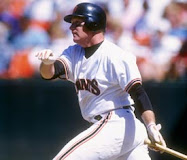
Brian Wilson is a constant source of frustration for Giants fans. It has been a far too common sight to see Wilson struggle in the ninth with a one run lead, and load the bases either through a series of hits, walks and/or both. Sometimes Wilson closes the game out and the Giants win. Sometimes he doesn't and the Giants lose. To put it nicely, it is more comfortable for a Bruce Willis to watch Ashton Kutcher on the screen in the movie "The Killers" than for a Giants fan to watch Wilson in the ninth at times.
So, I can see why the talk of Brian Wilson being an elite closer may sound like hogwash. Believe me. If you asked me the same question in Spring Training, I would have given you an emphatic "No way" and would have believed that a sequel to "Striptease" was more likely. (Boy...I'm really running with the Demi Moore-Bruce Willis divorce jokes, huh?)
When you look at the stats though, well...you can make the argument.
At the very least, Wilson has improved. During his All-Star season of 2008, Wilson posted 41 saves in 62.1 IP. However, his numbers other than his saves were far from impressive. He had a 4.62 ERA, a 1.44 WHIP, a K/BB ratio of 2.39 and a FIP of 3.93.
In 2008, he was closer to Matt Herges than Robb Nen in terms of Giants closers.
Last year though, he made tremendous strides. While he didn't make the NL All-Star roster, he certainly made a case that he deserved one by year's end. He did earn less saves than 2008 (38), but he pitched more innings (72.1 IP) and posted a better ERA (2.74), WHIP (1.20), K/BB ratio (3.07) and FIP (2.50).
And this year? He's on pace to surpass his already solid 2009 numbers, and has put himself in the discussion of perhaps earning a spot on this year's NL All-Star roster (Of course, that's if Charlie Manuel doesn't fill all the reserves with Phillies first).
First off, his K percentage is up (from 10.33 to 12.58) and his BB percentage is down (3.36 to 3.07), which has produced a stellar K/BB ratio (4.10). While his WHIP (1.23) is a bit underwhelming, his FIP (1.90), back up the assertion that he's been a better pitcher than what his 2.15 ERA says (which is always the challenge for relievers because ERA numbers can fluctuate so easily due to the lack of innings in comparison to starters).
The most startling stat? The fact that he is putting up these numbers despite having a BABIP of .375 (which is almost 75 points above the league average and 55 points higher than his BABIP last season).
What has been the secret to Wilson's success this year? Well, he's getting ahead in the count against more hitters for one.
In 2008, Wilson had a first strike percentage of 57.7 percent (below the league average of 58 percent). Last year, the percentage was 60.4. This season? His first strike percentage is 66.7 percent.
Why is this important? Being ahead of the count has paid dividends in allowing him to throw his slider more (7.9 percent in comparison to only 5.7 percent last year), which has become his most effective pitch this year. Sure, Wilson's fastball has some serious velocity (96.1 MPH), but his slider has been the better out pitch.
This year, his fastball is valued by Fangraphs at 1.26 runs above average per 100 pitches. His slider on the other hand? It is valued at 5.26 runs above average per 100 pitches. (Note: the higher the number, the better, like UZR; basically, think that it saves 5.26 runs above average per 100 pitches, for example.)
The solid repertoire of a fastball, slider and cutter (which he throws 27.1 percent of the time), has made Wilson a force to be reckoned with this year. According to ZiPS projections, Wilson is one pace for 70.1 IP. Those kind of innings logged would be beneficial to the Giants bullpen, which has struggled at times this year, especially Jeremy Affeldt, who was shelled again in his latest outing against the Blue Jays.
Now, Wilson may have improved from 2009 and yes, he may be a solid closer. That being said, I'm sure some naysayers are thinking "He's not one of the league's top closers and he's not an All-Star, either."
Let's take a look at some of the saves leaders in Major League Baseball.
Matt Capps of the Nationals is atop the league with 20 saves, Neftali Feliz of the Rangers and Kevin Gregg of the Blue Jays have 18 saves, and Heath Bell of the Padres, Jon Rauch of the Twins and Francisco Cordero of the Reds have 17 saves.
Those are the closers, along with Wilson, who are in the top-eight of the league in terms of saves.
However, how many of those top-seven guys, Wilson included, are in the top-ten in terms of FIP? One.
That one closer is Wilson.
How many of those guys are in the top ten in terms of xFIP?
Only Wilson.
So, Giants fans, as hard as it is for some to stomach, Wilson is finally a worthy successor to fan favorite Robb Nen. We had to suffer through Dustin Hermanson, Matt Herges and Armando Bentiez to get to this point, but the day of finally having a reliable closer in the ninth has come. Not only does he deserve a spot on the NL All-Star roster, but he deserves to be talked about when baseball fans talk about the league's best closers.
Because Wilson has been up there with the league's best so far in 2010, and he has the numbers (beyond saves) to back it up.
Showing posts with label Bullpen. Show all posts
Showing posts with label Bullpen. Show all posts
Sunday, June 20, 2010

Thursday, May 27, 2010
Can Denny Bautista and Santiago Casilla Invigorate the Giants Bullpen?
After coming back and beating the Nationals today 5-4, the Giants remained over .500 for the season at 24-22. While the record is still promising, the Giants have struggled in the month of May, alarming considering many of the teams in the NL West who flopped in April are starting to turn it around this month (e.g. Colorado, Los Angeles).
Now, the Giants have offensive problems. No doubt about it. Furthermore, there are concerns with Tim Lincecum as well, especially after his latest six hit, six run, five walk performance in 4.2 IP on Wednesday against the Nationals.
Yet one of the big concerns that has Giants fans up in arms is this: can the bullpen hold up and keep the Giants competitive?
The bullpen can mean the difference between a rebuilding season and a playoff run, and the Giants have experienced this first-hand. In 2008, during their 72-90 season, the Giants bullpen was one of the worst in baseball, sporting a 4.45 ERA (24th in the Majors). In 2009, when the Giants went 88-74 and just missed out on the NL Wild Card, the bullpen posted an ERA of 3.49, second-best in baseball (behind only the Dodgers, who had a bullpen ERA of 3.14).
How are the Giants relievers doing this season? Well, the results have been mixed. Brian Wilson is off to a solid start having converted 12 out of his first 13 saves, and sporting an ERA of 2.45. Furthermore, the Giants have gotten solid performances out of journeyman and former Dodger (God I hate saying that) Guillermo Mota, who has appeared in 18 games this season and holds an ERA of 1.13 and a WHIP of 0.94.
However, after ranking second last year in the Majors, the Giants bullpen currently ranks 10th in the league with a 3.68 team ERA. Furthermore, many Giants relievers who were expected to have an impact this year haven't necessarily gotten off to the best of starts.
Brandon Medders, who is currently on the disabled list, has been a train wreck, as evidenced by his 7.20 ERA and 2.13 WHIP in 14 appearances (granted, his 5.83 FIP suggests that he isn't as bad as his ERA says, but nonetheless, a 5.83 FIP isn't necessarily a sterling number either).
Fireballer Dan Runzler, who burst on the scene in September last year hasn't been much better. While Runzler's strikeout numbers continue to impress (20 strikeouts in 18 IP), his 1.54 BB/K ratio and 83.7 percent contact rate suggests that Runzler may have some command issues that he may need to sort out. Much like Medders, Runzler's FIP (3.77) suggests that he's better than his ERA (5.00), and he does induce a lot of groundballs (1.75 GB/FB ratio). However, considering Runzler is a two pitch pitcher (he throws his fastball 73.8 percent of the time and his slider 25.5 percent of the time) and his velocity has dropped (the average velocity on his fastball has dropped from 94.7 MPH in 2009 to 93.6 MPH this year), Runzler may be regulated to middle relief or mop up duty in the Giants bullpen and may see some time in Fresno to boot.
So, with Medders and Runzler struggling, Sergio Romo going through his usual fits of inconsistency (Romo has a solid BB/K ratio at 3.80 and WHIP at 0.89, but his FIP is unusually high at 4.04 as his HR/FB ratio at 9.4 percent), and with Jeremey Affeldt struggling with his control (5.19 BB/9; 1.40 BB/K ratio), is there anybody in the Giants bullpen of worth other than Mota and Wilson?
There are two candidates who could spark the Giants bullpen:
Denny Bautista and Santiago Casilla.
Now, Bautista and Casilla aren't exactly young and they don't necessarily have track records of success. Both Bautista and Casilla are turning 30 this season and both relievers struggled mightily with their respective teams (Bautista the Pirates; Casilla the A's) last season.
However, Bautista and Casilla throw serious heat and can strike guys out. This year, Bautista is averaging 95.3 MPH on his fastball. Casilla has been even better, averaging 96.7 MPH on his fastball.
If you don't believe me on Casilla, check out his velocity charts from today's game.

That is some serious gas, and can explain why Casilla has six strikeouts in 2.2 IP in 2010.
Bautista has been solid as well in terms of striking guys out. In 7.1 IP, Bautista has 11 strikeouts. Furthermore, he is sporting a contact rate of 74 percent and a swinging strike percentage of 10.3 percent (the league average swinging strike percentage is 8.3 percent).
That being said, it is not as if Bautista and Casilla are perfect. Both have issues with their control. Bautista has a career 5.12 BB/9 and 1.31 BB/K ratio, which isn't exactly comforting. Casilla also has suffered with the same problems, as evidenced by his career 4.49 BB/9 and 1.77 BB/K ratio.
Bautista has suffered in terms of finding the strike zone at times in 2010. This year, Bautista has walked eight batters in 7.1 IP and spots a WHIP of 1.91. Casilla has been solid with only one walk and a WHIP of 0.36. Despite these sterling numbers, Giants fans have to take it with a grain of salt, mainly because it is such a small sample (case in point, his WHIP was 1.78 last year and his BB/K ratio was 1.40 with the Oakland A's).
Are Bautista and Casilla saviors to this Giants bullpen? Probably not. However, both guys throw serious heat and can strike guys out, which is what you want from relievers in your bullpen. With Affeldt's health and effectiveness in question, and Medders' 2009 looking like a fluke, both Bautista and Casilla will be greatly needed to have breakout seasons in 2010.
At this point, I think it's totally possible for both Dominican-born pitchers.
Now, the Giants have offensive problems. No doubt about it. Furthermore, there are concerns with Tim Lincecum as well, especially after his latest six hit, six run, five walk performance in 4.2 IP on Wednesday against the Nationals.
Yet one of the big concerns that has Giants fans up in arms is this: can the bullpen hold up and keep the Giants competitive?
The bullpen can mean the difference between a rebuilding season and a playoff run, and the Giants have experienced this first-hand. In 2008, during their 72-90 season, the Giants bullpen was one of the worst in baseball, sporting a 4.45 ERA (24th in the Majors). In 2009, when the Giants went 88-74 and just missed out on the NL Wild Card, the bullpen posted an ERA of 3.49, second-best in baseball (behind only the Dodgers, who had a bullpen ERA of 3.14).
How are the Giants relievers doing this season? Well, the results have been mixed. Brian Wilson is off to a solid start having converted 12 out of his first 13 saves, and sporting an ERA of 2.45. Furthermore, the Giants have gotten solid performances out of journeyman and former Dodger (God I hate saying that) Guillermo Mota, who has appeared in 18 games this season and holds an ERA of 1.13 and a WHIP of 0.94.
However, after ranking second last year in the Majors, the Giants bullpen currently ranks 10th in the league with a 3.68 team ERA. Furthermore, many Giants relievers who were expected to have an impact this year haven't necessarily gotten off to the best of starts.
Brandon Medders, who is currently on the disabled list, has been a train wreck, as evidenced by his 7.20 ERA and 2.13 WHIP in 14 appearances (granted, his 5.83 FIP suggests that he isn't as bad as his ERA says, but nonetheless, a 5.83 FIP isn't necessarily a sterling number either).
Fireballer Dan Runzler, who burst on the scene in September last year hasn't been much better. While Runzler's strikeout numbers continue to impress (20 strikeouts in 18 IP), his 1.54 BB/K ratio and 83.7 percent contact rate suggests that Runzler may have some command issues that he may need to sort out. Much like Medders, Runzler's FIP (3.77) suggests that he's better than his ERA (5.00), and he does induce a lot of groundballs (1.75 GB/FB ratio). However, considering Runzler is a two pitch pitcher (he throws his fastball 73.8 percent of the time and his slider 25.5 percent of the time) and his velocity has dropped (the average velocity on his fastball has dropped from 94.7 MPH in 2009 to 93.6 MPH this year), Runzler may be regulated to middle relief or mop up duty in the Giants bullpen and may see some time in Fresno to boot.
So, with Medders and Runzler struggling, Sergio Romo going through his usual fits of inconsistency (Romo has a solid BB/K ratio at 3.80 and WHIP at 0.89, but his FIP is unusually high at 4.04 as his HR/FB ratio at 9.4 percent), and with Jeremey Affeldt struggling with his control (5.19 BB/9; 1.40 BB/K ratio), is there anybody in the Giants bullpen of worth other than Mota and Wilson?
There are two candidates who could spark the Giants bullpen:
Denny Bautista and Santiago Casilla.
Now, Bautista and Casilla aren't exactly young and they don't necessarily have track records of success. Both Bautista and Casilla are turning 30 this season and both relievers struggled mightily with their respective teams (Bautista the Pirates; Casilla the A's) last season.
However, Bautista and Casilla throw serious heat and can strike guys out. This year, Bautista is averaging 95.3 MPH on his fastball. Casilla has been even better, averaging 96.7 MPH on his fastball.
If you don't believe me on Casilla, check out his velocity charts from today's game.

That is some serious gas, and can explain why Casilla has six strikeouts in 2.2 IP in 2010.
Bautista has been solid as well in terms of striking guys out. In 7.1 IP, Bautista has 11 strikeouts. Furthermore, he is sporting a contact rate of 74 percent and a swinging strike percentage of 10.3 percent (the league average swinging strike percentage is 8.3 percent).
That being said, it is not as if Bautista and Casilla are perfect. Both have issues with their control. Bautista has a career 5.12 BB/9 and 1.31 BB/K ratio, which isn't exactly comforting. Casilla also has suffered with the same problems, as evidenced by his career 4.49 BB/9 and 1.77 BB/K ratio.
Bautista has suffered in terms of finding the strike zone at times in 2010. This year, Bautista has walked eight batters in 7.1 IP and spots a WHIP of 1.91. Casilla has been solid with only one walk and a WHIP of 0.36. Despite these sterling numbers, Giants fans have to take it with a grain of salt, mainly because it is such a small sample (case in point, his WHIP was 1.78 last year and his BB/K ratio was 1.40 with the Oakland A's).
Are Bautista and Casilla saviors to this Giants bullpen? Probably not. However, both guys throw serious heat and can strike guys out, which is what you want from relievers in your bullpen. With Affeldt's health and effectiveness in question, and Medders' 2009 looking like a fluke, both Bautista and Casilla will be greatly needed to have breakout seasons in 2010.
At this point, I think it's totally possible for both Dominican-born pitchers.
Wednesday, May 5, 2010
Is Waldis Joaquin Entering Alex Hinshaw Territory?
So far, this year, it has been an up and down season for the Giants bullpen. Some guys have gotten off to good starts, but have imploded on some big moments (e.g. Brian Wilson and Sergio Romo). Some guys have been a shell of who they were last season (e.g. Brandon Medders and Jeremy Affeldt). And some guys...well...they have been pretty good (e.g. Dan Runzler and Guillermo Mota).
Overall, I deeply believe the Giants have the best bullpen in the National League West...though not statistically at the present moment. They are behind Colorado (second) and San Diego (third) in terms of team bullpen ERA in the Majors (Colorado has a 2.58 ERA; San Diego sports a 2.65 ERA), but the Giants are not that far behind considering how early it is in the season (the Giants are seventh and have a bullpen ERA of 3.20).
Lost in the shuffle though of the Romos, Wilsons and Affeldts in the bullpen however is Waldis Joaquin.
For those who don't know, Joaquin was recently optioned to Triple-A Fresno after Aaron Rowand returned off his stint on the 15-day disabled list.
It makes sense from a Giants management perspective. Wilson, Romo, Mota, Runzler, Affeldt and Medders are way ahead of Joaquin in terms of standing in the bullpen, and Joaquin hasn't really lived up to his potential either this season.
In 4.2 IP, Joaquin sports a 9.64 ERA, a 2.79 WHIP and has allowed six hits and seven walks. To make matters worse, Joaquin, a flamethrower who averaged 96.2 MPH last year and 94.4 MPH on his fastball this year, hasn't struck out many batters. After striking out 12 batters in 10 IP in a short callup in 2009, Joaquin has only managed to punch out two batters.
Those numbers have produced god awful K/9 and BB/K ratios (3.86 and 0.29, respectively) which makes most sabermetrics and baseball fans shudder.
And what makes things worse? His stats eerily look similar to another "hard-throwing pitcher with command-problems reliever" from last year: Alex Hinshaw.
After a solid 2008 season with the Giants where he appeared in 48 games and posted an ERA of 3.40 and a K/9 of 10.66, Hinshaw absolutely struggled in short action with the Giants bullpen in 2009. Hinshaw gave up 10 hits and allowed 8 runs and 7 walks in 6 IP.
With already a solid staff in the Giants' 2009 bullpen, it came as no surprise why Hinshaw spent the majority of the season in Fresno (he pitched 46 games for the Grizzlies).
Could the same happen to Joaquin in 2010?
It is possible. Hitters have found a tremendously easy ability to find a hit against Joaquin, as evidenced by his .350 BABIP this season. Hinshaw suffered through the same problem in his nine appearances in 2009. His BABIP was .349.
However, while they share similar strand rates (Joaquin has a 57.1 percent strand rate so far; Hinshaw had a 63.4 percent strand rate), there is something that Joaquin is better at doing than Hinshaw: inducing groundballs.
Hinshaw is not a groundball pitcher. In his two stints in San Francisco, Hinshaw posted GB/FB rates of 0.48 and 0.58. What makes this ratio even worse is that when hitters hit fly balls against Hinshaw, they have made them count. The past two seasons, Hinshaw's HR/FB rate has been 10 percent (2008) and 16.7 percent (2009).
This doesn't seem to be the problem with Joaquin. Last year, Joaquin posted a GB/FB ratio of 3.60. This year? That ratio had improved to 5.00. Granted, Joaquin has allowed more line drives this season than Hinshaw did in 2009 (25 percent to 17.4 percent), but hitters haven't made Joaquin pay too badly when it comes to fly balls this year (Joaquin hasn't given up a homer this year, and he only allowed one last year).
Thus, that is why I am more optimistic that Joaquin can bounce back after a short tenure with the Grizzlies than Hinshaw (and I don't necessarily hate Hinshaw either). Look at the game logs for 2010 for Joaquin and 2009 for Hinshaw. Joaquin looks much better than Hinshaw, and in the grand scheme of things, Joaquin wasn't all that terrible. What really sealed the deal (e.g. being demoted) for Joaquin was the April 16th opener against the Dodgers. Check out his pitch F/X for that game:

What did all that wildness produce? Four walks, two hits, two earned runs in two innings pitched. Yikes. That is about as good as Josh Hartnett's performance in the "Black Dahlia."
Granted, his performance against the Braves (1.2 IP, two walks, two hits, three runs allowed) was pretty bad too. But it was only two performances. Is Joaquin capable of having bad performances like the ones against Los Angeles and Atlanta? Sure, but he is also capable of having solid performances, like his debut against the Astros on April 6th (12 strikes thrown, 4 balls thrown, 0.2 IP, 1 strikeout).
Is Joaquin entering that "Promising for a bit, but now falling back to earth" phase that Hinshaw drudged through in 2009? Perhaps, but I don't believe Giants fans should throw in the towel and say "Joaquin is the next Merkin Valdez!" just yet.
I think Joaquin making the Opening Day roster was a premature decision by general manager Brian Sabean (he has only pitched 10 innings at the Triple-A level). With some more experience and tuning of his command in Fresno (he has only thrown 45.3 percent of his pitches for strikes this year) , I don't think it's out of the question to see Joaquin back up my August, ready to contribute to the Giants bullpen once again.
Overall, I deeply believe the Giants have the best bullpen in the National League West...though not statistically at the present moment. They are behind Colorado (second) and San Diego (third) in terms of team bullpen ERA in the Majors (Colorado has a 2.58 ERA; San Diego sports a 2.65 ERA), but the Giants are not that far behind considering how early it is in the season (the Giants are seventh and have a bullpen ERA of 3.20).
Lost in the shuffle though of the Romos, Wilsons and Affeldts in the bullpen however is Waldis Joaquin.
For those who don't know, Joaquin was recently optioned to Triple-A Fresno after Aaron Rowand returned off his stint on the 15-day disabled list.
It makes sense from a Giants management perspective. Wilson, Romo, Mota, Runzler, Affeldt and Medders are way ahead of Joaquin in terms of standing in the bullpen, and Joaquin hasn't really lived up to his potential either this season.
In 4.2 IP, Joaquin sports a 9.64 ERA, a 2.79 WHIP and has allowed six hits and seven walks. To make matters worse, Joaquin, a flamethrower who averaged 96.2 MPH last year and 94.4 MPH on his fastball this year, hasn't struck out many batters. After striking out 12 batters in 10 IP in a short callup in 2009, Joaquin has only managed to punch out two batters.
Those numbers have produced god awful K/9 and BB/K ratios (3.86 and 0.29, respectively) which makes most sabermetrics and baseball fans shudder.
And what makes things worse? His stats eerily look similar to another "hard-throwing pitcher with command-problems reliever" from last year: Alex Hinshaw.
After a solid 2008 season with the Giants where he appeared in 48 games and posted an ERA of 3.40 and a K/9 of 10.66, Hinshaw absolutely struggled in short action with the Giants bullpen in 2009. Hinshaw gave up 10 hits and allowed 8 runs and 7 walks in 6 IP.
With already a solid staff in the Giants' 2009 bullpen, it came as no surprise why Hinshaw spent the majority of the season in Fresno (he pitched 46 games for the Grizzlies).
Could the same happen to Joaquin in 2010?
It is possible. Hitters have found a tremendously easy ability to find a hit against Joaquin, as evidenced by his .350 BABIP this season. Hinshaw suffered through the same problem in his nine appearances in 2009. His BABIP was .349.
However, while they share similar strand rates (Joaquin has a 57.1 percent strand rate so far; Hinshaw had a 63.4 percent strand rate), there is something that Joaquin is better at doing than Hinshaw: inducing groundballs.
Hinshaw is not a groundball pitcher. In his two stints in San Francisco, Hinshaw posted GB/FB rates of 0.48 and 0.58. What makes this ratio even worse is that when hitters hit fly balls against Hinshaw, they have made them count. The past two seasons, Hinshaw's HR/FB rate has been 10 percent (2008) and 16.7 percent (2009).
This doesn't seem to be the problem with Joaquin. Last year, Joaquin posted a GB/FB ratio of 3.60. This year? That ratio had improved to 5.00. Granted, Joaquin has allowed more line drives this season than Hinshaw did in 2009 (25 percent to 17.4 percent), but hitters haven't made Joaquin pay too badly when it comes to fly balls this year (Joaquin hasn't given up a homer this year, and he only allowed one last year).
Thus, that is why I am more optimistic that Joaquin can bounce back after a short tenure with the Grizzlies than Hinshaw (and I don't necessarily hate Hinshaw either). Look at the game logs for 2010 for Joaquin and 2009 for Hinshaw. Joaquin looks much better than Hinshaw, and in the grand scheme of things, Joaquin wasn't all that terrible. What really sealed the deal (e.g. being demoted) for Joaquin was the April 16th opener against the Dodgers. Check out his pitch F/X for that game:

What did all that wildness produce? Four walks, two hits, two earned runs in two innings pitched. Yikes. That is about as good as Josh Hartnett's performance in the "Black Dahlia."
Granted, his performance against the Braves (1.2 IP, two walks, two hits, three runs allowed) was pretty bad too. But it was only two performances. Is Joaquin capable of having bad performances like the ones against Los Angeles and Atlanta? Sure, but he is also capable of having solid performances, like his debut against the Astros on April 6th (12 strikes thrown, 4 balls thrown, 0.2 IP, 1 strikeout).
Is Joaquin entering that "Promising for a bit, but now falling back to earth" phase that Hinshaw drudged through in 2009? Perhaps, but I don't believe Giants fans should throw in the towel and say "Joaquin is the next Merkin Valdez!" just yet.
I think Joaquin making the Opening Day roster was a premature decision by general manager Brian Sabean (he has only pitched 10 innings at the Triple-A level). With some more experience and tuning of his command in Fresno (he has only thrown 45.3 percent of his pitches for strikes this year) , I don't think it's out of the question to see Joaquin back up my August, ready to contribute to the Giants bullpen once again.
Wednesday, April 7, 2010
Why Brandon Medders Is Expendable to the Giants Bullpen
I'm not bashing Brandon Medders and his performance in 2009 by any means. I thought he was a surprising reliever in 2009. He had a great May where he posted a FIP of 2.85, and a solid Septmber/October where he had a FIP of 3.16, and proved to be an integral part of the Giants' success last year.
What made Medders such a great signing was that he happened to be an unknown, bargain bin acquisition (He signed a Minor League contract prior to Spring Training last season), and provided great bang for the buck as a middle-to-late innings reliever. (His WAR converted to dollars in 2009 was $1.4 million; his contract last year was $475,000.)
He wasn't Jeremy Affeldt or Brian Wilson, but he certainly wasn't Bob Howry or Merkin Valdez either.
Yet, after three games into the 2010 season, it is terribly obvious: the Giants do not need Medders in their bullpen.
Like I said before, that is not to downgrade Medders as a pitcher. He may still be a slightly above average right handed reliever that would be useful on any Major League team, especially one that may be lacking in effective bullpen arms.
The Giants though, do not have that problem.
Already we have seen in the Houston sweep, the Giants have gotten great contributions from their bullpen.
Waldis Joaquin and Dan Runzler showed that they were promising young arms with incredible stuff.
Sergio Romo proved that he's the Giants' right-handed eighth-inning specialist, and Jeremy Affeldt illustrated in today's win why he's Romo's left-handed counterpart.
And as for Brian Wilson? Two saves in two opportunities, two strikeouts, no walks. I think those numbers show why he has his spot in this bullpen.
Medders though? He hasn't exactly impressed, as evidenced by his three hit, two runs allowed in one-third of an inning performance in the season opener.
Granted it's only one game, and I'm not saying the Giants should release Medders based on that outing alone. However, when it comes to defining what Medders' role is in the bullpen, well...that become tricky.
Wilson is the closer (obviously). Romo and Affeldt are the right-handed and left-handed setup men, respectively. Runzler and Joaquin are the young, left-handed and right-handed stoppers (come in when behind before the eighth to stop damage) or seventh-inning setup relievers. Guillermo Mota, at this point, seems to be the mop up man (guy to clean things up when the leads are big).
The only role Medders could possibly fill in this Giants bullpen would be as a "Justin Miller-esque" long reliever.
Considering Medders has never started a game at the Major League level and has only thrown 50 or more innings twice (2006 with Arizona and last season) in his Major League career, I don't think that role bodes well for him.
When you add in the fact that the Giants have two younger, cheaper options available to fill that role waiting in Fresno (Joe Martinez and Kevin Pucetas), Medders seems even less likely to be a fit as the Giants long middle reliever as the season progresses.
Now, I understand many Giants fans will be inclined to believe that Medders can bounce back from his first bad outing on Opening Day. However, while he undoubtedly will in some way at some point, to think that Medders will duplicate his 2009 numbers in 2010 might be a stretch.
Medders' high FIP (4.07) and lackluster K/BB ratio (1.81) and WHIP (1.38) prove that his 2009 wasn't as good as his 3.01 ERA or 5-1 record indicates. Medders is a flyball pitcher (0.88 GB/FB ratio last season) who doesn't strike a tremendous of guys out (7.60 K/9 in 2009; good for a starter, mediocre for a flyball reliever). Those are not good qualities to have, and though Medders got away with it for the most part last year (thanks mostly to AT&T Park's spacious environment), sooner or later the BABIP will rise and the fly balls that were long outs will turn into home runs.
I can say it's safe to say that no Giants fan wants to see that happen, especially when it will affect the Win-Loss column.
Considering Medders' age (he's 30 years old) and contract (he signed a one-year, $820,000 extension this off-season), he just doesn't seem to be an efficient arm to have in the Giants bullpen. There are so many quality young arms, not just in the Giants bullpen, but in Fresno as well, in addition to Pucetas and Martinez.
Henry Sosa and Alex Hinshaw had great Springs, and Hinshaw actually had a very successful stint in 2008 (If Hinshaw can ever solve his walk problems, he'll be dangerous because he posts very high strikeout numbers). They are currently with the Grizzlies, but don't expect them to be there for long. They're chomping at the bit to get a shot in the Majors.
Steve Edlefsen is a 24-year-old right-hander with the Grizzlies who made a meteoric "Dan Runzler-esque" rise from High Single-A San Jose to Triple-A Fresno last year. His combined numbers? In 69.2 IP, he earned eight wins, allowed only 43 hits, posted an ERA of 1.95 and sported a K/9 rate of 9.3 (he did have a BB/9 of 4.8 and 1.95 K/BB ratio, not exactly impressive, but considering his rise, the high walk numbers are to be expected).
With a little tuning in the Pacific Coast League, it isn't far-fetched to think that Edlefsen could be contributing to the Giants in a couple of months.
As you can see, the options in Fresno and on this Giants roster are plentiful, and I'm not even counting castoffs such as Denny Bautista or Horacio Ramirez (who are in Fresno as well) who could break out after being ignored by other teams this off-season (similar to Medders' situation in 2009).
I'm still willing to give Medders a chance for a short period of time. He deserves one after the contract extension Brian Sabean signed him to this off-season and his performance last year.
However, I wouldn't be surprised to see Medders fail to live up to the bar this bullpen and its relievers has set this season so far. His performance last year in high leverage situations (xFIP of 5.17; 1.29 K/BB ratio; 0.19 GB/FB ratio in high leverage situations last year) and questionable stuff (he had negative runs above average values on three of his five pitches last year) don't project well for repeated success.
The Giants' bullpen may be the key to their playoff hopes in 2010, and could be their second-strongest asset as a team, slightly behind the starting pitching (and considering they had two NL All-Star starting pitchers last year, that is saying something). While that is a great thing for the Giants and their fans, it's unfortunate for Medders.
Because, as of now, he's the odd man out.
What made Medders such a great signing was that he happened to be an unknown, bargain bin acquisition (He signed a Minor League contract prior to Spring Training last season), and provided great bang for the buck as a middle-to-late innings reliever. (His WAR converted to dollars in 2009 was $1.4 million; his contract last year was $475,000.)
He wasn't Jeremy Affeldt or Brian Wilson, but he certainly wasn't Bob Howry or Merkin Valdez either.
Yet, after three games into the 2010 season, it is terribly obvious: the Giants do not need Medders in their bullpen.
Like I said before, that is not to downgrade Medders as a pitcher. He may still be a slightly above average right handed reliever that would be useful on any Major League team, especially one that may be lacking in effective bullpen arms.
The Giants though, do not have that problem.
Already we have seen in the Houston sweep, the Giants have gotten great contributions from their bullpen.
Waldis Joaquin and Dan Runzler showed that they were promising young arms with incredible stuff.
Sergio Romo proved that he's the Giants' right-handed eighth-inning specialist, and Jeremy Affeldt illustrated in today's win why he's Romo's left-handed counterpart.
And as for Brian Wilson? Two saves in two opportunities, two strikeouts, no walks. I think those numbers show why he has his spot in this bullpen.
Medders though? He hasn't exactly impressed, as evidenced by his three hit, two runs allowed in one-third of an inning performance in the season opener.
Granted it's only one game, and I'm not saying the Giants should release Medders based on that outing alone. However, when it comes to defining what Medders' role is in the bullpen, well...that become tricky.
Wilson is the closer (obviously). Romo and Affeldt are the right-handed and left-handed setup men, respectively. Runzler and Joaquin are the young, left-handed and right-handed stoppers (come in when behind before the eighth to stop damage) or seventh-inning setup relievers. Guillermo Mota, at this point, seems to be the mop up man (guy to clean things up when the leads are big).
The only role Medders could possibly fill in this Giants bullpen would be as a "Justin Miller-esque" long reliever.
Considering Medders has never started a game at the Major League level and has only thrown 50 or more innings twice (2006 with Arizona and last season) in his Major League career, I don't think that role bodes well for him.
When you add in the fact that the Giants have two younger, cheaper options available to fill that role waiting in Fresno (Joe Martinez and Kevin Pucetas), Medders seems even less likely to be a fit as the Giants long middle reliever as the season progresses.
Now, I understand many Giants fans will be inclined to believe that Medders can bounce back from his first bad outing on Opening Day. However, while he undoubtedly will in some way at some point, to think that Medders will duplicate his 2009 numbers in 2010 might be a stretch.
Medders' high FIP (4.07) and lackluster K/BB ratio (1.81) and WHIP (1.38) prove that his 2009 wasn't as good as his 3.01 ERA or 5-1 record indicates. Medders is a flyball pitcher (0.88 GB/FB ratio last season) who doesn't strike a tremendous of guys out (7.60 K/9 in 2009; good for a starter, mediocre for a flyball reliever). Those are not good qualities to have, and though Medders got away with it for the most part last year (thanks mostly to AT&T Park's spacious environment), sooner or later the BABIP will rise and the fly balls that were long outs will turn into home runs.
I can say it's safe to say that no Giants fan wants to see that happen, especially when it will affect the Win-Loss column.
Considering Medders' age (he's 30 years old) and contract (he signed a one-year, $820,000 extension this off-season), he just doesn't seem to be an efficient arm to have in the Giants bullpen. There are so many quality young arms, not just in the Giants bullpen, but in Fresno as well, in addition to Pucetas and Martinez.
Henry Sosa and Alex Hinshaw had great Springs, and Hinshaw actually had a very successful stint in 2008 (If Hinshaw can ever solve his walk problems, he'll be dangerous because he posts very high strikeout numbers). They are currently with the Grizzlies, but don't expect them to be there for long. They're chomping at the bit to get a shot in the Majors.
Steve Edlefsen is a 24-year-old right-hander with the Grizzlies who made a meteoric "Dan Runzler-esque" rise from High Single-A San Jose to Triple-A Fresno last year. His combined numbers? In 69.2 IP, he earned eight wins, allowed only 43 hits, posted an ERA of 1.95 and sported a K/9 rate of 9.3 (he did have a BB/9 of 4.8 and 1.95 K/BB ratio, not exactly impressive, but considering his rise, the high walk numbers are to be expected).
With a little tuning in the Pacific Coast League, it isn't far-fetched to think that Edlefsen could be contributing to the Giants in a couple of months.
As you can see, the options in Fresno and on this Giants roster are plentiful, and I'm not even counting castoffs such as Denny Bautista or Horacio Ramirez (who are in Fresno as well) who could break out after being ignored by other teams this off-season (similar to Medders' situation in 2009).
I'm still willing to give Medders a chance for a short period of time. He deserves one after the contract extension Brian Sabean signed him to this off-season and his performance last year.
However, I wouldn't be surprised to see Medders fail to live up to the bar this bullpen and its relievers has set this season so far. His performance last year in high leverage situations (xFIP of 5.17; 1.29 K/BB ratio; 0.19 GB/FB ratio in high leverage situations last year) and questionable stuff (he had negative runs above average values on three of his five pitches last year) don't project well for repeated success.
The Giants' bullpen may be the key to their playoff hopes in 2010, and could be their second-strongest asset as a team, slightly behind the starting pitching (and considering they had two NL All-Star starting pitchers last year, that is saying something). While that is a great thing for the Giants and their fans, it's unfortunate for Medders.
Because, as of now, he's the odd man out.
Saturday, March 27, 2010
"Giants" Enemy Lines: A Look at the Closers in the NL West
Okay, so I did part one (a look at the one-two starting pitchers of each NL West squad) a couple of days ago. I figured, with all the hoopla about Jeremy Affeldt and Brian Wilson getting two-year extensions (which I'm not exactly thrilled about), that a look at all the late-inning specialists of each NL West squad was in order. Like before, I'm going to look at every team in the NL West except the Giants. Why not the Giants? Because I'm scouting "Enemy" lines, not "Our Own Team So I Can Expose Them to the Enemy" lines.
Arizona Diamondbacks
Chad Qualls (3.63 ERA, 24 saves, 1.15 WHIP, 7.79 K/9, 6.43 K/BB, 3.14 FIP)
For those who don't know, Qualls is one of the more effective closer in the league. Yes, he played for a lousy team last year. Yes, he blew five saves. Yes, 24 saves doesn't jump out at you like Brian Wilson's 38 saves in 2009 for the Giants.
However, Qualls is effective when he gets the opportunity.
The number that really sticks out in Qualls' favor is his K/BB ratio. I mean...it's incredible. 6.43, and it's compounded by a walk rate of 1.21.
Now, I know most people will say "He'll never get that again!" and you know what? You're probably right. A 1.21 BB/9 will be hard to duplicate. That being said, Qualls has shown plus control over his Major League career. Since his rookie year in 2004, he has never had a walk rate in the three range, and he has had K/BB ratio under three only twice (2005 and 2006 in Houston).
In comparison, Wilson has had a walk rate in the two range only once in his three-year Major League career (2007, where it was 2.66), and has only had a K/BB ratio over three twice in his Major and Minor League career (6.00 in Fresno in 2007 and 3.07 last season).
Qualls doesn't boast intimidating stuff (he averaged 92.9 MPH on his fastball last season), but he mixes up his pitches (he threw his slider 38.7 percent of the time in 2009) and induces a lot of groundballs (he had a 2.53 and a 2.46 GB/FB rate in 2008 and 2009, respectively).
Wilson may have the flashier stuff, but in many ways, Qualls may be the more effective closer.
Scare factor: 8.5 out of 10. (Qualls isn't a big-name closer. That being said, he is incredibly effective, has pinpoint control and gets ahead of batters early (68.2 first pitch strike percentage). He may be closer to Keith Foulke than Mariano Rivera, but if the Diamondbacks get some offense early, Qualls could be in the discussion of the top closers in the Major Leagues by the All-Star break.)
Colorado Rockies
Huston Street (3.06 ERA, 35 saves, 0.91 WHIP, 10.22 K/9, 5.38 K/BB ratio, 2.93 FIP)
Street had a studly 2009 in Colorado. After only saving 18 games in Oakland, and posting a 1.21 WHIP, 3.73 ERA and 3.47 FIP in 2008 with the A's, Street came back with a vengeance in his first season with the Rockies.
Street saved 35 games, but the more impressive numbers were his increases in K/9 (from 8.87 in 2008 to 10.22) and K/BB (from 2.56 to 5.38). Basically, Street went from mediocre to above-average at-best closer to one of the game's top ones in the span of a year as he helped the Rockies win the NL Wild Card berth over the Giants (it still stings by the way).
However, the main question is this: can Street do it again?
The chips will be stacked against Street to repeat his 2009 stats in 2010. For starters, his GB/FB rates aren't comforting (he posted a 0.89 GB/FB rate last year and the only time he had a GB/FB ratio over one was his rookie year in 2005 where it was 1.10), and he also had a very fortunate BABIP at .257 (the second-lowest BABIP of his career, and the lowest since 2005, when it was .251).
The thing about Street is he has three pitches (fastball, slider, changeup) and he mixes them up pretty well (he throws his fastball 53.2 percent of the time, his slider 29.7 percent of the time and his changeup 17.1 percent of the time). However, his velocity isn't great on his fastball (91.7 MPH), and it makes you wonder if he will continue to get away with pitches like he did in 2009.
Considering his luck, and the fact that he is also banged up going into Opening Day, chances are, Street is due for a regression in 2010.
Scare Factor: 7.5 out of 10. (Street was great last year, but he had a lot things fall in the right place. Sure, he strikes out a lot of guys, but his fastball isn't incredible, and his mediocre GB/FB makes his ability to duplicate his 2009 numbers unlikely. Street is still a solid closer, but he won't be one of the league's elite in 2010 like he was in 2009.)
Los Angeles Dodgers
Jonathan Broxton (2.61 ERA, 36 saves, 0.96 WHIP, 13.50 K/9, 3.93 K/BB, 1.97 FIP)
As much as I hate to say it, the Dodgers may have the scariest closer situation out of any rival team in the NL West.
First off, it all starts with Broxton, who finally emerged as the Dodgers closer last year after wrestling for the job with former closer Takashi Saito in 2008 (Saito had 18 saves, Broxton had 14 saves in 2008). Last year, Broxton was a stud. Sure, the 36 saves were impressive, but his other stats really jump out and wow you.
In 2009, Broxton strikeout rate was an incredible 13.50, and he posted a solid K/BB ratio at 3.93 (though his walk percentage could be better than 3.43). Furthermore, Broxton's FIP at 1.97 proved he was the real deal last year, and could have future success. His GB/FB rate was 2.02, the highest of his Major League career (his previous high was 1.66 in 2007), and his BABIP at .285 wasn't excessively below the league average of around .300.
Also, Broxton possesses grade-A stuff. His fastball is absolutely electric, as it averages 97.7 MPH and was consistently in the 100 MPH range in 2009 according to his velocity charts on Fangraphs.
That being said, despite Broxton's improvement as a closer in 2009, there are still some concerns. First of all, he blew six saves last season, and has blown 20 in the past three years. And if that isn't enough, his numbers in high leverage situations isn't exactly comforting either. While his strikeout rates in high leverage situations remained solid (12.65), his walk rate increased (4.10) and his K/BB rate decreased to 3.08 (his K/BB rate in low and medium leverage situations was 3.80 and 5.57, respectively). In addition, Broxton got a lot of help from defense and luck in the crunch in 2009. His BABIP in high leverage situations was .177 (in comparison to a .343 BABIP in low leverage situations and .330 BABIP in medium leverage situations). Whether or not he can duplicate those numbers in 2010 will be tough, especially with Gold Glove second baseman Orlando Hudson now in Minnesota.
Another concern about Broxton is he primarily is a two-pitcher pitcher, relying on his fastball and slider (he threw his fastball 73.7 percent of the time and his slider 24.1 percent of the time in 2009). He does have a changeup, but he hasn't seemed to develop much confidence behind it. In 2008 and 2009, he only threw it 2.7 and 2.2 percent of the time, respectively. While a third pitch isn't mandatory for a closer (Mariano Rivera threw his cutter 93.0 percent of the time last year and hasn't thrown a third pitch over one percent since 2004), it could be a problem should hitters start catching up to his fastball.
However, in the Dodgers' defense, even if Broxton does regress badly, they have plenty of backup options. Hong-Chih Kuo dealt with injury last year (he pitched only 30 innings in 2009 in comparison to 80 innings in 2008), but he still put up solid numbers. While he did regress (mostly due to an elbow injury), he still had a solid K/9 rate at 9.60. Also, it isn't out of the question to think that if Kuo is healthy in 2010, he can return to his 2008 form where he had a 10.80 strikeout rate, 4.57 K/BB ratio and 2.28 FIP. His average velocity actually went up in all of his pitches from 2008 to 2009, including his fastball, which went from 92.9 MPH to 94.7 MPH in 2009.
And it doesn't end with Kuo either. The Dodgers also still have George Sherrill, who used to close out ballgames for the Baltimore Orioles (he had 31 saves in 2008 in Baltimore). I don't like Sherrill as much as Kuo. His FIP (3.21) didn't match well with his ERA (1.70) in 2009 and he benefited from a low BABIP at .268. To make matters worse, he doesn't post great GB/FB ratios (it's been over one only once, in 2005 with Seattle), which means he is susceptible to bad statistics and getting shelled should his BABIP rise. That being said, while I don't trust him as a closer, he certainly is a good third option behind Broxton and Kuo that actually has some closer's experience.
Scare factor: 9 out of 10 (Broxton's scary as it is, but the depth in the bullpen is the bigger concern for Giants fans. If healthy, Kuo has the makings of a future closer and Sherrill is an above-average setup man that can close if needed. I hate to say it because I hate the Dodgers so much, but I might have to admit that the Dodgers have the best late-innings bullpen in the NL West.)
San Diego Padres
Heath Bell (2.71 ERA, 42 saves, 1.12 WHIP, 10.21 K/9, 3.29 K/BB, 2.42 FIP)
Bell's numbers look good. In fact, if you judge him on numbers alone, you could make the argument he was the best closer in the National League West in 2009. He made the All-Star team, he had 40-plus saves, his ERA and FIP numbers were close (29 points isn't too big of a difference), his BABIP was around the league average at .303, and his strikeout rate and K/BB ratio were stellar.
So why can't I get into him more?
For some reason, I just feel I need more information on the guy. Going into 2009 the guy had only two saves out of 14 opportunities. Last year? He only blew six saves (not bad considering he had 48 opportunities). Is Bell just a late bloomer ala Keith Foulke? Or is Bell a one-year wonder ala Billy Koch?
It's just tough to tell on Bell. He isn't bad in any category really. His velocity is good (he averages 93.7 MPH on his fastball), he mixes up his pitches (he throws primarily a fastball, curve ball and slider, mixing up a changeup here and there), induces a good amount of groundballs (1.39 GB/FB rate last year), and he doesn't walk a tremendous amount either (3.10 walk rate last year).
Yet if you ask me, "What Makes Heath Bell a Great Closer?" I really don't know what to say. I would say he isn't bad, that he is going to give you numbers, but for some reason, I wouldn't think he was any better than Broxton, Street or even Wilson. I mean, he's 32-years-old, and he didn't really have a breakout season until last year?
To me, that seems more flukish than telling. I'll be surprised if Bell can duplicate his 2009 numbers again, not only in 2010, but any other year to be frank.
Scare factor: 7 out of 10 (Bell is a solid guy to have on your fantasy team, but in terms of competition, well...I don't know. He just doesn't do it for me. Who knows. Maybe he's just one of those "not sexy but efficient closers" in the Joe Nathan mold. But in my opinion? It was a nice year he had in 2009, but it's not happening again.)
Arizona Diamondbacks
Chad Qualls (3.63 ERA, 24 saves, 1.15 WHIP, 7.79 K/9, 6.43 K/BB, 3.14 FIP)
For those who don't know, Qualls is one of the more effective closer in the league. Yes, he played for a lousy team last year. Yes, he blew five saves. Yes, 24 saves doesn't jump out at you like Brian Wilson's 38 saves in 2009 for the Giants.
However, Qualls is effective when he gets the opportunity.
The number that really sticks out in Qualls' favor is his K/BB ratio. I mean...it's incredible. 6.43, and it's compounded by a walk rate of 1.21.
Now, I know most people will say "He'll never get that again!" and you know what? You're probably right. A 1.21 BB/9 will be hard to duplicate. That being said, Qualls has shown plus control over his Major League career. Since his rookie year in 2004, he has never had a walk rate in the three range, and he has had K/BB ratio under three only twice (2005 and 2006 in Houston).
In comparison, Wilson has had a walk rate in the two range only once in his three-year Major League career (2007, where it was 2.66), and has only had a K/BB ratio over three twice in his Major and Minor League career (6.00 in Fresno in 2007 and 3.07 last season).
Qualls doesn't boast intimidating stuff (he averaged 92.9 MPH on his fastball last season), but he mixes up his pitches (he threw his slider 38.7 percent of the time in 2009) and induces a lot of groundballs (he had a 2.53 and a 2.46 GB/FB rate in 2008 and 2009, respectively).
Wilson may have the flashier stuff, but in many ways, Qualls may be the more effective closer.
Scare factor: 8.5 out of 10. (Qualls isn't a big-name closer. That being said, he is incredibly effective, has pinpoint control and gets ahead of batters early (68.2 first pitch strike percentage). He may be closer to Keith Foulke than Mariano Rivera, but if the Diamondbacks get some offense early, Qualls could be in the discussion of the top closers in the Major Leagues by the All-Star break.)
Colorado Rockies
Huston Street (3.06 ERA, 35 saves, 0.91 WHIP, 10.22 K/9, 5.38 K/BB ratio, 2.93 FIP)
Street had a studly 2009 in Colorado. After only saving 18 games in Oakland, and posting a 1.21 WHIP, 3.73 ERA and 3.47 FIP in 2008 with the A's, Street came back with a vengeance in his first season with the Rockies.
Street saved 35 games, but the more impressive numbers were his increases in K/9 (from 8.87 in 2008 to 10.22) and K/BB (from 2.56 to 5.38). Basically, Street went from mediocre to above-average at-best closer to one of the game's top ones in the span of a year as he helped the Rockies win the NL Wild Card berth over the Giants (it still stings by the way).
However, the main question is this: can Street do it again?
The chips will be stacked against Street to repeat his 2009 stats in 2010. For starters, his GB/FB rates aren't comforting (he posted a 0.89 GB/FB rate last year and the only time he had a GB/FB ratio over one was his rookie year in 2005 where it was 1.10), and he also had a very fortunate BABIP at .257 (the second-lowest BABIP of his career, and the lowest since 2005, when it was .251).
The thing about Street is he has three pitches (fastball, slider, changeup) and he mixes them up pretty well (he throws his fastball 53.2 percent of the time, his slider 29.7 percent of the time and his changeup 17.1 percent of the time). However, his velocity isn't great on his fastball (91.7 MPH), and it makes you wonder if he will continue to get away with pitches like he did in 2009.
Considering his luck, and the fact that he is also banged up going into Opening Day, chances are, Street is due for a regression in 2010.
Scare Factor: 7.5 out of 10. (Street was great last year, but he had a lot things fall in the right place. Sure, he strikes out a lot of guys, but his fastball isn't incredible, and his mediocre GB/FB makes his ability to duplicate his 2009 numbers unlikely. Street is still a solid closer, but he won't be one of the league's elite in 2010 like he was in 2009.)
Los Angeles Dodgers
Jonathan Broxton (2.61 ERA, 36 saves, 0.96 WHIP, 13.50 K/9, 3.93 K/BB, 1.97 FIP)
As much as I hate to say it, the Dodgers may have the scariest closer situation out of any rival team in the NL West.
First off, it all starts with Broxton, who finally emerged as the Dodgers closer last year after wrestling for the job with former closer Takashi Saito in 2008 (Saito had 18 saves, Broxton had 14 saves in 2008). Last year, Broxton was a stud. Sure, the 36 saves were impressive, but his other stats really jump out and wow you.
In 2009, Broxton strikeout rate was an incredible 13.50, and he posted a solid K/BB ratio at 3.93 (though his walk percentage could be better than 3.43). Furthermore, Broxton's FIP at 1.97 proved he was the real deal last year, and could have future success. His GB/FB rate was 2.02, the highest of his Major League career (his previous high was 1.66 in 2007), and his BABIP at .285 wasn't excessively below the league average of around .300.
Also, Broxton possesses grade-A stuff. His fastball is absolutely electric, as it averages 97.7 MPH and was consistently in the 100 MPH range in 2009 according to his velocity charts on Fangraphs.
That being said, despite Broxton's improvement as a closer in 2009, there are still some concerns. First of all, he blew six saves last season, and has blown 20 in the past three years. And if that isn't enough, his numbers in high leverage situations isn't exactly comforting either. While his strikeout rates in high leverage situations remained solid (12.65), his walk rate increased (4.10) and his K/BB rate decreased to 3.08 (his K/BB rate in low and medium leverage situations was 3.80 and 5.57, respectively). In addition, Broxton got a lot of help from defense and luck in the crunch in 2009. His BABIP in high leverage situations was .177 (in comparison to a .343 BABIP in low leverage situations and .330 BABIP in medium leverage situations). Whether or not he can duplicate those numbers in 2010 will be tough, especially with Gold Glove second baseman Orlando Hudson now in Minnesota.
Another concern about Broxton is he primarily is a two-pitcher pitcher, relying on his fastball and slider (he threw his fastball 73.7 percent of the time and his slider 24.1 percent of the time in 2009). He does have a changeup, but he hasn't seemed to develop much confidence behind it. In 2008 and 2009, he only threw it 2.7 and 2.2 percent of the time, respectively. While a third pitch isn't mandatory for a closer (Mariano Rivera threw his cutter 93.0 percent of the time last year and hasn't thrown a third pitch over one percent since 2004), it could be a problem should hitters start catching up to his fastball.
However, in the Dodgers' defense, even if Broxton does regress badly, they have plenty of backup options. Hong-Chih Kuo dealt with injury last year (he pitched only 30 innings in 2009 in comparison to 80 innings in 2008), but he still put up solid numbers. While he did regress (mostly due to an elbow injury), he still had a solid K/9 rate at 9.60. Also, it isn't out of the question to think that if Kuo is healthy in 2010, he can return to his 2008 form where he had a 10.80 strikeout rate, 4.57 K/BB ratio and 2.28 FIP. His average velocity actually went up in all of his pitches from 2008 to 2009, including his fastball, which went from 92.9 MPH to 94.7 MPH in 2009.
And it doesn't end with Kuo either. The Dodgers also still have George Sherrill, who used to close out ballgames for the Baltimore Orioles (he had 31 saves in 2008 in Baltimore). I don't like Sherrill as much as Kuo. His FIP (3.21) didn't match well with his ERA (1.70) in 2009 and he benefited from a low BABIP at .268. To make matters worse, he doesn't post great GB/FB ratios (it's been over one only once, in 2005 with Seattle), which means he is susceptible to bad statistics and getting shelled should his BABIP rise. That being said, while I don't trust him as a closer, he certainly is a good third option behind Broxton and Kuo that actually has some closer's experience.
Scare factor: 9 out of 10 (Broxton's scary as it is, but the depth in the bullpen is the bigger concern for Giants fans. If healthy, Kuo has the makings of a future closer and Sherrill is an above-average setup man that can close if needed. I hate to say it because I hate the Dodgers so much, but I might have to admit that the Dodgers have the best late-innings bullpen in the NL West.)
San Diego Padres
Heath Bell (2.71 ERA, 42 saves, 1.12 WHIP, 10.21 K/9, 3.29 K/BB, 2.42 FIP)
Bell's numbers look good. In fact, if you judge him on numbers alone, you could make the argument he was the best closer in the National League West in 2009. He made the All-Star team, he had 40-plus saves, his ERA and FIP numbers were close (29 points isn't too big of a difference), his BABIP was around the league average at .303, and his strikeout rate and K/BB ratio were stellar.
So why can't I get into him more?
For some reason, I just feel I need more information on the guy. Going into 2009 the guy had only two saves out of 14 opportunities. Last year? He only blew six saves (not bad considering he had 48 opportunities). Is Bell just a late bloomer ala Keith Foulke? Or is Bell a one-year wonder ala Billy Koch?
It's just tough to tell on Bell. He isn't bad in any category really. His velocity is good (he averages 93.7 MPH on his fastball), he mixes up his pitches (he throws primarily a fastball, curve ball and slider, mixing up a changeup here and there), induces a good amount of groundballs (1.39 GB/FB rate last year), and he doesn't walk a tremendous amount either (3.10 walk rate last year).
Yet if you ask me, "What Makes Heath Bell a Great Closer?" I really don't know what to say. I would say he isn't bad, that he is going to give you numbers, but for some reason, I wouldn't think he was any better than Broxton, Street or even Wilson. I mean, he's 32-years-old, and he didn't really have a breakout season until last year?
To me, that seems more flukish than telling. I'll be surprised if Bell can duplicate his 2009 numbers again, not only in 2010, but any other year to be frank.
Scare factor: 7 out of 10 (Bell is a solid guy to have on your fantasy team, but in terms of competition, well...I don't know. He just doesn't do it for me. Who knows. Maybe he's just one of those "not sexy but efficient closers" in the Joe Nathan mold. But in my opinion? It was a nice year he had in 2009, but it's not happening again.)
Thursday, March 25, 2010
Jeremy Affeldt's Two-Year Extension Might Not Have Been Worth It for the Giants
On Wednesday, the Giants inked reliever Jeremy Affeldt to a two-year, $9.5 million extension, according to USA Today baseball writer Bob Nightengale.
On paper, it makes sense. Affeldt, the Giants' left-handed setup man was effective for the Giants in 2009. He posted a 1.74 ERA and finished the 2009 season atop of the Major Leagues in holds (along with Minnesota Twins reliever Matt Guerrier) with 33. Thus, if you look at it from most Giants fans' perspectives, Brian Sabean made a good deal, right?
Well, yes and no. Is Affeldt a valuable commodity in the bullpen? Absolutely. Veteran relievers should not be taken lightly, especially considering this bullpen, for the most part is pretty green when it comes to Major League experience. Affeldt provides a mentor figurehead to the bullpen, much like Randy Johnson was a mentor to the young starting rotation last season.
That being said, the fact of the matter is this: two-years, $9.5 million. Is Affeldt worth that? Did his 2009 season merit those dollar amounts?
In my opinion, no. (His WAR (Wins Above Replacement) values agree with me too.)
I'll give a few reasons why Affeldt shouldn't have been inked for a two-year extension.
1.) His numbers in 2009 weren't that good.
Certainly Affeldt was lauded by Giants fans and media members alike, but in many ways, Affeldt's 2009 may have actually been worse than his 2008 in Cincinnati. Case in point. In 2009, Affeldt's strikeout rate dropped from 9.19 in 2008 to 7.94 in 2009. In all likelihood, Affeldt's 2008 (and even 2009 to an extent) K/9 numbers may have been an aberration. He had never posted a K/9 rate higher than 7.76 in his Major League career prior to 2008 (and that 7.76 strikeout rate was in 2002, his rookie year). So, while it was a drop, his K/9 rate isn't too alarming (though it's not comforting).
What should make Giants fans worry the most though were his struggles with control in 2009.
Yes, Affeldt did struggle with control in 2009. His walk rate increased dramatically (from 2.87 to 4.48) and his K/BB ratio also declined (from a solid 3.20 to a below-league average 1.77). Affeldt also had a first-strike percentage of 54.8 percent, which is almost four points below the league average, and his lowest percentage since 2006 (when he split duty between Kansas City and Colorado).
And, while Affeldt did make 74 appearances in 2009, he only pitched 62.1 innings, a sign that he gets pulled early way too often. Now that could mean a variety of things. Either manager Bruce Bochy isn't patient enough with him (which is partially true) or Affeldt isn't getting the job done in his appearances.
Most likely it's a combination of both factors, but if you had to ask me which one factors more, I might be inclined to say the latter.
2.) Affeldt was tremendously fortunate in 2009.
Like I said, most Giants fans will point to two stats to merit Affeldt's extension: ERA and WHIP. Yes, he had a sub-two ERA. Yes, he had a WHIP of 1.17.
However, I will counter with three stats: FIP, BABIP, LOB percentage.
Affeldt's FIP (fielding independent pitching on an ERA scale) was 3.59, his BABIP (batting average of balls put in play) was .244 and his LOB (left-on-base) percentage was 86.4 percent. The league averages in those respective categories are 4.32, .303 and 71.9 percent.
So what does that say? Affeldt got extremely lucky in 2009. You cannot sustain a BABIP that low for consistent seasons. You cannot sustain a LOB percentage that high for two seasons. Eventually, your luck is going to run out and the law of averages is going to present itself, which is most likely going to be the case in 2010.
Another stat that most likely was an aberration? His 3.52 GB/FB ratio (compounded by a 65 percent groundball rate). Affeldt has only posted a GB/FB ratio higher than 2 once (in 2005 with the Kansas City Royals). Granted, he has shown a progression to being a more groundball-inducing pitcher (his GB/FB ratio increased from 1.50 in 2006 to 1.97 in 2008), but I find it highly unlikely that he'll have a GB/FB ratio that high again in 2010.
Does that mean Affeldt is going to be a bad pitcher in 2010? No, but he isn't going to be the borderline All-Star people made him out to be in 2009 again. He just won't get that many breaks two seasons in a row.
3.) The Giants have enough good options in the bullpen as it is.
I'm not saying Affeldt should be released tomorrow. However, I don't see why Sabean couldn't have just let Affeldt finish out the year, let him continue to mentor guys, and let the torch be passed to guys like Sergio Romo and Dan Runzler in 2011. Romo proved he could pitch as a late innings reliever in 2009. Runzler has showed this Spring that he is ready for the Major League level. And, I'm not even counting wild-card options such as Guillermo Mota, Alex Hinshaw, Waldis Joaquin, Kevin Pucetas, and Henry Sosa, pitchers who could have a surprise impact in the bullpen in 2010 ala Justin Miller or Brandon Medders in 2009.
It's a tough reality, but it has to be known: Affeldt is not needed in this Giants bullpen like before when the Giants signed him to a two-year deal after the 2008 season.
At the most, Affeldt is needed for one more year, but instead, the Giants have him for two, maybe three more seasons. Granted, could Affeldt bring in some trade value should the Giants fall out of playoff contention this season and they put him on the trading block? Maybe. His contract isn't bad and teams always need arms.
However, if his numbers fall back to earth (which they most likely will), I wonder how much return the Giants could get on the left-handed setup man.
On paper, it makes sense. Affeldt, the Giants' left-handed setup man was effective for the Giants in 2009. He posted a 1.74 ERA and finished the 2009 season atop of the Major Leagues in holds (along with Minnesota Twins reliever Matt Guerrier) with 33. Thus, if you look at it from most Giants fans' perspectives, Brian Sabean made a good deal, right?
Well, yes and no. Is Affeldt a valuable commodity in the bullpen? Absolutely. Veteran relievers should not be taken lightly, especially considering this bullpen, for the most part is pretty green when it comes to Major League experience. Affeldt provides a mentor figurehead to the bullpen, much like Randy Johnson was a mentor to the young starting rotation last season.
That being said, the fact of the matter is this: two-years, $9.5 million. Is Affeldt worth that? Did his 2009 season merit those dollar amounts?
In my opinion, no. (His WAR (Wins Above Replacement) values agree with me too.)
I'll give a few reasons why Affeldt shouldn't have been inked for a two-year extension.
1.) His numbers in 2009 weren't that good.
Certainly Affeldt was lauded by Giants fans and media members alike, but in many ways, Affeldt's 2009 may have actually been worse than his 2008 in Cincinnati. Case in point. In 2009, Affeldt's strikeout rate dropped from 9.19 in 2008 to 7.94 in 2009. In all likelihood, Affeldt's 2008 (and even 2009 to an extent) K/9 numbers may have been an aberration. He had never posted a K/9 rate higher than 7.76 in his Major League career prior to 2008 (and that 7.76 strikeout rate was in 2002, his rookie year). So, while it was a drop, his K/9 rate isn't too alarming (though it's not comforting).
What should make Giants fans worry the most though were his struggles with control in 2009.
Yes, Affeldt did struggle with control in 2009. His walk rate increased dramatically (from 2.87 to 4.48) and his K/BB ratio also declined (from a solid 3.20 to a below-league average 1.77). Affeldt also had a first-strike percentage of 54.8 percent, which is almost four points below the league average, and his lowest percentage since 2006 (when he split duty between Kansas City and Colorado).
And, while Affeldt did make 74 appearances in 2009, he only pitched 62.1 innings, a sign that he gets pulled early way too often. Now that could mean a variety of things. Either manager Bruce Bochy isn't patient enough with him (which is partially true) or Affeldt isn't getting the job done in his appearances.
Most likely it's a combination of both factors, but if you had to ask me which one factors more, I might be inclined to say the latter.
2.) Affeldt was tremendously fortunate in 2009.
Like I said, most Giants fans will point to two stats to merit Affeldt's extension: ERA and WHIP. Yes, he had a sub-two ERA. Yes, he had a WHIP of 1.17.
However, I will counter with three stats: FIP, BABIP, LOB percentage.
Affeldt's FIP (fielding independent pitching on an ERA scale) was 3.59, his BABIP (batting average of balls put in play) was .244 and his LOB (left-on-base) percentage was 86.4 percent. The league averages in those respective categories are 4.32, .303 and 71.9 percent.
So what does that say? Affeldt got extremely lucky in 2009. You cannot sustain a BABIP that low for consistent seasons. You cannot sustain a LOB percentage that high for two seasons. Eventually, your luck is going to run out and the law of averages is going to present itself, which is most likely going to be the case in 2010.
Another stat that most likely was an aberration? His 3.52 GB/FB ratio (compounded by a 65 percent groundball rate). Affeldt has only posted a GB/FB ratio higher than 2 once (in 2005 with the Kansas City Royals). Granted, he has shown a progression to being a more groundball-inducing pitcher (his GB/FB ratio increased from 1.50 in 2006 to 1.97 in 2008), but I find it highly unlikely that he'll have a GB/FB ratio that high again in 2010.
Does that mean Affeldt is going to be a bad pitcher in 2010? No, but he isn't going to be the borderline All-Star people made him out to be in 2009 again. He just won't get that many breaks two seasons in a row.
3.) The Giants have enough good options in the bullpen as it is.
I'm not saying Affeldt should be released tomorrow. However, I don't see why Sabean couldn't have just let Affeldt finish out the year, let him continue to mentor guys, and let the torch be passed to guys like Sergio Romo and Dan Runzler in 2011. Romo proved he could pitch as a late innings reliever in 2009. Runzler has showed this Spring that he is ready for the Major League level. And, I'm not even counting wild-card options such as Guillermo Mota, Alex Hinshaw, Waldis Joaquin, Kevin Pucetas, and Henry Sosa, pitchers who could have a surprise impact in the bullpen in 2010 ala Justin Miller or Brandon Medders in 2009.
It's a tough reality, but it has to be known: Affeldt is not needed in this Giants bullpen like before when the Giants signed him to a two-year deal after the 2008 season.
At the most, Affeldt is needed for one more year, but instead, the Giants have him for two, maybe three more seasons. Granted, could Affeldt bring in some trade value should the Giants fall out of playoff contention this season and they put him on the trading block? Maybe. His contract isn't bad and teams always need arms.
However, if his numbers fall back to earth (which they most likely will), I wonder how much return the Giants could get on the left-handed setup man.
Saturday, January 30, 2010
Can Waldis Joaquin Break Out for the Giants in 2010?
We've heard a lot about Dan Runzler this off-season as being a breakout player, and a key component to the Giants' already steady bullpen next season.
Granted, there is good reason for the hype surrounding Runzler. Last year, in his short September callup, he absolutely dominated. In 11 appearances, he posted a 1.04 ERA, a 1.27 WHIP and a K/9 rate of 11.42 (highest on the team).
Sure, he wasn't perfect. His FIP was high at 4.14, and his BB/9 rate and K/BB ratio left a little to be desired (5.19 and 2.20, respectively), but for the most part, Runzler has rightly deserved the hype going into spring training.
However, one young pitcher who could be just as interesting to watch next year, perhaps even more so than Runzler, might be Waldis Joaquin.
Now Joaquin isn't exactly an unknown. He was turning heads after his first Major League outing in Houston. That being said, with all the hype concerning Runzler, Joaquin has gone a little underneath the radar this off-season, and that shouldn't be the case for a guy who has the potential to be a solid contributor to the Giants' bullpen in 2010.
Granted, the kid is still a little raw. Joaquin is only 23 and has been playing ball "officially" for the Giants since 2005. Despite his youth and lack of experience though, he does offer a lot of upside for the Giants.
For starters, Joaquin throws some serious gas. Last season, Joaquin averaged the second fastest fastball on the Giants at 96.2 MPH (he followed only Brian Wilson by 0.4 MPH). Furthermore, he had a K/9 rate of 10.13, fifth highest on the team. And those strikeout numbers might not be a fluke either. Joaquin had a 14.40 K/9 rate and a 8.00 K/BB ratio in 10 IP with Fresno last season as well.
Joaquin still has plenty to work on going into spring training. He had a 5.91 BB/9 rate and a 1.71 K/BB ratio last season with the Giants, which are not exactly impressive numbers. And if that isn't enough, Joaquin's WHIP and FIP weren't particularly great either a 1.59 and 4.60.
Thus, Joaquin isn't exactly coming of an impressive cup of coffee stint in San Francisco if you look beyond his fastball velocity and strikeout rate. However, even though his 2009 stats may pale in comparison to a guy like Runzler, Joaquin did benefit (albeit, strangely) from a couple of factors that may work in his favor as he continues to develop in 2010:
1.) Joaquin suffered from an abnormally high BABIP at .332 in 2009.
Though Joaquin may be at risk to high BABIP numbers in the future because he induces a lot of groundballs (he had a 3.60 GB/FB ratio last season), chances are, it won't be that high again next season. In all likelihood, it will hover around the league average of .300.
2.) Joaquin has a solid variety of pitches.
In 2009, Joaquin threw three pitches with consistency: a fastball (which he threw 76.6 percent of the time), a slider (which he threw 13.7 percent of the time) and a changeup (which he threw 9.8 percent of the time). And if that isn't enough, Joaquin also had some value behind those pitches in 2009. Though his fastball wasn't as effective as it could have been (he had a -1.07 fastball runs above average per 100 pitches), his slider and changeup proved to be solid, though not spectacular, pitches (as evidenced by his 1.85 slider runs above average per 100 pitches and 0.59 changeup runs above average per 100 pitches).
Why is pitch variety and runs above average per 100 pitches important to look at in Joaquin's case? Well, Runzler really showed confidence in only TWO pitches last season: a fastball and slider (he threw the fastball 74.7 percent of the time and the slider 20.8 percent of the time). Granted, he does have a curve and change, but last season he only threw the pitches a combined 4.5 percent of the time.
So, Runzler had only two pitches last year. He must have been awesome with them, right? Well, not exactly. Though he had tremendous value behind his slider (he averaged 10.0 slider runs above average per 100 pitches), his fastball actually proved to be less valuable than Joaquin's at -1.39 fastball runs above average per 100 pitches.
(Also, for the record, Runzler put up a -3.51 curve ball runs above average per 100 pitches and -4.43 changeup runs above average per 100 pitches in 2009 as well. However, considering he threw the pitches so little, they were bound to have such little value).
Is Joaquin going to perform better than Runzler in 2010 for the Giants? I probably wouldn't bet on it. Runzler is a lot more polished than Joaquin with his control and command at this point.
(Then again, Runzler also had less time above Single-A than Joaquin, which makes one wonder if Runzler might need to develop a little more in Fresno or Connecticut to start off the year. Joaquin pitched in 44 games in Connectictut and Fresno in 2009, while Runzler only pitched in nine games in Double-A and Triple-A.)
Whatever happens with Runzler, this is certain with Joaquin: with Merkin Valdez and Justin Miller gone from the 2009 bullpen, a spot is open in the bullpen for Joaquin to contribute right away. And, even though his 2009 wasn't as impressive on paper as one would like to hope, Joaquin certainly has the tools to succeed in 2010.
With a 96-plus fastball and a three-pitch repertoire, Joaquin is more than capable of bursting onto the scene as a surprise stopper for the Giants.
Granted, there is good reason for the hype surrounding Runzler. Last year, in his short September callup, he absolutely dominated. In 11 appearances, he posted a 1.04 ERA, a 1.27 WHIP and a K/9 rate of 11.42 (highest on the team).
Sure, he wasn't perfect. His FIP was high at 4.14, and his BB/9 rate and K/BB ratio left a little to be desired (5.19 and 2.20, respectively), but for the most part, Runzler has rightly deserved the hype going into spring training.
However, one young pitcher who could be just as interesting to watch next year, perhaps even more so than Runzler, might be Waldis Joaquin.
Now Joaquin isn't exactly an unknown. He was turning heads after his first Major League outing in Houston. That being said, with all the hype concerning Runzler, Joaquin has gone a little underneath the radar this off-season, and that shouldn't be the case for a guy who has the potential to be a solid contributor to the Giants' bullpen in 2010.
Granted, the kid is still a little raw. Joaquin is only 23 and has been playing ball "officially" for the Giants since 2005. Despite his youth and lack of experience though, he does offer a lot of upside for the Giants.
For starters, Joaquin throws some serious gas. Last season, Joaquin averaged the second fastest fastball on the Giants at 96.2 MPH (he followed only Brian Wilson by 0.4 MPH). Furthermore, he had a K/9 rate of 10.13, fifth highest on the team. And those strikeout numbers might not be a fluke either. Joaquin had a 14.40 K/9 rate and a 8.00 K/BB ratio in 10 IP with Fresno last season as well.
Joaquin still has plenty to work on going into spring training. He had a 5.91 BB/9 rate and a 1.71 K/BB ratio last season with the Giants, which are not exactly impressive numbers. And if that isn't enough, Joaquin's WHIP and FIP weren't particularly great either a 1.59 and 4.60.
Thus, Joaquin isn't exactly coming of an impressive cup of coffee stint in San Francisco if you look beyond his fastball velocity and strikeout rate. However, even though his 2009 stats may pale in comparison to a guy like Runzler, Joaquin did benefit (albeit, strangely) from a couple of factors that may work in his favor as he continues to develop in 2010:
1.) Joaquin suffered from an abnormally high BABIP at .332 in 2009.
Though Joaquin may be at risk to high BABIP numbers in the future because he induces a lot of groundballs (he had a 3.60 GB/FB ratio last season), chances are, it won't be that high again next season. In all likelihood, it will hover around the league average of .300.
2.) Joaquin has a solid variety of pitches.
In 2009, Joaquin threw three pitches with consistency: a fastball (which he threw 76.6 percent of the time), a slider (which he threw 13.7 percent of the time) and a changeup (which he threw 9.8 percent of the time). And if that isn't enough, Joaquin also had some value behind those pitches in 2009. Though his fastball wasn't as effective as it could have been (he had a -1.07 fastball runs above average per 100 pitches), his slider and changeup proved to be solid, though not spectacular, pitches (as evidenced by his 1.85 slider runs above average per 100 pitches and 0.59 changeup runs above average per 100 pitches).
Why is pitch variety and runs above average per 100 pitches important to look at in Joaquin's case? Well, Runzler really showed confidence in only TWO pitches last season: a fastball and slider (he threw the fastball 74.7 percent of the time and the slider 20.8 percent of the time). Granted, he does have a curve and change, but last season he only threw the pitches a combined 4.5 percent of the time.
So, Runzler had only two pitches last year. He must have been awesome with them, right? Well, not exactly. Though he had tremendous value behind his slider (he averaged 10.0 slider runs above average per 100 pitches), his fastball actually proved to be less valuable than Joaquin's at -1.39 fastball runs above average per 100 pitches.
(Also, for the record, Runzler put up a -3.51 curve ball runs above average per 100 pitches and -4.43 changeup runs above average per 100 pitches in 2009 as well. However, considering he threw the pitches so little, they were bound to have such little value).
Is Joaquin going to perform better than Runzler in 2010 for the Giants? I probably wouldn't bet on it. Runzler is a lot more polished than Joaquin with his control and command at this point.
(Then again, Runzler also had less time above Single-A than Joaquin, which makes one wonder if Runzler might need to develop a little more in Fresno or Connecticut to start off the year. Joaquin pitched in 44 games in Connectictut and Fresno in 2009, while Runzler only pitched in nine games in Double-A and Triple-A.)
Whatever happens with Runzler, this is certain with Joaquin: with Merkin Valdez and Justin Miller gone from the 2009 bullpen, a spot is open in the bullpen for Joaquin to contribute right away. And, even though his 2009 wasn't as impressive on paper as one would like to hope, Joaquin certainly has the tools to succeed in 2010.
With a 96-plus fastball and a three-pitch repertoire, Joaquin is more than capable of bursting onto the scene as a surprise stopper for the Giants.
Wednesday, January 13, 2010
Could Alex Hinshaw Be A Surprise for the Giants Bullpen?
With Bob Howry gone and officially an Arizona Diamondback (Collective "Yea!" heard from Giants fans all over), the Giants are in need of another arm to hold the fort down in the bullpen. Amazingly, one of the most underrated improvements of the Giants from 2008 to 2009 was the stellar relief pitching. Brian Wilson had a career year with 38 saves and a 1.20 WHIP, Jeremy Affeldt proved to be a solid left-handed option thanks to his 1.73 ERA, and Sergio Romo mowed guys down with his 10.85 K/9 IP rate.
However, there are still some questions lingering in the Giants bullpen. While Dan Runzler proved to be sterling in a late-season callup (he posted and 11.42 K/9 IP rate in 11 games last season), there is still wide sentiment around Giants nation that Runzler might still be a year away from seriously contributing at the Major League level. The same goes with Waldis Joaquin, who put up strong strikeout rate numbers (10.13 in 10 games), but had a lackluster WHIP (1.59). Though Runzler and Joaquin have the most potential out of the Giants current relievers (other than Romo, of course), they probably should be expected to be in a Giants uniform in 2011 rather than 2010.
So, with that being known, where do the Giants go for help in terms of stacking their bullpen, and continuing the progress they made from last season? While the Giants re-signed Brandon Medders, it may be a bit lofty for Giants fans to think that he can once again put up the solid numbers he put up last year. Medders' mediocre strikeout rates, and high walk rates do not bode well for future success and Bill James and CHONE projections already are thinking pessimistically for Medders next season (BJ predicts him to have a 4.38 ERA and 1.47 WHIP; CHONE projects a 4.36 ERA and 1.44 WHIP).
With Medders out, who does that leave the Giants to have hope for in terms of the bullpen behind Wilson, Romo and Affeldt? God forbid people think it's Merkin Valdez. His 1.72 WHIP last year should be a sign for any Giants fan that has hope in him that he doesn't have it together.
How about this idea though?
Alex Hinshaw.
I know, Giants fans are asking "Who the Hell is that?"
That being said, Hinshaw might be due for a good season next year, should General Manager Brian Sabean and Manager Bruce Bochy give him a shot.
For staters, let's get one thing out of the way: Hinshaw had a terrible callup in San Francisco last season. That is for certain. His 2.83 WHIP and 12.00 ERA look awful on paper. However, it must be noted that was in nine appearances. So to come any kind of concrete judgment on Hinshaw's 2009 because of nine Major League appearances is a bit unfair.
In order to judge Hinshaw, you have to look at where he got extended time: in 2008 with the Giants, and in 2009 with Fresno.
In 2008, Hinshaw put up very good numbers. He had a 3.40 ERA, a 10.66 K/9 IP rate and hitters only hit .217 off of him. Granted, his K/BB rate wasn't good (1.62, thanks to a 6.58 walk rate) and neither was his WHIP (1.51), but overall his 2008 with the Giants was very promising for the left-handed reliever.
In 2009 with Fresno, Hinshaw improved with the Grizzlies. His strikeout rate per nine innings improved (12.38), his walk rate per nine innings dropped (5.50), and thus he sported a much better strikeout-to-walk ratio in Triple-A (2.25). Furthermore, his 1.41 WHIP was better, and he did this over the course of 52.1 IP, almost 13 more innings than his stint in San Francisco in 2008.
And, if that isn't optimistic enough, CHONE projections are actually in Hinshaw's advantage. CHONE projects Hinshaw to throw 46 innings in 2010 and post a 3.72 ERA. A lot of categories that he is strong in will go down a bit according to the projections (CHONE projects his strikeout rate to drop to 9.59, and his BB/K ratio to go down to 1.96), but there is an expectation that he will improve in some important categories, such as WHIP (CHONE projects him to have a 1.35 WHIP next season, 16 points better than his stint in 2008).
Thus, if you look at it in terms of what he has done in a short extended stint with San Francisco in 2008, what he did in Fresno last season, and the projections from CHONE, Hinshaw could be a very solid left-handed option out of the bullpen for the Giants in 2010. Granted, those CHONE Projections are just that: projections. However, he should definitely be a pitcher that Sabean and Bochy should be seriously adding into the mix for 2010 come Spring Training.
Hinshaw shouldn't be a guy whom Giants fans should be saying "Who the Hell is that?" come March. If Hinshaw continues to make progress (like I expect him to do), then Hinshaw will be making the big jump next year, much like Johnny Depp made the jump from "21 Jump Street" to Edward Scissorhands in 1990.
(Or at the very least a Richard Greico-esque jump...hey, he was in "Night at The Roxbury", right? That' a good movie).
However, there are still some questions lingering in the Giants bullpen. While Dan Runzler proved to be sterling in a late-season callup (he posted and 11.42 K/9 IP rate in 11 games last season), there is still wide sentiment around Giants nation that Runzler might still be a year away from seriously contributing at the Major League level. The same goes with Waldis Joaquin, who put up strong strikeout rate numbers (10.13 in 10 games), but had a lackluster WHIP (1.59). Though Runzler and Joaquin have the most potential out of the Giants current relievers (other than Romo, of course), they probably should be expected to be in a Giants uniform in 2011 rather than 2010.
So, with that being known, where do the Giants go for help in terms of stacking their bullpen, and continuing the progress they made from last season? While the Giants re-signed Brandon Medders, it may be a bit lofty for Giants fans to think that he can once again put up the solid numbers he put up last year. Medders' mediocre strikeout rates, and high walk rates do not bode well for future success and Bill James and CHONE projections already are thinking pessimistically for Medders next season (BJ predicts him to have a 4.38 ERA and 1.47 WHIP; CHONE projects a 4.36 ERA and 1.44 WHIP).
With Medders out, who does that leave the Giants to have hope for in terms of the bullpen behind Wilson, Romo and Affeldt? God forbid people think it's Merkin Valdez. His 1.72 WHIP last year should be a sign for any Giants fan that has hope in him that he doesn't have it together.
How about this idea though?
Alex Hinshaw.
I know, Giants fans are asking "Who the Hell is that?"
That being said, Hinshaw might be due for a good season next year, should General Manager Brian Sabean and Manager Bruce Bochy give him a shot.
For staters, let's get one thing out of the way: Hinshaw had a terrible callup in San Francisco last season. That is for certain. His 2.83 WHIP and 12.00 ERA look awful on paper. However, it must be noted that was in nine appearances. So to come any kind of concrete judgment on Hinshaw's 2009 because of nine Major League appearances is a bit unfair.
In order to judge Hinshaw, you have to look at where he got extended time: in 2008 with the Giants, and in 2009 with Fresno.
In 2008, Hinshaw put up very good numbers. He had a 3.40 ERA, a 10.66 K/9 IP rate and hitters only hit .217 off of him. Granted, his K/BB rate wasn't good (1.62, thanks to a 6.58 walk rate) and neither was his WHIP (1.51), but overall his 2008 with the Giants was very promising for the left-handed reliever.
In 2009 with Fresno, Hinshaw improved with the Grizzlies. His strikeout rate per nine innings improved (12.38), his walk rate per nine innings dropped (5.50), and thus he sported a much better strikeout-to-walk ratio in Triple-A (2.25). Furthermore, his 1.41 WHIP was better, and he did this over the course of 52.1 IP, almost 13 more innings than his stint in San Francisco in 2008.
And, if that isn't optimistic enough, CHONE projections are actually in Hinshaw's advantage. CHONE projects Hinshaw to throw 46 innings in 2010 and post a 3.72 ERA. A lot of categories that he is strong in will go down a bit according to the projections (CHONE projects his strikeout rate to drop to 9.59, and his BB/K ratio to go down to 1.96), but there is an expectation that he will improve in some important categories, such as WHIP (CHONE projects him to have a 1.35 WHIP next season, 16 points better than his stint in 2008).
Thus, if you look at it in terms of what he has done in a short extended stint with San Francisco in 2008, what he did in Fresno last season, and the projections from CHONE, Hinshaw could be a very solid left-handed option out of the bullpen for the Giants in 2010. Granted, those CHONE Projections are just that: projections. However, he should definitely be a pitcher that Sabean and Bochy should be seriously adding into the mix for 2010 come Spring Training.
Hinshaw shouldn't be a guy whom Giants fans should be saying "Who the Hell is that?" come March. If Hinshaw continues to make progress (like I expect him to do), then Hinshaw will be making the big jump next year, much like Johnny Depp made the jump from "21 Jump Street" to Edward Scissorhands in 1990.
(Or at the very least a Richard Greico-esque jump...hey, he was in "Night at The Roxbury", right? That' a good movie).
Sunday, September 6, 2009
Giants closer Brian Wilson has earned his spot in the bullpen
From Bleacher Report
To be honest, I have never been that big of a Brian Wilson fan prior to this year.
I have been skeptical of his ability to take the ball in the ninth inning, and I felt that his All-Star selection last year was not as deserved as some other relief pitchers in the National League.
Even in the beginning of this season, I called him out and said that he needed to step it up if he really wanted to be the Giants closer of the future.
How is he now?
Well...to put it nicely, Wilson has stepped up and has made my claims against him look foolish.
Because as of now, there is no other pitcher in this Giants bullpen I want to have the ball in the ninth inning other than Wilson.
As Giants fans have seen throughout the year, many pitchers in this Giants bullpen have had their series of ups and downs.
Just when we thought Sergio Romo was being groomed to be the Giants closer perhaps as soon as next season, he had a brutal stretch in July where his ERA ballooned, and he couldn't even get outs, let alone get out of innings.
The same goes with any other pitcher in this Giants bullpen. Justin Miller, Brandon Medders, Bob Howry, and even to a point, Jeremy Affeldt. They all have been very dependable on some occasions, and well...not so much during some stretches.
Strangely enough, the guy who I thought was the most erratic reliever last year, and at times this year, has been a strong, consistent force for this Giants relief corps.
Is he perfect?
No, but Wilson's shortcomings don't seem as bad as they were a year ago.
If you look at him statistically, Wilson has improved in almost every category this season.
Last year, his ERA was 4.62. This year, it is 2.77. His WHIP last season was 1.44. This season it is down at 1.23. Opponents batting average against him is down 30 points (from .261 to .231), his BB/9 ratio is down almost .60 points (from 4.04 to 3.46) and his K/9 ratio is up as well (from 9.67 to 9.97).
And he's doing this despite pitching more innings from last year.
In 2008, Wilson pitched 62.1 innings. This season he has pitched 65 innings, and with the Giants in the heat of a playoff run and the offense keeping games closer than they probably want, Wilson is going to see a lot more work in September.
I know there is a lot to not like about Wilson. His groundball to flyball ratio is down from last year (from 1.75 to 1.35), and he has matched his blown save number from last season already (six), but for the most part, Wilson has done what the Giants have asked from him as closer.
What has sparked his resurgence?
If you want to look it casually, you could say he has gotten more comfortable in the role. After all, last year was his first year as closer, and while he did well in the first half, the second half of the season took its toll on him because he wasn't used to being in so many pressure-packed situations.
With a year under his belt, Wilson was bound to improve.
If you want to look it "sabermetrically," you could point to Wilson's change in pitch variety as a key to his success.
Last year, Wilson relied heavily on his fastball, slider and cutter. He threw his fastball 70.9 percent of the time, his slider 14.7 percent of the time and his cutter 13.1 percent of the time.
In 2009, Wilson has almost eliminated his slider from his repertoire altogether. Instead, he relies almost solely on his fastball and cutter. He throws his fastball 69.5 percent of the time and throws his cutter 24.5 percent of the time. As for the slider, he only throws it 5.7 percent of the time, nine percent less than last season.
Whether those percentages are a trend of improvement and ownership of his pitches, or a sign that he has lost confidence in his slider, who knows. However, the repertoire has worked so far this year, as evidenced by his strikeouts (72) and saves (34).
Sure, there has been a lot to be frustrated about with Wilson in the past two years. However, Wilson is the Giants closer of the future, and barring injury, Giants fans should get used to him coming into the ninth not only for the rest of this year, but next season and beyond.
Thursday, September 3, 2009
Bob Howry a Disappointment? Not As Much As Giants Fans Want To Believe
From Bleacher Report
It is safe to say that Bob Howry's tenure in San Francisco this season has gone without much fan fare.
With a 1-6 record, and a propensity to give up the walk-off home run (he has given up five home runs this year, and has blown three saves), Howry has been constantly hounded by boo-birds throughout the Bay Area.
If you look deeper at the stats though, Howry hasn't been as bad as Giants fans would like to think.
For instance, Howry currently has the second-best WHIP (Walks and hits divided by innings pitched) ratio on the Giants pitching staff at 1.13.
The only guy he is behind? The Ace of the Giants pitching staff, Tim Lincecum, who has a 1.03 WHIP.
Surprisingly, his WHIP is also better than more liked, and more used relievers such as Brian Wilson (who has a 1.25 WHIP), Sergio Romo (1.32) and even...gasp... holds leader Jeremy Affeldt (1.27).
I'm sure most fans will probably say, "So what! He has a good WHIP. That doesn't mean he's a good pitcher by any standards."
Yet when you have a guy like Howry, whose WHIP is dramatically better than the pitcher with the worst WHIP in the current bullpen (Merkin Valdez, who has a 1.59 WHIP, though he is to be supplanted by Joe Martinez who has a 1.94 WHIP), that has to be a sign that he should be getting more innings on the mound.
I can certainly understand a lot of people's disappointment with Howry. In terms of many of his other statistics, Howry has had a down year since his 2008 season in Chicago.
His strikeouts-per-nine innings pitched is down (7.51 to 6.36), and his walks-per-nine innings pitched has risen as well (1.66 to 2.75). Furthermore, his WPA (win probability added) this season has been awful (-1.32), even though last year it wasn't much better (-0.79).
Yet strangely enough, Howry actually has improved upon some categories this year while taking the hill for the Orange and Black.
His home run-per-nine innings ratio is actually down from his last year in Chicago (0.86 in comparison to 1.66 last year), and the .226 batting average of hitters who have faced him this season is not only dramatically down from last year (last year hitters hit .311 off of Howry), but is actually fourth-best on the team, behind only Affeldt, Lincecum and Jonathan Sanchez in that order.
Howry's season this year hasn't exactly been a replica of what we have seen from the other free-agent signing Brian Sabean inked this offseason in Affeldt. I will let fans have that.
However, to compare Howry to Affeldt is unfair. They are two different kinds of pitchers, and thus comparing the two would be comparing apples to oranges.
If anything, we should be comparing Howry to Brandon Medders and Sergio Romo, both who have seen much more time on the mound than Howry this season.
Romo getting more work lately than Howry makes sense. While Romo's WHIP is worse than Howry's, Romo makes up for his inefficiencies in the WHIP and ERA (5.04) categories with incredible strikeout-per-nine innings percentage and strikeouts-to-walks ratio
With a 10.44 K/9 and 3.22 K/BB ratios, he is first and second in those categories on the team respectively.
Thus, as evidenced by the data, Romo fills a need. He is more likely to get the big strikeout when the Giants need it, and Howry, with 6.36 K/9 and 2.31 K/BB ratios in the categories listed above, just can't do that as well as Romo.
That being said, Medders certainly doesn't do it much better than Howry.
Medders has a higher strikeout-per-nine innings ratio at 7.36, but after that, there isn't much Medders does better than Howry.
Medders' opponent batting average is higher than Howry's at .251, and his 1.42 WHIP is atrociously worse than Howry's WHIP as well.
Basically, whenever manager Bruce Bochy decides to put in Medders over Howry, the team is putting themselves in a dangerous spot. Fans may not want to believe it, but statistically, Howry is a more dependable pitcher than the erratic Medders, who has been a mess in the second half this season.
Overall, I still think Howry should be regulated to secondary set-up duty behind Affeldt, and shouldn't be kept beyond this year. That being said, those who blame Howry for the bullpen's struggles this year should quit pointing the finger at him all the time.
Yeah, he has been part of the problem with the Giants bullpen, but not as big as many would like to think, especially when compared to Medders.
Subscribe to:
Posts (Atom)

 Posts
Posts