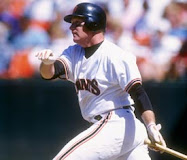
If you're a Giants fan, take a guess the average age of the position players currently on the active roster...
If you guessed 29.4 years old, then you are correct (and John Nash from "A Beautiful Mind"-esque in math as well...congrats).
That isn't exactly young, especially when you consider the fact that most of the guys that bring that average age under 30 sit on the bench. Case in point: last night, the only players in the lineup under 30 years of age were Pablo Sandoval and Buster Posey.
Now, this isn't exactly breaking ground. Giants fans have been used to Bruce Bochy's "Play the Vets At All Costs" mentality since 2007 when he first came on as manager. Some of the young guys have been solid under Bochy's tenure, and some haven't. That being said, there are some guys with solid potential, and some young guys that may just not be good enough for the big league level (ala Joe Borchard...he's tearing up Fresno, I know, but believe me, he is a Quad-A player).
John Bowker, Nate Schierholtz, Travis Ishikawa and Emmanuel Burriss are those players still with potential (whether you want to believe it or not...I'm saying it).
Of course, who knows if these four will get many opportunities this year. As a matter of fact, chances are, with the roster as veteran-stocked as it is, they probably won't get much, if any opportunities for regular playing time this year unless some injuries happen.
Yet, in terms of next season, these four arbitration-eligible players in 2012 should have some opportunities to play come Spring Training and I'll give you reasons why for each player.
John Bowker, outfielder, 26 years old.
Major League Stats: .303 average, .863 OPS in 552 games.
Major League Stats: .238 average, .678 OPS in 183 games.
What can I say about John Bowker? It's hard really. After being sent down to Fresno to make room for Pat Burrell, his 2010 season has been a bit of a disappointment. He tore up the Pacific Coast League last year, posting a .342 average, a 1.047 OPS and also hit 21 home runs in 450 plate appearances with the Grizzlies. Furthermore, he got off to a resounding start in Spring Training, hitting .312 with six home runs in 77 AB, which led him to getting the starting right fielder's position on Opening Day over Nate Schierholtz.
Unfortunately, the 2010 regular season has been anything but kind to Bowker. In 90 plate appearances this year, Bowker posted a .207 average, a .609 OPS and a .262 wOBA (his projected wOBA prior to the season was .350 according CHONE projections).To make matters worse, he didn't seem to transition the plate patience he showed in Fresno in 2009 to the big league level these first few months of Major League play. Bowker's 0.26 BB/K ratio (compounded by a 28 percent strikeout rate) is a far cry from the 1.16 BB/K ratio he sported with the Grizzlies (though, to look at it optimistically, it is better than the 0.22 ratio he had in 2009 at the Major League level).
However, despite the poor start, there is hope for Bowker.
First off, look at what he's doing in Fresno right now. In 10 games and 46 plate appearances with the Grizzlies, Bowker has hit four home runs and posted a batting average of .390 and an OPS of 1.166. Bowker is hitting the ball hard and hitting the ball with confidence, something you couldn't say he was doing in the Majors this year.
It is possible to think that Bowker will develop the confidence he needs in Fresno and will transition that to the Majors the next time he is called up. Then again, Giants fans thought that would happen this year (but Giants fans also thought he would get more of a chance as well).
Second, if you look at Bowker's plate discipline numbers, he has shown improvement, which is comforting. He has swung at less pitches outside the strike zone (22.5 percent, which is down 25.9 percent in 2009), and he is making better contact as well (his contact rate is up from 72.3 percent in 2009 to 78.7 percent this year).
The big problem for Bowker in the Majors? He is hitting more groundballs and he has struggled to find holes. His GB/FB ratio is abnormally high at 1.63 (he was under one the past two years in the Majors) and his BABIP is low at .241.
That being said, the numbers aren't as bad as they look. Despite only having a flyball rate of 31.1 percent this year, his HR/FB percentage is 15.8 percent (the highest it's been since he's been in the Majors). Additionally, his line drive percentage sits at 18 percent, an improvement from 2009 when it was 14 percent.
Prediction for Bowker in 2011
The outfield situation is very touchy for next year. Aubrey Huff will be a free agent, but considering how well he has played this year, it wouldn't be a surprise to see Brian Sabean re-up him for another year, which would hurt Bowker's chances of playing. Second, Thomas Neal, Roger Kieschnick and Darren Ford waiting on the horizon don't make things easier, especially considering how much is invested in them. Bowker certainly has the opportunity to break out as expected, especially if he can continue to gain confidence at the plate, which is what he needs after such a horrid start this year. However, if he can't produce at the Major League level soon, it won't be surprising to see the Giants cut him loose ala Fred Lewis-style.
Nate Schierholtz, outfielder, 26 years old.
Minor League Stats: .308 average, .871 OPS in 627 games.
Major League Stats: .281 average, .732 OPS in 230 games.
I admit, it has take me a while to come to terms with Schierholtz. I love him defensively and his numbers certainly back him up (career 20.9 UZR). Prior to 2010 though, I wasn't too big a fan of him offensively. He was an extremely free-swinger (he had O-Swing percentages of 34.7 and 34.9 percent in 2008 and 2009) and I didn't think he had the power (.133 ISO in 2009) to back up his lack of plate patience (0.28 BB/K ratio in 2009).
In 2010 though, Schierholtz has changed himself offensively. The power still isn't there (.107 ISO this year), but he has become much more disciplined at the plate. His O-Swing currently sits at 29.1 percent, not exactly great, but a great improvement considering it was never under 34 percent in his time in the Majors.
What sticks out the most for Schierholtz is his BB/K ratio and BB percentage, which have greatly improved. His BB/K ratio is currently 0.76 and his BB percentage is 9.4 percent. How has he improved these percentages from 2009? In addition to swinging less outside the strike zone, he has made better contact at the plate as well. In 2009, he only made contact 77.7 percent of the time. In 2010? That percentage is 84.6 percent, four points above the league average.
Now, Schierholtz doesn't hit the ball in the air, which is a bit deflating considering his ability to make contact. His GB/FB ratio sits at 1.61 this year and his line drive percentage is 18.1 percent. The line drive percentage is disappointing considering the past two years it was above 20 percent.
And, not only has Schierholtz dropped in terms of hitting flyballs this year (his FB rate sits at 31.4 percent), but he hasn't been very effective in making those flyballs count. His HR/FB percentage is three percent.
To put that HR/FB percentage in perspective, only Freddy Sanchez (who doesn't have a homer this year) has a lower HR/FB ratio of Giants hitters with 50 or more plate appearances.
Prediction for Schierholtz in 2011
Schierholtz deserves regular playing time and he should get it in 2011. With Mark Derosa's health a serious question, Schierholtz could have a shot to finally capture the job that probably should have been his this year. After all, he has done nothing to merit losing his job. His offensive numbers aren't eye-popping, but they aren't detrimental either (his wRC+ is 98, only two points below league average). However, when you add it along with his defensive value, it makes sense why Schierholtz has a WAR of 1.1 this year (which accumulates to $4.2 million dollars according to Fangraphs).
Travis Ishikawa, first baseman, 26 years old.
Minor League stats: .261 average, .808 OPS in 707 games.
Major League stats: .264 average, .739 OPS in 204 games.
Ishikawa has been up and down in his tenure with the Giants. Like Schierholtz, he has earned his keep on the Giants roster because of his defensive value. Last year, he led all defenders on the Giants with a 10.2 UZR. Furthermore, he also pelted nine home runs, which gave him a HR/FB percentage of 10.2 in 2009.
Unfortunately, he has tended to frustrate Giants fans more often than not the past three years as a Giant. Despite having a walk percentage of 8.7 and 8.3 percent in 2008 and 2009, he only had BB/K ratios of 0.33 and 0.34, respectively. Furthermore, his wOBA in 2009 (.313) was disappointing considering the promise he showed in 2008 with the Giants (when his wOBA was .337) and in Fresno (his wOBA was .445 with the Grizzlies in 2008).
Like many Giants hitters, Ishikawa swings a lot outside the strike zone (he has a career O-swing percentage of 27.9 percent). Unlike some Giants free-swingers, Ishikawa doesn't make contact enough to justify it. His career contact rate is 73.1 percent (the league average is usually around 80 percent).
This year, Ishikawa has shown improvement. His BB/K ratio is up to 0.50 and he has showed some power (.844 OPS; .367 wOBA) in his 32 plate appearances.
But as a Giants fan you have to realize that it's only 32 plate appearances. That is way too small a sample to come to any realistic projection. And the worst part? He probably won't get many more plate appearances anytime soon.
Prediction for Ishikawa in 2011
Out of the four guys listed, the future looks the most bleak for Ishikawa. He's great defensively, but he seems to be behind a lot of guys on this Giants roster. Barring an injury to Huff and someone else, Ishikawa is regulated to backup duty because he is out of minor league options. I wouldn't be surprised to see him designated for assignment either this year or next season, which is a shame because he certainly wasn't too bad in 2009.
Emmanuel Burriss, second base/shortstop, 26 years old.
Minor League Stats: .282 average, .679 OPS in 228 games.
Major League Stats: .262 average, .629 OPS in 156 games.
Burriss is probably the biggest wild card of the four. He is very interesting because of his situation alone.
In 2008, he was pretty much rushed to the big leagues because a.) Omar Vizquel was fighting age and ineffectiveness and b.) Brian Bocock was only other shortstop in their organization. So, Burriss was called up in 2008 despite being 23 years old and only having played as high as Advanced Single-A.
Surprisingly, Burriss didn't do too badly. In 95 games in 2008, Burriss tole 13 bases and hit .283 with an OBP of .357 and a BB/K ratio of 0.96. While he didn't show much power (.046 ISO) and his average was a little deceptive of his offensive success (.316 wOBA and 91 wRC+), the start in 2008 definitely was a step in the right direction for the Giants' 2006 first round draft pick.
Unfortunately, in 2009, despite a stellar spring training that earned him the starting second baseman position over Kevin Frandsen, Burriss struggled. While he still stole a decent amount of bases (11), many of his other offensive statistics fell drastically from 2008, including average (.238), OBP (.292), BB/K ratio (0.41), wOBA (.258) and wRC+ (52). Also, Burriss was inconsistent defensively, as evidenced by his UZR numbers in 2009 (minus-3.9 UZR/150 in 2009 at second base).
Since he was demoted to Fresno in 2009, not only has Burriss struggled to regain his 2008 form, but he also struggled with injury. He injured his foot shortly after being called down to the Grizzlies and missed most of the remainder of the 2009 season. When he arrived in Spring Training, he injured his foot early and was immediately put on the disabled list to start the season.
Though he is still on the disabled list, Burriss is already back in action, playing a few rehab games in San Jose before being called up to Fresno on June 14th.
Even if Burriss is able to come back healthy, this year may be a wash for him. The infield is already crowded with Juan Uribe, Freddy Sanchez, Edgar Renteria Matt Downs, and Ryan Rohlinger all vying for spots and playing time. In all likelihood, Burriss will probably spend the remainder of the year in Fresno, which isn't necessarily a bad thing considering he's only played in 31 games above Advanced Single-A prior to this season.
That being said, can Burriss still contribute? He will certainly have an opportunity next year. Renteria and Uribe will be free agents next season, so the starting shortstop position will definitely be up for grabs if those two aren't re-signed (though Uribe could be re-signed). And, if he can have a solid season in the Pacific Coast League, he may be able to convince the Giants brass that 2009 was a sophomore slump rather than an indicator of things to come.
Burriss definitely has a lot to offer. He certainly is fast (24 stolen bases at the Major League level) and has defensive potential (he had a 15.7 UZR/150 in 2008 at second base). Furthermore, he can make contact really well at the plate, as evidenced by his career 87.5 percent contact rate.
Unfortunately, Burriss' defensive inconsistencies (his career UZR/150 at shortstop is minus-17.7) as well as his questionable plate discipline in 2009 (28.5 O-Swing percentage) and lack of power in the Majors (career 0.38 ISO) and minors (career 0.65 ISO) don't exactly make Giants fans feel confident that he can be a long-lasting solution at the Major League level. Also, with higher end infield prospects Brandon Crawford, Conor Gillaspie, Nick Noonan, and Ehire Adrianza waiting on the horizon, Burriss may not get long to show what he can offer at a starting infielder position.
Prediction for Burriss in 2011
If Burriss is healthy (and that's a big "if"), then it isn't impossible to think that he can nab the starting shortstop position if Renteria and Uribe leave town. The potential is there, and I think Burriss is enough of a fan favorite that Giants fans could rally behind. His ability to make contact is promising, and with the relative lack of speed on this roster, Burriss offers a much needed quality.
Of course, Burriss needs to polish up his game on both ends. He has the ability to be a very good defensive player, but it seems, according to UZR, that he may be a tad overrated. Also, while he has an ability to make contact consistently, swinging outside the strike zone as much as he did last season certainly isn't going to help his cause.
He could go any way, and that's what makes him so interesting, and so hard to predict. Let's hope Burriss can improve in Fresno this year, and in 2011, be the player Giants fans and management hoped he would develop into after he made a splash in 2008.
Showing posts with label Nate Schierholtz. Show all posts
Showing posts with label Nate Schierholtz. Show all posts
Wednesday, June 16, 2010

Saturday, May 29, 2010
Buster Posey Up From Fresno! At-Bat Analysis Later Tonight
Being a fan who has resided in two different areas out of the Giants area for the past five years (four years in Spokane and one year so far in Los Angeles), I don't get to go to many games at AT&T Park. I long for the day when I finally am able to reside in the Bay Area and get season tickets or get enough money to purchase MLB.TV or MLB Extra Innings annually. For the time being though, I have to deal with this reality of following the team from afar.
Well, in my first game of the 2010 season at AT&T Park, I will be able to see the player I have pined for all season: Buster Posey.
According to Andrew Baggarly's blog Extra Baggs, Posey is slated to start at first base tonight with Aubrey Huff moving to left. Now, I'm not so keen about this move on paper. First off, Bengie Molina is not a serviceable Major League catcher anymore (as I have noted in a post yesterday), so I don't know why the Giants cut ties with him or somehow work out a trade. I mean, Molina is poor defensively, has no power and kills the team with his lack of speed. Sure, Timmy is comfortable with him, but you know what? You're going to have to get used to Posey at some point. Why not start sooner than later?
Furthermore, I'm not sure about Huff in left. Huff has only played nine total games in his career in left field, so I wonder if he's going to be able to make the adjustment to the outfield after getting comfortable at first base this season (Huff's 0.5 UZR/150 has been a surprise, especially considering his career UZR at first base is minus-11.8). What makes the situation worse is the fact that Nate Schierholtz and John Bowker are going to be the odd men out. Because of Bruce Bochy's love for Aaron Rowand (and his .286 wOBA), Schierholtz is going to lose playing time because the Giants can't afford to bench Andres Torres, who has become the Giants' leadoff hitter. It's tough to stomach because Schierholtz has been so good defensively in his career and offensively he has stepped up nicely this year (his .340 wOBA and 0.77 BB/K ratio show that).
As for Bowker, he has struggled this year, no doubt (.276 wOBA). However, Bowker needs more playing time and has shown at time that he is on the cusp of turning it around should he be given more at-bats. With Posey up and Pat Burrell apparently on the move to the Bay Area, it almost seems like a given that Bowker is destined for Fresno real soon.
Overall, I'm happy Brian Sabean decided to suck it up and call up Posey. I hope soon enough the Giants management will come to their senses and either bench or designate Molina for assignment and put Posey behind the plate, which will keep Torres and Schierholtz in the outfield, and give the Giants their best lineup overall (both offensively and defensively).
It will definitely be interesting in the long-run. For the short term now, I'm just excited to see Posey play in person for the first time. Expect an at-bat analysis for Posey later tonight or early tomorrow after I come back home from AT&T Park.
Well, in my first game of the 2010 season at AT&T Park, I will be able to see the player I have pined for all season: Buster Posey.
According to Andrew Baggarly's blog Extra Baggs, Posey is slated to start at first base tonight with Aubrey Huff moving to left. Now, I'm not so keen about this move on paper. First off, Bengie Molina is not a serviceable Major League catcher anymore (as I have noted in a post yesterday), so I don't know why the Giants cut ties with him or somehow work out a trade. I mean, Molina is poor defensively, has no power and kills the team with his lack of speed. Sure, Timmy is comfortable with him, but you know what? You're going to have to get used to Posey at some point. Why not start sooner than later?
Furthermore, I'm not sure about Huff in left. Huff has only played nine total games in his career in left field, so I wonder if he's going to be able to make the adjustment to the outfield after getting comfortable at first base this season (Huff's 0.5 UZR/150 has been a surprise, especially considering his career UZR at first base is minus-11.8). What makes the situation worse is the fact that Nate Schierholtz and John Bowker are going to be the odd men out. Because of Bruce Bochy's love for Aaron Rowand (and his .286 wOBA), Schierholtz is going to lose playing time because the Giants can't afford to bench Andres Torres, who has become the Giants' leadoff hitter. It's tough to stomach because Schierholtz has been so good defensively in his career and offensively he has stepped up nicely this year (his .340 wOBA and 0.77 BB/K ratio show that).
As for Bowker, he has struggled this year, no doubt (.276 wOBA). However, Bowker needs more playing time and has shown at time that he is on the cusp of turning it around should he be given more at-bats. With Posey up and Pat Burrell apparently on the move to the Bay Area, it almost seems like a given that Bowker is destined for Fresno real soon.
Overall, I'm happy Brian Sabean decided to suck it up and call up Posey. I hope soon enough the Giants management will come to their senses and either bench or designate Molina for assignment and put Posey behind the plate, which will keep Torres and Schierholtz in the outfield, and give the Giants their best lineup overall (both offensively and defensively).
It will definitely be interesting in the long-run. For the short term now, I'm just excited to see Posey play in person for the first time. Expect an at-bat analysis for Posey later tonight or early tomorrow after I come back home from AT&T Park.
Friday, May 14, 2010
Aaron Rowand No Longer A Viable Leadoff Option for the Giants
Aaron Rowand may have a good year and capitalize on that "Great every three years" cycle a lot of Giants fans have bought into. Baseball fans saw it in 2004 in Chicago (.388 wOBA) and in 2007 in Philadelphia (.382 wOBA). Maybe Giants fans will see something similar from Rowand in 2010.
He's off to a good, though not great start so far. While Rowand has hit four home runs this year in 95 plate appearances, his batting average dipped to .266 after tonight's 8-2 win over the Houston Astros and his OBP fell to .310.
Rowand may still have a breakout year for the Giants. That being said, I don't believe that "big" season will happen with him batting leadoff for this team.
First off, Rowand isn't and never was a leadoff hitter. The Giants panicked and gave him the spot because, after Spring Training ended, they had no other reasonable options at leadoff. As Giants fans, we could live with Rowand batting first simply because nobody else looked better in comparison. (Seriously, Edgar Renteria and his .307 OBP in 2009 was perhaps the second best option to bat leadoff on Opening Day).
However, this isn't Opening Day anymore. The Giants have just finished game 26 of the season. Is it the midway point? No, but it certainly has been long enough to tell what has been working and what hasn't this year for the Giants.
Rowand certainly fits in the latter category.
First off, leadoff hitters need to have one of two things in order to be effective:
1.) Tremendous speed or base stealing ability.
2.) A high propensity to draw walks or get on-base.
In terms of point number one, speed can make up for a hitter's poor plate discipline. Look at Willy Taveras, who has a career OBP of .320 and a career walk percentage of 5.1 percent. Why did he bat leadoff for every team he played for in his career until this season? Because Taveras stole over 30 bases from 2005-2008, and 25 bases in 2009 (and to put it in perspective, he had a .275 OBP for the Reds in 2009).
Rowand doesn't have that speed. Rowand has only 60 stolen bases in his career. Taveras had 68 stolen bases in 2008 ALONE.
So, if Rowand can't steal bases, he must be a good on-base guy, right? A "milk the pitcher and draw some walks" guy in the mold of Kosuke Fukudome?
Not exactly either.
Rowand has a career average walk percentage of 5.7 percent. This season, he has been below his career average, as evidenced by his 3.2 percent walk percentage so far in 2010. Now, while his strikeout rate is 17.8 percent, the first time it has been under 20 percent since 2007, his BB/K ratio is still far from impressive at 0.19. Rowand's BB/K ratios the past two years in San Francisco haven't been much better either, as it was 0.24 last year and 0.35 in 2008 (the league average is usually around 0.50).
Also, the big knock on Rowand has been his plate discipline, and this year he has showed more of the same. After swinging at 32.7 percent of pitches outside the strike zone last season (seven points more than the league average), he has been even worse this year, swinging at 42.8 percent of pitches outside the strike zone.
Therefore, Rowand does not fit either category in terms of being a successful leadoff hitter. I know manager Bruce Bochy likes Rowand, and wants Rowand to get comfortable at a spot in the lineup, but leadoff simply isn't it. The more Rowand bats leadoff for the Giants, the less chance they have of making the playoffs. I do not think any Giants fan can argue with that sentiment.
So who do the Giants bat at leadoff?
I suggest two scenarios.
1.) Andres Torres (the main one).
2.) Nate Schierholtz (the secondary one).
In terms of the first option, it makes the most sense. Torres, who has stepped up this year and proved that 2009 wasn't a fluke so far, fits both categories of a successful leadoff hitter. He has good speed (he has four stolen bases this year) and he has shown a strong ability to draw walks and get on base as well (he has a 14.8 percent walk percentage, a 1.00 BB/K ratio and a .398 OBP). Furthermore, unlike Rowand, Torres has proven to be patient in the batter's box. While Torres has cut down on his swings at the plate this year (42.8 percent swing percentage), he has swung at less pitches outside the strike zone (20.6 percent).
Torres not only deserves to be batting leadoff whenever he is in the lineup, but he deserves more playing time as well. While taking playing time away from Rowand will be a challenge, if unrealistic (simply because of his contract and clout with Bochy and Sabean), he certainly deserves to be playing more games in left field, especially if Mark Derosa's wrist doesn't fully recover this year.
However, while I agree that he deserves to be playing MORE, I do not think he should be the permanent left fielder for the remainder of the year. If anything, some kind of platoon needs to be worked out with John Bowker in left field. Bowker still has potential. His walk rate is the highest its been in his Major League career (9.2 percent) and his HR/FB rate (15.4 percent) shows that he has power potential. BowkerwOBA and 27.6 percent strikeout percentage don't help), but with Derosa hurt, this should be an opportunity for Giants management to give Bowker more at-bats.
The best scenario, in my mind, would be for some kind of 60-40 split (or at the very least, 70-30) between Torres and Bowker in terms of playing time in left field with Derosa out and likely heading to the DL. If they don't do it now, they might as well just send Bowker to Fresno because he isn't going to get any other opportunities considering how crowded this outfield is.
If Bowker does get the opportunity of playing every few days (and that's a big IF), then Schierholtz (who has earned the starting right field job after a great start) should bat leadoff for the Giants when Bowker is starting in left.
Schierholtz isn't a typical leadoff hitter. Unlike Rowand though, he has shown improvement this year in drawing walks and being more patient at the plate. His walk percentage is 7.4 percent this year and his BB/K ratio is 0.70 (it was 0.28 last year and 0.38 in 2008). Additionally, he has been more efficient at the plate, swinging at less pitches outside the strikezone (26 percent, a nine point drop from the previous season), while making better contact to boot (85.9 percent contact rate; an 8.2 percent improvement from 2009).
Surprisingly, Schierholtz has some speed as well. This year he has stolen three bases in four attempts. (He had only three stolen bases all of last year!) It wouldn't be surprising to see Schierholtz to steal 10-15 bases this year if given regular playing time. Is that Taveras base stealing ability? No, but it's efficient, and certainly better than what Rowand has to offer.
The Giants solution at leadoff? Drop Rowand in the lineup (six or seven would be a great fit), make Torres the leadoff when he's in the lineup, and when Bowker is replacing him in left field every few days or so, move Schierholtz up to the one spot.
It sounds easy enough, and there is a prime opportunity to instill this plan with Derosa going to be on the shelf.
The main question though is whether or not Bochy and Sabean will have the moxie to make the move. (Knowing Bochy and his history as Giants manager, my gut says no...unfortunately.)
He's off to a good, though not great start so far. While Rowand has hit four home runs this year in 95 plate appearances, his batting average dipped to .266 after tonight's 8-2 win over the Houston Astros and his OBP fell to .310.
Rowand may still have a breakout year for the Giants. That being said, I don't believe that "big" season will happen with him batting leadoff for this team.
First off, Rowand isn't and never was a leadoff hitter. The Giants panicked and gave him the spot because, after Spring Training ended, they had no other reasonable options at leadoff. As Giants fans, we could live with Rowand batting first simply because nobody else looked better in comparison. (Seriously, Edgar Renteria and his .307 OBP in 2009 was perhaps the second best option to bat leadoff on Opening Day).
However, this isn't Opening Day anymore. The Giants have just finished game 26 of the season. Is it the midway point? No, but it certainly has been long enough to tell what has been working and what hasn't this year for the Giants.
Rowand certainly fits in the latter category.
First off, leadoff hitters need to have one of two things in order to be effective:
1.) Tremendous speed or base stealing ability.
2.) A high propensity to draw walks or get on-base.
In terms of point number one, speed can make up for a hitter's poor plate discipline. Look at Willy Taveras, who has a career OBP of .320 and a career walk percentage of 5.1 percent. Why did he bat leadoff for every team he played for in his career until this season? Because Taveras stole over 30 bases from 2005-2008, and 25 bases in 2009 (and to put it in perspective, he had a .275 OBP for the Reds in 2009).
Rowand doesn't have that speed. Rowand has only 60 stolen bases in his career. Taveras had 68 stolen bases in 2008 ALONE.
So, if Rowand can't steal bases, he must be a good on-base guy, right? A "milk the pitcher and draw some walks" guy in the mold of Kosuke Fukudome?
Not exactly either.
Rowand has a career average walk percentage of 5.7 percent. This season, he has been below his career average, as evidenced by his 3.2 percent walk percentage so far in 2010. Now, while his strikeout rate is 17.8 percent, the first time it has been under 20 percent since 2007, his BB/K ratio is still far from impressive at 0.19. Rowand's BB/K ratios the past two years in San Francisco haven't been much better either, as it was 0.24 last year and 0.35 in 2008 (the league average is usually around 0.50).
Also, the big knock on Rowand has been his plate discipline, and this year he has showed more of the same. After swinging at 32.7 percent of pitches outside the strike zone last season (seven points more than the league average), he has been even worse this year, swinging at 42.8 percent of pitches outside the strike zone.
Therefore, Rowand does not fit either category in terms of being a successful leadoff hitter. I know manager Bruce Bochy likes Rowand, and wants Rowand to get comfortable at a spot in the lineup, but leadoff simply isn't it. The more Rowand bats leadoff for the Giants, the less chance they have of making the playoffs. I do not think any Giants fan can argue with that sentiment.
So who do the Giants bat at leadoff?
I suggest two scenarios.
1.) Andres Torres (the main one).
2.) Nate Schierholtz (the secondary one).
In terms of the first option, it makes the most sense. Torres, who has stepped up this year and proved that 2009 wasn't a fluke so far, fits both categories of a successful leadoff hitter. He has good speed (he has four stolen bases this year) and he has shown a strong ability to draw walks and get on base as well (he has a 14.8 percent walk percentage, a 1.00 BB/K ratio and a .398 OBP). Furthermore, unlike Rowand, Torres has proven to be patient in the batter's box. While Torres has cut down on his swings at the plate this year (42.8 percent swing percentage), he has swung at less pitches outside the strike zone (20.6 percent).
Torres not only deserves to be batting leadoff whenever he is in the lineup, but he deserves more playing time as well. While taking playing time away from Rowand will be a challenge, if unrealistic (simply because of his contract and clout with Bochy and Sabean), he certainly deserves to be playing more games in left field, especially if Mark Derosa's wrist doesn't fully recover this year.
However, while I agree that he deserves to be playing MORE, I do not think he should be the permanent left fielder for the remainder of the year. If anything, some kind of platoon needs to be worked out with John Bowker in left field. Bowker still has potential. His walk rate is the highest its been in his Major League career (9.2 percent) and his HR/FB rate (15.4 percent) shows that he has power potential. BowkerwOBA and 27.6 percent strikeout percentage don't help), but with Derosa hurt, this should be an opportunity for Giants management to give Bowker more at-bats.
The best scenario, in my mind, would be for some kind of 60-40 split (or at the very least, 70-30) between Torres and Bowker in terms of playing time in left field with Derosa out and likely heading to the DL. If they don't do it now, they might as well just send Bowker to Fresno because he isn't going to get any other opportunities considering how crowded this outfield is.
If Bowker does get the opportunity of playing every few days (and that's a big IF), then Schierholtz (who has earned the starting right field job after a great start) should bat leadoff for the Giants when Bowker is starting in left.
Schierholtz isn't a typical leadoff hitter. Unlike Rowand though, he has shown improvement this year in drawing walks and being more patient at the plate. His walk percentage is 7.4 percent this year and his BB/K ratio is 0.70 (it was 0.28 last year and 0.38 in 2008). Additionally, he has been more efficient at the plate, swinging at less pitches outside the strikezone (26 percent, a nine point drop from the previous season), while making better contact to boot (85.9 percent contact rate; an 8.2 percent improvement from 2009).
Surprisingly, Schierholtz has some speed as well. This year he has stolen three bases in four attempts. (He had only three stolen bases all of last year!) It wouldn't be surprising to see Schierholtz to steal 10-15 bases this year if given regular playing time. Is that Taveras base stealing ability? No, but it's efficient, and certainly better than what Rowand has to offer.
The Giants solution at leadoff? Drop Rowand in the lineup (six or seven would be a great fit), make Torres the leadoff when he's in the lineup, and when Bowker is replacing him in left field every few days or so, move Schierholtz up to the one spot.
It sounds easy enough, and there is a prime opportunity to instill this plan with Derosa going to be on the shelf.
The main question though is whether or not Bochy and Sabean will have the moxie to make the move. (Knowing Bochy and his history as Giants manager, my gut says no...unfortunately.)
Tuesday, April 27, 2010
Trying to Understand John Bowker, "MLB-Version"
I really, really like John Bowker. I admit that. I like him more than Nate Schierholtz (though nothing against Nate, it's like comparing Penelope Cruz and Salma Hayek; I just like Penelope and Bowker a little more), which is why I petitioned him for the starting right field position and supported manager Bruce Bochy's call on Opening Day.
Why do I like him? I'm not really sure. Maybe he's from Sacramento, and being a Sacramento-resident, I feel obligated to support my own. Maybe I like the power potential he showed when he burst on the scene in 2008.
However, despite my gravitation toward Bowker, I have to admit one thing: Bowker hasn't really impressed too much at the Major League level.
In 2008, Bowker put up solid numbers, hitting 10 home runs and driving in 43 RBI in 350 plate appearances with the Giants. His OBP (.300), OPS (.703) or wOBA (.307) weren't that impressive, but I think the 10 home runs gave some Giants fans hope that Bowker was on the cusp of being at least a solid, regularly-contributing player to the Giants roster in a couple of years.
One of the main beefs about Bowker at the time was his plate approach. In 2008 with the Giants, Bowker had a BB/K ratio of 0.26, which in all honesty is not very good. Thus, if Bowker was going to contribute at the next level, he needed to improve his eye at the plate and cut down the strikeouts or at the very least, up the walk numbers and ability to get on-base.
Surprisingly, in 2009 in Fresno, Bowker did that and more.
After never posting a BB/K ratio higher than 0.40 at any professional level prior to 2009, Bowker was incredible in Fresno. People talk about the home runs (21), the OPS (1.047) or the average (.342), but the most eye-popping statistic in my mind was Bowker's 1.16 BB/K ratio (an 86 point improvement from the previous season, which is equivalent to Robert Downey's career jump after 2005).
Everybody, including myself, was convinced. Bowker was set and ready for the Major League level.
However, he struggled in his callup in 2009, and looked far from comfortable in the batter's box for the Giants. In 73 plate appearances, Bowker hit .194, posted an OPS of .620 and sported a wOBA of .277. And, unlike 2008, he didn't add much power either. He had only six extra-base hits (including two home runs).
The worst part of it all for Bowker though happened to be his dip in his BB/K ratio. After putting up unbelievable numbers in 2009 in Fresno, he didn't seem to be any better from the 2008 version Giants fans saw in San Francisco. His BB/K ratio in 2009 with the Giants was 0.22 (compounded by a strikeout rate of 26.9 percent).
Then again though, us Bowker defenders tried not to fret too much. We pointed out to the small sample in the Major Leagues as reason to not completely jump ship on him. We pointed out that the large sample in Fresno was for real, and with Hensley Meulens (the Fresno hitting coach in 2009) taking over the Giants hitting coach position in 2010, Bowker was ready to break out.
Despite a solid Spring Training, Bowker continues to show more of the same.
In 45 plate appearances in 2010, Bowker is hitting .186 with a .525 OPS and a wOBA of .222. His BB/K ratio is almost laughable at 0.17 and his strikeout rate (27.9 percent) is almost six points higher than it was in 2008.
None of it makes sense. This was supposed to be Bowker's year. Everything was in place: the hitting coach, the starting gig, the "nothing to prove" factor in Fresno.
And yet, here we are again, with Bowker most likely heading down to Fresno once Freddy Sanchez returns off the Disabled List.
What is wrong with Bowker? What made him such a stud in 2009 in Triple-A? Why does he look like Albert Pujols in the Pacific Coast League, but in the Majors, he seems to swing at every breaking ball in the dirt?
At this point, I don't understand, and many Giants fans do not either. Yes, he is somewhat getting better. He swings at less pitches outside the strike zone (24.6 percent) in comparison to his first Major League stint in 2008 (when it was 32.3 percent). He has made better contact this year (76.7 percent) than last year (72.2) percent. He hasn't hit many flyballs (his FB percentage is 29.0 percent this year), but he makes those flyballs count (11.1 percent HR/FB ratio).
Bowker is getting there. He hasn't made the progress or had the luck we Giants fans hoped for this year, but Bowker is a better hitter now than he was in 2008. The numbers prove it.
However, with Bochy as manager, and average defensive skills, Bowker doesn't look like he has much time to prove to the Giants that he is the guy to be playing everyday for Orange and Black. Giants management and fans seem to be more in favor of other outfielders like Schierholtz and Torres, and in many ways, you can't blame them. Schierholtz is hitting well (.819 OPS, .370 wOBA, and 0.60 BB/K ratio) and Torres provides a ton of defensive value. Those are two things you can't necessarily say Bowker possesses at this moment.
As a Giants and Bowker fan, I hope he can gets his way out of this mess. I hope his BABIP (currently .233) rises and he can finally look better on paper for the Giants fans who constantly point to his average and other conventional stats (RBI!) as reasons why he is a bust.
Bowker is not a bust...yet. He just needs to catch some breaks.
Or at least that is what I'm telling myself now.
Why do I like him? I'm not really sure. Maybe he's from Sacramento, and being a Sacramento-resident, I feel obligated to support my own. Maybe I like the power potential he showed when he burst on the scene in 2008.
However, despite my gravitation toward Bowker, I have to admit one thing: Bowker hasn't really impressed too much at the Major League level.
In 2008, Bowker put up solid numbers, hitting 10 home runs and driving in 43 RBI in 350 plate appearances with the Giants. His OBP (.300), OPS (.703) or wOBA (.307) weren't that impressive, but I think the 10 home runs gave some Giants fans hope that Bowker was on the cusp of being at least a solid, regularly-contributing player to the Giants roster in a couple of years.
One of the main beefs about Bowker at the time was his plate approach. In 2008 with the Giants, Bowker had a BB/K ratio of 0.26, which in all honesty is not very good. Thus, if Bowker was going to contribute at the next level, he needed to improve his eye at the plate and cut down the strikeouts or at the very least, up the walk numbers and ability to get on-base.
Surprisingly, in 2009 in Fresno, Bowker did that and more.
After never posting a BB/K ratio higher than 0.40 at any professional level prior to 2009, Bowker was incredible in Fresno. People talk about the home runs (21), the OPS (1.047) or the average (.342), but the most eye-popping statistic in my mind was Bowker's 1.16 BB/K ratio (an 86 point improvement from the previous season, which is equivalent to Robert Downey's career jump after 2005).
Everybody, including myself, was convinced. Bowker was set and ready for the Major League level.
However, he struggled in his callup in 2009, and looked far from comfortable in the batter's box for the Giants. In 73 plate appearances, Bowker hit .194, posted an OPS of .620 and sported a wOBA of .277. And, unlike 2008, he didn't add much power either. He had only six extra-base hits (including two home runs).
The worst part of it all for Bowker though happened to be his dip in his BB/K ratio. After putting up unbelievable numbers in 2009 in Fresno, he didn't seem to be any better from the 2008 version Giants fans saw in San Francisco. His BB/K ratio in 2009 with the Giants was 0.22 (compounded by a strikeout rate of 26.9 percent).
Then again though, us Bowker defenders tried not to fret too much. We pointed out to the small sample in the Major Leagues as reason to not completely jump ship on him. We pointed out that the large sample in Fresno was for real, and with Hensley Meulens (the Fresno hitting coach in 2009) taking over the Giants hitting coach position in 2010, Bowker was ready to break out.
Despite a solid Spring Training, Bowker continues to show more of the same.
In 45 plate appearances in 2010, Bowker is hitting .186 with a .525 OPS and a wOBA of .222. His BB/K ratio is almost laughable at 0.17 and his strikeout rate (27.9 percent) is almost six points higher than it was in 2008.
None of it makes sense. This was supposed to be Bowker's year. Everything was in place: the hitting coach, the starting gig, the "nothing to prove" factor in Fresno.
And yet, here we are again, with Bowker most likely heading down to Fresno once Freddy Sanchez returns off the Disabled List.
What is wrong with Bowker? What made him such a stud in 2009 in Triple-A? Why does he look like Albert Pujols in the Pacific Coast League, but in the Majors, he seems to swing at every breaking ball in the dirt?
At this point, I don't understand, and many Giants fans do not either. Yes, he is somewhat getting better. He swings at less pitches outside the strike zone (24.6 percent) in comparison to his first Major League stint in 2008 (when it was 32.3 percent). He has made better contact this year (76.7 percent) than last year (72.2) percent. He hasn't hit many flyballs (his FB percentage is 29.0 percent this year), but he makes those flyballs count (11.1 percent HR/FB ratio).
Bowker is getting there. He hasn't made the progress or had the luck we Giants fans hoped for this year, but Bowker is a better hitter now than he was in 2008. The numbers prove it.
However, with Bochy as manager, and average defensive skills, Bowker doesn't look like he has much time to prove to the Giants that he is the guy to be playing everyday for Orange and Black. Giants management and fans seem to be more in favor of other outfielders like Schierholtz and Torres, and in many ways, you can't blame them. Schierholtz is hitting well (.819 OPS, .370 wOBA, and 0.60 BB/K ratio) and Torres provides a ton of defensive value. Those are two things you can't necessarily say Bowker possesses at this moment.
As a Giants and Bowker fan, I hope he can gets his way out of this mess. I hope his BABIP (currently .233) rises and he can finally look better on paper for the Giants fans who constantly point to his average and other conventional stats (RBI!) as reasons why he is a bust.
Bowker is not a bust...yet. He just needs to catch some breaks.
Or at least that is what I'm telling myself now.
Saturday, February 6, 2010
Schierholtz the Man in Right for the Giants Now, but Don't Count Out Bowker
I expected it anyway, but now I'm making it official: I'm accepting the fact that Nate Schierholtz will be the starting right fielder for the San Francisco Giants on Opening Day. Yes, I have questioned Schierholtz's ability to play right field every day for the Giants, but for the most part I'm fine with the decision by manager Bruce Bochy. Randy Winn is gone, and Schierholtz is the best defensive and offensive replacement. He has no minor league options on his contract left either, and thus, deserves his shot to play every day at the Major League level.
However, should Schierholtz falter to start off the 2010 season, Giants fans should immediately be looking at one guy to replace him: John Bowker.
Now, I understand Bowker had a terrible 2009 with the Giants and that he cooled off in 2008 after putting up solid numbers to start off his Major League career. Furthermore, even though Bowker wasn't terrible defensively for the Giants in the outfield in 2009 (he had a 3.3 UZR in the outfield last season), he certainly can't compare with Schierholtz with the glove (he had a 5.1 UZR last season).
Offensively though, Bowker could provide more upside than Schierholtz next season. And, considering the team is in need of players to step up around Pablo Sandoval, that aspect of Bowker's game should be greatly considered by Bochy next season.
First off, if you look at the projections, Bowker surprisingly fares much better than Schierholtz in 2010. According to CHONE projections (which was deemed competitive in comparison to Bill James projections by some), Bowker is expected to do better in Schierholtz in nearly every category. CHONE projects him to hit more home runs (15 to Schierholtz's 11), more RBI (62 to 49), score more runs (57 to 50), draw more walks (43 to 19), have a higher OPS (.805 to .782), and accumulate more runs above average based on wOBA (8.3 to 3.8).
Now, I understand projections are only projections (after all, CHONE did expect Sandoval to hit under 20 home runs next season). That being said, I think there are a couple of factors that could make Bowker's projections a reality next season, should he be given a chance to play regularly.
1.) Hensley Meulens was named the Giants' hitting coach this off-season.
For those who don't know "Bam-Bam," he was the hitting coach in Fresno last season. Why is that such a big deal? Well, Bowker put up unbelievable stats at the plate last season in 104 games with the Grizzlies. Bowker hit .342 with 21 home runs, 83 RBI, and scored 82 runs, had a 1.047 OPS, a .447 wOBA (weighted on-base average) and accumulated 41.3 runs above average based on wOBA in 2009 at Triple-A.
Yet the biggest stats of importance in Bowker's case last year in Fresno? A 16.4 percent walk rate, a 17.5 strikeout rate and a 1.16 BB/K rate. He never had a BB/K rate over 0.40 at any level until last year in Fresno.
And who was the guy that helped Bowker become a more selective and better hitter at the dish (not to mention earn "Triple-A Player of the Year" honors)? That honor belongs to Meulens. To make things better, chances are he will continue to work with and help Bowker transition that Triple-A success to the Major Leagues, now that he's the Giants' hitting coach in 2010.
Granted, those numbers are at Triple-A, and if anybody remembers, Todd Linden hit 30 home runs and posted a 1.120 OPS in 2005 at the Triple-A level.
That being said, even in his best season at Triple-A in 2008, Schierholtz only posted a 0.41 BB/K ratio. Thus, though Schierholtz could hit for power at the Triple-A level (he hit 18 homers in 2008 and had an OPS of .958), his free-hacking approach certainly doesn't bode well for success at the MLB level, especially after 2009 where he posted a pedestrian 0.28 BB/K ratio and .702 OPS.
There is also one more reason why Bowker could prove to be a valuable asset to the Giants outfield in 2010 over Schierholtz:
2.) Bowker's HR/FB percentage
Now, Bowker's HR/FB (home run to flyball ratio) was nothing special at 9.1 percent, but it looks really good in comparison to Schierholtz, who had a HR/FB ratio of 6.2 percent in 2009.
To put it in perspective, Schierholtz had a lower HR/FB percentage than Eugenio Velez and Fred Lewis (that's right, Giants fans' favorite whipping boy).
What does this mean? It means that Bowker has a better potential to hit with more power than Schierholtz (as did Velez and Lewis in 2009), and with a team devoid of "power hitters" around Sandoval (unless you consider Bengie Molina and Aubrey Huff to be decent power hitters), the Giants need all the offensive production they can get. With Bowker, the Giants' lineup has a home-run potential. With Schierholtz, chances are they will just get groundballs (as evidenced by his 44.6 groundball percentage and 1.28 GB/FB ratio in 2009).
Now, I know everyone will say "that's just one season" in terms of comparing the HR/FB ratios between Bowker and Schierholtz. However, if you look at 2008, the numbers are even more in Bowker's favor. In 2008, Bowker had a 10.5 percent HR/FB percentage. Schierholtz? He only had a 6.3 percent HR/FB percentage.
Just to make it known, I'm not hoping for Schierholtz to fail as the Giants right fielder. There is a lot to like about Schierholtz: he's incredible defensively, and he's a gamer. The latter quality probably isn't so important (since Aaron Rowand is technically a "gamer" too), but the former definitely is. If there's anything Giants fans took for granted in 2009, it was Randy Winn's defense. AT&T Park's right field is a killer position to play, and Winn made it look easy (his 9.6 UZR and 16.5 fielding runs above average based on UZR proved that in 2009). Schierholtz not only is capable of handling the position as well as Winn, but he might do better because he has a better arm than Winn.
That being said, aside from his defense, I do feel Schierholtz is a limited player with the bat. He doesn't provide power and he doesn't have enough plate patience to make up for his lack of power. On the flip side, Bowker provides so much more upside with his bat, and with a new hitting coach for the Giants (one that knows Bowker's strengths and weaknesses inside and out) and a better opportunity for regular playing time in 2010, it isn't impossible think that Bowker can put up numbers closer to his 2009 in Fresno rather than his 2009 with the Giants.
Sure, Schierholtz is the fan-favorite for now, but if the Giants really want to improve their offense in 2010, Bowker may prove to be the better option overall. If Bowker has a solid Spring Training, don't be surprised to see Schierholtz feel the heat if he struggles out of the gate next season.
However, should Schierholtz falter to start off the 2010 season, Giants fans should immediately be looking at one guy to replace him: John Bowker.
Now, I understand Bowker had a terrible 2009 with the Giants and that he cooled off in 2008 after putting up solid numbers to start off his Major League career. Furthermore, even though Bowker wasn't terrible defensively for the Giants in the outfield in 2009 (he had a 3.3 UZR in the outfield last season), he certainly can't compare with Schierholtz with the glove (he had a 5.1 UZR last season).
Offensively though, Bowker could provide more upside than Schierholtz next season. And, considering the team is in need of players to step up around Pablo Sandoval, that aspect of Bowker's game should be greatly considered by Bochy next season.
First off, if you look at the projections, Bowker surprisingly fares much better than Schierholtz in 2010. According to CHONE projections (which was deemed competitive in comparison to Bill James projections by some), Bowker is expected to do better in Schierholtz in nearly every category. CHONE projects him to hit more home runs (15 to Schierholtz's 11), more RBI (62 to 49), score more runs (57 to 50), draw more walks (43 to 19), have a higher OPS (.805 to .782), and accumulate more runs above average based on wOBA (8.3 to 3.8).
Now, I understand projections are only projections (after all, CHONE did expect Sandoval to hit under 20 home runs next season). That being said, I think there are a couple of factors that could make Bowker's projections a reality next season, should he be given a chance to play regularly.
1.) Hensley Meulens was named the Giants' hitting coach this off-season.
For those who don't know "Bam-Bam," he was the hitting coach in Fresno last season. Why is that such a big deal? Well, Bowker put up unbelievable stats at the plate last season in 104 games with the Grizzlies. Bowker hit .342 with 21 home runs, 83 RBI, and scored 82 runs, had a 1.047 OPS, a .447 wOBA (weighted on-base average) and accumulated 41.3 runs above average based on wOBA in 2009 at Triple-A.
Yet the biggest stats of importance in Bowker's case last year in Fresno? A 16.4 percent walk rate, a 17.5 strikeout rate and a 1.16 BB/K rate. He never had a BB/K rate over 0.40 at any level until last year in Fresno.
And who was the guy that helped Bowker become a more selective and better hitter at the dish (not to mention earn "Triple-A Player of the Year" honors)? That honor belongs to Meulens. To make things better, chances are he will continue to work with and help Bowker transition that Triple-A success to the Major Leagues, now that he's the Giants' hitting coach in 2010.
Granted, those numbers are at Triple-A, and if anybody remembers, Todd Linden hit 30 home runs and posted a 1.120 OPS in 2005 at the Triple-A level.
That being said, even in his best season at Triple-A in 2008, Schierholtz only posted a 0.41 BB/K ratio. Thus, though Schierholtz could hit for power at the Triple-A level (he hit 18 homers in 2008 and had an OPS of .958), his free-hacking approach certainly doesn't bode well for success at the MLB level, especially after 2009 where he posted a pedestrian 0.28 BB/K ratio and .702 OPS.
There is also one more reason why Bowker could prove to be a valuable asset to the Giants outfield in 2010 over Schierholtz:
2.) Bowker's HR/FB percentage
Now, Bowker's HR/FB (home run to flyball ratio) was nothing special at 9.1 percent, but it looks really good in comparison to Schierholtz, who had a HR/FB ratio of 6.2 percent in 2009.
To put it in perspective, Schierholtz had a lower HR/FB percentage than Eugenio Velez and Fred Lewis (that's right, Giants fans' favorite whipping boy).
What does this mean? It means that Bowker has a better potential to hit with more power than Schierholtz (as did Velez and Lewis in 2009), and with a team devoid of "power hitters" around Sandoval (unless you consider Bengie Molina and Aubrey Huff to be decent power hitters), the Giants need all the offensive production they can get. With Bowker, the Giants' lineup has a home-run potential. With Schierholtz, chances are they will just get groundballs (as evidenced by his 44.6 groundball percentage and 1.28 GB/FB ratio in 2009).
Now, I know everyone will say "that's just one season" in terms of comparing the HR/FB ratios between Bowker and Schierholtz. However, if you look at 2008, the numbers are even more in Bowker's favor. In 2008, Bowker had a 10.5 percent HR/FB percentage. Schierholtz? He only had a 6.3 percent HR/FB percentage.
Just to make it known, I'm not hoping for Schierholtz to fail as the Giants right fielder. There is a lot to like about Schierholtz: he's incredible defensively, and he's a gamer. The latter quality probably isn't so important (since Aaron Rowand is technically a "gamer" too), but the former definitely is. If there's anything Giants fans took for granted in 2009, it was Randy Winn's defense. AT&T Park's right field is a killer position to play, and Winn made it look easy (his 9.6 UZR and 16.5 fielding runs above average based on UZR proved that in 2009). Schierholtz not only is capable of handling the position as well as Winn, but he might do better because he has a better arm than Winn.
That being said, aside from his defense, I do feel Schierholtz is a limited player with the bat. He doesn't provide power and he doesn't have enough plate patience to make up for his lack of power. On the flip side, Bowker provides so much more upside with his bat, and with a new hitting coach for the Giants (one that knows Bowker's strengths and weaknesses inside and out) and a better opportunity for regular playing time in 2010, it isn't impossible think that Bowker can put up numbers closer to his 2009 in Fresno rather than his 2009 with the Giants.
Sure, Schierholtz is the fan-favorite for now, but if the Giants really want to improve their offense in 2010, Bowker may prove to be the better option overall. If Bowker has a solid Spring Training, don't be surprised to see Schierholtz feel the heat if he struggles out of the gate next season.
Wednesday, October 7, 2009
Is Nate Schierholtz that great of an outfield option for the Giants in 2010?
It seems that after (and even at-times during) the 2009 season, Giants fans came up with a common thought:
Manager Bruce Bochy did not play Nate Schierholtz enough.
It is true Bochy played Randy Winn way too much in right field. It is true that he had the best arm out of any of the outfielders. It is true he is a very likable player because he wears his socks high and wears no batting gloves (e.g. old-school).
Yet to argue that the right field position next season should be handed to Schierholtz is a stretch though. Sure, he had a decent year, and yes, I would rather have him patrolling right field than the aging, lame-duck armed Winn.
That being said, did Schierholtz really have a better season than fellow outfielder Fred Lewis, whose 2009 season was much maligned by far too many Giants fans?
If you look at the stats, then I don't think you can decisively say Schierholtz was better than Lewis without some argument. To say his 2009 year was head and shoulders above Lewis' is like saying Micheal Jackson was that much better a performer than Prince. (e.g. you can make the argument, and you probably in the end would be right, but it's not that black and white).
For instance, I think he gets the benefit of the doubt in two categories over Lewis:
1.) The team turned around their fortunes when he went on a hot streak of his own in mid-late June, early July.
2.) He strikes out a heck of a lot less than Lewis.
Here is the problem with the first argument: like my senior year Biology teacher told me in college, "Correlation does not necessarily mean causation."
Thus, just because Schierholtz went on a hot streak of his own doesn't mean he single-handily carried the Giants into the "winning zone." Do I think his contribution at that time had an effect on the team? Of course. Was it that big though? No, because somebody else had a hot streak that in my mind had more impact on the Giants.
Pablo Sandoval's season.
The Giants got off to a cold start out of the gate (which included a dreadful sweep at the hands of the Padres...yikes) because Sandoval didn't know the difference in the first month of the season between a bad, un-hittable pitch, and a good one that he could make contact with.
Case in point: on April 18th, Sandoval had a .195 batting average with a .250 OBP, zero home runs and only one RBI. The Giants record on April 18th after a loss to the Diamondbacks that day was 3-8.
Once Sandoval became a better hitter, the team became better. Sans a stretch where they went 2-11 in May, once Sandoval got over the hump of that bad opening point of the season, Sandoval pretty much carried the Giants to their 88-74 record (at least on the offensive end) with his bat, as evidenced by him leading the Giants in every offensive category of note.
If you want to say though that with Schierholtz in the lineup the Giants wouldn't have had that 2-11 swoon, here's another argument I would put up: Lewis had nine hits in that thirteen game stretch, and was still hitting .277 with a .377 OBP after the loss to Seattle on May 24.
The Giants had a lot of problems during that bad stretch of the year, but Lewis wasn't one of them.
My problem with the second argument mostly has to do with the fact with how overrated the strikeout is to measure how bad a player is. Mark Reynolds is the prime example of the faulty thinking of "experts" who think strikeouts are extremely detrimental to a player's development.
This season, Reynolds hit 44 home runs, drove in 102 RBI and had a .349 OBP (which would be second best on the Giants) despite setting the single-season strikeout mark (again) with 223 strikeouts.
What does this show? This shows that Reynolds is the prototype patient hitter. He may strike out a lot, but he also works the count to the point where he is able to get pitches that he can hit for power.
Strikeouts are only bad when you're Aaron Rowand, and strike out a lot while not drawing a lot of walks. While Reynolds shows that working the count can produce big hits despite strikeouts, Rowand simply shows with his high strikeout-low walk numbers he doesn't have the slightest clue what a strike zone is.
Back to Lewis though, he is more of an example of Reynolds than Rowand, at least in terms of strike zone recognition. While he doesn't have the power (as evidenced by his slugging numbers, which are poor) or the ability to drive in runs like Lewis, he certainly knows the strike zone. Lewis .348 OBP is only one point below Reynolds' and is 46 points higher than Schierholtz's.
While I know most people hate the OBP stat, here is another reason why Lewis' OBP is an indicator that Schierholtz isn't that much better than Lewis: Lewis scored 16 more runs in only 10 more at-bats than Schierholtz. Basically, with Lewis in the lineup, the Giants had a better chance of scoring runs than with Schierholtz in right field, as shocking as that may seem.
Yes, Schierholtz struck out less (36 times less to be specific) but no other stat of his is considerably better than Lewis' stat line. His batting average is only nine points better (.267 to .258), he only hit one more home run (five to four), his slugging percentage was only 10 points better (.400 to .390), and he only drove in nine more RBI (29 to 20, and even then that stat is flawed because Lewis was counted on more to score runs than drive them in like Schierholtz).
To make matters worse for "Nate the Great" fans, he did not hit extra base hits as well as Lewis. Lewis had more doubles (21 to 19) and triples (three to two) than Schierholtz.
Now, I'm not saying Lewis is better than Schierholtz and should be starting on Opening Day in 2010. Schierholtz does hold advantages in terms of age (he is three years younger) and defense (Schierholtz is good defensively, Lewis is well...mediocre is putting it nicely).
However, I think Giants fans should really come to grips with how good Schierholtz is as a player. The McCovey Chronicles brought up this point back in June, yet as you can see with the comments on the post, people were so quick to put Schierholtz on a pedestal over Lewis and other Giants outfielders just because he was on a hot streak.
Does Schierholtz have potential? Yes, this season was good as long as he is able to improve in certain categories. Yet to say he is without a doubt the right fielder of the future might be a stretch.
Because if he isn't that much statistically better than Lewis, an outfielder a lot of Giants fans seem to want no part of in 2010, than I think we, as Giants fans, are getting a little ahead of ourselves.
Manager Bruce Bochy did not play Nate Schierholtz enough.
It is true Bochy played Randy Winn way too much in right field. It is true that he had the best arm out of any of the outfielders. It is true he is a very likable player because he wears his socks high and wears no batting gloves (e.g. old-school).
Yet to argue that the right field position next season should be handed to Schierholtz is a stretch though. Sure, he had a decent year, and yes, I would rather have him patrolling right field than the aging, lame-duck armed Winn.
That being said, did Schierholtz really have a better season than fellow outfielder Fred Lewis, whose 2009 season was much maligned by far too many Giants fans?
If you look at the stats, then I don't think you can decisively say Schierholtz was better than Lewis without some argument. To say his 2009 year was head and shoulders above Lewis' is like saying Micheal Jackson was that much better a performer than Prince. (e.g. you can make the argument, and you probably in the end would be right, but it's not that black and white).
For instance, I think he gets the benefit of the doubt in two categories over Lewis:
1.) The team turned around their fortunes when he went on a hot streak of his own in mid-late June, early July.
2.) He strikes out a heck of a lot less than Lewis.
Here is the problem with the first argument: like my senior year Biology teacher told me in college, "Correlation does not necessarily mean causation."
Thus, just because Schierholtz went on a hot streak of his own doesn't mean he single-handily carried the Giants into the "winning zone." Do I think his contribution at that time had an effect on the team? Of course. Was it that big though? No, because somebody else had a hot streak that in my mind had more impact on the Giants.
Pablo Sandoval's season.
The Giants got off to a cold start out of the gate (which included a dreadful sweep at the hands of the Padres...yikes) because Sandoval didn't know the difference in the first month of the season between a bad, un-hittable pitch, and a good one that he could make contact with.
Case in point: on April 18th, Sandoval had a .195 batting average with a .250 OBP, zero home runs and only one RBI. The Giants record on April 18th after a loss to the Diamondbacks that day was 3-8.
Once Sandoval became a better hitter, the team became better. Sans a stretch where they went 2-11 in May, once Sandoval got over the hump of that bad opening point of the season, Sandoval pretty much carried the Giants to their 88-74 record (at least on the offensive end) with his bat, as evidenced by him leading the Giants in every offensive category of note.
If you want to say though that with Schierholtz in the lineup the Giants wouldn't have had that 2-11 swoon, here's another argument I would put up: Lewis had nine hits in that thirteen game stretch, and was still hitting .277 with a .377 OBP after the loss to Seattle on May 24.
The Giants had a lot of problems during that bad stretch of the year, but Lewis wasn't one of them.
My problem with the second argument mostly has to do with the fact with how overrated the strikeout is to measure how bad a player is. Mark Reynolds is the prime example of the faulty thinking of "experts" who think strikeouts are extremely detrimental to a player's development.
This season, Reynolds hit 44 home runs, drove in 102 RBI and had a .349 OBP (which would be second best on the Giants) despite setting the single-season strikeout mark (again) with 223 strikeouts.
What does this show? This shows that Reynolds is the prototype patient hitter. He may strike out a lot, but he also works the count to the point where he is able to get pitches that he can hit for power.
Strikeouts are only bad when you're Aaron Rowand, and strike out a lot while not drawing a lot of walks. While Reynolds shows that working the count can produce big hits despite strikeouts, Rowand simply shows with his high strikeout-low walk numbers he doesn't have the slightest clue what a strike zone is.
Back to Lewis though, he is more of an example of Reynolds than Rowand, at least in terms of strike zone recognition. While he doesn't have the power (as evidenced by his slugging numbers, which are poor) or the ability to drive in runs like Lewis, he certainly knows the strike zone. Lewis .348 OBP is only one point below Reynolds' and is 46 points higher than Schierholtz's.
While I know most people hate the OBP stat, here is another reason why Lewis' OBP is an indicator that Schierholtz isn't that much better than Lewis: Lewis scored 16 more runs in only 10 more at-bats than Schierholtz. Basically, with Lewis in the lineup, the Giants had a better chance of scoring runs than with Schierholtz in right field, as shocking as that may seem.
Yes, Schierholtz struck out less (36 times less to be specific) but no other stat of his is considerably better than Lewis' stat line. His batting average is only nine points better (.267 to .258), he only hit one more home run (five to four), his slugging percentage was only 10 points better (.400 to .390), and he only drove in nine more RBI (29 to 20, and even then that stat is flawed because Lewis was counted on more to score runs than drive them in like Schierholtz).
To make matters worse for "Nate the Great" fans, he did not hit extra base hits as well as Lewis. Lewis had more doubles (21 to 19) and triples (three to two) than Schierholtz.
Now, I'm not saying Lewis is better than Schierholtz and should be starting on Opening Day in 2010. Schierholtz does hold advantages in terms of age (he is three years younger) and defense (Schierholtz is good defensively, Lewis is well...mediocre is putting it nicely).
However, I think Giants fans should really come to grips with how good Schierholtz is as a player. The McCovey Chronicles brought up this point back in June, yet as you can see with the comments on the post, people were so quick to put Schierholtz on a pedestal over Lewis and other Giants outfielders just because he was on a hot streak.
Does Schierholtz have potential? Yes, this season was good as long as he is able to improve in certain categories. Yet to say he is without a doubt the right fielder of the future might be a stretch.
Because if he isn't that much statistically better than Lewis, an outfielder a lot of Giants fans seem to want no part of in 2010, than I think we, as Giants fans, are getting a little ahead of ourselves.
Subscribe to:
Posts (Atom)

 Posts
Posts