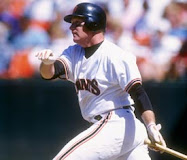
There has been a huge delay in posts. I know consistency has been something of a problem in the past, but I had some things at work that got in the way and it was hard to find time to really sit down and write. Now though, I have a little free time, so I should be able to start posting. I will get back to the 2007 prospect retrospective later, but I wanted to get through the profiles first before Spring Training. So, without further delay, here's the first profile in the Top 30.
No.1: Gary Brown, Outfielder
Age: 23 years old
Drafted: First Round (24th overall) in 2010 Draft
College: Cal State Fullerton
2011 regular season numbers: .336 average, .407 OBP, .519 slugging, .925 OPS, .411 wOBA, 140 wRC+, 115 runs scored, 14 home runs, 53 stolen bases (High-A)
2011 Fall League/Winter League numbers: .220 average, .278 OBP, .300 slugging, .578 OPS, .266 wOBA, 40 wRC+, 6 runs scored, 1 home run, 2 stolen bases (AFL)
Why You Should Know About Brown in 2012:
Brown is the consensus top prospect in the Giants system and for good reason. He had an absolutely phenomenal year in the California League in his first full professional year. While he had a stellar career at baseball powerhouse Cal State Fullerton, many baseball experts felt Brown was a bit of a reach at the 24th slot in the 2010 draft. However, after last year, not only did he help change the minds of a lot of those naysayers, but he also became valuable to the point where the Giants were willing to trade former Top 10 pick Zack Wheeler in the Carlos Beltran deal over Brown.
What Are Brown's Strengths as a Prospect?
Brown's speed is his calling card and his plus tool as a prospect. Brown recorded a 3.80 time down the first line according to scouts, which is absolutely blazing (4.00 is usually a plus score), and last year in San Jose, Brown did steal 53 bags to boot. However, while the speed on the basepaths is nice, Brown was known for being a solid contact hitter (he posted a 94 percent contact rate in his last year at Fullerton) and in San Jose he proved much of the same as he posted an above .300 batting average and a contact rate of 86 percent. Furthermore, he also showed some gap to gap power, as he hit 34 doubles, 13 triples and 14 home runs in 638 plate appearances in San Jose in 2012 (which added up to a sterling .519 slugging).
Offensively, Brown's bat turned a lot of heads in 2011, and rightfully so. His speed, contact ability, and surprising power (especially to the gaps) make him an ideal leadoff hitter for the Giants in the future (currently Angel Pagan is slotted in the spot and he's only on a one year contract). However, defensively, Brown also rates very strong and he seems to be more than capable of handling the dimensions of AT&T's spacious park. Brown posted a 2.25 RF/G and a .989 fielding percentage in 2011. He also recorded 16 assists, not bad considering scouts rate his arm as average at best. That being said, he does have excellent range in the outfield, and has an aggressive mindset in the field as well (though at times it can be an enemy as he overplays some balls...that will get better with more experience though and is correctable). MLB Prospect Portal.com was very high on his defensive potential, as they rated his defense a 55 now, but with 70 potential (on a 20-80 scale).
Where Might Brown Struggle?
Though he had very good college numbers, Brown hasn't done anything to disprove the notion that he isn't anything more than a "California League" wonder. Now, like I said, his college numbers were very good, he has excellent tools, and his California League campaign looks incredible all across the board. That being said, he did not have a very good year statistically in Rookie ball or the Northwest League in 2010 (he posted batting averages under .200 and wOBA's of .311 and .225, respectively). In addition, his 2011 AFL campaign was extremely underwhelming offensively (.220 average, .266 wOBA). While those numbers are simply too small of samples to really hold against him (99 plate appearances total between those three stints), there will be immense pressure on Brown to perform in Richmond, especially since a lot of Giants fans envision him as the Giants starting center fielder in 2013. A lot of hitters have struggled in the transition from the California League to the Eastern League, and hence, their development stagnated along with their bats. I don't think Brown will fall in that category (as I mentioned in this earlier post), but it is something to think about as a Giants fan.
The only real concern about Brown (other than his arm strength, which is graded as mostly average by scouts; but he's a centerfielder and it's fine for his position) is probably his plate approach, which was much maligned going into the 2010 draft. Basically, Brown doesn't walk very much. It isn't Francisco Peguero-bad, but he's not going to be piling up the free passes either. Last year, he showed a lot of improvement from his college numbers (he only drew 9 walks in 210 at-bats in 2010 with the Titans), as he garnered 46 bases on balls (a 7.4 percent walk rate) and a BB/K ratio of 0.60. That being said, in the AFL, he only drew 1 walk in 55 plate appearances (a 1.8 percent rate), a bit of a regression from his solid approach in San Jose (though as stated before, it's a small sample). One of the plus aspects of Brown's game is not only his ability to make contact, but his speed. Though he could be a little more selective on the basepaths (he was caught 19 times last year), 53 stolen bases is nothing to shrug about. Brown could be one of the Giants' best stolen base threats in a long time (better than even Andres Torres, who had great speed, but did not accumulate a lot of stolen bases). However, if he struggles to get walks and recognize pitches, it's going to limit his value, because that speed will be on the bench rather than on the basepaths. (Though as I've said in my earlier post about Brown, his sneaky value comes in his HBP numbers, which make his BB/K ratios even better when you add them in to the ratio; so that could be something that could make up for the lack of walks).
A nitpicky thing I have read a lot of scouts complain about is Brown's mechanics in the batter's box. A lot of scouts feel he has too much movement pre-swing, and that it makes them wonder if his noisy mechanics will hinder him as he climbs up the system and faces better pitching. To be honest, yes, I think Brown in the batter's box looks ugly. I don't like all the movement with his legs (he twitches his back leg a lot) and he does at times show cases of "happy feet" (where he's moving his feet in the batter's box prior to the swing), though it doesn't seem as bad as it was in college. That being said, I think that concern about Brown is down the ladder with me, perhaps even a non-issue to be frank. Once Brown gets loaded up for his swing, everything looks good, and he gets out of the batter's box fast for a right handed hitter. From what I've seen, none of his quirkiness does anything to hinder his approach or swing. Is it the prettiest swing in the world? Probably not. But is it effective? Absolutely, and until it ceases to be effective, I'll consider the "noise" pre-swing as a minimal issue at best.
Grades on Brown's Tools:
Hitting for Average/Contact Ability: 18/20 (He was good in college and made strides last year; I think he should be a mid-80 percent contact hitter who'll threaten the .300 mark on an annual basis).
Plate Approach: 17/20 (Showed good discipline in 2011, but before I grade it in the A-minus range, I want to see him transition that for a second straight year).
Power: 16/20 (Depends how you view power; if it's big flies, than he's got C-grade power at best; if it's gap to gap power, Brown has a ton of potential, and this grade could go up next year if he can hold up his gap to gap power in the Eastern League in 2012).
Speed: 20/20 (Gary Brown is FAST. Enough said.)
Defense: 18/20 (Big knock is his average arm, but his range and aggressiveness make up for it; as a center fielder, I think he could have big-play, Gold Glove potential).
Health/Makeup/Intangibles: 19/20 (No major injury issues and did play 131 games last year in San Jose; seems like an upstanding guy too, which doesn't help you a ton as a prospect, but it's better than being a jerk, which seems to hurt you more than one would think as a prospect; either way, he seems like he could easily fit with other baby faces like Madison Bumgarner, Buster Posey, and Brandon Belt at the Big League level).
Overall Grade: A-minus.
Projection: Starting Center Fielder at the minimum, could have big-time contributor/All-Star potential.
Summary: I like Brown a lot, which is why I graded him as an A-minus prospect (I know Sickels graded him as a B-plus). I think Brown has some plus tools (speed being the obvious one) and some tools that could get better with more and more exposure to professional pitching. To be honest, it's hard to find a lot of flaws with Brown's tool set or abilities. Sure, he had a bit of a slump mid-season that probably prevented an earlier callup, but the overall numbers don't lie: Brown was simply phenomenal in the California League. Of course, we've been down this road before with "phenomenal" California League performers. Yet with his tool set and potential, I think Brown will not only be successful next year in Richmond, but at the Big League level as well.
Showing posts with label Gary Brown. Show all posts
Showing posts with label Gary Brown. Show all posts
Wednesday, February 15, 2012

Saturday, January 14, 2012
Will Gary Brown's Offense Survive the Move to the Eastern League?
No question about it, outfielder Gary Brown is the Giants' top prospect in the system and it isn't really close. Brown, the Giants' first round pick in the 2010 draft, had a killer year in the California League, as he posted a batting average of .336, an on-base percentage of .407 and an OPS of .925 in 131 games and 638 plate appearances in San Jose. While the home runs were nice for a guy with leadoff potential (14), his speed (his calling card when he was drafted), was on full display in the Cal League as he had 13 triples and stole 53 bases on 72 attempts.
Without a doubt, offensively, it was a banner year for Brown, but as most Giants fans know, High-A tends to be a banner year for most position prospects in the Giants system due to the hitter-friendly environments of the California League. The big question now will be how his bat will transition to the Eastern League where he will not only face better pitching, but hitting environments that favor the pitchers considerably so.
If you don't believe me, let's take a look at two formerly touted outfield prospects who mashed in High-A, but took dips the following years in Richmond: Thomas Neal and Roger Kieschnick.
2009 was a coming out party for Neal, as he posted a solid .242 ISO in San Jose, thanks to 22 home runs and a slugging percentage of .579. Neal, not previously a highly touted prospect in the Giants system (he was a 36th round draft pick out of junior college), climbed up the boards after his monster year, as Fangraphs had him listed as the the third best prospect in the Giants system in 2010 after Buster Posey and Madison Bumgarner (quite good company). In addition to the power numbers, a lot of analysts were high on Neal because of his improved approach at the plate in San Jose, as his BB/K ratio went up from 0.47 in 2008 in Augusta to 0.66 in SJ (he posted a BB percentage of 11.6 percent and a K percentage of 17.5 percent). Fangraphs writer Marc Hulet said this about Neal in his 2010 Giants write-up.
Neal's impressive 2009 performance merited a Spring Training invite in 2010, but the transition to the Eastern league proved to be a challenge for the 23-year-old from Riverside Junior College. Despite having 26 more plate appearances in 2010, his home run total dipped to 12 and his ISO fell to .149 (and consequently his wOBA tumbled almost a 100 points to .359). Also, he seemed to struggle against the better pitching as well, as his BB/K ratio fell to 0.49, with the walk rate taking the biggest hit, as it dropped to 7.9 percent, the lowest percentage since 2006, his first year in pro ball. While the numbers were not bad by any measure on a hitting standpoint, considering he was the third-best prospect in the Giants system, and his calling card was his bat (especially the power), the regression was a bit of a disappointment for Giants fans who envisioned him a future corner outfielder for the Giants in 2012 or 2013.
Things seemed to only get worse for Neal in 2011 (though it started well with him getting put on the 40-man roster), as his power continued to wilt even in the Pacific Coast League, as his ISO and wOBA fell to .114 and .336, respectively. Even worse, he looked even more lost at the plate with the Grizzlies than with the Flying Squirrels, as he had a 0.26 BB/K rate in 239 plate appearances, amplified by a 20.9 strikeout percentage, the second highest percentage in his career. Neal's decline from top-prospect to most likely a utility outfielder made him expendable to the Giants brass, as he was traded in a mid-season deal for middle infielder Orlando Cabrera (any time you get traded for a player like Cabrera, it means that management doesn't think much of you).
As for Kieschnick, his tumble in the Eastern League is much more evident, though to be honest, injuries have had a part in the hindering of his development. Much like Neal, Kieschnick went bonkers in the Cal League in 2009, as he hit 23 home runs and posted an ISO of .236 and an OPS of .876 in 563 plate appearances. Considering it was his first year of professional ball, there was a lot of hopes that the third round pick out of Texas Tech could be a better-hitting Nate Schierholtz in the future (his calling card was his rocket arm). Hulet of Fangraphs ranked him as the Giants' 5th best prospect in 2010, and remarked this in his report:
However, Kieschnick's tumble in Double-A was even more dramatic than Neal's. Due to injury, he only had 246 plate appearances and posted a measly .251 average, .298 wOBA and .673 OPS. His home run total fell to four and he had only 15 extra base hits during the injury-shortened campaign. Consequently, he tumbled out of the rankings in 2011 and earned himself a second tour of duty in the Eastern League in 2011. Unfortunately, things did not get better despite a healthier year (he had 501 plate appearances). He hit only .255 and posted a OPS of .737 in his second season with the Flying Squirrles and his ISO remained pedestrian at .174. He did hit 16 home runs and had 22 doubles and five triples, but for the most part, the achillies heel of his game, his plate approach, still did not improve, as he posted a 0.28 BB/K ratio (amplified by a 24.2 percent strikeout rate, a career high) in 2011.
Granted, Kieschnick's flaw as a player has been his inability to make consistent contact (his strikeout percentage in his three pro seasons have been 23.1, 22.4, and 24.2 percent), while not drawing walks to make up for it (his career walk percentage is 6.83). So, in many ways, the Eastern League struggles were probably more predictable than Neal's. That being said, Kieschnick is a prime example of a guy who probably got lifted a little too high in the rankings for a one year sample in a league that obviously hides a lot of hitter's flaws.
As for Brown, is he going to have a similar tumble to Neal and Kieschnick? It's hard to say (because you never know about injuries), but I would say Brown has a lot more going for him than both guys. For starters, Brown is and always was a top prospect, as he was drafted in the first round. He was a top-5 guy in the Giants system last year before his season in San Jose, while Neal and Kieschnick were relatively under-the-radar prospects whose profiles got boosted thanks to impressive (though obviously inflated) Cal League campaigns.
Secondly, Brown's calling card isn't "home-run" power like Neal and Kieschnick. Rather, the strongest part of his game is his speed, and that should be able to transition to the Eastern League, even despite the pitcher friendly confines around the league. Last year, Brown hit 34 doubles and an insane 13 triples in 638 plate appearances. Neal and Kieschnick may have hit more home runs (22 and 23 respectively compared to Brown's 14), but their extra base hits minus home runs don't compare to Brown (Neal had 45 and Kieschnick 27 to Brown's 47; and it must be noted that Neal had 41 doubles, so if you look at it, Brown had more triples than Kieschnick and Neal did combined in 2009). Without question, I would be surprised if Brown launched 14 home runs in Richmond, but while that total will go down, I think he will still manage to post good slugging percentages, because his speed is such a plus-tool.
Of course, the plate approach has people a little worried about Brown and his transition to Double-A. While his BB/K ratio was solid (0.60 in 2011), his walk rates leave a little to be desired. He only posted a 7.2 percent walk rate in San Jose, and in a short stint in the Arizona Fall League before the 2011 campaign, he only drew one (that's right ONE) walk in 55 plate appearances. That being said, he doesn't strikeout a lot either (12.7 percent strikeout rate a year ago), so he's a guy that can make contact consistently, something you couldn't say of Neal and Kieschnick in their tenures in High-A.
Another sneaky factor that could work in Brown's favor is his toughness, as evidenced by his HBP count, which was 23 last year. Add that to his walk total and BB+HBP/K ratio jumps to 0.90. Granted, I don't know if that is a sustainable number, especially as he moves up and faces better and better pitching, but it shows that Brown has an aggressive approach at the plate and that he is willing to get on base any way necessary, which is definitely a plus in his favor.
Overall, I like Brown a lot, and if he can continue to progress in Double-A at the plate like he did in High-A, then it is very likely to think that he could push for a starting job in the Giants outfield in 2013 (he's probably blocked this year due to Angel Pagan and Melky Cabrera). In my opinion, the home run power most likely will take a dip, but he's probably an 8-15 home run guy at the majors anyways, so that shouldn't be too much of an alarm. His speed on the basepaths, his ability to stretch hits and make consistent contact should bode him well at the plate in Richmond, and I don't think Giants fans will see the dramatic drop off from Brown in 2012 like former outfield prospects Neal and Kieschnick in 2010.
Without a doubt, offensively, it was a banner year for Brown, but as most Giants fans know, High-A tends to be a banner year for most position prospects in the Giants system due to the hitter-friendly environments of the California League. The big question now will be how his bat will transition to the Eastern League where he will not only face better pitching, but hitting environments that favor the pitchers considerably so.
If you don't believe me, let's take a look at two formerly touted outfield prospects who mashed in High-A, but took dips the following years in Richmond: Thomas Neal and Roger Kieschnick.
2009 was a coming out party for Neal, as he posted a solid .242 ISO in San Jose, thanks to 22 home runs and a slugging percentage of .579. Neal, not previously a highly touted prospect in the Giants system (he was a 36th round draft pick out of junior college), climbed up the boards after his monster year, as Fangraphs had him listed as the the third best prospect in the Giants system in 2010 after Buster Posey and Madison Bumgarner (quite good company). In addition to the power numbers, a lot of analysts were high on Neal because of his improved approach at the plate in San Jose, as his BB/K ratio went up from 0.47 in 2008 in Augusta to 0.66 in SJ (he posted a BB percentage of 11.6 percent and a K percentage of 17.5 percent). Fangraphs writer Marc Hulet said this about Neal in his 2010 Giants write-up.
"In fairness, his ’09 numbers may have been helped by a good hitting environment. Even so, the 22-year-old outfielder hit .337/.431/.579 in 475 at-bats. His ISO rate jumped from .168 in low-A in ’08 to .242 in high-A in ’09. Neal has also shown solid patience at the plate over the past three seasons, topping out at 11.6 BB% this past year. He did a nice job of trimming his strikeout rate by 4% over ’08′s 24.1%. It will be hard for Neal to improve upon his .444 wOBA from ’09 but he has the talent to be a star corner outfielder for the Giants."
Neal's impressive 2009 performance merited a Spring Training invite in 2010, but the transition to the Eastern league proved to be a challenge for the 23-year-old from Riverside Junior College. Despite having 26 more plate appearances in 2010, his home run total dipped to 12 and his ISO fell to .149 (and consequently his wOBA tumbled almost a 100 points to .359). Also, he seemed to struggle against the better pitching as well, as his BB/K ratio fell to 0.49, with the walk rate taking the biggest hit, as it dropped to 7.9 percent, the lowest percentage since 2006, his first year in pro ball. While the numbers were not bad by any measure on a hitting standpoint, considering he was the third-best prospect in the Giants system, and his calling card was his bat (especially the power), the regression was a bit of a disappointment for Giants fans who envisioned him a future corner outfielder for the Giants in 2012 or 2013.
Things seemed to only get worse for Neal in 2011 (though it started well with him getting put on the 40-man roster), as his power continued to wilt even in the Pacific Coast League, as his ISO and wOBA fell to .114 and .336, respectively. Even worse, he looked even more lost at the plate with the Grizzlies than with the Flying Squirrels, as he had a 0.26 BB/K rate in 239 plate appearances, amplified by a 20.9 strikeout percentage, the second highest percentage in his career. Neal's decline from top-prospect to most likely a utility outfielder made him expendable to the Giants brass, as he was traded in a mid-season deal for middle infielder Orlando Cabrera (any time you get traded for a player like Cabrera, it means that management doesn't think much of you).
As for Kieschnick, his tumble in the Eastern League is much more evident, though to be honest, injuries have had a part in the hindering of his development. Much like Neal, Kieschnick went bonkers in the Cal League in 2009, as he hit 23 home runs and posted an ISO of .236 and an OPS of .876 in 563 plate appearances. Considering it was his first year of professional ball, there was a lot of hopes that the third round pick out of Texas Tech could be a better-hitting Nate Schierholtz in the future (his calling card was his rocket arm). Hulet of Fangraphs ranked him as the Giants' 5th best prospect in 2010, and remarked this in his report:
"The left-handed hitter did a nice job of handling southpaws by posting a .933 OPS on the heels of a .400 BABIP. His OPS against right-handers was .832. Kieschnick is a hustler on the base paths and in the field despite average speed. He also has the arm strength for right field."
However, Kieschnick's tumble in Double-A was even more dramatic than Neal's. Due to injury, he only had 246 plate appearances and posted a measly .251 average, .298 wOBA and .673 OPS. His home run total fell to four and he had only 15 extra base hits during the injury-shortened campaign. Consequently, he tumbled out of the rankings in 2011 and earned himself a second tour of duty in the Eastern League in 2011. Unfortunately, things did not get better despite a healthier year (he had 501 plate appearances). He hit only .255 and posted a OPS of .737 in his second season with the Flying Squirrles and his ISO remained pedestrian at .174. He did hit 16 home runs and had 22 doubles and five triples, but for the most part, the achillies heel of his game, his plate approach, still did not improve, as he posted a 0.28 BB/K ratio (amplified by a 24.2 percent strikeout rate, a career high) in 2011.
Granted, Kieschnick's flaw as a player has been his inability to make consistent contact (his strikeout percentage in his three pro seasons have been 23.1, 22.4, and 24.2 percent), while not drawing walks to make up for it (his career walk percentage is 6.83). So, in many ways, the Eastern League struggles were probably more predictable than Neal's. That being said, Kieschnick is a prime example of a guy who probably got lifted a little too high in the rankings for a one year sample in a league that obviously hides a lot of hitter's flaws.
As for Brown, is he going to have a similar tumble to Neal and Kieschnick? It's hard to say (because you never know about injuries), but I would say Brown has a lot more going for him than both guys. For starters, Brown is and always was a top prospect, as he was drafted in the first round. He was a top-5 guy in the Giants system last year before his season in San Jose, while Neal and Kieschnick were relatively under-the-radar prospects whose profiles got boosted thanks to impressive (though obviously inflated) Cal League campaigns.
Secondly, Brown's calling card isn't "home-run" power like Neal and Kieschnick. Rather, the strongest part of his game is his speed, and that should be able to transition to the Eastern League, even despite the pitcher friendly confines around the league. Last year, Brown hit 34 doubles and an insane 13 triples in 638 plate appearances. Neal and Kieschnick may have hit more home runs (22 and 23 respectively compared to Brown's 14), but their extra base hits minus home runs don't compare to Brown (Neal had 45 and Kieschnick 27 to Brown's 47; and it must be noted that Neal had 41 doubles, so if you look at it, Brown had more triples than Kieschnick and Neal did combined in 2009). Without question, I would be surprised if Brown launched 14 home runs in Richmond, but while that total will go down, I think he will still manage to post good slugging percentages, because his speed is such a plus-tool.
Of course, the plate approach has people a little worried about Brown and his transition to Double-A. While his BB/K ratio was solid (0.60 in 2011), his walk rates leave a little to be desired. He only posted a 7.2 percent walk rate in San Jose, and in a short stint in the Arizona Fall League before the 2011 campaign, he only drew one (that's right ONE) walk in 55 plate appearances. That being said, he doesn't strikeout a lot either (12.7 percent strikeout rate a year ago), so he's a guy that can make contact consistently, something you couldn't say of Neal and Kieschnick in their tenures in High-A.
Another sneaky factor that could work in Brown's favor is his toughness, as evidenced by his HBP count, which was 23 last year. Add that to his walk total and BB+HBP/K ratio jumps to 0.90. Granted, I don't know if that is a sustainable number, especially as he moves up and faces better and better pitching, but it shows that Brown has an aggressive approach at the plate and that he is willing to get on base any way necessary, which is definitely a plus in his favor.
Overall, I like Brown a lot, and if he can continue to progress in Double-A at the plate like he did in High-A, then it is very likely to think that he could push for a starting job in the Giants outfield in 2013 (he's probably blocked this year due to Angel Pagan and Melky Cabrera). In my opinion, the home run power most likely will take a dip, but he's probably an 8-15 home run guy at the majors anyways, so that shouldn't be too much of an alarm. His speed on the basepaths, his ability to stretch hits and make consistent contact should bode him well at the plate in Richmond, and I don't think Giants fans will see the dramatic drop off from Brown in 2012 like former outfield prospects Neal and Kieschnick in 2010.
Subscribe to:
Posts (Atom)

 Posts
Posts