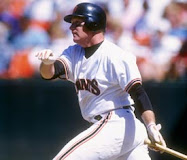
While these aren't exactly new, I forgot to include them on the last post of Spring Training notes, so I figured it would be good to include them for those who weren't aware. I was just scanning the Minor League transactions blog of Baseball America and I uncovered these tidbits on the Giants.
-- This happened during the week of March 7-12th, but the Giants optioned shortstop Ehire Adrianza and outfielder Francisco Peguero to Triple-A Fresno to start the 2012 season.
-- The decision to have Adrianza start in Fresno is a bold maneuver by Giants management. Adrianza hasn't played above High-A ball (sans a couple game stint in Fresno his first year) in his minor league career, and it was widely assumed that the defensive-oriented shortstop would most likely begin the year in Double-A Richmond. However, the Giants must have liked his defensive abilities, because his batting stat line was anything but impressive this Spring, as he only played 5 games and had 3 at-bats. In those at-bats, he struck out twice and recorded no hits. While he may start the year with the Grizzlies, I would be mighty surprised to see Adrianza stick in the PCL the whole season.
-- Peguero hasn't seen much time with the Major League club this Spring, as it seems like he has mostly been in Minor League camp if you look at the stat line (he has no recorded offensive or defensive stats on the Giants' Spring Training site). The only note I have of Peguero is the fact that he threw out A's catcher Derek Norris in a game (most likely a Minor League one). This decision to have him begin in Triple-A is a mild surprise, since I thought the Giants might start him in Richmond after he only played half a season there. That being said, the Giants must have felt his performance in Double-A was good enough, and warranted a promotion to the PCL.
-- Lastly, the Giants optioned first base prospect Angel Villalona to High-A San Jose this week. This also doesn't come as a surprise considering Villalona has been unable to acquire a visa from the U.S. consulate this Spring. It was first reported that he was approved and that he would be able to make it for Spring Training, but due to some physical issues, it has been delayed and Villalona has been stuck in the Dominican Republic this whole Spring Training. Villalona last played in San Jose in 2009, so even if he did make it for some workouts this Spring, I think High-A ball was going to be his most likely destination anyways considering he hasn't played professionally since 2009.
Showing posts with label Francisco Peguero. Show all posts
Showing posts with label Francisco Peguero. Show all posts
Thursday, March 22, 2012

Monday, February 27, 2012
OTF Top 30: No. 7, Francisco Peguero, OF
No. 7: Francisco Peguero, outfielder
Age: 23
Country: Dominican Republic
Signed: 2006
2011 Regular Season numbers: .324 average, .387 OBP, .441 Slugging, .828 OPS, .387 wOBA, 125 wRC+, 12 runs scored, 2 home runs, 4 stolen bases (High-A). .309 average, .318 OBP, .446 Slugging, .763 OPS, .340 wOBA, 109 wRC+, 34 runs scored, 5 home runs, 8 stolen bases (Double-A).
2011 Winter League numbers: .264 average, .312 OBP, .345 slugging, .657 OPS, 0.29 BB/K ratio, 5 runs scored, 1 home run, 3 stolen bases (Dominican Winter League).
Why you should know about Peguero in 2012?
Behind Gary Brown, Peguero rates as the Giants' best outfield prospect. Unlike Brown, Peguero may be ready for the big leagues as soon as this season. He already completed Double-A, and held his own with the bat (albeit with flaws). Furthermore, Peguero has five tool potential as a player, with stellar defensive abilities (he sports solid range and arm strength) as well as good speed on the basepaths. However, the projections on Peguero vary amongst analysts and scouts. Some believe he has the potential to be a very good Major League player. Some on the other hand, don't believe Peguero's free-swinging approach will translate very well to the next level. Either way, 2012 will be a very interesting year for the Dominican outfielder, especially if (and most likely when) he gets a call up to the Big League club.
What are Peguero's strengths as a prospect?
Peguero's strength is his bat, and he has showcased impressive hitting skills at every Minor League level he has played at since signing out of the Dominican Republic in 2006. He sports a minor league career batting average of .312 and has posted an average contact rate of 85.2 the past five stops from 2009-2011 (which included Salem-Keizer, Augusta, San Jose, and Richmond). To make things better, Peguero's power has improved as he has gotten older and started to fill out his 5-feet, 11-inches frame. In 2010 in 510 at-bats, he posted a career high .488 slugging and .159 ISO in the California League with San Jose, and last year in the Eastern League, he posted a .137 ISO along with a 26 percent extra base hit percentage (only one percent lower than his extra base hit percentage in San Jose in 2010). Considering the Eastern League tends to suppress hitters' power, Peguero's ability to show some pop was pretty impressive, especially since it was his debut campaign in Double-A.
However, hitting isn't the only strength of Peguero's, as he sports strong abilities on the basepaths (Rob Gordon of the MiLBA graded his speed as a four-plus out of five) and in the field (his defense was also graded as a four-plus). Though he only stole 12 bases last year between High-A and Double-A, Peguero was recovering from a knee injury, so the regression in stolen bases was to be expected. However, in a fully healthy season in 2010, he stole 40 bags and a combined 22 between Salem Keizer and Augusta in 2009. While he may not be a 30 stolen base guy by any stretch of the imagination, he does have 15-20 potential, especially with his power maturing and knee starting to recover.
From a scouting standpoint, analysts and professional scouts love the tools Peguero brings to the table. Some scouts make the Vlad Guerrero comparison often, due to his free-swinging nature, ability to make contact and rocket arm in the outfield (Baseball America graded him as having the best outfield arm in the Giants system). While I think the Guerrero comparison is a tad over-optimistic, he is impressive to watch on tape and on the field (I got a chance to watch him in San Jose in a short stint he had in the Cal League in 2011). Furthermore, Jonathan Mayo of MLB.com was especially glowing of Peguero, as he rated him the No. 2 prospect in the Giants system and 99th prospect overall. Here's what Mayo said in his scouting report of Peguero:
Where could Peguero struggle as a prospect?
The biggest issue for Peguero is his plate approach, which frankly isn't very good. Yes, he makes consistent contact and doesn't strike out a lot. That being said, Peguero doesn't draw any walks, and that's putting it nicely. His career BB/K ratio is 0.23, and he has only drawn 80 walks in 2106 plate appearances in the Minor Leagues (yes, you read that right). Last year in Richmond, he only garnered five walks in 296 plate appearances (which is 1.7 percent).
Of course, having a lack of walks at the professional level isn't necessarily a bad thing. Guerrero and Pablo Sandoval never drew a lot of walks in their Minor League careers either. That being said, to compare within the organization, Sandoval did post 97 walks in 1924 plate appearances in the Minors, and even his plate approach was questioned by some. The fact that a notorious free-swinging prospect like Sandoval drew 17 more walks in almost 200 less plate appearances than Peguero should be a big warning sign about Peguero's plate approach. He did get away with it in the lower levels, and he was successful in Richmond, so there is hope that his plus-hit tool will carry him as a professional. However, it will be interesting to see how he will fare once he starts to face better pitching and once teams get better scouting reports on him. If his BABIP dips, his numbers could take a catastrophic hit, especially considering his offensive production is so heavily weighted on him hitting for high average.
Another miniscule issue one could find with Peguero is what position he should play. While he has played center field most of his career, he moved to right field due to injury in 2011. While he profiles well there defensively (especially considering AT&T's dimensions, which require athletic right fielders), he may not hit for enough power at the corner outfield positions. Furthermore, with Gary Brown rating just as high, if not better defensively (at least in terms of range), Peguero could find himself stuck behind or moving around out-of-place when Brown catches up with him. I think Peguero would be ideal at right for the Giants (just because so much is demanded from right fielders defensively at AT&T), but his "tweener" outfielder status could present a problem in the future.
Grades on Peguero's tools:
Hitting for average/contact ability: 19/20 (I really love Peguero's hit tool. His contact rates have been consistently stellar, and he has hit for high average everywhere he's played. His swing is short and smooth, and despite the aggressiveness, his bat just doesn't miss the ball often. To me, that's just a huge plus in his favor, for it's not easy to replicate High-A offensive numbers in Double-A.)
Plate Approach: 12/20 (He gets killed heavily here, and it's the reason why he only profiles as a B prospect in my book. The BB/K ratios are atrocious and even for a free swinger, the lack of walks is disturbing and a huge red flag. Do I think he can improve the approach? Certainly, but he is already going to be 24 next season and after a season in Double-A, I don't know how much instruction will help his approach at this point. I'm not trying to be pessimistic of course, but at this point in a player's career, usually a player's approach is what it is, and his approach is not a blueprint for consistent success at the Major League level.)
Power: 16/20 (It's still developing, but Peguero's power is maturing to the point where he really does profile as a legitimate five-tool player. I don't think he'll be a 20-plus home run hitter, as his career high was 10 in 2010 in the hitter-friendly California League, but he certainly will be a threat for high slugging numbers and a lot of doubles and triples simply due to his speed. I think if he can hone his approach at the plate even a little bit, he could be a 10-15 home run guy at the Major League level. If not, then he probably profiles more as an 8-12 home run hitter.)
Speed: 18/20 (I'm curious to see how his speed will fare post-knee injury, but for the most part, Peguero's speed is a plus tool in his arsenal. 40 stolen bases in 2010 is nothing to shrug at, and he certainly has 20 stolen base potential at the next level. Furthermore, he has showed a strong knack for stretching out extra base hits, as his plus-20 percent extra base hit rates in Augusta, San Jose and Richmond have illustrated.)
Defense: 18/20 (He may be a bit of a tweener, but his tools fit well in AT&T park. His arm isn't as strong as Schierholtz's but it's close and still above average nonetheless. As with his abilities on the basepaths, I wonder how his knee injury will affect his fielding in the future, but there weren't any major issues in San Jose or Richmond last year and the reports were good on his play in center in the Dominican Winter League this past off-season. He may not be a Gold Glover, but he has the range, athleticism and arm to be a solid defender for years to come.)
Health/Makeup/Intangibles: 15/20 (The knee injury he suffered prior to 2011 is a big warning sign, simply because you never know how those will turn out. Some are just temporary set backs, some tend to linger over the years. Time will only tell how his knee holds up and how it will affect his skills. Another issue is the fact that the Giants have progressed Peguero slowly in the system, as he has repeated almost every level in his Minor League career. Granted, that's not a bad thing, and Peguero signed young enough to where repeating didn't hinder his development. Still, at 24, Peguero's time to break into the Majors is now. If he doesn't make the Majors at some point in 2012, it would be a tremendous disappointment and set back for him as a prospect.)
Overall grade: B
Projection: Starting Major League outfielder; at the very worst, a utility outfielder.
Summary: To me, Peguero resembles an Austin Jackson-esque player. He has solid tools, including speed and defense, but the offense is a huge question mark simply because of the "swing first, walk never" approach (e.g. Shawon Dunston's dream). Peguero's offensive production is always going to be heavily reliant on his BABIP, and as Jackson showed last season, a regression in the BABIP could mean a huge regression in production. Granted, a Jackson-esque player isn't a bad thing to have (he was a runner up for the Rookie of the Year award in 2010), but to think Peguero is going to be a sure-thing outfielder at the Major League level isn't for certain. 2012 is going to be a make or break year for Peguero. If he continues to hit wherever he starts (I am guessing Fresno, but I wouldn't be surprised to see him start in Richmond just considering how slowly they have progressed him), then he may have a bright future as a potential starting outfielder for the Giants starting in 2013. However, if that BABIP regresses...then well...it's not going to look good for Peguero, as he is just going to profile as that free-swinging outfielder who'll put up great Minor League numbers, but just can't hack it at the Major League level against elite pitching.
Age: 23
Country: Dominican Republic
Signed: 2006
2011 Regular Season numbers: .324 average, .387 OBP, .441 Slugging, .828 OPS, .387 wOBA, 125 wRC+, 12 runs scored, 2 home runs, 4 stolen bases (High-A). .309 average, .318 OBP, .446 Slugging, .763 OPS, .340 wOBA, 109 wRC+, 34 runs scored, 5 home runs, 8 stolen bases (Double-A).
2011 Winter League numbers: .264 average, .312 OBP, .345 slugging, .657 OPS, 0.29 BB/K ratio, 5 runs scored, 1 home run, 3 stolen bases (Dominican Winter League).
Why you should know about Peguero in 2012?
Behind Gary Brown, Peguero rates as the Giants' best outfield prospect. Unlike Brown, Peguero may be ready for the big leagues as soon as this season. He already completed Double-A, and held his own with the bat (albeit with flaws). Furthermore, Peguero has five tool potential as a player, with stellar defensive abilities (he sports solid range and arm strength) as well as good speed on the basepaths. However, the projections on Peguero vary amongst analysts and scouts. Some believe he has the potential to be a very good Major League player. Some on the other hand, don't believe Peguero's free-swinging approach will translate very well to the next level. Either way, 2012 will be a very interesting year for the Dominican outfielder, especially if (and most likely when) he gets a call up to the Big League club.
What are Peguero's strengths as a prospect?
Peguero's strength is his bat, and he has showcased impressive hitting skills at every Minor League level he has played at since signing out of the Dominican Republic in 2006. He sports a minor league career batting average of .312 and has posted an average contact rate of 85.2 the past five stops from 2009-2011 (which included Salem-Keizer, Augusta, San Jose, and Richmond). To make things better, Peguero's power has improved as he has gotten older and started to fill out his 5-feet, 11-inches frame. In 2010 in 510 at-bats, he posted a career high .488 slugging and .159 ISO in the California League with San Jose, and last year in the Eastern League, he posted a .137 ISO along with a 26 percent extra base hit percentage (only one percent lower than his extra base hit percentage in San Jose in 2010). Considering the Eastern League tends to suppress hitters' power, Peguero's ability to show some pop was pretty impressive, especially since it was his debut campaign in Double-A.
However, hitting isn't the only strength of Peguero's, as he sports strong abilities on the basepaths (Rob Gordon of the MiLBA graded his speed as a four-plus out of five) and in the field (his defense was also graded as a four-plus). Though he only stole 12 bases last year between High-A and Double-A, Peguero was recovering from a knee injury, so the regression in stolen bases was to be expected. However, in a fully healthy season in 2010, he stole 40 bags and a combined 22 between Salem Keizer and Augusta in 2009. While he may not be a 30 stolen base guy by any stretch of the imagination, he does have 15-20 potential, especially with his power maturing and knee starting to recover.
From a scouting standpoint, analysts and professional scouts love the tools Peguero brings to the table. Some scouts make the Vlad Guerrero comparison often, due to his free-swinging nature, ability to make contact and rocket arm in the outfield (Baseball America graded him as having the best outfield arm in the Giants system). While I think the Guerrero comparison is a tad over-optimistic, he is impressive to watch on tape and on the field (I got a chance to watch him in San Jose in a short stint he had in the Cal League in 2011). Furthermore, Jonathan Mayo of MLB.com was especially glowing of Peguero, as he rated him the No. 2 prospect in the Giants system and 99th prospect overall. Here's what Mayo said in his scouting report of Peguero:
"Peguero has tools galore and tries to use them with an all-or-nothing style. He’s very aggressive at the plate, a free swinger who doesn’t walk at all but also doesn’t strike out, making contact with anything and everything. He runs the bases the same way, and he has the speed to be a basestealing threat. His power hasn’t really shown up in games consistently yet, but he’s got pop in his bat for sure. He moved over to right field last year, partially because he was coming back from a knee injury. His strong arm works well there, but he was back in center field in the Dominican this winter."
Where could Peguero struggle as a prospect?
The biggest issue for Peguero is his plate approach, which frankly isn't very good. Yes, he makes consistent contact and doesn't strike out a lot. That being said, Peguero doesn't draw any walks, and that's putting it nicely. His career BB/K ratio is 0.23, and he has only drawn 80 walks in 2106 plate appearances in the Minor Leagues (yes, you read that right). Last year in Richmond, he only garnered five walks in 296 plate appearances (which is 1.7 percent).
Of course, having a lack of walks at the professional level isn't necessarily a bad thing. Guerrero and Pablo Sandoval never drew a lot of walks in their Minor League careers either. That being said, to compare within the organization, Sandoval did post 97 walks in 1924 plate appearances in the Minors, and even his plate approach was questioned by some. The fact that a notorious free-swinging prospect like Sandoval drew 17 more walks in almost 200 less plate appearances than Peguero should be a big warning sign about Peguero's plate approach. He did get away with it in the lower levels, and he was successful in Richmond, so there is hope that his plus-hit tool will carry him as a professional. However, it will be interesting to see how he will fare once he starts to face better pitching and once teams get better scouting reports on him. If his BABIP dips, his numbers could take a catastrophic hit, especially considering his offensive production is so heavily weighted on him hitting for high average.
Another miniscule issue one could find with Peguero is what position he should play. While he has played center field most of his career, he moved to right field due to injury in 2011. While he profiles well there defensively (especially considering AT&T's dimensions, which require athletic right fielders), he may not hit for enough power at the corner outfield positions. Furthermore, with Gary Brown rating just as high, if not better defensively (at least in terms of range), Peguero could find himself stuck behind or moving around out-of-place when Brown catches up with him. I think Peguero would be ideal at right for the Giants (just because so much is demanded from right fielders defensively at AT&T), but his "tweener" outfielder status could present a problem in the future.
Grades on Peguero's tools:
Hitting for average/contact ability: 19/20 (I really love Peguero's hit tool. His contact rates have been consistently stellar, and he has hit for high average everywhere he's played. His swing is short and smooth, and despite the aggressiveness, his bat just doesn't miss the ball often. To me, that's just a huge plus in his favor, for it's not easy to replicate High-A offensive numbers in Double-A.)
Plate Approach: 12/20 (He gets killed heavily here, and it's the reason why he only profiles as a B prospect in my book. The BB/K ratios are atrocious and even for a free swinger, the lack of walks is disturbing and a huge red flag. Do I think he can improve the approach? Certainly, but he is already going to be 24 next season and after a season in Double-A, I don't know how much instruction will help his approach at this point. I'm not trying to be pessimistic of course, but at this point in a player's career, usually a player's approach is what it is, and his approach is not a blueprint for consistent success at the Major League level.)
Power: 16/20 (It's still developing, but Peguero's power is maturing to the point where he really does profile as a legitimate five-tool player. I don't think he'll be a 20-plus home run hitter, as his career high was 10 in 2010 in the hitter-friendly California League, but he certainly will be a threat for high slugging numbers and a lot of doubles and triples simply due to his speed. I think if he can hone his approach at the plate even a little bit, he could be a 10-15 home run guy at the Major League level. If not, then he probably profiles more as an 8-12 home run hitter.)
Speed: 18/20 (I'm curious to see how his speed will fare post-knee injury, but for the most part, Peguero's speed is a plus tool in his arsenal. 40 stolen bases in 2010 is nothing to shrug at, and he certainly has 20 stolen base potential at the next level. Furthermore, he has showed a strong knack for stretching out extra base hits, as his plus-20 percent extra base hit rates in Augusta, San Jose and Richmond have illustrated.)
Defense: 18/20 (He may be a bit of a tweener, but his tools fit well in AT&T park. His arm isn't as strong as Schierholtz's but it's close and still above average nonetheless. As with his abilities on the basepaths, I wonder how his knee injury will affect his fielding in the future, but there weren't any major issues in San Jose or Richmond last year and the reports were good on his play in center in the Dominican Winter League this past off-season. He may not be a Gold Glover, but he has the range, athleticism and arm to be a solid defender for years to come.)
Health/Makeup/Intangibles: 15/20 (The knee injury he suffered prior to 2011 is a big warning sign, simply because you never know how those will turn out. Some are just temporary set backs, some tend to linger over the years. Time will only tell how his knee holds up and how it will affect his skills. Another issue is the fact that the Giants have progressed Peguero slowly in the system, as he has repeated almost every level in his Minor League career. Granted, that's not a bad thing, and Peguero signed young enough to where repeating didn't hinder his development. Still, at 24, Peguero's time to break into the Majors is now. If he doesn't make the Majors at some point in 2012, it would be a tremendous disappointment and set back for him as a prospect.)
Overall grade: B
Projection: Starting Major League outfielder; at the very worst, a utility outfielder.
Summary: To me, Peguero resembles an Austin Jackson-esque player. He has solid tools, including speed and defense, but the offense is a huge question mark simply because of the "swing first, walk never" approach (e.g. Shawon Dunston's dream). Peguero's offensive production is always going to be heavily reliant on his BABIP, and as Jackson showed last season, a regression in the BABIP could mean a huge regression in production. Granted, a Jackson-esque player isn't a bad thing to have (he was a runner up for the Rookie of the Year award in 2010), but to think Peguero is going to be a sure-thing outfielder at the Major League level isn't for certain. 2012 is going to be a make or break year for Peguero. If he continues to hit wherever he starts (I am guessing Fresno, but I wouldn't be surprised to see him start in Richmond just considering how slowly they have progressed him), then he may have a bright future as a potential starting outfielder for the Giants starting in 2013. However, if that BABIP regresses...then well...it's not going to look good for Peguero, as he is just going to profile as that free-swinging outfielder who'll put up great Minor League numbers, but just can't hack it at the Major League level against elite pitching.
Tuesday, March 9, 2010
Peguero or Ford: Which CF Prospect Has a Brighter Future for the Giants?
The fact of the matter is this for Giants fans: Aaron Rowand is going to be the Giants center fielder on Opening Day, and he most likely is going to bat leadoff unless one of three things happen:
1.) Mark DeRosa gets hurt again this Spring Training and is unable to play on Opening Day, which forces manager Bruce Bochy to play either Eugenio Velez or Andres Torres in left field (who would be slotted in at leadoff because of their speed).
2.) Velez goes nuts this Spring Training (entirely possible) and Bochy somehow is convinced that despite his negative UZR at the position, Velez can start second base. So, Bochy plugs in Velez at second over Uribe (because Freddy Sanchez, the "$12 Million Man" will miss Opening Day) and consequently at leadoff despite his .308 OBP last season.
3.) Rowand gets hurt sometime during Spring Training and Torres, Rowand's backup, gets the nod on Opening Day. Because of Torres' speed, Bochy gives him the leadoff spot.
Overall, only one of the options I like, and even then, I don't like it all that much (I don't think it's very hard to guess which option it is). That being said, when talking about Rowand, a very important notion does come up concerning the center fielder:
Who do the Giants have in the farm system to replace him or succeed him?
Right now, there basically are two candidates:
Francisco Peguero and Darren Ford.
Both centerfielder prospects are on the 40-man roster heading into the 2010 season and are currently playing in Spring Training games down in Scottsdale with the Major League team at this moment. There is a lot of promise and hype surrounding the two speedy centerfielders, especially after their solid 2009 campaigns in the minor leagues.
Yet, as we know, two players can't play the same position. So, which prospect is better? Which prospect should Giants fans be expecting to start in center field when Rowand (and his ridiculous contract) finally leave San Francisco?
Let's take a more in-depth look at the two young outfielders.
Why Giants Fans Should Expect Big Things from Peguero:
Peguero, a Top 10 prospect in the Giants system according to some experts, is being touted as a "Pablo Sandoval Without the Power But More Speed"-esque hitter, and you know what? It makes a lot of sense. Peguero, who will be only 22 in June, is a heck of a hitter and he sure proved last season in Salem-Keizer and Augusta.
In 17 games with the Volcanoes last year, Peguero hit .394, and posted a .421 OBP, a .435 wOBA and an .886 OPS. Furthermore, he also stole seven bases and didn't get caught once. In Augusta, Peguero also performed admirably. In 58 games, he hit .340, and posted a .359 OBP, a .367 wOBA, and a .796 OPS (not bad considering he only had a .437 slugging percentage).
Peguero is an accomplished base stealer who has shown promise on the basepaths since his rookie season. In 2008, the then 20-year-old stole a combined 25 bases (10 in the Arizona Rookie League and 15 in Single-A Augusta) while only getting caught four times (an 86.2 percent success rate).
In addition to being a solid base stealer, Peguero is also a tough out at the plate. Last season in the Northwest League, pitchers were only able to strike Peguero out 12.7 percent of the time, and in Single-A, Peguero only struck out 16.7 percent of the time. While the numbers aren't extraordinary, they are an improvement from his rookie season. In 2008 in Arizona and Augusta, Peguero struck out 21.3 and 23.9 percent of the time, respectively. Thus, 2009 showed that Peguero made strides in terms of honing his plate discipline.
Peguero also proved to be a solid defender in 2009. In both levels, he averaged a 2.43 RF/G. His RF/G was 11 points higher than Ford's RF/G in San Jose in 2009 (and Peguero also made one less error and one more double play than Ford as well).
Why Peguero May Not Be the Answer for Giants Fans:
As good a hitter as Peguero is in terms of making contact, there are some serious plate discipline issues for the Dominican outfielder. Basically, Peguero can't draw a walk to save his life. In 328 plate appearances last season between Salem Keizer and Augusta, Peguero drew eight walks. (Eight! That's it!) His walk percentage ended up being 3.9 percent for the Volcanoes and 2.0 percent for the Greenjackets, and his BB/K ratios were 0.33 and 0.13 for the Volcanoes and Greenjackets, respectively.
It is understandable that Peguero may not be the best at taking a walk, and if Sandoval has shown Giants fans anything, that isn't necessarily a bad thing (the "Panda" illustrated that you can achieve Minor and Major League success despite low walk numbers). Yet Peguero doesn't really offer any power, unlike Sandoval, who at least showed a modicum of power in the minors (and a lot more in the Majors).
In 2009, Peguero had a .070 and .097 ISO in Salem Keizer and Augusta, respectively, and he has only had an ISO over .100 once in his minor league career (during his stint in the Arizona Rookie League where it was .124). Thus, without much power to compensate, Peguero needs to get on base to maximize his speed and his meager walk numbers certainly don't make bode well in terms of keeping a solid OBP as he rises through the farm system.
Another sketchy statistic concerning Peguero's 2009 were his high BABIP numbers. In Salem Keizer, Peguero posted a .444 BABIP. In Augusta, he posted a .396 BABIP. Chances are, as he begins the year in Double-A or higher in 2010, he won't be able to post BABIP numbers that high again. They simply are too high to sustain, especially while advancing through the minor leagues. Thus, the question is this: can Peguero continue to find gaps on balls he puts in play and if he can't (which is inevitable at some point) can he improve his walk numbers enough so he can continue to get on base despite the drop on BABIP?
It could happen, but after a stint this winter in the Dominican Winter League where he hit .284, Peguero did not show much progress in terms of plate patience. In 67 at-bats this winter, Peguero only drew three walks (with one being intentional).
Why Giants Fans Should Expect Big Things from Ford:
Darren Ford is a speed demon on the basepaths. Plain and simple.
In 2006, his first season in Single A, Ford stole 69 bases for the West Virginia Power (the Milwaukee Brewers' Single-A organization). In 2007, in a combined stint with West Virginia and Brevard County (the Brewers' Advanced Single-A organization) he stole 67 bases. In 2008, while playing for Brevard County and San Jose (he was traded to Giants in the Ray Durham deal), he stole 62 bases. And, last season, he stole 35 bases in 101 games for San Jose.
As you can see, Ford has some serious base-stealing potential, not a bad quality considering the Giants' stolen base leader, Randy Winn (who stole 16 bases in 2009) signed with the New York Yankees this off-season.
And yet, stealing bases may not be the only thing Ford does well. Last season, Ford showed that he may be a solid hitter in addition to being a solid baserunner.
In San Jose last season, Ford had a breakout party of sorts at the dish. In 441 plate appearances, Ford hit .300 with a .386 OBP, a .384 wOBA, and an .849 OPS. Furthermore, Ford scored 81 runs (the most he's had at any stint since his 2006 seasons in West Virginia) and added nine home runs, nine triples and 17 doubles to his offensive resume in 2009. He also continued his solid, patient approach at the plate, as he posted an 11.1 percent walk rate (he hasn't posted a walk rate underneath nine in his professional career) and a 0.51 BB/K ratio.
For fans who miss Rajai Davis, but still like what Fred Lewis has to offer to the Giants "free-swinging" offense, Ford may be a combo of both. He is a player that has the speed of Davis, but the plate patience of Lewis. He also proved to be solid defensively in 2009, as evidenced by his 2.32 RF/G.
Ford definitely has something to offer for Giants fans of all tastes.
Why Ford May Not Be the Answer for Giants Fans:
Ford killed in Advanced Single-A last year. That being said, he was also 23 at the time, and it was his fourth go-around in Advanced Single-A to boot. So in many ways, Ford was almost an old man beating up on the competition of sorts in 2009, so a lot of his stats (especially his hitting stats) may have to be taken with a grain of salt, especially considering he didn't post a wOBA over .317 in his three previous stints in Advanced Single-A.
Additionally, while his walk rates are promising, his strikeout rates aren't. Ford strikes out a lot, and considering it's only Single-A, that makes a lot of fans wonder how he will fare at the Major League level. Ford has only posted a strikeout rate under 25 percent once in his professional career (24.5 percent in 2007 with Brevard County). And even last year, his breakout year, he still posted a 25.5 percent strikeout rate, and actually posted the lowest BB/K ratio of his four stints in Advanced Single-A.
So how did Ford have such a coming out party? His BABIP greatly increased from his last three stints in Advanced Single-A.
In 2007 and 2008 in Brevard County, Ford posted a .288 and .301 BABIP, respectively. In 2008 in San Jose, his BABIP was .326.
Last year? It was .379, the highest BABIP he's had since 2007, where he had a .427 BABIP with West Virginia.
Thus, with an increase in BABIP, it is predictable that his offensive numbers would improve so dramatically. Yet, like I said about it being his fourth year in Advanced Single-A, Giants fans have to take that BABIP numbers with a grain of salt. The California League (the league San Jose plays in) is notorious for being a "hitter's league," and last year was no exception. A lot of players posted extraordinarily high offensive numbers (especially in BABIP) in their stints for California League teams, only to see their number dip once they advanced to the next level.
One case that doesn't bode well for fans of Ford? Just take a look at Brandon Crawford in 2009.
In San Jose, Crawford hit like a mad man, posting a .371 average, .445 OBP, .445 wOBA, and a 1.045 OPS. However, his BABIP also happened to be .493 (incredibly high). When he got promoted to Double-A later in the season, his BABIP fell to .334 and his stats feel accordingly. With the Connecticut Defenders, Crawford only hit .258 with a .294 OBP, .299 wOBA and a .659 OPS.
Does this mean a similar drop off will happen for Ford in 2010 as he advances to Double-A? Maybe, maybe not. Ford is a more disciplined hitter over his career in comparison to Crawford (Crawford only posted BB/K ratios of 0.31 and 0.20 in San Jose and Connecticut, respectively). So that bodes in Ford's favor.
However, while Ford's plate patience is promising, by no means should Giants fans think that Ford will automatically being transitioning his San Jose stats to Double-A and beyond in 2010.
The Verdict?
It's a tough one to call at this point. Right now, I would say it's a dead heat between Peguero and Ford in terms of being the "centerfielder of the future" for the Giants, and it will definitely be interesting keeping tabs on these two in Spring Training (go to AZGiants.com for the latest Spring Training bits on the two, as well as Giants Spring Training news in general).
So far, Peguero is better at making contact and hitting for higher average, but Ford is a more patient hitter and a better base stealer. How do you differentiate between the two? It really depends on which qualities you like more from a player as a baseball fan.
Right now, just because I like his Fred Lewis/Rajai Davis hybrid abilities, I am in the Ford camp. However, Peguero is definitely capable of swinging my vote should he be able to improve his walk numbers and keep up his high batting average in 2010.
1.) Mark DeRosa gets hurt again this Spring Training and is unable to play on Opening Day, which forces manager Bruce Bochy to play either Eugenio Velez or Andres Torres in left field (who would be slotted in at leadoff because of their speed).
2.) Velez goes nuts this Spring Training (entirely possible) and Bochy somehow is convinced that despite his negative UZR at the position, Velez can start second base. So, Bochy plugs in Velez at second over Uribe (because Freddy Sanchez, the "$12 Million Man" will miss Opening Day) and consequently at leadoff despite his .308 OBP last season.
3.) Rowand gets hurt sometime during Spring Training and Torres, Rowand's backup, gets the nod on Opening Day. Because of Torres' speed, Bochy gives him the leadoff spot.
Overall, only one of the options I like, and even then, I don't like it all that much (I don't think it's very hard to guess which option it is). That being said, when talking about Rowand, a very important notion does come up concerning the center fielder:
Who do the Giants have in the farm system to replace him or succeed him?
Right now, there basically are two candidates:
Francisco Peguero and Darren Ford.
Both centerfielder prospects are on the 40-man roster heading into the 2010 season and are currently playing in Spring Training games down in Scottsdale with the Major League team at this moment. There is a lot of promise and hype surrounding the two speedy centerfielders, especially after their solid 2009 campaigns in the minor leagues.
Yet, as we know, two players can't play the same position. So, which prospect is better? Which prospect should Giants fans be expecting to start in center field when Rowand (and his ridiculous contract) finally leave San Francisco?
Let's take a more in-depth look at the two young outfielders.
Why Giants Fans Should Expect Big Things from Peguero:
Peguero, a Top 10 prospect in the Giants system according to some experts, is being touted as a "Pablo Sandoval Without the Power But More Speed"-esque hitter, and you know what? It makes a lot of sense. Peguero, who will be only 22 in June, is a heck of a hitter and he sure proved last season in Salem-Keizer and Augusta.
In 17 games with the Volcanoes last year, Peguero hit .394, and posted a .421 OBP, a .435 wOBA and an .886 OPS. Furthermore, he also stole seven bases and didn't get caught once. In Augusta, Peguero also performed admirably. In 58 games, he hit .340, and posted a .359 OBP, a .367 wOBA, and a .796 OPS (not bad considering he only had a .437 slugging percentage).
Peguero is an accomplished base stealer who has shown promise on the basepaths since his rookie season. In 2008, the then 20-year-old stole a combined 25 bases (10 in the Arizona Rookie League and 15 in Single-A Augusta) while only getting caught four times (an 86.2 percent success rate).
In addition to being a solid base stealer, Peguero is also a tough out at the plate. Last season in the Northwest League, pitchers were only able to strike Peguero out 12.7 percent of the time, and in Single-A, Peguero only struck out 16.7 percent of the time. While the numbers aren't extraordinary, they are an improvement from his rookie season. In 2008 in Arizona and Augusta, Peguero struck out 21.3 and 23.9 percent of the time, respectively. Thus, 2009 showed that Peguero made strides in terms of honing his plate discipline.
Peguero also proved to be a solid defender in 2009. In both levels, he averaged a 2.43 RF/G. His RF/G was 11 points higher than Ford's RF/G in San Jose in 2009 (and Peguero also made one less error and one more double play than Ford as well).
Why Peguero May Not Be the Answer for Giants Fans:
As good a hitter as Peguero is in terms of making contact, there are some serious plate discipline issues for the Dominican outfielder. Basically, Peguero can't draw a walk to save his life. In 328 plate appearances last season between Salem Keizer and Augusta, Peguero drew eight walks. (Eight! That's it!) His walk percentage ended up being 3.9 percent for the Volcanoes and 2.0 percent for the Greenjackets, and his BB/K ratios were 0.33 and 0.13 for the Volcanoes and Greenjackets, respectively.
It is understandable that Peguero may not be the best at taking a walk, and if Sandoval has shown Giants fans anything, that isn't necessarily a bad thing (the "Panda" illustrated that you can achieve Minor and Major League success despite low walk numbers). Yet Peguero doesn't really offer any power, unlike Sandoval, who at least showed a modicum of power in the minors (and a lot more in the Majors).
In 2009, Peguero had a .070 and .097 ISO in Salem Keizer and Augusta, respectively, and he has only had an ISO over .100 once in his minor league career (during his stint in the Arizona Rookie League where it was .124). Thus, without much power to compensate, Peguero needs to get on base to maximize his speed and his meager walk numbers certainly don't make bode well in terms of keeping a solid OBP as he rises through the farm system.
Another sketchy statistic concerning Peguero's 2009 were his high BABIP numbers. In Salem Keizer, Peguero posted a .444 BABIP. In Augusta, he posted a .396 BABIP. Chances are, as he begins the year in Double-A or higher in 2010, he won't be able to post BABIP numbers that high again. They simply are too high to sustain, especially while advancing through the minor leagues. Thus, the question is this: can Peguero continue to find gaps on balls he puts in play and if he can't (which is inevitable at some point) can he improve his walk numbers enough so he can continue to get on base despite the drop on BABIP?
It could happen, but after a stint this winter in the Dominican Winter League where he hit .284, Peguero did not show much progress in terms of plate patience. In 67 at-bats this winter, Peguero only drew three walks (with one being intentional).
Why Giants Fans Should Expect Big Things from Ford:
Darren Ford is a speed demon on the basepaths. Plain and simple.
In 2006, his first season in Single A, Ford stole 69 bases for the West Virginia Power (the Milwaukee Brewers' Single-A organization). In 2007, in a combined stint with West Virginia and Brevard County (the Brewers' Advanced Single-A organization) he stole 67 bases. In 2008, while playing for Brevard County and San Jose (he was traded to Giants in the Ray Durham deal), he stole 62 bases. And, last season, he stole 35 bases in 101 games for San Jose.
As you can see, Ford has some serious base-stealing potential, not a bad quality considering the Giants' stolen base leader, Randy Winn (who stole 16 bases in 2009) signed with the New York Yankees this off-season.
And yet, stealing bases may not be the only thing Ford does well. Last season, Ford showed that he may be a solid hitter in addition to being a solid baserunner.
In San Jose last season, Ford had a breakout party of sorts at the dish. In 441 plate appearances, Ford hit .300 with a .386 OBP, a .384 wOBA, and an .849 OPS. Furthermore, Ford scored 81 runs (the most he's had at any stint since his 2006 seasons in West Virginia) and added nine home runs, nine triples and 17 doubles to his offensive resume in 2009. He also continued his solid, patient approach at the plate, as he posted an 11.1 percent walk rate (he hasn't posted a walk rate underneath nine in his professional career) and a 0.51 BB/K ratio.
For fans who miss Rajai Davis, but still like what Fred Lewis has to offer to the Giants "free-swinging" offense, Ford may be a combo of both. He is a player that has the speed of Davis, but the plate patience of Lewis. He also proved to be solid defensively in 2009, as evidenced by his 2.32 RF/G.
Ford definitely has something to offer for Giants fans of all tastes.
Why Ford May Not Be the Answer for Giants Fans:
Ford killed in Advanced Single-A last year. That being said, he was also 23 at the time, and it was his fourth go-around in Advanced Single-A to boot. So in many ways, Ford was almost an old man beating up on the competition of sorts in 2009, so a lot of his stats (especially his hitting stats) may have to be taken with a grain of salt, especially considering he didn't post a wOBA over .317 in his three previous stints in Advanced Single-A.
Additionally, while his walk rates are promising, his strikeout rates aren't. Ford strikes out a lot, and considering it's only Single-A, that makes a lot of fans wonder how he will fare at the Major League level. Ford has only posted a strikeout rate under 25 percent once in his professional career (24.5 percent in 2007 with Brevard County). And even last year, his breakout year, he still posted a 25.5 percent strikeout rate, and actually posted the lowest BB/K ratio of his four stints in Advanced Single-A.
So how did Ford have such a coming out party? His BABIP greatly increased from his last three stints in Advanced Single-A.
In 2007 and 2008 in Brevard County, Ford posted a .288 and .301 BABIP, respectively. In 2008 in San Jose, his BABIP was .326.
Last year? It was .379, the highest BABIP he's had since 2007, where he had a .427 BABIP with West Virginia.
Thus, with an increase in BABIP, it is predictable that his offensive numbers would improve so dramatically. Yet, like I said about it being his fourth year in Advanced Single-A, Giants fans have to take that BABIP numbers with a grain of salt. The California League (the league San Jose plays in) is notorious for being a "hitter's league," and last year was no exception. A lot of players posted extraordinarily high offensive numbers (especially in BABIP) in their stints for California League teams, only to see their number dip once they advanced to the next level.
One case that doesn't bode well for fans of Ford? Just take a look at Brandon Crawford in 2009.
In San Jose, Crawford hit like a mad man, posting a .371 average, .445 OBP, .445 wOBA, and a 1.045 OPS. However, his BABIP also happened to be .493 (incredibly high). When he got promoted to Double-A later in the season, his BABIP fell to .334 and his stats feel accordingly. With the Connecticut Defenders, Crawford only hit .258 with a .294 OBP, .299 wOBA and a .659 OPS.
Does this mean a similar drop off will happen for Ford in 2010 as he advances to Double-A? Maybe, maybe not. Ford is a more disciplined hitter over his career in comparison to Crawford (Crawford only posted BB/K ratios of 0.31 and 0.20 in San Jose and Connecticut, respectively). So that bodes in Ford's favor.
However, while Ford's plate patience is promising, by no means should Giants fans think that Ford will automatically being transitioning his San Jose stats to Double-A and beyond in 2010.
The Verdict?
It's a tough one to call at this point. Right now, I would say it's a dead heat between Peguero and Ford in terms of being the "centerfielder of the future" for the Giants, and it will definitely be interesting keeping tabs on these two in Spring Training (go to AZGiants.com for the latest Spring Training bits on the two, as well as Giants Spring Training news in general).
So far, Peguero is better at making contact and hitting for higher average, but Ford is a more patient hitter and a better base stealer. How do you differentiate between the two? It really depends on which qualities you like more from a player as a baseball fan.
Right now, just because I like his Fred Lewis/Rajai Davis hybrid abilities, I am in the Ford camp. However, Peguero is definitely capable of swinging my vote should he be able to improve his walk numbers and keep up his high batting average in 2010.
Subscribe to:
Posts (Atom)

 Posts
Posts