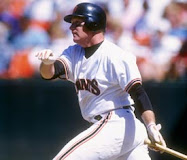
Just a quick post. I put up a poll on the sidebar asking which Giants deserve to make the All-Star game in Anaheim this year. I narrowed it down to eight guys who have a realistic chance of making it:
Tim Lincecum, Matt Cain, Brian Wilson, Aubrey Huff, Juan Uribe, Freddy Sanchez, Pablo Sandoval, and Andres Torres.
I left out Jonathan Sanchez from the list because of his inconsistency and Buster Posey and Pat Burrell because they don't have that many games under the belt.
You can vote for multiple guys on the list. In my opinion: I would think five guys are deserving: Lincecum, Cain, Wilson, Huff, and Torres. Uribe has been good, but I can't see him getting a boost over Troy Tulowitzki (who was an MVP candidate until he got hurt) and Hanley Ramirez (though he certainly is a better candidate than guys like Jimmy Rollins and Orlando Cabrera, as Crazy Crabbers notes). Also, I put Sandoval on this list more out of formality, since his year hasn't been as good as last season. As for Sanchez, he too has been awesome, but I'm not sure if his sample is large enough in comparison to other second baseman in the league.
Would love any input on your all-star picks. You can vote for real on MLB.com. It would be nice to see some Giants position players on the NL roster for once.
Showing posts with label Brian Wilson. Show all posts
Showing posts with label Brian Wilson. Show all posts
Monday, June 21, 2010

Sunday, June 20, 2010
Is the Giants' Brian Wilson An Elite Closer?
Brian Wilson is a constant source of frustration for Giants fans. It has been a far too common sight to see Wilson struggle in the ninth with a one run lead, and load the bases either through a series of hits, walks and/or both. Sometimes Wilson closes the game out and the Giants win. Sometimes he doesn't and the Giants lose. To put it nicely, it is more comfortable for a Bruce Willis to watch Ashton Kutcher on the screen in the movie "The Killers" than for a Giants fan to watch Wilson in the ninth at times.
So, I can see why the talk of Brian Wilson being an elite closer may sound like hogwash. Believe me. If you asked me the same question in Spring Training, I would have given you an emphatic "No way" and would have believed that a sequel to "Striptease" was more likely. (Boy...I'm really running with the Demi Moore-Bruce Willis divorce jokes, huh?)
When you look at the stats though, well...you can make the argument.
At the very least, Wilson has improved. During his All-Star season of 2008, Wilson posted 41 saves in 62.1 IP. However, his numbers other than his saves were far from impressive. He had a 4.62 ERA, a 1.44 WHIP, a K/BB ratio of 2.39 and a FIP of 3.93.
In 2008, he was closer to Matt Herges than Robb Nen in terms of Giants closers.
Last year though, he made tremendous strides. While he didn't make the NL All-Star roster, he certainly made a case that he deserved one by year's end. He did earn less saves than 2008 (38), but he pitched more innings (72.1 IP) and posted a better ERA (2.74), WHIP (1.20), K/BB ratio (3.07) and FIP (2.50).
And this year? He's on pace to surpass his already solid 2009 numbers, and has put himself in the discussion of perhaps earning a spot on this year's NL All-Star roster (Of course, that's if Charlie Manuel doesn't fill all the reserves with Phillies first).
First off, his K percentage is up (from 10.33 to 12.58) and his BB percentage is down (3.36 to 3.07), which has produced a stellar K/BB ratio (4.10). While his WHIP (1.23) is a bit underwhelming, his FIP (1.90), back up the assertion that he's been a better pitcher than what his 2.15 ERA says (which is always the challenge for relievers because ERA numbers can fluctuate so easily due to the lack of innings in comparison to starters).
The most startling stat? The fact that he is putting up these numbers despite having a BABIP of .375 (which is almost 75 points above the league average and 55 points higher than his BABIP last season).
What has been the secret to Wilson's success this year? Well, he's getting ahead in the count against more hitters for one.
In 2008, Wilson had a first strike percentage of 57.7 percent (below the league average of 58 percent). Last year, the percentage was 60.4. This season? His first strike percentage is 66.7 percent.
Why is this important? Being ahead of the count has paid dividends in allowing him to throw his slider more (7.9 percent in comparison to only 5.7 percent last year), which has become his most effective pitch this year. Sure, Wilson's fastball has some serious velocity (96.1 MPH), but his slider has been the better out pitch.
This year, his fastball is valued by Fangraphs at 1.26 runs above average per 100 pitches. His slider on the other hand? It is valued at 5.26 runs above average per 100 pitches. (Note: the higher the number, the better, like UZR; basically, think that it saves 5.26 runs above average per 100 pitches, for example.)
The solid repertoire of a fastball, slider and cutter (which he throws 27.1 percent of the time), has made Wilson a force to be reckoned with this year. According to ZiPS projections, Wilson is one pace for 70.1 IP. Those kind of innings logged would be beneficial to the Giants bullpen, which has struggled at times this year, especially Jeremy Affeldt, who was shelled again in his latest outing against the Blue Jays.
Now, Wilson may have improved from 2009 and yes, he may be a solid closer. That being said, I'm sure some naysayers are thinking "He's not one of the league's top closers and he's not an All-Star, either."
Let's take a look at some of the saves leaders in Major League Baseball.
Matt Capps of the Nationals is atop the league with 20 saves, Neftali Feliz of the Rangers and Kevin Gregg of the Blue Jays have 18 saves, and Heath Bell of the Padres, Jon Rauch of the Twins and Francisco Cordero of the Reds have 17 saves.
Those are the closers, along with Wilson, who are in the top-eight of the league in terms of saves.
However, how many of those top-seven guys, Wilson included, are in the top-ten in terms of FIP? One.
That one closer is Wilson.
How many of those guys are in the top ten in terms of xFIP?
Only Wilson.
So, Giants fans, as hard as it is for some to stomach, Wilson is finally a worthy successor to fan favorite Robb Nen. We had to suffer through Dustin Hermanson, Matt Herges and Armando Bentiez to get to this point, but the day of finally having a reliable closer in the ninth has come. Not only does he deserve a spot on the NL All-Star roster, but he deserves to be talked about when baseball fans talk about the league's best closers.
Because Wilson has been up there with the league's best so far in 2010, and he has the numbers (beyond saves) to back it up.
So, I can see why the talk of Brian Wilson being an elite closer may sound like hogwash. Believe me. If you asked me the same question in Spring Training, I would have given you an emphatic "No way" and would have believed that a sequel to "Striptease" was more likely. (Boy...I'm really running with the Demi Moore-Bruce Willis divorce jokes, huh?)
When you look at the stats though, well...you can make the argument.
At the very least, Wilson has improved. During his All-Star season of 2008, Wilson posted 41 saves in 62.1 IP. However, his numbers other than his saves were far from impressive. He had a 4.62 ERA, a 1.44 WHIP, a K/BB ratio of 2.39 and a FIP of 3.93.
In 2008, he was closer to Matt Herges than Robb Nen in terms of Giants closers.
Last year though, he made tremendous strides. While he didn't make the NL All-Star roster, he certainly made a case that he deserved one by year's end. He did earn less saves than 2008 (38), but he pitched more innings (72.1 IP) and posted a better ERA (2.74), WHIP (1.20), K/BB ratio (3.07) and FIP (2.50).
And this year? He's on pace to surpass his already solid 2009 numbers, and has put himself in the discussion of perhaps earning a spot on this year's NL All-Star roster (Of course, that's if Charlie Manuel doesn't fill all the reserves with Phillies first).
First off, his K percentage is up (from 10.33 to 12.58) and his BB percentage is down (3.36 to 3.07), which has produced a stellar K/BB ratio (4.10). While his WHIP (1.23) is a bit underwhelming, his FIP (1.90), back up the assertion that he's been a better pitcher than what his 2.15 ERA says (which is always the challenge for relievers because ERA numbers can fluctuate so easily due to the lack of innings in comparison to starters).
The most startling stat? The fact that he is putting up these numbers despite having a BABIP of .375 (which is almost 75 points above the league average and 55 points higher than his BABIP last season).
What has been the secret to Wilson's success this year? Well, he's getting ahead in the count against more hitters for one.
In 2008, Wilson had a first strike percentage of 57.7 percent (below the league average of 58 percent). Last year, the percentage was 60.4. This season? His first strike percentage is 66.7 percent.
Why is this important? Being ahead of the count has paid dividends in allowing him to throw his slider more (7.9 percent in comparison to only 5.7 percent last year), which has become his most effective pitch this year. Sure, Wilson's fastball has some serious velocity (96.1 MPH), but his slider has been the better out pitch.
This year, his fastball is valued by Fangraphs at 1.26 runs above average per 100 pitches. His slider on the other hand? It is valued at 5.26 runs above average per 100 pitches. (Note: the higher the number, the better, like UZR; basically, think that it saves 5.26 runs above average per 100 pitches, for example.)
The solid repertoire of a fastball, slider and cutter (which he throws 27.1 percent of the time), has made Wilson a force to be reckoned with this year. According to ZiPS projections, Wilson is one pace for 70.1 IP. Those kind of innings logged would be beneficial to the Giants bullpen, which has struggled at times this year, especially Jeremy Affeldt, who was shelled again in his latest outing against the Blue Jays.
Now, Wilson may have improved from 2009 and yes, he may be a solid closer. That being said, I'm sure some naysayers are thinking "He's not one of the league's top closers and he's not an All-Star, either."
Let's take a look at some of the saves leaders in Major League Baseball.
Matt Capps of the Nationals is atop the league with 20 saves, Neftali Feliz of the Rangers and Kevin Gregg of the Blue Jays have 18 saves, and Heath Bell of the Padres, Jon Rauch of the Twins and Francisco Cordero of the Reds have 17 saves.
Those are the closers, along with Wilson, who are in the top-eight of the league in terms of saves.
However, how many of those top-seven guys, Wilson included, are in the top-ten in terms of FIP? One.
That one closer is Wilson.
How many of those guys are in the top ten in terms of xFIP?
Only Wilson.
So, Giants fans, as hard as it is for some to stomach, Wilson is finally a worthy successor to fan favorite Robb Nen. We had to suffer through Dustin Hermanson, Matt Herges and Armando Bentiez to get to this point, but the day of finally having a reliable closer in the ninth has come. Not only does he deserve a spot on the NL All-Star roster, but he deserves to be talked about when baseball fans talk about the league's best closers.
Because Wilson has been up there with the league's best so far in 2010, and he has the numbers (beyond saves) to back it up.
Thursday, May 27, 2010
Can Denny Bautista and Santiago Casilla Invigorate the Giants Bullpen?
After coming back and beating the Nationals today 5-4, the Giants remained over .500 for the season at 24-22. While the record is still promising, the Giants have struggled in the month of May, alarming considering many of the teams in the NL West who flopped in April are starting to turn it around this month (e.g. Colorado, Los Angeles).
Now, the Giants have offensive problems. No doubt about it. Furthermore, there are concerns with Tim Lincecum as well, especially after his latest six hit, six run, five walk performance in 4.2 IP on Wednesday against the Nationals.
Yet one of the big concerns that has Giants fans up in arms is this: can the bullpen hold up and keep the Giants competitive?
The bullpen can mean the difference between a rebuilding season and a playoff run, and the Giants have experienced this first-hand. In 2008, during their 72-90 season, the Giants bullpen was one of the worst in baseball, sporting a 4.45 ERA (24th in the Majors). In 2009, when the Giants went 88-74 and just missed out on the NL Wild Card, the bullpen posted an ERA of 3.49, second-best in baseball (behind only the Dodgers, who had a bullpen ERA of 3.14).
How are the Giants relievers doing this season? Well, the results have been mixed. Brian Wilson is off to a solid start having converted 12 out of his first 13 saves, and sporting an ERA of 2.45. Furthermore, the Giants have gotten solid performances out of journeyman and former Dodger (God I hate saying that) Guillermo Mota, who has appeared in 18 games this season and holds an ERA of 1.13 and a WHIP of 0.94.
However, after ranking second last year in the Majors, the Giants bullpen currently ranks 10th in the league with a 3.68 team ERA. Furthermore, many Giants relievers who were expected to have an impact this year haven't necessarily gotten off to the best of starts.
Brandon Medders, who is currently on the disabled list, has been a train wreck, as evidenced by his 7.20 ERA and 2.13 WHIP in 14 appearances (granted, his 5.83 FIP suggests that he isn't as bad as his ERA says, but nonetheless, a 5.83 FIP isn't necessarily a sterling number either).
Fireballer Dan Runzler, who burst on the scene in September last year hasn't been much better. While Runzler's strikeout numbers continue to impress (20 strikeouts in 18 IP), his 1.54 BB/K ratio and 83.7 percent contact rate suggests that Runzler may have some command issues that he may need to sort out. Much like Medders, Runzler's FIP (3.77) suggests that he's better than his ERA (5.00), and he does induce a lot of groundballs (1.75 GB/FB ratio). However, considering Runzler is a two pitch pitcher (he throws his fastball 73.8 percent of the time and his slider 25.5 percent of the time) and his velocity has dropped (the average velocity on his fastball has dropped from 94.7 MPH in 2009 to 93.6 MPH this year), Runzler may be regulated to middle relief or mop up duty in the Giants bullpen and may see some time in Fresno to boot.
So, with Medders and Runzler struggling, Sergio Romo going through his usual fits of inconsistency (Romo has a solid BB/K ratio at 3.80 and WHIP at 0.89, but his FIP is unusually high at 4.04 as his HR/FB ratio at 9.4 percent), and with Jeremey Affeldt struggling with his control (5.19 BB/9; 1.40 BB/K ratio), is there anybody in the Giants bullpen of worth other than Mota and Wilson?
There are two candidates who could spark the Giants bullpen:
Denny Bautista and Santiago Casilla.
Now, Bautista and Casilla aren't exactly young and they don't necessarily have track records of success. Both Bautista and Casilla are turning 30 this season and both relievers struggled mightily with their respective teams (Bautista the Pirates; Casilla the A's) last season.
However, Bautista and Casilla throw serious heat and can strike guys out. This year, Bautista is averaging 95.3 MPH on his fastball. Casilla has been even better, averaging 96.7 MPH on his fastball.
If you don't believe me on Casilla, check out his velocity charts from today's game.

That is some serious gas, and can explain why Casilla has six strikeouts in 2.2 IP in 2010.
Bautista has been solid as well in terms of striking guys out. In 7.1 IP, Bautista has 11 strikeouts. Furthermore, he is sporting a contact rate of 74 percent and a swinging strike percentage of 10.3 percent (the league average swinging strike percentage is 8.3 percent).
That being said, it is not as if Bautista and Casilla are perfect. Both have issues with their control. Bautista has a career 5.12 BB/9 and 1.31 BB/K ratio, which isn't exactly comforting. Casilla also has suffered with the same problems, as evidenced by his career 4.49 BB/9 and 1.77 BB/K ratio.
Bautista has suffered in terms of finding the strike zone at times in 2010. This year, Bautista has walked eight batters in 7.1 IP and spots a WHIP of 1.91. Casilla has been solid with only one walk and a WHIP of 0.36. Despite these sterling numbers, Giants fans have to take it with a grain of salt, mainly because it is such a small sample (case in point, his WHIP was 1.78 last year and his BB/K ratio was 1.40 with the Oakland A's).
Are Bautista and Casilla saviors to this Giants bullpen? Probably not. However, both guys throw serious heat and can strike guys out, which is what you want from relievers in your bullpen. With Affeldt's health and effectiveness in question, and Medders' 2009 looking like a fluke, both Bautista and Casilla will be greatly needed to have breakout seasons in 2010.
At this point, I think it's totally possible for both Dominican-born pitchers.
Now, the Giants have offensive problems. No doubt about it. Furthermore, there are concerns with Tim Lincecum as well, especially after his latest six hit, six run, five walk performance in 4.2 IP on Wednesday against the Nationals.
Yet one of the big concerns that has Giants fans up in arms is this: can the bullpen hold up and keep the Giants competitive?
The bullpen can mean the difference between a rebuilding season and a playoff run, and the Giants have experienced this first-hand. In 2008, during their 72-90 season, the Giants bullpen was one of the worst in baseball, sporting a 4.45 ERA (24th in the Majors). In 2009, when the Giants went 88-74 and just missed out on the NL Wild Card, the bullpen posted an ERA of 3.49, second-best in baseball (behind only the Dodgers, who had a bullpen ERA of 3.14).
How are the Giants relievers doing this season? Well, the results have been mixed. Brian Wilson is off to a solid start having converted 12 out of his first 13 saves, and sporting an ERA of 2.45. Furthermore, the Giants have gotten solid performances out of journeyman and former Dodger (God I hate saying that) Guillermo Mota, who has appeared in 18 games this season and holds an ERA of 1.13 and a WHIP of 0.94.
However, after ranking second last year in the Majors, the Giants bullpen currently ranks 10th in the league with a 3.68 team ERA. Furthermore, many Giants relievers who were expected to have an impact this year haven't necessarily gotten off to the best of starts.
Brandon Medders, who is currently on the disabled list, has been a train wreck, as evidenced by his 7.20 ERA and 2.13 WHIP in 14 appearances (granted, his 5.83 FIP suggests that he isn't as bad as his ERA says, but nonetheless, a 5.83 FIP isn't necessarily a sterling number either).
Fireballer Dan Runzler, who burst on the scene in September last year hasn't been much better. While Runzler's strikeout numbers continue to impress (20 strikeouts in 18 IP), his 1.54 BB/K ratio and 83.7 percent contact rate suggests that Runzler may have some command issues that he may need to sort out. Much like Medders, Runzler's FIP (3.77) suggests that he's better than his ERA (5.00), and he does induce a lot of groundballs (1.75 GB/FB ratio). However, considering Runzler is a two pitch pitcher (he throws his fastball 73.8 percent of the time and his slider 25.5 percent of the time) and his velocity has dropped (the average velocity on his fastball has dropped from 94.7 MPH in 2009 to 93.6 MPH this year), Runzler may be regulated to middle relief or mop up duty in the Giants bullpen and may see some time in Fresno to boot.
So, with Medders and Runzler struggling, Sergio Romo going through his usual fits of inconsistency (Romo has a solid BB/K ratio at 3.80 and WHIP at 0.89, but his FIP is unusually high at 4.04 as his HR/FB ratio at 9.4 percent), and with Jeremey Affeldt struggling with his control (5.19 BB/9; 1.40 BB/K ratio), is there anybody in the Giants bullpen of worth other than Mota and Wilson?
There are two candidates who could spark the Giants bullpen:
Denny Bautista and Santiago Casilla.
Now, Bautista and Casilla aren't exactly young and they don't necessarily have track records of success. Both Bautista and Casilla are turning 30 this season and both relievers struggled mightily with their respective teams (Bautista the Pirates; Casilla the A's) last season.
However, Bautista and Casilla throw serious heat and can strike guys out. This year, Bautista is averaging 95.3 MPH on his fastball. Casilla has been even better, averaging 96.7 MPH on his fastball.
If you don't believe me on Casilla, check out his velocity charts from today's game.

That is some serious gas, and can explain why Casilla has six strikeouts in 2.2 IP in 2010.
Bautista has been solid as well in terms of striking guys out. In 7.1 IP, Bautista has 11 strikeouts. Furthermore, he is sporting a contact rate of 74 percent and a swinging strike percentage of 10.3 percent (the league average swinging strike percentage is 8.3 percent).
That being said, it is not as if Bautista and Casilla are perfect. Both have issues with their control. Bautista has a career 5.12 BB/9 and 1.31 BB/K ratio, which isn't exactly comforting. Casilla also has suffered with the same problems, as evidenced by his career 4.49 BB/9 and 1.77 BB/K ratio.
Bautista has suffered in terms of finding the strike zone at times in 2010. This year, Bautista has walked eight batters in 7.1 IP and spots a WHIP of 1.91. Casilla has been solid with only one walk and a WHIP of 0.36. Despite these sterling numbers, Giants fans have to take it with a grain of salt, mainly because it is such a small sample (case in point, his WHIP was 1.78 last year and his BB/K ratio was 1.40 with the Oakland A's).
Are Bautista and Casilla saviors to this Giants bullpen? Probably not. However, both guys throw serious heat and can strike guys out, which is what you want from relievers in your bullpen. With Affeldt's health and effectiveness in question, and Medders' 2009 looking like a fluke, both Bautista and Casilla will be greatly needed to have breakout seasons in 2010.
At this point, I think it's totally possible for both Dominican-born pitchers.
Tuesday, March 30, 2010
Why Re-Signing Matt Cain Makes Sense (And Why Brian Wilson Does Not)
On March 28th, San Francisco Giants general manager Brian Sabean made a big move to solidify the Giants' pitching staff: he re-signed left-handed setup man Jeremey Affeldt, closer Brian Wilson and starting pitcher Matt Cain to contract extensions.
The extensions seem to be preemptive measures by Sabean to take care of their pitching situation right away. Affeldt was in the last year of the two-year contract he signed in 2008, and Cain and Wilson were going to have be in arbitration the next couple of seasons. With these deals, he basically has delayed Affeldt's contract negotiations at least another season, and doesn't have to worry about Wilson's arbitration status until his last year in 2013. As for Cain, all his arbitration years are settled, and all Sabean has to worry about for the time being is when he becomes a free agent in 2013.
The deals aren't cheap, especially in Cain and Wilson's case. Cain is due $27.25 million over the next three seasons while Wilson is due about $19 million over the next three seasons. Considering the two were making around three million dollars COMBINED in 2009, I think it's safe to say that Cain and Wilson (and their agents) will be very happy as they start the 2010 season.
I have already voiced my opinion on the Affeldt deal, so I do not feel there is any need to go over it again. That being said, I am intrigued by the Cain and Wilson deals, manly because I have very mixed feelings about it.
My initial feelings? I like the Cain deal, but I am not sure about Wilson.
First off, to start with Cain, he may not be Tim Lincecum and I am not sure if he will repeat his 2009 numbers, especially in terms of ERA. I don't know if he will get lucky enough to be a sub-three ERA pitcher over his career. Why do I believe this? His strikeout rates aren't great (he has been only in the eight-range once in his career, in 2006 when it was 8.45) and his GB/FB rates aren't impressive either (last year it was 0.92, and that was the best ratio of his Major League career).
So why do I like Cain so much?
Because he is a proven innings eater, he is improving his control and he is only 25-years-old (he is going to be 26 in October).
Just look at Cain's numbers over the course of his career. He has pitched 190-plus innings since 2006, the first year he became a full-time starter in the rotation. In addition, Cain has never allowed more hits than innings pitched in his career. To me, that's promising, even surprising considering he isn't a strikeout artist in the Lincecum/Jonathan Sanchez mold.
However, while Cain has done well in minimizing hits as a pitcher, his control has been an issue over his career. Last year, he made great strides to take care of those problems.
In 2009, his walk rate was 3.02, the lowest of his career (in comparison, in 2008, his walk rate was 3.76 and in 2007 it was 3.56). Yes, his strikeout rate went down to 7.07 (it was 7.69 in 2008), which hurt his K/BB ratio (it was 2.34, only a 30 point improvement from 2008). However, I can live with the drop in K/9 if his BB/9 corresponds as well. Do I think Cain can continue that trend? Absolutely. Look at his first-pitch strike percentage, which jumped from 58.5 percent in 2008 to 61.2 percent in 2009 (it has improved steadily as well since his rookie season). Cain is getting ahead of batters more often, and by getting ahead, Cain is putting himself in more advantageous situations, which accordingly, leads to more success.
Now, a lot of Giants fans believe Cain made dramatic progress last season as a pitcher (mostly because his win totals jumped up). I'm not exactly in that camp, and I know some other writers out there in blogosphere believe the same. That is not a bad thing though. Cain has had a FIP under four since 2005 (the league average varies from the 4.30-4.50 range). According to Fangraphs' WAR (Wins Above Replacement) value translated into dollar amounts, Cain has been worth $16.5, $16.6 and $16 million dollars each season the past three seasons. Thus, the Giants have been getting serious return on their investment in Cain, and if anything, Cain should continue to give the Giants organization return on their investment as he continues to polish up his command and pitch more innings.
In my mind Cain is a solid investment from a baseball executive's standpoint. From a Giants fan's perspective, the deal is even better because Cain is a solid player who gets the job done (whether or not the hitters get the job done around him is a different story). Therefore, this deal not only was must-do for the Giants, but it also turned out great since I don't believe the Giants overpaid for Cain at all (if anything, they were able to get Cain at a good, bargain price).
That being said, my feelings about Wilson aren't quite the same.
Yes, Wilson did show tremendous upside last year. Yes, he was better in 2009 than his All-Star season in 2008. Yes, his strikeout rates were great (10.33) and his walk rates improved from 2008 (4.04 to 3.26). That being said, there are some discouraging numbers in Wilson's case.
His O-Swing percentage (pitches outside the strike zone hitters swing at) was 18.5 percent in 2009 (the league average is 25.1 percent). He has only had an O-Swing percentage in the 20 percent range in his Major League career (2007, when it was 24.7 percent).
His numbers in high leverage situations are also questionable when you look at what he did last year. His walk rate was 6.03 and his K/BB ratio in high leverage situations was 1.78 (and he had a 10.75 K/9 rate in high leverage situations mind you). Furthermore, his fly ball rates are the highest in high leverage situations (38.8 percent in high leverage situations in comparison to medium and low leverage situations, where it is 36.6 and 32.7 percent, respectively), as are his HR/FB ratios (9.7 percent).
What does this mean? Well, in terms of the first point, Wilson doesn't get a lot of people to chase outside the strike zone. That is discouraging from Wilson's standpoint mainly because he has only two pitches he throws with any regularity (he throws his fastball 69.5 percent and his cutter 24.5 percent of the time). Hence, he is not getting hitters to chase out of the zone with his off-speed stuff, and batters are sitting on his fastball because they know he has trouble locating with his off-speed pitches.
That is not good when you're a pitcher in general, but it is amplified when you are a closer, as we have seen in Wilson's case too often the past couple of seasons.
Now, I know Wilson is a likable guy. I admit he is our best closer since Robb Nen. That being said, that's why I think so many fans are in the Wilson bandwagon. The Giants haven't had an average closer since Nen was put on the shelf, and now that the Giants have a guy who is above-average, fans think he is the second-coming of Nen or worse, the next Mariano Rivera/Trevor Hoffman-esque closer.
At this point in his career though, Wilson isn't the next Nen and he isn't the next Rivera or Hoffman. He is a good closer, but that's it: a good, but not great closer.
Therefore, I don't know why the Giants can't wait until after 2010 to re-structure his contract, and let him prove this season on the field that he is getting better as a closer. They got the deal done before arbitration this year (the initial one), who says the Giants management can't do it again?
In Cain's case, I see improvement or at the very least the continued progress of his maturity as a pitcher in 2010. In Wilson's case, I can't see that definitely. He could have a great year, or he could have an off-year. He's just too much of a wild card to predict because a.) he has great stuff and velocity (a point that makes me inclined to believe the former) and b.) his performance in high leverage situations over the past two season has been wildly inconsistent (which makes me inclined to believe the latter).
What makes me less inclined to jump on this extension bandwagon for Wilson is that the Giants have good relievers in the wings. I believe Dan Runzler is good. I believe Sergio Romo is good. I believe Waldis Joaquin is good. Heck, I believe Henry Sosa can be good if moved to the bullpen.
There is a lot of wealth in the farm system in terms of relief arms, so there shouldn't be a rush to figure out Wilson's future. The same can't be said of the starting pitching, especially after Tim Alderson and Scott Barnes were dealt last July, so you can understand in Cain's case.
Of course, I am not naysaying Wilson. I am just a believer that unless a closer is "Top Tier" (in the Rivera, Nathan, K-Rod, Soria mold), then I don't believe a team should pay big bucks for that closer (look at the White Sox and Giants in 2005 who got burned on Billy Koch and Armando Benitez, guys who weren't "Top Tier" but were paid like "Top Tier" closers).
Is Wilson capable of reaching that status? Yes. He has the stuff and he has improved his command in 200 (especially in the second-half), so there is hope. That being said, he isn't there yet, and I don't know why the Giants can't be patient and just wait it out, letting Wilson prove it on the field rather than in the conference room.
The extensions seem to be preemptive measures by Sabean to take care of their pitching situation right away. Affeldt was in the last year of the two-year contract he signed in 2008, and Cain and Wilson were going to have be in arbitration the next couple of seasons. With these deals, he basically has delayed Affeldt's contract negotiations at least another season, and doesn't have to worry about Wilson's arbitration status until his last year in 2013. As for Cain, all his arbitration years are settled, and all Sabean has to worry about for the time being is when he becomes a free agent in 2013.
The deals aren't cheap, especially in Cain and Wilson's case. Cain is due $27.25 million over the next three seasons while Wilson is due about $19 million over the next three seasons. Considering the two were making around three million dollars COMBINED in 2009, I think it's safe to say that Cain and Wilson (and their agents) will be very happy as they start the 2010 season.
I have already voiced my opinion on the Affeldt deal, so I do not feel there is any need to go over it again. That being said, I am intrigued by the Cain and Wilson deals, manly because I have very mixed feelings about it.
My initial feelings? I like the Cain deal, but I am not sure about Wilson.
First off, to start with Cain, he may not be Tim Lincecum and I am not sure if he will repeat his 2009 numbers, especially in terms of ERA. I don't know if he will get lucky enough to be a sub-three ERA pitcher over his career. Why do I believe this? His strikeout rates aren't great (he has been only in the eight-range once in his career, in 2006 when it was 8.45) and his GB/FB rates aren't impressive either (last year it was 0.92, and that was the best ratio of his Major League career).
So why do I like Cain so much?
Because he is a proven innings eater, he is improving his control and he is only 25-years-old (he is going to be 26 in October).
Just look at Cain's numbers over the course of his career. He has pitched 190-plus innings since 2006, the first year he became a full-time starter in the rotation. In addition, Cain has never allowed more hits than innings pitched in his career. To me, that's promising, even surprising considering he isn't a strikeout artist in the Lincecum/Jonathan Sanchez mold.
However, while Cain has done well in minimizing hits as a pitcher, his control has been an issue over his career. Last year, he made great strides to take care of those problems.
In 2009, his walk rate was 3.02, the lowest of his career (in comparison, in 2008, his walk rate was 3.76 and in 2007 it was 3.56). Yes, his strikeout rate went down to 7.07 (it was 7.69 in 2008), which hurt his K/BB ratio (it was 2.34, only a 30 point improvement from 2008). However, I can live with the drop in K/9 if his BB/9 corresponds as well. Do I think Cain can continue that trend? Absolutely. Look at his first-pitch strike percentage, which jumped from 58.5 percent in 2008 to 61.2 percent in 2009 (it has improved steadily as well since his rookie season). Cain is getting ahead of batters more often, and by getting ahead, Cain is putting himself in more advantageous situations, which accordingly, leads to more success.
Now, a lot of Giants fans believe Cain made dramatic progress last season as a pitcher (mostly because his win totals jumped up). I'm not exactly in that camp, and I know some other writers out there in blogosphere believe the same. That is not a bad thing though. Cain has had a FIP under four since 2005 (the league average varies from the 4.30-4.50 range). According to Fangraphs' WAR (Wins Above Replacement) value translated into dollar amounts, Cain has been worth $16.5, $16.6 and $16 million dollars each season the past three seasons. Thus, the Giants have been getting serious return on their investment in Cain, and if anything, Cain should continue to give the Giants organization return on their investment as he continues to polish up his command and pitch more innings.
In my mind Cain is a solid investment from a baseball executive's standpoint. From a Giants fan's perspective, the deal is even better because Cain is a solid player who gets the job done (whether or not the hitters get the job done around him is a different story). Therefore, this deal not only was must-do for the Giants, but it also turned out great since I don't believe the Giants overpaid for Cain at all (if anything, they were able to get Cain at a good, bargain price).
That being said, my feelings about Wilson aren't quite the same.
Yes, Wilson did show tremendous upside last year. Yes, he was better in 2009 than his All-Star season in 2008. Yes, his strikeout rates were great (10.33) and his walk rates improved from 2008 (4.04 to 3.26). That being said, there are some discouraging numbers in Wilson's case.
His O-Swing percentage (pitches outside the strike zone hitters swing at) was 18.5 percent in 2009 (the league average is 25.1 percent). He has only had an O-Swing percentage in the 20 percent range in his Major League career (2007, when it was 24.7 percent).
His numbers in high leverage situations are also questionable when you look at what he did last year. His walk rate was 6.03 and his K/BB ratio in high leverage situations was 1.78 (and he had a 10.75 K/9 rate in high leverage situations mind you). Furthermore, his fly ball rates are the highest in high leverage situations (38.8 percent in high leverage situations in comparison to medium and low leverage situations, where it is 36.6 and 32.7 percent, respectively), as are his HR/FB ratios (9.7 percent).
What does this mean? Well, in terms of the first point, Wilson doesn't get a lot of people to chase outside the strike zone. That is discouraging from Wilson's standpoint mainly because he has only two pitches he throws with any regularity (he throws his fastball 69.5 percent and his cutter 24.5 percent of the time). Hence, he is not getting hitters to chase out of the zone with his off-speed stuff, and batters are sitting on his fastball because they know he has trouble locating with his off-speed pitches.
That is not good when you're a pitcher in general, but it is amplified when you are a closer, as we have seen in Wilson's case too often the past couple of seasons.
Now, I know Wilson is a likable guy. I admit he is our best closer since Robb Nen. That being said, that's why I think so many fans are in the Wilson bandwagon. The Giants haven't had an average closer since Nen was put on the shelf, and now that the Giants have a guy who is above-average, fans think he is the second-coming of Nen or worse, the next Mariano Rivera/Trevor Hoffman-esque closer.
At this point in his career though, Wilson isn't the next Nen and he isn't the next Rivera or Hoffman. He is a good closer, but that's it: a good, but not great closer.
Therefore, I don't know why the Giants can't wait until after 2010 to re-structure his contract, and let him prove this season on the field that he is getting better as a closer. They got the deal done before arbitration this year (the initial one), who says the Giants management can't do it again?
In Cain's case, I see improvement or at the very least the continued progress of his maturity as a pitcher in 2010. In Wilson's case, I can't see that definitely. He could have a great year, or he could have an off-year. He's just too much of a wild card to predict because a.) he has great stuff and velocity (a point that makes me inclined to believe the former) and b.) his performance in high leverage situations over the past two season has been wildly inconsistent (which makes me inclined to believe the latter).
What makes me less inclined to jump on this extension bandwagon for Wilson is that the Giants have good relievers in the wings. I believe Dan Runzler is good. I believe Sergio Romo is good. I believe Waldis Joaquin is good. Heck, I believe Henry Sosa can be good if moved to the bullpen.
There is a lot of wealth in the farm system in terms of relief arms, so there shouldn't be a rush to figure out Wilson's future. The same can't be said of the starting pitching, especially after Tim Alderson and Scott Barnes were dealt last July, so you can understand in Cain's case.
Of course, I am not naysaying Wilson. I am just a believer that unless a closer is "Top Tier" (in the Rivera, Nathan, K-Rod, Soria mold), then I don't believe a team should pay big bucks for that closer (look at the White Sox and Giants in 2005 who got burned on Billy Koch and Armando Benitez, guys who weren't "Top Tier" but were paid like "Top Tier" closers).
Is Wilson capable of reaching that status? Yes. He has the stuff and he has improved his command in 200 (especially in the second-half), so there is hope. That being said, he isn't there yet, and I don't know why the Giants can't be patient and just wait it out, letting Wilson prove it on the field rather than in the conference room.
Saturday, March 27, 2010
"Giants" Enemy Lines: A Look at the Closers in the NL West
Okay, so I did part one (a look at the one-two starting pitchers of each NL West squad) a couple of days ago. I figured, with all the hoopla about Jeremy Affeldt and Brian Wilson getting two-year extensions (which I'm not exactly thrilled about), that a look at all the late-inning specialists of each NL West squad was in order. Like before, I'm going to look at every team in the NL West except the Giants. Why not the Giants? Because I'm scouting "Enemy" lines, not "Our Own Team So I Can Expose Them to the Enemy" lines.
Arizona Diamondbacks
Chad Qualls (3.63 ERA, 24 saves, 1.15 WHIP, 7.79 K/9, 6.43 K/BB, 3.14 FIP)
For those who don't know, Qualls is one of the more effective closer in the league. Yes, he played for a lousy team last year. Yes, he blew five saves. Yes, 24 saves doesn't jump out at you like Brian Wilson's 38 saves in 2009 for the Giants.
However, Qualls is effective when he gets the opportunity.
The number that really sticks out in Qualls' favor is his K/BB ratio. I mean...it's incredible. 6.43, and it's compounded by a walk rate of 1.21.
Now, I know most people will say "He'll never get that again!" and you know what? You're probably right. A 1.21 BB/9 will be hard to duplicate. That being said, Qualls has shown plus control over his Major League career. Since his rookie year in 2004, he has never had a walk rate in the three range, and he has had K/BB ratio under three only twice (2005 and 2006 in Houston).
In comparison, Wilson has had a walk rate in the two range only once in his three-year Major League career (2007, where it was 2.66), and has only had a K/BB ratio over three twice in his Major and Minor League career (6.00 in Fresno in 2007 and 3.07 last season).
Qualls doesn't boast intimidating stuff (he averaged 92.9 MPH on his fastball last season), but he mixes up his pitches (he threw his slider 38.7 percent of the time in 2009) and induces a lot of groundballs (he had a 2.53 and a 2.46 GB/FB rate in 2008 and 2009, respectively).
Wilson may have the flashier stuff, but in many ways, Qualls may be the more effective closer.
Scare factor: 8.5 out of 10. (Qualls isn't a big-name closer. That being said, he is incredibly effective, has pinpoint control and gets ahead of batters early (68.2 first pitch strike percentage). He may be closer to Keith Foulke than Mariano Rivera, but if the Diamondbacks get some offense early, Qualls could be in the discussion of the top closers in the Major Leagues by the All-Star break.)
Colorado Rockies
Huston Street (3.06 ERA, 35 saves, 0.91 WHIP, 10.22 K/9, 5.38 K/BB ratio, 2.93 FIP)
Street had a studly 2009 in Colorado. After only saving 18 games in Oakland, and posting a 1.21 WHIP, 3.73 ERA and 3.47 FIP in 2008 with the A's, Street came back with a vengeance in his first season with the Rockies.
Street saved 35 games, but the more impressive numbers were his increases in K/9 (from 8.87 in 2008 to 10.22) and K/BB (from 2.56 to 5.38). Basically, Street went from mediocre to above-average at-best closer to one of the game's top ones in the span of a year as he helped the Rockies win the NL Wild Card berth over the Giants (it still stings by the way).
However, the main question is this: can Street do it again?
The chips will be stacked against Street to repeat his 2009 stats in 2010. For starters, his GB/FB rates aren't comforting (he posted a 0.89 GB/FB rate last year and the only time he had a GB/FB ratio over one was his rookie year in 2005 where it was 1.10), and he also had a very fortunate BABIP at .257 (the second-lowest BABIP of his career, and the lowest since 2005, when it was .251).
The thing about Street is he has three pitches (fastball, slider, changeup) and he mixes them up pretty well (he throws his fastball 53.2 percent of the time, his slider 29.7 percent of the time and his changeup 17.1 percent of the time). However, his velocity isn't great on his fastball (91.7 MPH), and it makes you wonder if he will continue to get away with pitches like he did in 2009.
Considering his luck, and the fact that he is also banged up going into Opening Day, chances are, Street is due for a regression in 2010.
Scare Factor: 7.5 out of 10. (Street was great last year, but he had a lot things fall in the right place. Sure, he strikes out a lot of guys, but his fastball isn't incredible, and his mediocre GB/FB makes his ability to duplicate his 2009 numbers unlikely. Street is still a solid closer, but he won't be one of the league's elite in 2010 like he was in 2009.)
Los Angeles Dodgers
Jonathan Broxton (2.61 ERA, 36 saves, 0.96 WHIP, 13.50 K/9, 3.93 K/BB, 1.97 FIP)
As much as I hate to say it, the Dodgers may have the scariest closer situation out of any rival team in the NL West.
First off, it all starts with Broxton, who finally emerged as the Dodgers closer last year after wrestling for the job with former closer Takashi Saito in 2008 (Saito had 18 saves, Broxton had 14 saves in 2008). Last year, Broxton was a stud. Sure, the 36 saves were impressive, but his other stats really jump out and wow you.
In 2009, Broxton strikeout rate was an incredible 13.50, and he posted a solid K/BB ratio at 3.93 (though his walk percentage could be better than 3.43). Furthermore, Broxton's FIP at 1.97 proved he was the real deal last year, and could have future success. His GB/FB rate was 2.02, the highest of his Major League career (his previous high was 1.66 in 2007), and his BABIP at .285 wasn't excessively below the league average of around .300.
Also, Broxton possesses grade-A stuff. His fastball is absolutely electric, as it averages 97.7 MPH and was consistently in the 100 MPH range in 2009 according to his velocity charts on Fangraphs.
That being said, despite Broxton's improvement as a closer in 2009, there are still some concerns. First of all, he blew six saves last season, and has blown 20 in the past three years. And if that isn't enough, his numbers in high leverage situations isn't exactly comforting either. While his strikeout rates in high leverage situations remained solid (12.65), his walk rate increased (4.10) and his K/BB rate decreased to 3.08 (his K/BB rate in low and medium leverage situations was 3.80 and 5.57, respectively). In addition, Broxton got a lot of help from defense and luck in the crunch in 2009. His BABIP in high leverage situations was .177 (in comparison to a .343 BABIP in low leverage situations and .330 BABIP in medium leverage situations). Whether or not he can duplicate those numbers in 2010 will be tough, especially with Gold Glove second baseman Orlando Hudson now in Minnesota.
Another concern about Broxton is he primarily is a two-pitcher pitcher, relying on his fastball and slider (he threw his fastball 73.7 percent of the time and his slider 24.1 percent of the time in 2009). He does have a changeup, but he hasn't seemed to develop much confidence behind it. In 2008 and 2009, he only threw it 2.7 and 2.2 percent of the time, respectively. While a third pitch isn't mandatory for a closer (Mariano Rivera threw his cutter 93.0 percent of the time last year and hasn't thrown a third pitch over one percent since 2004), it could be a problem should hitters start catching up to his fastball.
However, in the Dodgers' defense, even if Broxton does regress badly, they have plenty of backup options. Hong-Chih Kuo dealt with injury last year (he pitched only 30 innings in 2009 in comparison to 80 innings in 2008), but he still put up solid numbers. While he did regress (mostly due to an elbow injury), he still had a solid K/9 rate at 9.60. Also, it isn't out of the question to think that if Kuo is healthy in 2010, he can return to his 2008 form where he had a 10.80 strikeout rate, 4.57 K/BB ratio and 2.28 FIP. His average velocity actually went up in all of his pitches from 2008 to 2009, including his fastball, which went from 92.9 MPH to 94.7 MPH in 2009.
And it doesn't end with Kuo either. The Dodgers also still have George Sherrill, who used to close out ballgames for the Baltimore Orioles (he had 31 saves in 2008 in Baltimore). I don't like Sherrill as much as Kuo. His FIP (3.21) didn't match well with his ERA (1.70) in 2009 and he benefited from a low BABIP at .268. To make matters worse, he doesn't post great GB/FB ratios (it's been over one only once, in 2005 with Seattle), which means he is susceptible to bad statistics and getting shelled should his BABIP rise. That being said, while I don't trust him as a closer, he certainly is a good third option behind Broxton and Kuo that actually has some closer's experience.
Scare factor: 9 out of 10 (Broxton's scary as it is, but the depth in the bullpen is the bigger concern for Giants fans. If healthy, Kuo has the makings of a future closer and Sherrill is an above-average setup man that can close if needed. I hate to say it because I hate the Dodgers so much, but I might have to admit that the Dodgers have the best late-innings bullpen in the NL West.)
San Diego Padres
Heath Bell (2.71 ERA, 42 saves, 1.12 WHIP, 10.21 K/9, 3.29 K/BB, 2.42 FIP)
Bell's numbers look good. In fact, if you judge him on numbers alone, you could make the argument he was the best closer in the National League West in 2009. He made the All-Star team, he had 40-plus saves, his ERA and FIP numbers were close (29 points isn't too big of a difference), his BABIP was around the league average at .303, and his strikeout rate and K/BB ratio were stellar.
So why can't I get into him more?
For some reason, I just feel I need more information on the guy. Going into 2009 the guy had only two saves out of 14 opportunities. Last year? He only blew six saves (not bad considering he had 48 opportunities). Is Bell just a late bloomer ala Keith Foulke? Or is Bell a one-year wonder ala Billy Koch?
It's just tough to tell on Bell. He isn't bad in any category really. His velocity is good (he averages 93.7 MPH on his fastball), he mixes up his pitches (he throws primarily a fastball, curve ball and slider, mixing up a changeup here and there), induces a good amount of groundballs (1.39 GB/FB rate last year), and he doesn't walk a tremendous amount either (3.10 walk rate last year).
Yet if you ask me, "What Makes Heath Bell a Great Closer?" I really don't know what to say. I would say he isn't bad, that he is going to give you numbers, but for some reason, I wouldn't think he was any better than Broxton, Street or even Wilson. I mean, he's 32-years-old, and he didn't really have a breakout season until last year?
To me, that seems more flukish than telling. I'll be surprised if Bell can duplicate his 2009 numbers again, not only in 2010, but any other year to be frank.
Scare factor: 7 out of 10 (Bell is a solid guy to have on your fantasy team, but in terms of competition, well...I don't know. He just doesn't do it for me. Who knows. Maybe he's just one of those "not sexy but efficient closers" in the Joe Nathan mold. But in my opinion? It was a nice year he had in 2009, but it's not happening again.)
Arizona Diamondbacks
Chad Qualls (3.63 ERA, 24 saves, 1.15 WHIP, 7.79 K/9, 6.43 K/BB, 3.14 FIP)
For those who don't know, Qualls is one of the more effective closer in the league. Yes, he played for a lousy team last year. Yes, he blew five saves. Yes, 24 saves doesn't jump out at you like Brian Wilson's 38 saves in 2009 for the Giants.
However, Qualls is effective when he gets the opportunity.
The number that really sticks out in Qualls' favor is his K/BB ratio. I mean...it's incredible. 6.43, and it's compounded by a walk rate of 1.21.
Now, I know most people will say "He'll never get that again!" and you know what? You're probably right. A 1.21 BB/9 will be hard to duplicate. That being said, Qualls has shown plus control over his Major League career. Since his rookie year in 2004, he has never had a walk rate in the three range, and he has had K/BB ratio under three only twice (2005 and 2006 in Houston).
In comparison, Wilson has had a walk rate in the two range only once in his three-year Major League career (2007, where it was 2.66), and has only had a K/BB ratio over three twice in his Major and Minor League career (6.00 in Fresno in 2007 and 3.07 last season).
Qualls doesn't boast intimidating stuff (he averaged 92.9 MPH on his fastball last season), but he mixes up his pitches (he threw his slider 38.7 percent of the time in 2009) and induces a lot of groundballs (he had a 2.53 and a 2.46 GB/FB rate in 2008 and 2009, respectively).
Wilson may have the flashier stuff, but in many ways, Qualls may be the more effective closer.
Scare factor: 8.5 out of 10. (Qualls isn't a big-name closer. That being said, he is incredibly effective, has pinpoint control and gets ahead of batters early (68.2 first pitch strike percentage). He may be closer to Keith Foulke than Mariano Rivera, but if the Diamondbacks get some offense early, Qualls could be in the discussion of the top closers in the Major Leagues by the All-Star break.)
Colorado Rockies
Huston Street (3.06 ERA, 35 saves, 0.91 WHIP, 10.22 K/9, 5.38 K/BB ratio, 2.93 FIP)
Street had a studly 2009 in Colorado. After only saving 18 games in Oakland, and posting a 1.21 WHIP, 3.73 ERA and 3.47 FIP in 2008 with the A's, Street came back with a vengeance in his first season with the Rockies.
Street saved 35 games, but the more impressive numbers were his increases in K/9 (from 8.87 in 2008 to 10.22) and K/BB (from 2.56 to 5.38). Basically, Street went from mediocre to above-average at-best closer to one of the game's top ones in the span of a year as he helped the Rockies win the NL Wild Card berth over the Giants (it still stings by the way).
However, the main question is this: can Street do it again?
The chips will be stacked against Street to repeat his 2009 stats in 2010. For starters, his GB/FB rates aren't comforting (he posted a 0.89 GB/FB rate last year and the only time he had a GB/FB ratio over one was his rookie year in 2005 where it was 1.10), and he also had a very fortunate BABIP at .257 (the second-lowest BABIP of his career, and the lowest since 2005, when it was .251).
The thing about Street is he has three pitches (fastball, slider, changeup) and he mixes them up pretty well (he throws his fastball 53.2 percent of the time, his slider 29.7 percent of the time and his changeup 17.1 percent of the time). However, his velocity isn't great on his fastball (91.7 MPH), and it makes you wonder if he will continue to get away with pitches like he did in 2009.
Considering his luck, and the fact that he is also banged up going into Opening Day, chances are, Street is due for a regression in 2010.
Scare Factor: 7.5 out of 10. (Street was great last year, but he had a lot things fall in the right place. Sure, he strikes out a lot of guys, but his fastball isn't incredible, and his mediocre GB/FB makes his ability to duplicate his 2009 numbers unlikely. Street is still a solid closer, but he won't be one of the league's elite in 2010 like he was in 2009.)
Los Angeles Dodgers
Jonathan Broxton (2.61 ERA, 36 saves, 0.96 WHIP, 13.50 K/9, 3.93 K/BB, 1.97 FIP)
As much as I hate to say it, the Dodgers may have the scariest closer situation out of any rival team in the NL West.
First off, it all starts with Broxton, who finally emerged as the Dodgers closer last year after wrestling for the job with former closer Takashi Saito in 2008 (Saito had 18 saves, Broxton had 14 saves in 2008). Last year, Broxton was a stud. Sure, the 36 saves were impressive, but his other stats really jump out and wow you.
In 2009, Broxton strikeout rate was an incredible 13.50, and he posted a solid K/BB ratio at 3.93 (though his walk percentage could be better than 3.43). Furthermore, Broxton's FIP at 1.97 proved he was the real deal last year, and could have future success. His GB/FB rate was 2.02, the highest of his Major League career (his previous high was 1.66 in 2007), and his BABIP at .285 wasn't excessively below the league average of around .300.
Also, Broxton possesses grade-A stuff. His fastball is absolutely electric, as it averages 97.7 MPH and was consistently in the 100 MPH range in 2009 according to his velocity charts on Fangraphs.
That being said, despite Broxton's improvement as a closer in 2009, there are still some concerns. First of all, he blew six saves last season, and has blown 20 in the past three years. And if that isn't enough, his numbers in high leverage situations isn't exactly comforting either. While his strikeout rates in high leverage situations remained solid (12.65), his walk rate increased (4.10) and his K/BB rate decreased to 3.08 (his K/BB rate in low and medium leverage situations was 3.80 and 5.57, respectively). In addition, Broxton got a lot of help from defense and luck in the crunch in 2009. His BABIP in high leverage situations was .177 (in comparison to a .343 BABIP in low leverage situations and .330 BABIP in medium leverage situations). Whether or not he can duplicate those numbers in 2010 will be tough, especially with Gold Glove second baseman Orlando Hudson now in Minnesota.
Another concern about Broxton is he primarily is a two-pitcher pitcher, relying on his fastball and slider (he threw his fastball 73.7 percent of the time and his slider 24.1 percent of the time in 2009). He does have a changeup, but he hasn't seemed to develop much confidence behind it. In 2008 and 2009, he only threw it 2.7 and 2.2 percent of the time, respectively. While a third pitch isn't mandatory for a closer (Mariano Rivera threw his cutter 93.0 percent of the time last year and hasn't thrown a third pitch over one percent since 2004), it could be a problem should hitters start catching up to his fastball.
However, in the Dodgers' defense, even if Broxton does regress badly, they have plenty of backup options. Hong-Chih Kuo dealt with injury last year (he pitched only 30 innings in 2009 in comparison to 80 innings in 2008), but he still put up solid numbers. While he did regress (mostly due to an elbow injury), he still had a solid K/9 rate at 9.60. Also, it isn't out of the question to think that if Kuo is healthy in 2010, he can return to his 2008 form where he had a 10.80 strikeout rate, 4.57 K/BB ratio and 2.28 FIP. His average velocity actually went up in all of his pitches from 2008 to 2009, including his fastball, which went from 92.9 MPH to 94.7 MPH in 2009.
And it doesn't end with Kuo either. The Dodgers also still have George Sherrill, who used to close out ballgames for the Baltimore Orioles (he had 31 saves in 2008 in Baltimore). I don't like Sherrill as much as Kuo. His FIP (3.21) didn't match well with his ERA (1.70) in 2009 and he benefited from a low BABIP at .268. To make matters worse, he doesn't post great GB/FB ratios (it's been over one only once, in 2005 with Seattle), which means he is susceptible to bad statistics and getting shelled should his BABIP rise. That being said, while I don't trust him as a closer, he certainly is a good third option behind Broxton and Kuo that actually has some closer's experience.
Scare factor: 9 out of 10 (Broxton's scary as it is, but the depth in the bullpen is the bigger concern for Giants fans. If healthy, Kuo has the makings of a future closer and Sherrill is an above-average setup man that can close if needed. I hate to say it because I hate the Dodgers so much, but I might have to admit that the Dodgers have the best late-innings bullpen in the NL West.)
San Diego Padres
Heath Bell (2.71 ERA, 42 saves, 1.12 WHIP, 10.21 K/9, 3.29 K/BB, 2.42 FIP)
Bell's numbers look good. In fact, if you judge him on numbers alone, you could make the argument he was the best closer in the National League West in 2009. He made the All-Star team, he had 40-plus saves, his ERA and FIP numbers were close (29 points isn't too big of a difference), his BABIP was around the league average at .303, and his strikeout rate and K/BB ratio were stellar.
So why can't I get into him more?
For some reason, I just feel I need more information on the guy. Going into 2009 the guy had only two saves out of 14 opportunities. Last year? He only blew six saves (not bad considering he had 48 opportunities). Is Bell just a late bloomer ala Keith Foulke? Or is Bell a one-year wonder ala Billy Koch?
It's just tough to tell on Bell. He isn't bad in any category really. His velocity is good (he averages 93.7 MPH on his fastball), he mixes up his pitches (he throws primarily a fastball, curve ball and slider, mixing up a changeup here and there), induces a good amount of groundballs (1.39 GB/FB rate last year), and he doesn't walk a tremendous amount either (3.10 walk rate last year).
Yet if you ask me, "What Makes Heath Bell a Great Closer?" I really don't know what to say. I would say he isn't bad, that he is going to give you numbers, but for some reason, I wouldn't think he was any better than Broxton, Street or even Wilson. I mean, he's 32-years-old, and he didn't really have a breakout season until last year?
To me, that seems more flukish than telling. I'll be surprised if Bell can duplicate his 2009 numbers again, not only in 2010, but any other year to be frank.
Scare factor: 7 out of 10 (Bell is a solid guy to have on your fantasy team, but in terms of competition, well...I don't know. He just doesn't do it for me. Who knows. Maybe he's just one of those "not sexy but efficient closers" in the Joe Nathan mold. But in my opinion? It was a nice year he had in 2009, but it's not happening again.)
Sunday, September 6, 2009
Giants closer Brian Wilson has earned his spot in the bullpen
From Bleacher Report
To be honest, I have never been that big of a Brian Wilson fan prior to this year.
I have been skeptical of his ability to take the ball in the ninth inning, and I felt that his All-Star selection last year was not as deserved as some other relief pitchers in the National League.
Even in the beginning of this season, I called him out and said that he needed to step it up if he really wanted to be the Giants closer of the future.
How is he now?
Well...to put it nicely, Wilson has stepped up and has made my claims against him look foolish.
Because as of now, there is no other pitcher in this Giants bullpen I want to have the ball in the ninth inning other than Wilson.
As Giants fans have seen throughout the year, many pitchers in this Giants bullpen have had their series of ups and downs.
Just when we thought Sergio Romo was being groomed to be the Giants closer perhaps as soon as next season, he had a brutal stretch in July where his ERA ballooned, and he couldn't even get outs, let alone get out of innings.
The same goes with any other pitcher in this Giants bullpen. Justin Miller, Brandon Medders, Bob Howry, and even to a point, Jeremy Affeldt. They all have been very dependable on some occasions, and well...not so much during some stretches.
Strangely enough, the guy who I thought was the most erratic reliever last year, and at times this year, has been a strong, consistent force for this Giants relief corps.
Is he perfect?
No, but Wilson's shortcomings don't seem as bad as they were a year ago.
If you look at him statistically, Wilson has improved in almost every category this season.
Last year, his ERA was 4.62. This year, it is 2.77. His WHIP last season was 1.44. This season it is down at 1.23. Opponents batting average against him is down 30 points (from .261 to .231), his BB/9 ratio is down almost .60 points (from 4.04 to 3.46) and his K/9 ratio is up as well (from 9.67 to 9.97).
And he's doing this despite pitching more innings from last year.
In 2008, Wilson pitched 62.1 innings. This season he has pitched 65 innings, and with the Giants in the heat of a playoff run and the offense keeping games closer than they probably want, Wilson is going to see a lot more work in September.
I know there is a lot to not like about Wilson. His groundball to flyball ratio is down from last year (from 1.75 to 1.35), and he has matched his blown save number from last season already (six), but for the most part, Wilson has done what the Giants have asked from him as closer.
What has sparked his resurgence?
If you want to look it casually, you could say he has gotten more comfortable in the role. After all, last year was his first year as closer, and while he did well in the first half, the second half of the season took its toll on him because he wasn't used to being in so many pressure-packed situations.
With a year under his belt, Wilson was bound to improve.
If you want to look it "sabermetrically," you could point to Wilson's change in pitch variety as a key to his success.
Last year, Wilson relied heavily on his fastball, slider and cutter. He threw his fastball 70.9 percent of the time, his slider 14.7 percent of the time and his cutter 13.1 percent of the time.
In 2009, Wilson has almost eliminated his slider from his repertoire altogether. Instead, he relies almost solely on his fastball and cutter. He throws his fastball 69.5 percent of the time and throws his cutter 24.5 percent of the time. As for the slider, he only throws it 5.7 percent of the time, nine percent less than last season.
Whether those percentages are a trend of improvement and ownership of his pitches, or a sign that he has lost confidence in his slider, who knows. However, the repertoire has worked so far this year, as evidenced by his strikeouts (72) and saves (34).
Sure, there has been a lot to be frustrated about with Wilson in the past two years. However, Wilson is the Giants closer of the future, and barring injury, Giants fans should get used to him coming into the ninth not only for the rest of this year, but next season and beyond.
Subscribe to:
Posts (Atom)

 Posts
Posts