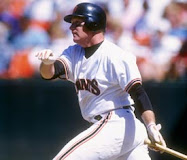
With Mark Derosa landing on the Disabled List (again...sigh), the Giants called up Emmanuel Burriss to add some depth to the infield and speed on the basepaths. As I noted yesterday in a post, Burriss had gotten off to a fast start out of the gate for the Grizzlies, as he was batting .344 with an .849 OPS and 15 stolen bases before his callup. With Miguel Tejada struggling as the Giants' starting shortstop (he is batting .200 with a .541 OPS and only one home run), Burriss is an interesting option, though I doubt he'll bring much competition to the position.
Burriss is a former first round pick out of Kent State University (he was the 33rd pick in the 2006 Draft and the Giants second pick in the first round with the other being Tim Lincecum). He has had two previous stints in the Majors: 2008 and 2009. In 2008, with Omar Vizquel suffering through injury and regression and Brian Bocock just a plain old bad option all together, Burriss came in and performed admirably as the Giants' starting shortstop. In 274 plate appearances, he hit .283 with a .357 OBP and added 13 stolen bases. Despite his good plate patience numbers though (0.96 BB/K ratio), he proved to add no power whatsoever as his ISO was only .046 and his OPS was .686.
In 2009, he earned the starting second base position in Spring Training in a close battle with Kevin Frandsen (the Giants gave the starting shortstop position to free agent Edgar Renteria). However, Burriss failed to capitalize on his strong Spring and 2008, as he regressed in almost every offensive category. His gaudy BB/K ratio fell to 0.41, his average dipped to .238 and his already minuscule power numbers fell to new depths (0.30 ISO). After playing in 94 games in 2008, he only appeared in 61 games in 2009 as he eventually lost the Giants' starting second base job to Matt Downs, Juan Uribe and eventually Freddy Sanchez (who was acquired in a trade-deadline deal for Tim Alderson).
Injuries have been an issue for Burriss, especially the past couple of years. After being demoted to Fresno, Burriss only played in 17 games in Triple-A before being shelved with a foot injury. In 2010 in Spring Training, he aggravated his foot again and only played 79 games total among stops in San Jose (for rehab), Fresno and San Francisco (he only played seven games with the Giants though and has only five plate appearances). The 2010 foot injury proved to have an effect on Burriss' stats as his wOBA was only .305 in Fresno and he only stole 11 bases on 16 attempts (he stole 103 bases in 2006 and 2007 total amongst his stops in Salem-Keizer, Augusta and San Jose). While it seems like his foot hasn't bothered him so much this year (as evidenced by his 15 stolen bases), Burriss' injury history is going to be an issue as he gets older.
Though his athleticism has been a noted trait of Burriss throughout his professional career, his defense is a bit questionable. On an advanced statistical note, Burriss' profile isn't impressive. At shortstop his career UZR is negative-3.7 and at second base, his UZR is only 0.2. And, he only has a 55 FSR (fans scouting reports) rating according to Fangraphs.com. Thus, while he may not be Tejada-esque (negative UZR numbers the past three years), Burriss isn't exactly that much of an upgrade defensively as some Giants fans would like to believe.
With Andres Torres on the DL, Burriss, along with Darren Ford, bring some speed to a Giants roster that is devoid of it sans Torres. That being said, while Burriss' start has been very good this year in the Pacific Coast League, his slap-hitting approach (career 2.62 GB/FB ratio in the Majors) can be kind of hit and miss in terms of success (his BABIP was .310 in his good 2008; .284 during his mediocre 2009). If Burriss can find some holes in his short stint with the Giants, then maybe he could be a dark horse option for the Giants if Tejada or Fontenot don't cut it in the infield. To be realistic though, I foresee Burriss contributing more to the Fresno club this year rather than the San Francisco one (though that isn't necessarily a bad thing, since the Grizzlies would benefit with him as their leadoff or numbr two hitter and Brett Pill and Brandon Belt hitting behind him).
Showing posts with label Emmanuel Burriss. Show all posts
Showing posts with label Emmanuel Burriss. Show all posts
Thursday, April 28, 2011

Wednesday, June 16, 2010
Bowker, Schierholtz, Ishikawa, Burriss: What Does the Future Hold for These Giants?
If you're a Giants fan, take a guess the average age of the position players currently on the active roster...
If you guessed 29.4 years old, then you are correct (and John Nash from "A Beautiful Mind"-esque in math as well...congrats).
That isn't exactly young, especially when you consider the fact that most of the guys that bring that average age under 30 sit on the bench. Case in point: last night, the only players in the lineup under 30 years of age were Pablo Sandoval and Buster Posey.
Now, this isn't exactly breaking ground. Giants fans have been used to Bruce Bochy's "Play the Vets At All Costs" mentality since 2007 when he first came on as manager. Some of the young guys have been solid under Bochy's tenure, and some haven't. That being said, there are some guys with solid potential, and some young guys that may just not be good enough for the big league level (ala Joe Borchard...he's tearing up Fresno, I know, but believe me, he is a Quad-A player).
John Bowker, Nate Schierholtz, Travis Ishikawa and Emmanuel Burriss are those players still with potential (whether you want to believe it or not...I'm saying it).
Of course, who knows if these four will get many opportunities this year. As a matter of fact, chances are, with the roster as veteran-stocked as it is, they probably won't get much, if any opportunities for regular playing time this year unless some injuries happen.
Yet, in terms of next season, these four arbitration-eligible players in 2012 should have some opportunities to play come Spring Training and I'll give you reasons why for each player.
John Bowker, outfielder, 26 years old.
Major League Stats: .303 average, .863 OPS in 552 games.
Major League Stats: .238 average, .678 OPS in 183 games.
What can I say about John Bowker? It's hard really. After being sent down to Fresno to make room for Pat Burrell, his 2010 season has been a bit of a disappointment. He tore up the Pacific Coast League last year, posting a .342 average, a 1.047 OPS and also hit 21 home runs in 450 plate appearances with the Grizzlies. Furthermore, he got off to a resounding start in Spring Training, hitting .312 with six home runs in 77 AB, which led him to getting the starting right fielder's position on Opening Day over Nate Schierholtz.
Unfortunately, the 2010 regular season has been anything but kind to Bowker. In 90 plate appearances this year, Bowker posted a .207 average, a .609 OPS and a .262 wOBA (his projected wOBA prior to the season was .350 according CHONE projections).To make matters worse, he didn't seem to transition the plate patience he showed in Fresno in 2009 to the big league level these first few months of Major League play. Bowker's 0.26 BB/K ratio (compounded by a 28 percent strikeout rate) is a far cry from the 1.16 BB/K ratio he sported with the Grizzlies (though, to look at it optimistically, it is better than the 0.22 ratio he had in 2009 at the Major League level).
However, despite the poor start, there is hope for Bowker.
First off, look at what he's doing in Fresno right now. In 10 games and 46 plate appearances with the Grizzlies, Bowker has hit four home runs and posted a batting average of .390 and an OPS of 1.166. Bowker is hitting the ball hard and hitting the ball with confidence, something you couldn't say he was doing in the Majors this year.
It is possible to think that Bowker will develop the confidence he needs in Fresno and will transition that to the Majors the next time he is called up. Then again, Giants fans thought that would happen this year (but Giants fans also thought he would get more of a chance as well).
Second, if you look at Bowker's plate discipline numbers, he has shown improvement, which is comforting. He has swung at less pitches outside the strike zone (22.5 percent, which is down 25.9 percent in 2009), and he is making better contact as well (his contact rate is up from 72.3 percent in 2009 to 78.7 percent this year).
The big problem for Bowker in the Majors? He is hitting more groundballs and he has struggled to find holes. His GB/FB ratio is abnormally high at 1.63 (he was under one the past two years in the Majors) and his BABIP is low at .241.
That being said, the numbers aren't as bad as they look. Despite only having a flyball rate of 31.1 percent this year, his HR/FB percentage is 15.8 percent (the highest it's been since he's been in the Majors). Additionally, his line drive percentage sits at 18 percent, an improvement from 2009 when it was 14 percent.
Prediction for Bowker in 2011
The outfield situation is very touchy for next year. Aubrey Huff will be a free agent, but considering how well he has played this year, it wouldn't be a surprise to see Brian Sabean re-up him for another year, which would hurt Bowker's chances of playing. Second, Thomas Neal, Roger Kieschnick and Darren Ford waiting on the horizon don't make things easier, especially considering how much is invested in them. Bowker certainly has the opportunity to break out as expected, especially if he can continue to gain confidence at the plate, which is what he needs after such a horrid start this year. However, if he can't produce at the Major League level soon, it won't be surprising to see the Giants cut him loose ala Fred Lewis-style.
Nate Schierholtz, outfielder, 26 years old.
Minor League Stats: .308 average, .871 OPS in 627 games.
Major League Stats: .281 average, .732 OPS in 230 games.
I admit, it has take me a while to come to terms with Schierholtz. I love him defensively and his numbers certainly back him up (career 20.9 UZR). Prior to 2010 though, I wasn't too big a fan of him offensively. He was an extremely free-swinger (he had O-Swing percentages of 34.7 and 34.9 percent in 2008 and 2009) and I didn't think he had the power (.133 ISO in 2009) to back up his lack of plate patience (0.28 BB/K ratio in 2009).
In 2010 though, Schierholtz has changed himself offensively. The power still isn't there (.107 ISO this year), but he has become much more disciplined at the plate. His O-Swing currently sits at 29.1 percent, not exactly great, but a great improvement considering it was never under 34 percent in his time in the Majors.
What sticks out the most for Schierholtz is his BB/K ratio and BB percentage, which have greatly improved. His BB/K ratio is currently 0.76 and his BB percentage is 9.4 percent. How has he improved these percentages from 2009? In addition to swinging less outside the strike zone, he has made better contact at the plate as well. In 2009, he only made contact 77.7 percent of the time. In 2010? That percentage is 84.6 percent, four points above the league average.
Now, Schierholtz doesn't hit the ball in the air, which is a bit deflating considering his ability to make contact. His GB/FB ratio sits at 1.61 this year and his line drive percentage is 18.1 percent. The line drive percentage is disappointing considering the past two years it was above 20 percent.
And, not only has Schierholtz dropped in terms of hitting flyballs this year (his FB rate sits at 31.4 percent), but he hasn't been very effective in making those flyballs count. His HR/FB percentage is three percent.
To put that HR/FB percentage in perspective, only Freddy Sanchez (who doesn't have a homer this year) has a lower HR/FB ratio of Giants hitters with 50 or more plate appearances.
Prediction for Schierholtz in 2011
Schierholtz deserves regular playing time and he should get it in 2011. With Mark Derosa's health a serious question, Schierholtz could have a shot to finally capture the job that probably should have been his this year. After all, he has done nothing to merit losing his job. His offensive numbers aren't eye-popping, but they aren't detrimental either (his wRC+ is 98, only two points below league average). However, when you add it along with his defensive value, it makes sense why Schierholtz has a WAR of 1.1 this year (which accumulates to $4.2 million dollars according to Fangraphs).
Travis Ishikawa, first baseman, 26 years old.
Minor League stats: .261 average, .808 OPS in 707 games.
Major League stats: .264 average, .739 OPS in 204 games.
Ishikawa has been up and down in his tenure with the Giants. Like Schierholtz, he has earned his keep on the Giants roster because of his defensive value. Last year, he led all defenders on the Giants with a 10.2 UZR. Furthermore, he also pelted nine home runs, which gave him a HR/FB percentage of 10.2 in 2009.
Unfortunately, he has tended to frustrate Giants fans more often than not the past three years as a Giant. Despite having a walk percentage of 8.7 and 8.3 percent in 2008 and 2009, he only had BB/K ratios of 0.33 and 0.34, respectively. Furthermore, his wOBA in 2009 (.313) was disappointing considering the promise he showed in 2008 with the Giants (when his wOBA was .337) and in Fresno (his wOBA was .445 with the Grizzlies in 2008).
Like many Giants hitters, Ishikawa swings a lot outside the strike zone (he has a career O-swing percentage of 27.9 percent). Unlike some Giants free-swingers, Ishikawa doesn't make contact enough to justify it. His career contact rate is 73.1 percent (the league average is usually around 80 percent).
This year, Ishikawa has shown improvement. His BB/K ratio is up to 0.50 and he has showed some power (.844 OPS; .367 wOBA) in his 32 plate appearances.
But as a Giants fan you have to realize that it's only 32 plate appearances. That is way too small a sample to come to any realistic projection. And the worst part? He probably won't get many more plate appearances anytime soon.
Prediction for Ishikawa in 2011
Out of the four guys listed, the future looks the most bleak for Ishikawa. He's great defensively, but he seems to be behind a lot of guys on this Giants roster. Barring an injury to Huff and someone else, Ishikawa is regulated to backup duty because he is out of minor league options. I wouldn't be surprised to see him designated for assignment either this year or next season, which is a shame because he certainly wasn't too bad in 2009.
Emmanuel Burriss, second base/shortstop, 26 years old.
Minor League Stats: .282 average, .679 OPS in 228 games.
Major League Stats: .262 average, .629 OPS in 156 games.
Burriss is probably the biggest wild card of the four. He is very interesting because of his situation alone.
In 2008, he was pretty much rushed to the big leagues because a.) Omar Vizquel was fighting age and ineffectiveness and b.) Brian Bocock was only other shortstop in their organization. So, Burriss was called up in 2008 despite being 23 years old and only having played as high as Advanced Single-A.
Surprisingly, Burriss didn't do too badly. In 95 games in 2008, Burriss tole 13 bases and hit .283 with an OBP of .357 and a BB/K ratio of 0.96. While he didn't show much power (.046 ISO) and his average was a little deceptive of his offensive success (.316 wOBA and 91 wRC+), the start in 2008 definitely was a step in the right direction for the Giants' 2006 first round draft pick.
Unfortunately, in 2009, despite a stellar spring training that earned him the starting second baseman position over Kevin Frandsen, Burriss struggled. While he still stole a decent amount of bases (11), many of his other offensive statistics fell drastically from 2008, including average (.238), OBP (.292), BB/K ratio (0.41), wOBA (.258) and wRC+ (52). Also, Burriss was inconsistent defensively, as evidenced by his UZR numbers in 2009 (minus-3.9 UZR/150 in 2009 at second base).
Since he was demoted to Fresno in 2009, not only has Burriss struggled to regain his 2008 form, but he also struggled with injury. He injured his foot shortly after being called down to the Grizzlies and missed most of the remainder of the 2009 season. When he arrived in Spring Training, he injured his foot early and was immediately put on the disabled list to start the season.
Though he is still on the disabled list, Burriss is already back in action, playing a few rehab games in San Jose before being called up to Fresno on June 14th.
Even if Burriss is able to come back healthy, this year may be a wash for him. The infield is already crowded with Juan Uribe, Freddy Sanchez, Edgar Renteria Matt Downs, and Ryan Rohlinger all vying for spots and playing time. In all likelihood, Burriss will probably spend the remainder of the year in Fresno, which isn't necessarily a bad thing considering he's only played in 31 games above Advanced Single-A prior to this season.
That being said, can Burriss still contribute? He will certainly have an opportunity next year. Renteria and Uribe will be free agents next season, so the starting shortstop position will definitely be up for grabs if those two aren't re-signed (though Uribe could be re-signed). And, if he can have a solid season in the Pacific Coast League, he may be able to convince the Giants brass that 2009 was a sophomore slump rather than an indicator of things to come.
Burriss definitely has a lot to offer. He certainly is fast (24 stolen bases at the Major League level) and has defensive potential (he had a 15.7 UZR/150 in 2008 at second base). Furthermore, he can make contact really well at the plate, as evidenced by his career 87.5 percent contact rate.
Unfortunately, Burriss' defensive inconsistencies (his career UZR/150 at shortstop is minus-17.7) as well as his questionable plate discipline in 2009 (28.5 O-Swing percentage) and lack of power in the Majors (career 0.38 ISO) and minors (career 0.65 ISO) don't exactly make Giants fans feel confident that he can be a long-lasting solution at the Major League level. Also, with higher end infield prospects Brandon Crawford, Conor Gillaspie, Nick Noonan, and Ehire Adrianza waiting on the horizon, Burriss may not get long to show what he can offer at a starting infielder position.
Prediction for Burriss in 2011
If Burriss is healthy (and that's a big "if"), then it isn't impossible to think that he can nab the starting shortstop position if Renteria and Uribe leave town. The potential is there, and I think Burriss is enough of a fan favorite that Giants fans could rally behind. His ability to make contact is promising, and with the relative lack of speed on this roster, Burriss offers a much needed quality.
Of course, Burriss needs to polish up his game on both ends. He has the ability to be a very good defensive player, but it seems, according to UZR, that he may be a tad overrated. Also, while he has an ability to make contact consistently, swinging outside the strike zone as much as he did last season certainly isn't going to help his cause.
He could go any way, and that's what makes him so interesting, and so hard to predict. Let's hope Burriss can improve in Fresno this year, and in 2011, be the player Giants fans and management hoped he would develop into after he made a splash in 2008.
If you guessed 29.4 years old, then you are correct (and John Nash from "A Beautiful Mind"-esque in math as well...congrats).
That isn't exactly young, especially when you consider the fact that most of the guys that bring that average age under 30 sit on the bench. Case in point: last night, the only players in the lineup under 30 years of age were Pablo Sandoval and Buster Posey.
Now, this isn't exactly breaking ground. Giants fans have been used to Bruce Bochy's "Play the Vets At All Costs" mentality since 2007 when he first came on as manager. Some of the young guys have been solid under Bochy's tenure, and some haven't. That being said, there are some guys with solid potential, and some young guys that may just not be good enough for the big league level (ala Joe Borchard...he's tearing up Fresno, I know, but believe me, he is a Quad-A player).
John Bowker, Nate Schierholtz, Travis Ishikawa and Emmanuel Burriss are those players still with potential (whether you want to believe it or not...I'm saying it).
Of course, who knows if these four will get many opportunities this year. As a matter of fact, chances are, with the roster as veteran-stocked as it is, they probably won't get much, if any opportunities for regular playing time this year unless some injuries happen.
Yet, in terms of next season, these four arbitration-eligible players in 2012 should have some opportunities to play come Spring Training and I'll give you reasons why for each player.
John Bowker, outfielder, 26 years old.
Major League Stats: .303 average, .863 OPS in 552 games.
Major League Stats: .238 average, .678 OPS in 183 games.
What can I say about John Bowker? It's hard really. After being sent down to Fresno to make room for Pat Burrell, his 2010 season has been a bit of a disappointment. He tore up the Pacific Coast League last year, posting a .342 average, a 1.047 OPS and also hit 21 home runs in 450 plate appearances with the Grizzlies. Furthermore, he got off to a resounding start in Spring Training, hitting .312 with six home runs in 77 AB, which led him to getting the starting right fielder's position on Opening Day over Nate Schierholtz.
Unfortunately, the 2010 regular season has been anything but kind to Bowker. In 90 plate appearances this year, Bowker posted a .207 average, a .609 OPS and a .262 wOBA (his projected wOBA prior to the season was .350 according CHONE projections).To make matters worse, he didn't seem to transition the plate patience he showed in Fresno in 2009 to the big league level these first few months of Major League play. Bowker's 0.26 BB/K ratio (compounded by a 28 percent strikeout rate) is a far cry from the 1.16 BB/K ratio he sported with the Grizzlies (though, to look at it optimistically, it is better than the 0.22 ratio he had in 2009 at the Major League level).
However, despite the poor start, there is hope for Bowker.
First off, look at what he's doing in Fresno right now. In 10 games and 46 plate appearances with the Grizzlies, Bowker has hit four home runs and posted a batting average of .390 and an OPS of 1.166. Bowker is hitting the ball hard and hitting the ball with confidence, something you couldn't say he was doing in the Majors this year.
It is possible to think that Bowker will develop the confidence he needs in Fresno and will transition that to the Majors the next time he is called up. Then again, Giants fans thought that would happen this year (but Giants fans also thought he would get more of a chance as well).
Second, if you look at Bowker's plate discipline numbers, he has shown improvement, which is comforting. He has swung at less pitches outside the strike zone (22.5 percent, which is down 25.9 percent in 2009), and he is making better contact as well (his contact rate is up from 72.3 percent in 2009 to 78.7 percent this year).
The big problem for Bowker in the Majors? He is hitting more groundballs and he has struggled to find holes. His GB/FB ratio is abnormally high at 1.63 (he was under one the past two years in the Majors) and his BABIP is low at .241.
That being said, the numbers aren't as bad as they look. Despite only having a flyball rate of 31.1 percent this year, his HR/FB percentage is 15.8 percent (the highest it's been since he's been in the Majors). Additionally, his line drive percentage sits at 18 percent, an improvement from 2009 when it was 14 percent.
Prediction for Bowker in 2011
The outfield situation is very touchy for next year. Aubrey Huff will be a free agent, but considering how well he has played this year, it wouldn't be a surprise to see Brian Sabean re-up him for another year, which would hurt Bowker's chances of playing. Second, Thomas Neal, Roger Kieschnick and Darren Ford waiting on the horizon don't make things easier, especially considering how much is invested in them. Bowker certainly has the opportunity to break out as expected, especially if he can continue to gain confidence at the plate, which is what he needs after such a horrid start this year. However, if he can't produce at the Major League level soon, it won't be surprising to see the Giants cut him loose ala Fred Lewis-style.
Nate Schierholtz, outfielder, 26 years old.
Minor League Stats: .308 average, .871 OPS in 627 games.
Major League Stats: .281 average, .732 OPS in 230 games.
I admit, it has take me a while to come to terms with Schierholtz. I love him defensively and his numbers certainly back him up (career 20.9 UZR). Prior to 2010 though, I wasn't too big a fan of him offensively. He was an extremely free-swinger (he had O-Swing percentages of 34.7 and 34.9 percent in 2008 and 2009) and I didn't think he had the power (.133 ISO in 2009) to back up his lack of plate patience (0.28 BB/K ratio in 2009).
In 2010 though, Schierholtz has changed himself offensively. The power still isn't there (.107 ISO this year), but he has become much more disciplined at the plate. His O-Swing currently sits at 29.1 percent, not exactly great, but a great improvement considering it was never under 34 percent in his time in the Majors.
What sticks out the most for Schierholtz is his BB/K ratio and BB percentage, which have greatly improved. His BB/K ratio is currently 0.76 and his BB percentage is 9.4 percent. How has he improved these percentages from 2009? In addition to swinging less outside the strike zone, he has made better contact at the plate as well. In 2009, he only made contact 77.7 percent of the time. In 2010? That percentage is 84.6 percent, four points above the league average.
Now, Schierholtz doesn't hit the ball in the air, which is a bit deflating considering his ability to make contact. His GB/FB ratio sits at 1.61 this year and his line drive percentage is 18.1 percent. The line drive percentage is disappointing considering the past two years it was above 20 percent.
And, not only has Schierholtz dropped in terms of hitting flyballs this year (his FB rate sits at 31.4 percent), but he hasn't been very effective in making those flyballs count. His HR/FB percentage is three percent.
To put that HR/FB percentage in perspective, only Freddy Sanchez (who doesn't have a homer this year) has a lower HR/FB ratio of Giants hitters with 50 or more plate appearances.
Prediction for Schierholtz in 2011
Schierholtz deserves regular playing time and he should get it in 2011. With Mark Derosa's health a serious question, Schierholtz could have a shot to finally capture the job that probably should have been his this year. After all, he has done nothing to merit losing his job. His offensive numbers aren't eye-popping, but they aren't detrimental either (his wRC+ is 98, only two points below league average). However, when you add it along with his defensive value, it makes sense why Schierholtz has a WAR of 1.1 this year (which accumulates to $4.2 million dollars according to Fangraphs).
Travis Ishikawa, first baseman, 26 years old.
Minor League stats: .261 average, .808 OPS in 707 games.
Major League stats: .264 average, .739 OPS in 204 games.
Ishikawa has been up and down in his tenure with the Giants. Like Schierholtz, he has earned his keep on the Giants roster because of his defensive value. Last year, he led all defenders on the Giants with a 10.2 UZR. Furthermore, he also pelted nine home runs, which gave him a HR/FB percentage of 10.2 in 2009.
Unfortunately, he has tended to frustrate Giants fans more often than not the past three years as a Giant. Despite having a walk percentage of 8.7 and 8.3 percent in 2008 and 2009, he only had BB/K ratios of 0.33 and 0.34, respectively. Furthermore, his wOBA in 2009 (.313) was disappointing considering the promise he showed in 2008 with the Giants (when his wOBA was .337) and in Fresno (his wOBA was .445 with the Grizzlies in 2008).
Like many Giants hitters, Ishikawa swings a lot outside the strike zone (he has a career O-swing percentage of 27.9 percent). Unlike some Giants free-swingers, Ishikawa doesn't make contact enough to justify it. His career contact rate is 73.1 percent (the league average is usually around 80 percent).
This year, Ishikawa has shown improvement. His BB/K ratio is up to 0.50 and he has showed some power (.844 OPS; .367 wOBA) in his 32 plate appearances.
But as a Giants fan you have to realize that it's only 32 plate appearances. That is way too small a sample to come to any realistic projection. And the worst part? He probably won't get many more plate appearances anytime soon.
Prediction for Ishikawa in 2011
Out of the four guys listed, the future looks the most bleak for Ishikawa. He's great defensively, but he seems to be behind a lot of guys on this Giants roster. Barring an injury to Huff and someone else, Ishikawa is regulated to backup duty because he is out of minor league options. I wouldn't be surprised to see him designated for assignment either this year or next season, which is a shame because he certainly wasn't too bad in 2009.
Emmanuel Burriss, second base/shortstop, 26 years old.
Minor League Stats: .282 average, .679 OPS in 228 games.
Major League Stats: .262 average, .629 OPS in 156 games.
Burriss is probably the biggest wild card of the four. He is very interesting because of his situation alone.
In 2008, he was pretty much rushed to the big leagues because a.) Omar Vizquel was fighting age and ineffectiveness and b.) Brian Bocock was only other shortstop in their organization. So, Burriss was called up in 2008 despite being 23 years old and only having played as high as Advanced Single-A.
Surprisingly, Burriss didn't do too badly. In 95 games in 2008, Burriss tole 13 bases and hit .283 with an OBP of .357 and a BB/K ratio of 0.96. While he didn't show much power (.046 ISO) and his average was a little deceptive of his offensive success (.316 wOBA and 91 wRC+), the start in 2008 definitely was a step in the right direction for the Giants' 2006 first round draft pick.
Unfortunately, in 2009, despite a stellar spring training that earned him the starting second baseman position over Kevin Frandsen, Burriss struggled. While he still stole a decent amount of bases (11), many of his other offensive statistics fell drastically from 2008, including average (.238), OBP (.292), BB/K ratio (0.41), wOBA (.258) and wRC+ (52). Also, Burriss was inconsistent defensively, as evidenced by his UZR numbers in 2009 (minus-3.9 UZR/150 in 2009 at second base).
Since he was demoted to Fresno in 2009, not only has Burriss struggled to regain his 2008 form, but he also struggled with injury. He injured his foot shortly after being called down to the Grizzlies and missed most of the remainder of the 2009 season. When he arrived in Spring Training, he injured his foot early and was immediately put on the disabled list to start the season.
Though he is still on the disabled list, Burriss is already back in action, playing a few rehab games in San Jose before being called up to Fresno on June 14th.
Even if Burriss is able to come back healthy, this year may be a wash for him. The infield is already crowded with Juan Uribe, Freddy Sanchez, Edgar Renteria Matt Downs, and Ryan Rohlinger all vying for spots and playing time. In all likelihood, Burriss will probably spend the remainder of the year in Fresno, which isn't necessarily a bad thing considering he's only played in 31 games above Advanced Single-A prior to this season.
That being said, can Burriss still contribute? He will certainly have an opportunity next year. Renteria and Uribe will be free agents next season, so the starting shortstop position will definitely be up for grabs if those two aren't re-signed (though Uribe could be re-signed). And, if he can have a solid season in the Pacific Coast League, he may be able to convince the Giants brass that 2009 was a sophomore slump rather than an indicator of things to come.
Burriss definitely has a lot to offer. He certainly is fast (24 stolen bases at the Major League level) and has defensive potential (he had a 15.7 UZR/150 in 2008 at second base). Furthermore, he can make contact really well at the plate, as evidenced by his career 87.5 percent contact rate.
Unfortunately, Burriss' defensive inconsistencies (his career UZR/150 at shortstop is minus-17.7) as well as his questionable plate discipline in 2009 (28.5 O-Swing percentage) and lack of power in the Majors (career 0.38 ISO) and minors (career 0.65 ISO) don't exactly make Giants fans feel confident that he can be a long-lasting solution at the Major League level. Also, with higher end infield prospects Brandon Crawford, Conor Gillaspie, Nick Noonan, and Ehire Adrianza waiting on the horizon, Burriss may not get long to show what he can offer at a starting infielder position.
Prediction for Burriss in 2011
If Burriss is healthy (and that's a big "if"), then it isn't impossible to think that he can nab the starting shortstop position if Renteria and Uribe leave town. The potential is there, and I think Burriss is enough of a fan favorite that Giants fans could rally behind. His ability to make contact is promising, and with the relative lack of speed on this roster, Burriss offers a much needed quality.
Of course, Burriss needs to polish up his game on both ends. He has the ability to be a very good defensive player, but it seems, according to UZR, that he may be a tad overrated. Also, while he has an ability to make contact consistently, swinging outside the strike zone as much as he did last season certainly isn't going to help his cause.
He could go any way, and that's what makes him so interesting, and so hard to predict. Let's hope Burriss can improve in Fresno this year, and in 2011, be the player Giants fans and management hoped he would develop into after he made a splash in 2008.
Tuesday, May 25, 2010
Scarce Six: A Look at the African-American Players in the Giants Organization
I just realized this fact after I saw Emmanuel Burriss get transferred to the 60-day Disabled List on May 22 to make room for Santiago Casilla: the Giants haven't had one African-American player take the field for them this year. Burriss has been hurt and on the disabled list all season, and Fred Lewis, the only other African-American player on the 25-man active roster this Spring, was traded away to Toronto shortly after the season began.
In my mind, this is incredible, and may be the first year in a long time that the Giants have not had an African-American player take the field in a Giants uniform. I mean, this is a franchise that has housed great African-American players like Willie Mays, Monte Irvin, Hank Thompson, Willie McCovey, Bobby Bonds, Jeffrey Leonard, Kevin Mitchell, Ellis Burks, Reggie Sanders, Kenny Lofton (for a half-season anyways), Ray Durham, and of course, Barry Bonds.
Now, I don't think you can blame this one on the Giants organization or use the racism card on Bill Neukom or Brian Sabean (though I wish we could because it would get Sabean fired). The lack of African-American ballplayers on the Giants roster is simply a reality of the game nowadays. It's not just the Giants that lack African-American players, a lot of teams are. Last year, in a tweet, Bill Simmons joked that the Red Sox "had more Jewish guys on their team than African-Americans." Hence, anybody claiming the Giants as a "racist" organization may have a hard argument to make.
That being said, the organization isn't completely bare of talented African American players. Let's take a look at the African-American players in the Giants organization and how soon (or if) they will see playing time in a San Francisco Giants uniform.
Emmanuel Burriss, 2B/SS
Stats this season: None (Has been on Disabled List all year due to a foot injury).
Burriss has plenty of experience on this Giants team and may be the only African-American player in the Giants organization that could play for the Giants this year. Burriss is coming off a foot injury this Spring, which is disheartening mainly because the strongest aspect of his game is his speed (he stole 11 bases last year in 61 games). Burriss doesn't have much power (.046 and .030 ISO the past two seasons), but he had a very strong BB/K ratio in 2008 (0.96) and he has a strong propensity to make contact at the plate (career 87.6 percent contact rate in the Majors). Burriss isn't a bad defender, but his UZR suggests that he may not be as good as advertised (minus-17.7 UZR/150 at shortstop in 2008; minus-3.9 UZR/150 at second base last year).
The biggest roadblock to Burriss' path in the Majors this year (other than his injury) may be the crowded Giants infield. With Juan Uribe, Freddy Sanchez, Edgar Renteria, and Matt Downs all vying for playing position at second base and shortstop, there just may not be any room for Burriss at the Major League level this season. In all likelihood, when he comes back, Burris will be playing most (if not all) of the year in Fresno, which isn't necessarily a bad thing considering he's only played 21 total games above the Advanced Single-A level.
Darren Ford, OF
Stats this season: .247 average, .319 OBP, .673 OPS, 19 R, 14 SB in 38 games in Richmond (Double-A).
Darren Ford turned some heads after a strong year in San Jose in 2009 (.384 wOBA, 81 runs scored, 35 stolen bases) and a surprising Spring Training (11 hits, 11 runs scored in 22 at-bats). While Ford did not make the active, 25-man roster (tough to justify that one when the highest level he played before Spring Training was Advanced Single-A), it was safe to say that Ford earned his spot on the Giants' 40-man roster after Spring Training ended.
So far in 2010, the results have been mixed for Ford. While he has stolen 14 bases, Ford hasn't hit particularly well in the Eastern League for the Flying Squirrels. Granted, this isn't necessarily too big a deal (the Eastern League is known to be a pitcher's league), but the 23.3 percent strikeout percentage and 9.1 walk percentage (he also sports a 0.42 BB/K ratio; almost a ten point dip from 2009) certainly don't make you as a Giants fan feel particularly hopeful that he will get a callup anytime soon.
Ford's speed definitely is attractive, especially considering the Giants' only legitimate stolen base threat is Andres Torres at this point. However, unless he's able to really turn it around, it's safe to say that the soonest Ford will be up with the Giants will be in 2011.
Thomas Neal, OF
Stats this season: .263 average, .332 OBP, .706 OPS, 3 HR, 23 RBI, 15 R, 5 SB in 44 games in Richmond (Double-A).
The hype around Thomas Neal amplified after a breakout year in San Jose last season. In the California League last year, Neal hit 22 HR, scored 102 runs and posted an OPS 1.010 and a wOBA .444 in 129 games. The performance had such an impact on the Giants brass and media that it earned him a non-roster invite to Spring Training, and a spot in the Top-Five of every Giants Prospect Rankings publication, blog or Web site.
However, this year has been anything but kind to Neal. After a disappointing, short Spring Training stint (Neal has only two hits in 11 at-bats), Neal hasn't necessarily been showing the power he displayed in the California League in 2009. This year, he has hit only three home runs and his slugging percentage sits at .374 (his slugging hasn't been under .444 since his first stint in the Northwest League).
The biggest concern with Neal though has to be his plate patience, which has been a bit questionable this season. After posting walk percentages over 9.5 percent the last three years, Neal currently has a walk percentage of 7.1 percent. This has affected his BB/K ratio, which currently sits at 0.37 (last year in San Jose it was 0.66).
Neal eventually is going to see more balls drop for hits. That's just the reality of the game and playing in the Eastern League. However, he has to improve his plate patience if he wants to live up to that billing of being a Top-Five prospect in the Giants organization.
Wendell Fairley, OF
Stats this season: .283 average, .367 OBP, .677 OPS, 15 RBI, 2 SB in 33 games in San Jose (Advanced Single-A).
Fairley was a first-round pick for the Giants in the 2007 first-year player draft. However, despite his draft position, many draft experts felt he was picked in the first round for cost reasons rather than his talent (the Giants had four first round picks in 2007).
Like many experts have predicted, Fairley has disappointed in his tenure in the Giants organization. While he posted a solid wOBA (.363) and BB/K ratio in (0.70) in Arizona Rookie League in 2008, he tumbled greatly in his first season in the South Atlantic League with the Greenjackets in 2009. Fairley went down in wOBA (.307), average (.243), stolen bases (only two stolen bases in six attempts), and BB/K ratio (0.35). And he did this with an improvement in BABIP (it jumped from .308 in 2008 to .338 in 2009).
However, things have turned around a little bit for Fairley in 2010. He started the year off well, holding his own in Spring Training as a non-roster invitee (he had two hits in five at-bats). He has transitioned that strong impression to a pretty solid year so far in San Jose. While he may not hit for power (his slugging is very underwhelming at .310), his ability to get on-base (.367 OBP) has some Giants fans and management people turning their heads a little bit.
Fairley could use some more refinement at the plate (his BB/K ratio is 0.33). That being said, considering how well he has played lately (he is hitting .324 in his last 10 games), it isn't out of the question to think that Fairley can continue to progress in the California League, and improve in his power and plate patience categories. If he is able to build upon this recent hot streak, it will definitely help him shed that "Tumbler" label he's been tagged with since 2008.
James Simmons, OF
Stats this season: .227 average, .299 OBP, .670 OPS, 7 SB, 9 RBI in 33 games in San Jose (Advanced Single-A).
I really don't know much about Simmons, and I don't think many Giants fans do either. Simmons was a 24th round draft pick in the 2005 MLB amateur draft and came out of Vernon Junior College in Texas. He hasn't been listed in any of the Giants Top Prospects lists, and he has only played in the Arizona Rookie League and the South Atlantic League in addition to the California League (where he currently plays).
What can I tell you about Simmons? He has some athleticism, and has the ability to steal a base. In 2008, he stole 25 bases for Augusta. Last year, he stole 15 bases while doing another tour of duty for the Greenjackets, but he only got caught once. This year, he has been similarly effective, with seven stolen bases on eight tries.
Despite that solid baserunning ability however, Simmons hasn't showed much with the bat. This year he is hitting .227 in San Jose, and the same has been true throughout his four years in the minors. He really jumped onto the scene in 2006, posting a .360 wOBA in Rookie League, but for the next two years he didn't have a wOBA over .292 at any level (he bounced around from Augusta to San Jose). In 2009, he picked it up and posted a wOBA of .343, but considering that it was his third go-around in Augusta, those numbers have to be taken with a grain of salt.
So, what kind of hopes can Giants fans have for a guy like Simmons? Not much, really. But then again, he was a 24th round draft pick, so it makes sense why you can't expect too much from the guy.
Evan Crawford, OF
Stats this season: .273 average, .355 OBP, .718 OPS, 22 R, 9 SB in 42 games in San Jose (Single-A).
Crawford was the Giants' ninth round pick in the 2009 first year player draft. For some reason, I have a lot of hope for this kid (he seems to have a good head on his shoulders). He played three seasons at Indiana University, and had a solid campaign in 2009, posting an .847 OPS and 27 stolen bases. Immediately after he was drafted, Crawford head to Arizona Rookie League, where he hit .273, scored 14 runs and stole nine bases in 16 games. When he was promoted Salem Keizer of the Northwest League, Crawford played even better, posting a .316 average and a wOBA of .381.
Now, it's tough to tell how good Crawford's Volcanoes campaign really was. While his wOBA was high, as was his OBP (.375), there were some concerning numbers. For starters, his BABIP was .412, which is extremely high and probably means he was extremely luck when it came to finding hits (which isn't sustainable, especially as you advance through the minor league system). Second, his BB/K ratio wasn't exactly impressive at 0.30. A high strikeout percentage (26.3 percent) most likely happened to be the culprit of his mediocre BB/K ratio, though he seems to be a player that strikes out a lot in general (he had a 22.7 percent strikeout rate in Arizona Rookie League).
This year, he began the year in Augusta and for the most part, it has been solid. He hasn't showed much power (.364 slugging), but that's been true since his college days (he hit only four home runs total at Indiana). Additionally, while he still shows a lot of speed (nine stolen bases) and he certainly can get on-base (.355 OBP), the strikeouts (37 in 165 at-bats, which is a 22.7 percent strikeout rate) still are a bit of a concern. To look at it on the bright side, at least Crawford is now getting better at drawing walks. This year, he has drawn 18 walks (9.8 percent walk percentage) and has a BB/K ratio of 0.49 (which is 19 points higher than his BB/K ratio in Salem-Keizer).
Crawford may be a year or two away from even sniffing the Giants roster. However, this kid certainly has under-the-radar talent, and considering his improvement in plate discipline this year with Greenjackets, I wouldn't be surprised if he continues to progress and surprise as a ballplayer as he moves up through the Giants farm system.
In my mind, this is incredible, and may be the first year in a long time that the Giants have not had an African-American player take the field in a Giants uniform. I mean, this is a franchise that has housed great African-American players like Willie Mays, Monte Irvin, Hank Thompson, Willie McCovey, Bobby Bonds, Jeffrey Leonard, Kevin Mitchell, Ellis Burks, Reggie Sanders, Kenny Lofton (for a half-season anyways), Ray Durham, and of course, Barry Bonds.
Now, I don't think you can blame this one on the Giants organization or use the racism card on Bill Neukom or Brian Sabean (though I wish we could because it would get Sabean fired). The lack of African-American ballplayers on the Giants roster is simply a reality of the game nowadays. It's not just the Giants that lack African-American players, a lot of teams are. Last year, in a tweet, Bill Simmons joked that the Red Sox "had more Jewish guys on their team than African-Americans." Hence, anybody claiming the Giants as a "racist" organization may have a hard argument to make.
That being said, the organization isn't completely bare of talented African American players. Let's take a look at the African-American players in the Giants organization and how soon (or if) they will see playing time in a San Francisco Giants uniform.
Emmanuel Burriss, 2B/SS
Stats this season: None (Has been on Disabled List all year due to a foot injury).
Burriss has plenty of experience on this Giants team and may be the only African-American player in the Giants organization that could play for the Giants this year. Burriss is coming off a foot injury this Spring, which is disheartening mainly because the strongest aspect of his game is his speed (he stole 11 bases last year in 61 games). Burriss doesn't have much power (.046 and .030 ISO the past two seasons), but he had a very strong BB/K ratio in 2008 (0.96) and he has a strong propensity to make contact at the plate (career 87.6 percent contact rate in the Majors). Burriss isn't a bad defender, but his UZR suggests that he may not be as good as advertised (minus-17.7 UZR/150 at shortstop in 2008; minus-3.9 UZR/150 at second base last year).
The biggest roadblock to Burriss' path in the Majors this year (other than his injury) may be the crowded Giants infield. With Juan Uribe, Freddy Sanchez, Edgar Renteria, and Matt Downs all vying for playing position at second base and shortstop, there just may not be any room for Burriss at the Major League level this season. In all likelihood, when he comes back, Burris will be playing most (if not all) of the year in Fresno, which isn't necessarily a bad thing considering he's only played 21 total games above the Advanced Single-A level.
Darren Ford, OF
Stats this season: .247 average, .319 OBP, .673 OPS, 19 R, 14 SB in 38 games in Richmond (Double-A).
Darren Ford turned some heads after a strong year in San Jose in 2009 (.384 wOBA, 81 runs scored, 35 stolen bases) and a surprising Spring Training (11 hits, 11 runs scored in 22 at-bats). While Ford did not make the active, 25-man roster (tough to justify that one when the highest level he played before Spring Training was Advanced Single-A), it was safe to say that Ford earned his spot on the Giants' 40-man roster after Spring Training ended.
So far in 2010, the results have been mixed for Ford. While he has stolen 14 bases, Ford hasn't hit particularly well in the Eastern League for the Flying Squirrels. Granted, this isn't necessarily too big a deal (the Eastern League is known to be a pitcher's league), but the 23.3 percent strikeout percentage and 9.1 walk percentage (he also sports a 0.42 BB/K ratio; almost a ten point dip from 2009) certainly don't make you as a Giants fan feel particularly hopeful that he will get a callup anytime soon.
Ford's speed definitely is attractive, especially considering the Giants' only legitimate stolen base threat is Andres Torres at this point. However, unless he's able to really turn it around, it's safe to say that the soonest Ford will be up with the Giants will be in 2011.
Thomas Neal, OF
Stats this season: .263 average, .332 OBP, .706 OPS, 3 HR, 23 RBI, 15 R, 5 SB in 44 games in Richmond (Double-A).
The hype around Thomas Neal amplified after a breakout year in San Jose last season. In the California League last year, Neal hit 22 HR, scored 102 runs and posted an OPS 1.010 and a wOBA .444 in 129 games. The performance had such an impact on the Giants brass and media that it earned him a non-roster invite to Spring Training, and a spot in the Top-Five of every Giants Prospect Rankings publication, blog or Web site.
However, this year has been anything but kind to Neal. After a disappointing, short Spring Training stint (Neal has only two hits in 11 at-bats), Neal hasn't necessarily been showing the power he displayed in the California League in 2009. This year, he has hit only three home runs and his slugging percentage sits at .374 (his slugging hasn't been under .444 since his first stint in the Northwest League).
The biggest concern with Neal though has to be his plate patience, which has been a bit questionable this season. After posting walk percentages over 9.5 percent the last three years, Neal currently has a walk percentage of 7.1 percent. This has affected his BB/K ratio, which currently sits at 0.37 (last year in San Jose it was 0.66).
Neal eventually is going to see more balls drop for hits. That's just the reality of the game and playing in the Eastern League. However, he has to improve his plate patience if he wants to live up to that billing of being a Top-Five prospect in the Giants organization.
Wendell Fairley, OF
Stats this season: .283 average, .367 OBP, .677 OPS, 15 RBI, 2 SB in 33 games in San Jose (Advanced Single-A).
Fairley was a first-round pick for the Giants in the 2007 first-year player draft. However, despite his draft position, many draft experts felt he was picked in the first round for cost reasons rather than his talent (the Giants had four first round picks in 2007).
Like many experts have predicted, Fairley has disappointed in his tenure in the Giants organization. While he posted a solid wOBA (.363) and BB/K ratio in (0.70) in Arizona Rookie League in 2008, he tumbled greatly in his first season in the South Atlantic League with the Greenjackets in 2009. Fairley went down in wOBA (.307), average (.243), stolen bases (only two stolen bases in six attempts), and BB/K ratio (0.35). And he did this with an improvement in BABIP (it jumped from .308 in 2008 to .338 in 2009).
However, things have turned around a little bit for Fairley in 2010. He started the year off well, holding his own in Spring Training as a non-roster invitee (he had two hits in five at-bats). He has transitioned that strong impression to a pretty solid year so far in San Jose. While he may not hit for power (his slugging is very underwhelming at .310), his ability to get on-base (.367 OBP) has some Giants fans and management people turning their heads a little bit.
Fairley could use some more refinement at the plate (his BB/K ratio is 0.33). That being said, considering how well he has played lately (he is hitting .324 in his last 10 games), it isn't out of the question to think that Fairley can continue to progress in the California League, and improve in his power and plate patience categories. If he is able to build upon this recent hot streak, it will definitely help him shed that "Tumbler" label he's been tagged with since 2008.
James Simmons, OF
Stats this season: .227 average, .299 OBP, .670 OPS, 7 SB, 9 RBI in 33 games in San Jose (Advanced Single-A).
I really don't know much about Simmons, and I don't think many Giants fans do either. Simmons was a 24th round draft pick in the 2005 MLB amateur draft and came out of Vernon Junior College in Texas. He hasn't been listed in any of the Giants Top Prospects lists, and he has only played in the Arizona Rookie League and the South Atlantic League in addition to the California League (where he currently plays).
What can I tell you about Simmons? He has some athleticism, and has the ability to steal a base. In 2008, he stole 25 bases for Augusta. Last year, he stole 15 bases while doing another tour of duty for the Greenjackets, but he only got caught once. This year, he has been similarly effective, with seven stolen bases on eight tries.
Despite that solid baserunning ability however, Simmons hasn't showed much with the bat. This year he is hitting .227 in San Jose, and the same has been true throughout his four years in the minors. He really jumped onto the scene in 2006, posting a .360 wOBA in Rookie League, but for the next two years he didn't have a wOBA over .292 at any level (he bounced around from Augusta to San Jose). In 2009, he picked it up and posted a wOBA of .343, but considering that it was his third go-around in Augusta, those numbers have to be taken with a grain of salt.
So, what kind of hopes can Giants fans have for a guy like Simmons? Not much, really. But then again, he was a 24th round draft pick, so it makes sense why you can't expect too much from the guy.
Evan Crawford, OF
Stats this season: .273 average, .355 OBP, .718 OPS, 22 R, 9 SB in 42 games in San Jose (Single-A).
Crawford was the Giants' ninth round pick in the 2009 first year player draft. For some reason, I have a lot of hope for this kid (he seems to have a good head on his shoulders). He played three seasons at Indiana University, and had a solid campaign in 2009, posting an .847 OPS and 27 stolen bases. Immediately after he was drafted, Crawford head to Arizona Rookie League, where he hit .273, scored 14 runs and stole nine bases in 16 games. When he was promoted Salem Keizer of the Northwest League, Crawford played even better, posting a .316 average and a wOBA of .381.
Now, it's tough to tell how good Crawford's Volcanoes campaign really was. While his wOBA was high, as was his OBP (.375), there were some concerning numbers. For starters, his BABIP was .412, which is extremely high and probably means he was extremely luck when it came to finding hits (which isn't sustainable, especially as you advance through the minor league system). Second, his BB/K ratio wasn't exactly impressive at 0.30. A high strikeout percentage (26.3 percent) most likely happened to be the culprit of his mediocre BB/K ratio, though he seems to be a player that strikes out a lot in general (he had a 22.7 percent strikeout rate in Arizona Rookie League).
This year, he began the year in Augusta and for the most part, it has been solid. He hasn't showed much power (.364 slugging), but that's been true since his college days (he hit only four home runs total at Indiana). Additionally, while he still shows a lot of speed (nine stolen bases) and he certainly can get on-base (.355 OBP), the strikeouts (37 in 165 at-bats, which is a 22.7 percent strikeout rate) still are a bit of a concern. To look at it on the bright side, at least Crawford is now getting better at drawing walks. This year, he has drawn 18 walks (9.8 percent walk percentage) and has a BB/K ratio of 0.49 (which is 19 points higher than his BB/K ratio in Salem-Keizer).
Crawford may be a year or two away from even sniffing the Giants roster. However, this kid certainly has under-the-radar talent, and considering his improvement in plate discipline this year with Greenjackets, I wouldn't be surprised if he continues to progress and surprise as a ballplayer as he moves up through the Giants farm system.
Saturday, March 6, 2010
Injuries, Injuries, Injuries...And It's Only Spring Training!
The Giants are only three games into Spring Training and yet injuries are already an issues. Here's a rundown of guys who are going through some injury issues at this time:
Ishikawa I'm also concerned about, but from what it sounds like, it could be serious but it could also be minor as well. We'll need more time to determine whether or not it will truly have an effect on him in 2010 (and if it does, then...well...we might have some problems defensively at first base without our best defensive infielder in Ishikawa).
As for Derosa and Sanchez? Well...it's frustrating. $24 million for damaged goods (in the grand scheme of things it certainly could be worse). Oh well, let's hope that they can get healthy soon so they can make those contracts worth it. After all, it's only Spring Training and the Giants are 3-0 going into today (but like I said...it's only Spring Training).
- Freddy Sanchez is recovering from surgery on his knee and is expected to miss Opening Day and perhaps begin the year on the Disabled List. (Sanchez signed a two-year, $12-million dollar contract this off-season).
- Mark Derosa still hasn't played a game yet as he continues to recover from wrist surgery last October. He expects to take batting practice sometime this weekend. (Derosa signed a two-year, $12-million dollar this off-season as well).
- Travis Ishikawa is recovering from a torn ligament in his foot that has put him in a boot all week. He suffered the foot injury while slipping down some stairs, apparently. However, Ishikawa has taken grounders and hit some soft toss, but he is still day-to-day in terms of being game-ready.
- After a solid Spring Training debut where he hit two doubles, Emmanuel Burriss re-injured his foot against the Seattle Mariners. Burriss fractured his foot last season, but thankfully, there were no fractures this time around. How this affects his 2010 season and his speed (his most valuable asset) is yet to be determined. Let's hope it doesn't affect him like Fred Lewis' foot problems sapped his speed in 2009. (Update: Andrew Baggarly reports via Twitter that Burriss actually re-fractured his foot and will be in a boot for four weeks. Seriously, what is with Giants second baseman and injuries? First Frandsen in 2008, now Burriss? I would be asking for a trade if I were Matt Downs. Some bad Karma going on. Ghost of Robby Thompson, perhaps?)
Ishikawa I'm also concerned about, but from what it sounds like, it could be serious but it could also be minor as well. We'll need more time to determine whether or not it will truly have an effect on him in 2010 (and if it does, then...well...we might have some problems defensively at first base without our best defensive infielder in Ishikawa).
As for Derosa and Sanchez? Well...it's frustrating. $24 million for damaged goods (in the grand scheme of things it certainly could be worse). Oh well, let's hope that they can get healthy soon so they can make those contracts worth it. After all, it's only Spring Training and the Giants are 3-0 going into today (but like I said...it's only Spring Training).
Tuesday, February 23, 2010
Giant Comeback? Four Infielder Prospects Looking to Bounce Back in 2010
Last year was a great year for some top Giants prospects. Buster Posey certainly made a leap in his first full year of professional ball, Madison Bumgarner made solid headway from Single-A to the Major Leagues and Waldis Joaquin and Dan Runzler proved they could be solid relief options in 2010 after solid Minor (and even Major) League campaigns in 2009.
However, for all the success stories concerning Giants prospects, there were a few downers in 2009. Specifically, four of them were middle infielders (two who were first round draft picks): Emmanuel Burriss, Brandon Crawford, Ehire Adrianza, and Nick Noonan. All four guys were expected to make big leaps after promising 2008 campaigns, but for some reason, none of them really lived up to expectations in 2009.
Now, does that mean the sun has set on these four infield prospects? Not at all. The potential for Major League success as soon as 2010 is still there for some of them. That being said, I feel it is important to look at the four and examine which guys are due for a breakout in 2010, and what are some of the warning signs that may prevent one, a couple (or perhaps all four) of the players from being big-time contributors at the Major League level.
Emmanuel Burriss, 2B/SS (Highest level reached last year: MLB).
2009 stats with Giants: 61 G, 202 AB, 220 PA, 48 H, 42 1B, 6 2B, 0 3B, 0 HR, 18 R, 13 RBI, 14 BB, 34 SO, 11 SB, .238 AVG., .292 OBP, .560 OPS
How Burriss Struggled in 2009:
Big expectations were put on Burriss, the Giants' First Round Pick in 2006, after a solid 2008 campaign with the Giants, and an even better Spring Training where he put up a .855 OPS in Spring Training prior to the 2009 season. With those credentials, and the second base spot open after Ray Durham's departure, Burriss was given the starting nod at second base with the hope that he would build on those two solid campaigns and become a viable candidate for the leadoff spot in the Giants lineup.
Well, Burriss never really lived up to the promise of 2008 or Spring Training, as he struggled to get on base (.292 OBP) and seemed to be overmatched at the plate. He posted the highest strikeout rate of his professional career with the Giants in 2009 (16.8 percent), and only hit six extra base hits all year (all doubles), which produced a putrid .267 slugging percentage and .560 OPS. Even though Burriss did provide some spark on the bases as expected (11 stolen bases in 2009), his defense didn't live up to billing. After sporting a 3.8 UZR in 2008 at second base, Burriss had a -3.7 UZR in 2009 at second base.
How bad was Burriss in 2009? In WAR values for the Giants, Burriss ranked last in WAR out of any San Francisco positional player at -0.8 (equivalent to $-3.8 million dollars, according to Fangraphs).
Why Giants Fans Should be Hopeful of Burriss:
Talent-wise, Burriss is a very interesting player. He has tremendous base-stealing ability (as evidenced by his 35 and 51 stolen bases in 2007 and 2008 in Salem-Keizer and Augusta), a quality that will be sorely needed in 2010 after the Giants lost their leading stolen base leader (Randy Winn) to free agency this off-season. The Giants really do not have a true leadoff hitter at the moment (Aaron Rowand is predicted to bat lead-off on Opening Day) and though Eugenio Velez and Andres Torres are solid baserunning options, they are much older ( 27 and 32, respectively) and it is debatable whether or not they will get many opportunities considering how crowded the outfield is. With Freddy Sanchez injured, and Edgar Renteria on thin ice, Burriss could have a chance to compete if somebody ahead of him falters and if he can get off to a fast start out of the gate in 2010 in the Minors or even Spring Training.
Offensively, Burriss does not draw a lot of walks (6.4 percent walk rate in 2009, 8.4 percent walk rate in 2008) but with the exception of last season, he does not strike out very much either. In 2008, he had a 0.96 BB/K ratio, and in 2009 with Fresno, he had a 0.75 BB/K ratio. While he could swing less outside of the strike zone (he swung at 28.3 percent of pitches outside the strike zone), he has a very strong ability to make contact at the plate. In 2008, he had a contact rate of 90.1 percent and even in his sub-par 2009, he had a contact rate of 84.6 percent, fifth-best of Giants hitters with 20 or more plate appearances.
Why Giants Fans Should Be Skeptical of Burriss:
Speed and defense were supposed to be the key characteristics of Burriss' game. Last year, he only proved the former. His negative UZR at second base was disappointing, and his negative UZR at shortstop in 2008 proved that he may not be as versatile in the field as many Giants fans would like to think.
Furthermore, Burriss' absolute lack of power is a huge red flag. He has never posted a slugging percentage over .370 in his career, and has never sported an OPS over .750 either. Granted, Giants fans don't expect him to be Barry Bonds at the plate, but one would expect with his speed that he would be better in terms of legging out extra-base hits, especially triples. Sadly, that isn't the case. In his career at the Major League level, Burriss has only hit 14 extra-base hits (12 doubles, 1 triple, 1 home run) in 494 plate appearances.
Brandon Crawford, 2B (Highest level reached last year: Double-A).
2009 stats with Connecticut (Double-A): 108 G, 392 AB, 423 PA, 101 H, 69 1B, 26 2B, 2 3B, 4 HR, 38 R, 31 RBI, 20 BB, 100 SO, 11 SB, .258 AVG., .294 OBP, .659 OPS.
How Crawford Struggled in 2009:
Crawford actually tore it up in 2009...in Single-A San Jose that is. In San Jose, Crawford hit .371 with a 1.045 OPS and also hit six home runs and 17 RBI in 25 games in the California League.
However, after getting promoted to Double-A Connecticut, Crawford ran into major problems at the plate.
Nearly every category of his dropped with the Defenders. His average went down to .258, his OPS went down to .659, he couldn't draw a walk to save his life (as evidenced by his 4.7 walk percentage, and .294 OBP), and he suddenly became a modern day recreation of Pedro Feliz circa 2001 when it came to swinging and missing (100 strikeouts in Connecticut, 25.5 percent strikeout rate).
To make things worse, he didn't add much power either in Double-A. After posting a .600 slugging and .229 ISO in San Jose in 2009, his slugging and ISO fell to .395 and .107 respectively. Additionally, he only hit four home runs in 423 plate appearances (he hit six home runs in 119 plate appearances in San Jose).
Why Giants Fans Should Be Hopeful of Crawford:
Crawford has always had raves for his glove and he still remains a solid defensive player. His RF/G was 4.58 in combined Single-A and Double-A play in 2009, so that should give some Giants fans hope considering Edgar Renteria's RF/G was 3.74 for the Giants in 2009. If anything, Crawford would be a solid upgrade over Renteria or even Juan Uribe (who had a 3.78 RF/G in 2009 at shortstop).
Granted, defense isn't everything. Brian Bocock was a good defender too. However, unlike Bocock, Crawford does have an ability to hit. His combined stats in Single-A and Double-A last year were still decent (.282 average, .742 OPS) and he had a solid campaign in Arizona Fall League this year (as evidenced by a .312 average and .850 OPS). If Crawford can get back to Single-A form somewhat, or hover around those combined-level stats from 2009 in 2010, it isn't impossible to think that he could be competing for the starting shortstop job in 2011 once Edgar Renteria's contract is up.
Why Giants Fans Should Be Skeptical of Crawford:
He is 23-years-old, and played three years of college baseball at UCLA. So, he's not exactly young considering where he's at in the minor league system, and he doesn't have a whole lot of time to develop in comparison to guys out of high school (such as Nick Noonan). Therefore, Crawford ceiling may not be very high, and Giants fans could seem him reach it in a couple of years considering his college experience.
That being said, despite his three years of college ball, and two years of professional ball, Crawford has serious issues at the plate. At four levels of play (rookie, short-season Single-A, Advanced Single-A, and Double-A), Crawford's BB/K ratios haven't been great. He had 0.00 BB/K ratio in Arizona and Salem Keizer (because he drew no walks, but then again, it was only a five game sample) and a 0.20 BB/K ratio with the Defenders. Even in his solid outing in San Jose, he BB/K ratio wasn't good at 0.31 (a 30.5 percent strikeout rate probably contributed to such a high ratio).
Ehire Adrianza, SS (Highest level reached last year: Single-A).
2009 Stats with Augusta (Single-A): 117 G, 388 AB, 448 PA, 100 H, 80 1B, 15 2B, 3 3B, 2 HR, 54 R, 46 RBI, 42 BB, 66 SO, 7 SB, .258 AVG., .333 OBP, .660 OPS.
How Adrianza Struggled in 2009:
Adrianza played sparingly in 2008, but he showed some promise in Rookie League, Short-Season Single-A, and even Triple-A stints. He performed okay in his longest stint of of the year in Arizona Rookie league, hitting .255 with a .349 OBP and .731 OPS, but his two-game cup of coffee in Fresno proved to be the most impressive, as he went 3-for-8 with a double and scored two runs.
Despite the promise from the Fresno games, Adrianza didn't really make a jump at the plate in Augusta. He only hit .258 in 117 games and only sported an OPS of .660. While his plate patience numbers were fine, if not promising considering he was only 19-20 years old in 2009 (.333 OBP, 9.4 percent walk rate, 0.64 BB/K ratio), he really didn't show much ability to get extra base hits or produce runs. His slugging was only .327, his ISO was 0.70, and he had a runs above average based on wOBA of -2.6. That's not exactly the kind of improvement everyone expected from Adrianza after his callup with the Grizzlies.
Why Giants Fans Should Be Hopeful of Adrianza:
Giants fans should be hopeful because a lot of people are. Baseball America is, as is the McCovey Chronicles, not to mention MLB.com Giants beat writer Chris Haft. Why is that? Because Adrianza has a great glove and great speed. Adrianza had a 5.06 RF/G in 2008, which shows that he is capable of being a Gold Glove-Caliber shortstop. And his speed? You won't see it in his seven stolen bases (though he was only caught once), but his speed score of 5.4 is very solid, and shows the potential he has when he gets running.
Also, Adrianza has very solid plate patience for a guy his age. Granted, he's no Nick Johnson, but considering he's only 20 and he had a BB/K ratio of 0.64 in 2009 shows that he isn't too much of a free-swinger and has an idea what the strike zone looks like. If he can continue to harness and slightly improve these solid plate patience skills as he makes his way through the Giants' system, Adrianza will be a very solid commodity to a ballclub that is notoriously known for lack of strike zone recognition from their hitters (e.g Aaron Rowand, Bengie Molina, etc.).
Why Giants Fans Should Be Skeptical of Adrianza:
Giants fans should have some skepticism about Adrianza because some people seriously doubt his ability as well. Seriously, SF Dugout.com has him rated as No. 50 in their Top 50 Giants prospects. That's a pretty big difference from where Baseball America, McCovey Chronicles and Haft have him ranked. Why do I think there's such a big gap in terms of the mindset on Adrianza? Well...for the most part, at this point in his career (like I said before, he's only 20, but still) he's all potential and really hasn't proven all that much on the field.
At the levels of pro ball he has played at extensively ( Dominican Summer League and Augusta), his stats are very underwhelming, especially when it comes to getting hits. He hasn't hit over .260 in places where he has played 15 games or more (Dominican Summer League, Arizona Rookie League, Augusta), and his OPS in stints where he played 15 games or more has topped out at .676 (2007 in the Dominican Summer League).
Furthermore, the two aspects of his game that are most intriguing (defense and baserunning) took major hits last season in Single-A. His RF/G went down to 4.13 (he had a 5.06 RF/G in 2008) and he committed 30 errors as well. As for his baserunning, he only stole seven bases in 117 games in 2009, a huge drop from his ballyhooed 2007 in the Dominican Summer League where he stole 23 bases in 66 games.
Nick Noonan, 2B (Highest level reached last year: Advanced Single-A).
2009 stats with San Jose (Advanced Single-A): 124 G, 459 AB, 530 PA, 119 H, 78 1B, 26 2B, 8 3B, 7 HR, 82 R, 64 RBI, 48 BB, 97 SO, 9 SB, .259 AVG., .330 OBP, .727 OPS.
How Noonan Struggled in 2009:
Other than perhaps Conor Gillaspie, nobody had a more disappointing 2009 in the minors than Noonan. His rookie season in 2007 showed flashes of promise, illustrated by his .313 batting average, .809 OPS and 18 stolen bases. For a while, Noonan was being compared to a young Chase Utley: a solid defensive infielder with some pop and skill on the basepaths.
However, after a slight regression in 2008 Augusta (where his OPS fell to .730 and his strikeout rate rose to 19.6 percent, though he did steal 29 bases), Noonan really hit the skids in 2009 in San Jose. His average fell down to .258 (down 55 points from his rookie season), his OPS fell to .727 (down 82 points from his rookie season) and his stolen base total, one of the sole category highlights of his 2008 campaign, fell from 29 to 9. Noonan was deemed somewhat of "tumbling" prospects by some experts after the 2009 season, which made many Giants fans wonder if he ever could live up to those Chase Utley comparisons he was bestowed with after his rookie season in 2007.
Why Giants Fans Should Be Hopeful of Noonan:
Noonan is still incredibly young (he'll be 21 in May, something Grant from McCovey Chronicles continues to emphasize) and he still has shown some extended flashes of brilliance in his three years of pro ball (something you can't really say out of a guy like Adrianza, who has shown "brief" flashes of brilliance). Also, while Noonan's strikeout rate went up two points (from 19.6 percent in 2008 to 21.1 percent in 2009), his walk rate did improve in 2009 (from 4.3 to 9.1 percent) as did his BB/K ratio (0.23 in 2008 to 0.49). If his BB/K ratios had stayed around the same or went down (ala Brandon Crawford) then I would be more worried. So, to look on the sunny side of things, Noonan is getting a better idea at the plate, even if it isn't exactly reflected in his batting average or OPS. And if you look at video of Noonan's swing, you can't help but feel he has a solid, balanced stroke and approach in the batter's box.
In addition, Noonan still remained stellar defensively at second base despite his drop offensively. Noonan's RF/G stayed around the same at 4.68, and he made less errors (16 in comparison to 18 in 2008) in more games (120 to 116 in 2008) and chances (577 to 572 in 2008). So, even though his ability at the plate and his ability to steal bases are in question, his ability in the field certainly isn't.
Why Giants Fans Should Be Skeptical of Noonan:
Sure, he's young, but still...one bad season is an "off season" (and Giants fans can live with those). Two bad seasons in a row, however, could be grounds for regression, and you could make that argument with Noonan. An 82 point drop off in OPS in a two year span is a red flag. A 20 base difference in stolen bases (despite having only two less plate appearances from 2008) is a red flag. A steadily increasing strikeout rate from 2007 to 2009 is a red flag. Going from 6.1 runs above average based on wOBA to -6.4 runs above average based on wOBA in one season is a red flag.
As you can see, there are so many red flags with Noonan that his career outlook almost looks like the Soviet Union (lots of red flags...duh!) Pre-Fall of the Berlin Wall. Therefore, Giants fans have every right to be skeptical. Then again, Giants fans have to remember that Noonan is still young (and I know it's tough to stomach because we saw guys like Pablo Sandoval come in and mash at the Major League level at 22 years old), and that is comforting because he still has a lot of time to develop his approach at the plate (something a guy like Crawford, for example, doesn't have the luxury of doing because he's 23 years old).
As far as the Utley comparisons, you have to take into consideration Utley's stats when he played in Advanced Single-A during his second season of professional ball. (Granted, Utley was three years older than Noonan when he broke into professional ball, so take that into consideration).
Utley's 2003 stats with Clearwater (Advanced Single-A): 122 G, 467 AB, 523 PA, 120 H, 25 2B, 16 HR, 65 R, 59 RBI, 19 SB, 37 BB, .257 AVG., .324 OBP, .746 OPS.
As you can see (unfortunately), those numbers don't bode well for Noonan in terms of being the "Next Chase Utley."
However, for all the success stories concerning Giants prospects, there were a few downers in 2009. Specifically, four of them were middle infielders (two who were first round draft picks): Emmanuel Burriss, Brandon Crawford, Ehire Adrianza, and Nick Noonan. All four guys were expected to make big leaps after promising 2008 campaigns, but for some reason, none of them really lived up to expectations in 2009.
Now, does that mean the sun has set on these four infield prospects? Not at all. The potential for Major League success as soon as 2010 is still there for some of them. That being said, I feel it is important to look at the four and examine which guys are due for a breakout in 2010, and what are some of the warning signs that may prevent one, a couple (or perhaps all four) of the players from being big-time contributors at the Major League level.
Emmanuel Burriss, 2B/SS (Highest level reached last year: MLB).
2009 stats with Giants: 61 G, 202 AB, 220 PA, 48 H, 42 1B, 6 2B, 0 3B, 0 HR, 18 R, 13 RBI, 14 BB, 34 SO, 11 SB, .238 AVG., .292 OBP, .560 OPS
How Burriss Struggled in 2009:
Big expectations were put on Burriss, the Giants' First Round Pick in 2006, after a solid 2008 campaign with the Giants, and an even better Spring Training where he put up a .855 OPS in Spring Training prior to the 2009 season. With those credentials, and the second base spot open after Ray Durham's departure, Burriss was given the starting nod at second base with the hope that he would build on those two solid campaigns and become a viable candidate for the leadoff spot in the Giants lineup.
Well, Burriss never really lived up to the promise of 2008 or Spring Training, as he struggled to get on base (.292 OBP) and seemed to be overmatched at the plate. He posted the highest strikeout rate of his professional career with the Giants in 2009 (16.8 percent), and only hit six extra base hits all year (all doubles), which produced a putrid .267 slugging percentage and .560 OPS. Even though Burriss did provide some spark on the bases as expected (11 stolen bases in 2009), his defense didn't live up to billing. After sporting a 3.8 UZR in 2008 at second base, Burriss had a -3.7 UZR in 2009 at second base.
How bad was Burriss in 2009? In WAR values for the Giants, Burriss ranked last in WAR out of any San Francisco positional player at -0.8 (equivalent to $-3.8 million dollars, according to Fangraphs).
Why Giants Fans Should be Hopeful of Burriss:
Talent-wise, Burriss is a very interesting player. He has tremendous base-stealing ability (as evidenced by his 35 and 51 stolen bases in 2007 and 2008 in Salem-Keizer and Augusta), a quality that will be sorely needed in 2010 after the Giants lost their leading stolen base leader (Randy Winn) to free agency this off-season. The Giants really do not have a true leadoff hitter at the moment (Aaron Rowand is predicted to bat lead-off on Opening Day) and though Eugenio Velez and Andres Torres are solid baserunning options, they are much older ( 27 and 32, respectively) and it is debatable whether or not they will get many opportunities considering how crowded the outfield is. With Freddy Sanchez injured, and Edgar Renteria on thin ice, Burriss could have a chance to compete if somebody ahead of him falters and if he can get off to a fast start out of the gate in 2010 in the Minors or even Spring Training.
Offensively, Burriss does not draw a lot of walks (6.4 percent walk rate in 2009, 8.4 percent walk rate in 2008) but with the exception of last season, he does not strike out very much either. In 2008, he had a 0.96 BB/K ratio, and in 2009 with Fresno, he had a 0.75 BB/K ratio. While he could swing less outside of the strike zone (he swung at 28.3 percent of pitches outside the strike zone), he has a very strong ability to make contact at the plate. In 2008, he had a contact rate of 90.1 percent and even in his sub-par 2009, he had a contact rate of 84.6 percent, fifth-best of Giants hitters with 20 or more plate appearances.
Why Giants Fans Should Be Skeptical of Burriss:
Speed and defense were supposed to be the key characteristics of Burriss' game. Last year, he only proved the former. His negative UZR at second base was disappointing, and his negative UZR at shortstop in 2008 proved that he may not be as versatile in the field as many Giants fans would like to think.
Furthermore, Burriss' absolute lack of power is a huge red flag. He has never posted a slugging percentage over .370 in his career, and has never sported an OPS over .750 either. Granted, Giants fans don't expect him to be Barry Bonds at the plate, but one would expect with his speed that he would be better in terms of legging out extra-base hits, especially triples. Sadly, that isn't the case. In his career at the Major League level, Burriss has only hit 14 extra-base hits (12 doubles, 1 triple, 1 home run) in 494 plate appearances.
Brandon Crawford, 2B (Highest level reached last year: Double-A).
2009 stats with Connecticut (Double-A): 108 G, 392 AB, 423 PA, 101 H, 69 1B, 26 2B, 2 3B, 4 HR, 38 R, 31 RBI, 20 BB, 100 SO, 11 SB, .258 AVG., .294 OBP, .659 OPS.
How Crawford Struggled in 2009:
Crawford actually tore it up in 2009...in Single-A San Jose that is. In San Jose, Crawford hit .371 with a 1.045 OPS and also hit six home runs and 17 RBI in 25 games in the California League.
However, after getting promoted to Double-A Connecticut, Crawford ran into major problems at the plate.
Nearly every category of his dropped with the Defenders. His average went down to .258, his OPS went down to .659, he couldn't draw a walk to save his life (as evidenced by his 4.7 walk percentage, and .294 OBP), and he suddenly became a modern day recreation of Pedro Feliz circa 2001 when it came to swinging and missing (100 strikeouts in Connecticut, 25.5 percent strikeout rate).
To make things worse, he didn't add much power either in Double-A. After posting a .600 slugging and .229 ISO in San Jose in 2009, his slugging and ISO fell to .395 and .107 respectively. Additionally, he only hit four home runs in 423 plate appearances (he hit six home runs in 119 plate appearances in San Jose).
Why Giants Fans Should Be Hopeful of Crawford:
Crawford has always had raves for his glove and he still remains a solid defensive player. His RF/G was 4.58 in combined Single-A and Double-A play in 2009, so that should give some Giants fans hope considering Edgar Renteria's RF/G was 3.74 for the Giants in 2009. If anything, Crawford would be a solid upgrade over Renteria or even Juan Uribe (who had a 3.78 RF/G in 2009 at shortstop).
Granted, defense isn't everything. Brian Bocock was a good defender too. However, unlike Bocock, Crawford does have an ability to hit. His combined stats in Single-A and Double-A last year were still decent (.282 average, .742 OPS) and he had a solid campaign in Arizona Fall League this year (as evidenced by a .312 average and .850 OPS). If Crawford can get back to Single-A form somewhat, or hover around those combined-level stats from 2009 in 2010, it isn't impossible to think that he could be competing for the starting shortstop job in 2011 once Edgar Renteria's contract is up.
Why Giants Fans Should Be Skeptical of Crawford:
He is 23-years-old, and played three years of college baseball at UCLA. So, he's not exactly young considering where he's at in the minor league system, and he doesn't have a whole lot of time to develop in comparison to guys out of high school (such as Nick Noonan). Therefore, Crawford ceiling may not be very high, and Giants fans could seem him reach it in a couple of years considering his college experience.
That being said, despite his three years of college ball, and two years of professional ball, Crawford has serious issues at the plate. At four levels of play (rookie, short-season Single-A, Advanced Single-A, and Double-A), Crawford's BB/K ratios haven't been great. He had 0.00 BB/K ratio in Arizona and Salem Keizer (because he drew no walks, but then again, it was only a five game sample) and a 0.20 BB/K ratio with the Defenders. Even in his solid outing in San Jose, he BB/K ratio wasn't good at 0.31 (a 30.5 percent strikeout rate probably contributed to such a high ratio).
Ehire Adrianza, SS (Highest level reached last year: Single-A).
2009 Stats with Augusta (Single-A): 117 G, 388 AB, 448 PA, 100 H, 80 1B, 15 2B, 3 3B, 2 HR, 54 R, 46 RBI, 42 BB, 66 SO, 7 SB, .258 AVG., .333 OBP, .660 OPS.
How Adrianza Struggled in 2009:
Adrianza played sparingly in 2008, but he showed some promise in Rookie League, Short-Season Single-A, and even Triple-A stints. He performed okay in his longest stint of of the year in Arizona Rookie league, hitting .255 with a .349 OBP and .731 OPS, but his two-game cup of coffee in Fresno proved to be the most impressive, as he went 3-for-8 with a double and scored two runs.
Despite the promise from the Fresno games, Adrianza didn't really make a jump at the plate in Augusta. He only hit .258 in 117 games and only sported an OPS of .660. While his plate patience numbers were fine, if not promising considering he was only 19-20 years old in 2009 (.333 OBP, 9.4 percent walk rate, 0.64 BB/K ratio), he really didn't show much ability to get extra base hits or produce runs. His slugging was only .327, his ISO was 0.70, and he had a runs above average based on wOBA of -2.6. That's not exactly the kind of improvement everyone expected from Adrianza after his callup with the Grizzlies.
Why Giants Fans Should Be Hopeful of Adrianza:
Giants fans should be hopeful because a lot of people are. Baseball America is, as is the McCovey Chronicles, not to mention MLB.com Giants beat writer Chris Haft. Why is that? Because Adrianza has a great glove and great speed. Adrianza had a 5.06 RF/G in 2008, which shows that he is capable of being a Gold Glove-Caliber shortstop. And his speed? You won't see it in his seven stolen bases (though he was only caught once), but his speed score of 5.4 is very solid, and shows the potential he has when he gets running.
Also, Adrianza has very solid plate patience for a guy his age. Granted, he's no Nick Johnson, but considering he's only 20 and he had a BB/K ratio of 0.64 in 2009 shows that he isn't too much of a free-swinger and has an idea what the strike zone looks like. If he can continue to harness and slightly improve these solid plate patience skills as he makes his way through the Giants' system, Adrianza will be a very solid commodity to a ballclub that is notoriously known for lack of strike zone recognition from their hitters (e.g Aaron Rowand, Bengie Molina, etc.).
Why Giants Fans Should Be Skeptical of Adrianza:
Giants fans should have some skepticism about Adrianza because some people seriously doubt his ability as well. Seriously, SF Dugout.com has him rated as No. 50 in their Top 50 Giants prospects. That's a pretty big difference from where Baseball America, McCovey Chronicles and Haft have him ranked. Why do I think there's such a big gap in terms of the mindset on Adrianza? Well...for the most part, at this point in his career (like I said before, he's only 20, but still) he's all potential and really hasn't proven all that much on the field.
At the levels of pro ball he has played at extensively ( Dominican Summer League and Augusta), his stats are very underwhelming, especially when it comes to getting hits. He hasn't hit over .260 in places where he has played 15 games or more (Dominican Summer League, Arizona Rookie League, Augusta), and his OPS in stints where he played 15 games or more has topped out at .676 (2007 in the Dominican Summer League).
Furthermore, the two aspects of his game that are most intriguing (defense and baserunning) took major hits last season in Single-A. His RF/G went down to 4.13 (he had a 5.06 RF/G in 2008) and he committed 30 errors as well. As for his baserunning, he only stole seven bases in 117 games in 2009, a huge drop from his ballyhooed 2007 in the Dominican Summer League where he stole 23 bases in 66 games.
Nick Noonan, 2B (Highest level reached last year: Advanced Single-A).
2009 stats with San Jose (Advanced Single-A): 124 G, 459 AB, 530 PA, 119 H, 78 1B, 26 2B, 8 3B, 7 HR, 82 R, 64 RBI, 48 BB, 97 SO, 9 SB, .259 AVG., .330 OBP, .727 OPS.
How Noonan Struggled in 2009:
Other than perhaps Conor Gillaspie, nobody had a more disappointing 2009 in the minors than Noonan. His rookie season in 2007 showed flashes of promise, illustrated by his .313 batting average, .809 OPS and 18 stolen bases. For a while, Noonan was being compared to a young Chase Utley: a solid defensive infielder with some pop and skill on the basepaths.
However, after a slight regression in 2008 Augusta (where his OPS fell to .730 and his strikeout rate rose to 19.6 percent, though he did steal 29 bases), Noonan really hit the skids in 2009 in San Jose. His average fell down to .258 (down 55 points from his rookie season), his OPS fell to .727 (down 82 points from his rookie season) and his stolen base total, one of the sole category highlights of his 2008 campaign, fell from 29 to 9. Noonan was deemed somewhat of "tumbling" prospects by some experts after the 2009 season, which made many Giants fans wonder if he ever could live up to those Chase Utley comparisons he was bestowed with after his rookie season in 2007.
Why Giants Fans Should Be Hopeful of Noonan:
Noonan is still incredibly young (he'll be 21 in May, something Grant from McCovey Chronicles continues to emphasize) and he still has shown some extended flashes of brilliance in his three years of pro ball (something you can't really say out of a guy like Adrianza, who has shown "brief" flashes of brilliance). Also, while Noonan's strikeout rate went up two points (from 19.6 percent in 2008 to 21.1 percent in 2009), his walk rate did improve in 2009 (from 4.3 to 9.1 percent) as did his BB/K ratio (0.23 in 2008 to 0.49). If his BB/K ratios had stayed around the same or went down (ala Brandon Crawford) then I would be more worried. So, to look on the sunny side of things, Noonan is getting a better idea at the plate, even if it isn't exactly reflected in his batting average or OPS. And if you look at video of Noonan's swing, you can't help but feel he has a solid, balanced stroke and approach in the batter's box.
In addition, Noonan still remained stellar defensively at second base despite his drop offensively. Noonan's RF/G stayed around the same at 4.68, and he made less errors (16 in comparison to 18 in 2008) in more games (120 to 116 in 2008) and chances (577 to 572 in 2008). So, even though his ability at the plate and his ability to steal bases are in question, his ability in the field certainly isn't.
Why Giants Fans Should Be Skeptical of Noonan:
Sure, he's young, but still...one bad season is an "off season" (and Giants fans can live with those). Two bad seasons in a row, however, could be grounds for regression, and you could make that argument with Noonan. An 82 point drop off in OPS in a two year span is a red flag. A 20 base difference in stolen bases (despite having only two less plate appearances from 2008) is a red flag. A steadily increasing strikeout rate from 2007 to 2009 is a red flag. Going from 6.1 runs above average based on wOBA to -6.4 runs above average based on wOBA in one season is a red flag.
As you can see, there are so many red flags with Noonan that his career outlook almost looks like the Soviet Union (lots of red flags...duh!) Pre-Fall of the Berlin Wall. Therefore, Giants fans have every right to be skeptical. Then again, Giants fans have to remember that Noonan is still young (and I know it's tough to stomach because we saw guys like Pablo Sandoval come in and mash at the Major League level at 22 years old), and that is comforting because he still has a lot of time to develop his approach at the plate (something a guy like Crawford, for example, doesn't have the luxury of doing because he's 23 years old).
As far as the Utley comparisons, you have to take into consideration Utley's stats when he played in Advanced Single-A during his second season of professional ball. (Granted, Utley was three years older than Noonan when he broke into professional ball, so take that into consideration).
Utley's 2003 stats with Clearwater (Advanced Single-A): 122 G, 467 AB, 523 PA, 120 H, 25 2B, 16 HR, 65 R, 59 RBI, 19 SB, 37 BB, .257 AVG., .324 OBP, .746 OPS.
As you can see (unfortunately), those numbers don't bode well for Noonan in terms of being the "Next Chase Utley."
Subscribe to:
Posts (Atom)

 Posts
Posts