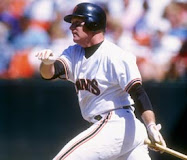
Showing posts with label Travis Ishikawa. Show all posts

Tuesday, July 20, 2010

July Bullets: Posey and Bumgarner, Marichal's Debut, Ishikawa, and the Second Half

Okay, I know I haven't posted in a while. Two things have happened:

1.) I'm working right now and my schedule severely limits my free time.
2.) I don't really have acess to the internet either.

So, add those two things together and this is what you get. A blog with a post every couple of weeks, if that. I will be back on July 30th, so expect some more regular posts then, but for the time being, I'm just going to give you these bullets for now.


Buster Posey and Madison Bumgarner Tearing It Up

Remember when Giants fans and management didn't want to call up these two for fear of exposing them too early in their development? Remember when we felt Bengie Molina and Todd Wellemeyer were adequate enough?

Well, don't we as Giants fans feel a little foolish.

Posey is making Giants fans forget all about Bengie. He has been on a tear lately, as evidenced by his team-leading (of players with 30 or more plate appearances) .409 wOBA and eight home runs. Posey is also looking incredible behind the plate, posting a 44 percent caught stealing rate so far. (In comparison, Molina's caught stealing rate was 23 percent before being traded.)

As for Bumgarner, he is 3-2 with a 2.41 ERA and is posting a K/BB ratio of 3.43. Yes, the K/9 rate isn't Timmy-impressive, but his BB rate is impressive at 1.87 and he is showing an impressive four pitch repertoire with a fasball averaging 90.5 MPH.

Of course, there are concerns. Bumgarner's contact rate is 85.2 percent, which is very high, and his BABIP is .268, so he is due to come back to earth, as his FIP (4.13) suggests. Posey's BABIP is also high (.356), but at the very least he is posting a good BB/K ratio (0.45) and he is making good contact (83.8 percent).

It's safe to say, Posey and Bumgarner are proving that the Giants have a bright future.


Anniversary of Juan Marichal's Debut Yesterday

Thanks to Chris Jaffe of The Hardball Times, who gave me a link to a blog which remembered some impressive debuts from Luis Tiant to Bob Feller. The most impressive though? The "Dominican Dandy" Juan Marichal.

Here's  blurb fom Jaffe's post:

On July 19, 1960, Juan Marichal made his MLB debut, pitching a complete game one-hitter with 12 Ks. His Game Score of 96 is the highest known one for a MLB debut.


If you haven't, check out The Hardball Times. It's one of the best Sabermertric blogs out there.
 
Travis Ishikawa es en Fuego
 
I have always been a big believer in Ishikawa. The guy has a great glove and some good power, and finally, it seems as if he is finally realizing his potential.
 
Ishikawa has been on fire (which is what I say in sloppy Spanish above), as evidenced by his .394 wOBA. What has been the key to Ishikawa's success? A decreased strikeout rate (from 27.3 last year to 18.2 this year) and better and more contact at the plate this year. Ishikawa's swinging strike percentage has gone down from 2009 (from 13.1 percent to 8.3 percent this year) and his contact percentage is up (from 71.8 percent last year to 83.2 percent this season). Also, he is making good contact, as evidenced by a ridiculous 36.7 percent line drive percentage.
 
Now, this may just be a "Eugenio Velez-style" hot streak. Ishikawa only has 81 plate appearances and his line drive perecentage and BABIP (.397) are bound to come back to earth. However, it's nice to not only see Ishikawa get some playing time after spending most of the first half as only a defensive replacement, but to see him succeed as well.
 
 
Giants Off to Hot Start in Second Half
 
The Giants are currently 4-1 out of the gate in the second half and should be 5-0, if not for a blown call by the home plate umpire Phil Cuzzi. They have won 10 of their last 12 games. Pablo Sandoval has been on a tear since the second half started and may be on his way to being Old Panda again. The Giants finally broke a bit of a hex, and beat the Dodgers in LA last night.
 
It's still early, but man...what a difference a couple of weeks make.

Wednesday, June 16, 2010

Bowker, Schierholtz, Ishikawa, Burriss: What Does the Future Hold for These Giants?

If you're a Giants fan, take a guess the average age of the position players currently on the active roster...

If you guessed 29.4 years old, then you are correct (and John Nash from "A Beautiful Mind"-esque in math as well...congrats).

That isn't exactly young, especially when you consider the fact that most of the guys that bring that average age under 30 sit on the bench. Case in point: last night, the only players in the lineup under 30 years of age were Pablo Sandoval and Buster Posey.

Now, this isn't exactly breaking ground. Giants fans have been used to Bruce Bochy's "Play the Vets At All Costs" mentality since 2007 when he first came on as manager. Some of the young guys have been solid under Bochy's tenure, and some haven't. That being said, there are some guys with solid potential, and some young guys that may just not be good enough for the big league level (ala Joe Borchard...he's tearing up Fresno, I know, but believe me, he is a Quad-A player).

John Bowker, Nate Schierholtz, Travis Ishikawa and Emmanuel Burriss are those players still with potential (whether you want to believe it or not...I'm saying it).

Of course, who knows if these four will get many opportunities this year. As a matter of fact, chances are, with the roster as veteran-stocked as it is, they probably won't get much, if any opportunities for regular playing time this year unless some injuries happen.

Yet, in terms of next season, these four arbitration-eligible players in 2012 should have some opportunities to play come Spring Training and I'll give you reasons why for each player.


John Bowker, outfielder, 26 years old.
Major League Stats: .303 average, .863 OPS in 552 games.
Major League Stats: .238 average, .678 OPS in 183 games.

What can I say about John Bowker? It's hard really. After being sent down to Fresno to make room for Pat Burrell, his 2010 season has been a bit of a disappointment. He tore up the Pacific Coast League last year, posting a .342 average, a 1.047 OPS and also hit 21 home runs in 450 plate appearances with the Grizzlies. Furthermore, he got off to a resounding start in Spring Training, hitting .312 with six home runs in 77 AB, which led him to getting the starting right fielder's position on Opening Day over Nate Schierholtz.

Unfortunately, the 2010 regular season has been anything but kind to Bowker. In 90 plate appearances this year, Bowker posted a .207 average, a .609 OPS and a .262 wOBA (his projected wOBA prior to the season was .350 according CHONE projections).To make matters worse, he didn't seem to transition the plate patience he showed in Fresno in 2009 to the big league level these first few months of Major League play. Bowker's 0.26 BB/K ratio (compounded by a 28 percent strikeout rate) is a far cry from the 1.16 BB/K ratio he sported with the Grizzlies (though, to look at it optimistically, it is better than the 0.22 ratio he had in 2009 at the Major League level).

However, despite the poor start, there is hope for Bowker.

First off, look at what he's doing in Fresno right now. In 10 games and 46 plate appearances with the Grizzlies, Bowker has hit four home runs and posted a batting average of .390 and an OPS of 1.166. Bowker is hitting the ball hard and hitting the ball with confidence, something you couldn't say he was doing in the Majors this year.

It is possible to think that Bowker will develop the confidence he needs in Fresno and will transition that to the Majors the next time he is called up. Then again, Giants fans thought that would happen this year (but Giants fans also thought he would get more of a chance as well).

Second, if you look at Bowker's plate discipline numbers, he has shown improvement, which is comforting. He has swung at less pitches outside the strike zone (22.5 percent, which is down 25.9 percent in 2009), and he is making better contact as well (his contact rate is up from 72.3 percent in 2009 to 78.7 percent this year).

The big problem for Bowker in the Majors? He is hitting more groundballs and he has struggled to find holes. His GB/FB ratio is abnormally high at 1.63 (he was under one the past two years in the Majors) and his BABIP is low at .241.

That being said, the numbers aren't as bad as they look. Despite only having a flyball rate of 31.1 percent this year, his HR/FB percentage is 15.8 percent (the highest it's been since he's been in the Majors). Additionally, his line drive percentage sits at 18 percent, an improvement from 2009 when it was 14 percent.

Prediction for Bowker in 2011

The outfield situation is very touchy for next year. Aubrey Huff will be a free agent, but considering how well he has played this year, it wouldn't be a surprise to see Brian Sabean re-up him for another year, which would hurt Bowker's chances of playing. Second, Thomas Neal, Roger Kieschnick and Darren Ford waiting on the horizon don't make things easier, especially considering how much is invested in them. Bowker certainly has the opportunity to break out as expected, especially if he can continue to gain confidence at the plate, which is what he needs after such a horrid start this year. However, if he can't produce at the Major League level soon, it won't be surprising to see the Giants cut him loose ala Fred Lewis-style.


Nate Schierholtz, outfielder, 26 years old.
Minor League Stats: .308 average, .871 OPS in 627 games.
Major League Stats: .281 average, .732 OPS in 230 games.

I admit, it has take me a while to come to terms with Schierholtz. I love him defensively and his numbers certainly back him up (career 20.9 UZR). Prior to 2010 though, I wasn't too big a fan of him offensively. He was an extremely free-swinger (he had O-Swing percentages of 34.7 and 34.9 percent in 2008 and 2009) and I didn't think he had the power (.133 ISO in 2009) to back up his lack of plate patience (0.28 BB/K ratio in 2009).

In 2010 though, Schierholtz has changed himself offensively. The power still isn't there (.107 ISO this year), but he has become much more disciplined at the plate. His O-Swing currently sits at 29.1 percent, not exactly great, but a great improvement considering it was never under 34 percent in his time in the Majors.

What sticks out the most for Schierholtz is his BB/K ratio and BB percentage, which have greatly improved. His BB/K ratio is currently 0.76 and his BB percentage is 9.4 percent. How has he improved these percentages from 2009? In addition to swinging less outside the strike zone, he has made better contact at the plate as well. In 2009, he only made contact 77.7 percent of the time. In 2010? That percentage is 84.6 percent, four points above the league average.

Now, Schierholtz doesn't hit the ball in the air, which is a bit deflating considering his ability to make contact. His GB/FB ratio sits at 1.61 this year and his line drive percentage is 18.1 percent. The line drive percentage is disappointing considering the past two years it was above 20 percent.

And, not only has Schierholtz dropped in terms of hitting flyballs this year (his FB rate sits at 31.4 percent), but he hasn't been very effective in making those flyballs count. His HR/FB percentage is three percent.

To put that HR/FB percentage in perspective, only Freddy Sanchez (who doesn't have a homer this year) has a lower HR/FB ratio of Giants hitters with 50 or more plate appearances.


Prediction for Schierholtz in 2011

Schierholtz deserves regular playing time and he should get it in 2011. With Mark Derosa's health a serious question, Schierholtz could have a shot to finally capture the job that probably should have been his this year. After all, he has done nothing to merit losing his job. His offensive numbers aren't eye-popping, but they aren't detrimental either (his wRC+ is 98, only two points below league average). However, when you add it along with his defensive value, it makes sense why Schierholtz has a WAR of 1.1 this year (which accumulates to $4.2 million dollars according to Fangraphs).


Travis Ishikawa, first baseman, 26 years old.
Minor League stats: .261 average, .808 OPS in 707 games.
Major League stats: .264 average, .739 OPS in 204 games.

Ishikawa has been up and down in his tenure with the Giants. Like Schierholtz, he has earned his keep on the Giants roster because of his defensive value. Last year, he led all defenders on the Giants with a 10.2 UZR. Furthermore, he also pelted nine home runs, which gave him a HR/FB percentage of 10.2 in 2009.

Unfortunately, he has tended to frustrate Giants fans more often than not the past three years as a Giant. Despite having a walk percentage of 8.7 and 8.3 percent in 2008 and 2009, he only had BB/K ratios of 0.33 and 0.34, respectively. Furthermore, his wOBA in 2009 (.313) was disappointing considering the promise he showed in 2008 with the Giants (when his wOBA was .337) and in Fresno (his wOBA was .445 with the Grizzlies in 2008).

Like many Giants hitters, Ishikawa swings a lot outside the strike zone (he has a career O-swing percentage of 27.9 percent). Unlike some Giants free-swingers, Ishikawa doesn't make contact enough to justify it. His career contact rate is 73.1 percent (the league average is usually around 80 percent).

This year, Ishikawa has shown improvement. His BB/K ratio is up to 0.50 and he has showed some power (.844 OPS; .367 wOBA) in his 32 plate appearances.

But as a Giants fan you have to realize that it's only 32 plate appearances. That is way too small a sample to come to any realistic projection. And the worst part? He probably won't get many more plate appearances anytime soon.

Prediction for Ishikawa in 2011

Out of the four guys listed, the future looks the most bleak for Ishikawa. He's great defensively, but he seems to be behind a lot of guys on this Giants roster. Barring an injury to Huff and someone else, Ishikawa is regulated to backup duty because he is out of minor league options. I wouldn't be surprised to see him designated for assignment either this year or next season, which is a shame because he certainly wasn't too bad in 2009.


Emmanuel Burriss, second base/shortstop, 26 years old.
Minor League Stats: .282 average, .679 OPS in 228 games.
Major League Stats: .262 average, .629 OPS in 156 games.

Burriss is probably the biggest wild card of the four. He is very interesting because of his situation alone.

In 2008, he was pretty much rushed to the big leagues because a.) Omar Vizquel was fighting age and ineffectiveness and b.) Brian Bocock was only other shortstop in their organization. So, Burriss was called up in 2008 despite being 23 years old and only having played as high as Advanced Single-A.

Surprisingly, Burriss didn't do too badly. In 95 games in 2008, Burriss tole 13 bases and hit .283 with an OBP of .357 and a BB/K ratio of 0.96. While he didn't show much power (.046 ISO) and his average was a little deceptive of his offensive success (.316 wOBA and 91 wRC+), the start in 2008 definitely was a step in the right direction for the Giants' 2006 first round draft pick.

Unfortunately, in 2009, despite a stellar spring training that earned him the starting second baseman position over Kevin Frandsen, Burriss struggled. While he still stole a decent amount of bases (11), many of his other offensive statistics fell drastically from 2008, including average (.238), OBP (.292), BB/K ratio (0.41), wOBA (.258) and wRC+ (52). Also, Burriss was inconsistent defensively, as evidenced by his UZR numbers in 2009 (minus-3.9 UZR/150 in 2009 at second base).

Since he was demoted to Fresno in 2009, not only has Burriss struggled to regain his 2008 form, but he also struggled with injury. He injured his foot shortly after being called down to the Grizzlies and missed most of the remainder of the 2009 season. When he arrived in Spring Training, he injured his foot early and was immediately put on the disabled list to start the season.

Though he is still on the disabled list, Burriss is already back in action, playing a few rehab games in San Jose before being called up to Fresno on June 14th.

Even if Burriss is able to come back healthy, this year may be a wash for him. The infield is already crowded with Juan Uribe, Freddy Sanchez, Edgar Renteria Matt Downs, and Ryan Rohlinger all vying for spots and playing time. In all likelihood, Burriss will probably spend the remainder of the year in Fresno, which isn't necessarily a bad thing considering he's only played in 31 games above Advanced Single-A prior to this season.

That being said, can Burriss still contribute? He will certainly have an opportunity next year. Renteria and Uribe will be free agents next season, so the starting shortstop position will definitely be up for grabs if those two aren't re-signed (though Uribe could be re-signed). And, if he can have a solid season in the Pacific Coast League, he may be able to convince the Giants brass that 2009 was a sophomore slump rather than an indicator of things to come.

Burriss definitely has a lot to offer. He certainly is fast (24 stolen bases at the Major League level) and has defensive potential (he had a 15.7 UZR/150 in 2008 at second base). Furthermore, he can make contact really well at the plate, as evidenced by his career 87.5 percent contact rate.

Unfortunately, Burriss' defensive inconsistencies (his career UZR/150 at shortstop is minus-17.7) as well as his questionable plate discipline in 2009 (28.5 O-Swing percentage) and lack of power in the Majors (career 0.38 ISO) and minors (career 0.65 ISO) don't exactly make Giants fans feel confident that he can be a long-lasting solution at the Major League level. Also, with higher end infield prospects Brandon Crawford, Conor Gillaspie, Nick Noonan, and Ehire Adrianza waiting on the horizon, Burriss may not get long to show what he can offer at a starting infielder position.

Prediction for Burriss in 2011

If Burriss is healthy (and that's a big "if"), then it isn't impossible to think that he can nab the starting shortstop position if Renteria and Uribe leave town. The potential is there, and I think Burriss is enough of a fan favorite that Giants fans could rally behind. His ability to make contact is promising, and with the relative lack of speed on this roster, Burriss offers a much needed quality.

Of course, Burriss needs to polish up his game on both ends. He has the ability to be a very good defensive player, but it seems, according to UZR, that he may be a tad overrated. Also, while he has an ability to make contact consistently, swinging outside the strike zone as much as he did last season certainly isn't going to help his cause.

He could go any way, and that's what makes him so interesting, and so hard to predict. Let's hope Burriss can improve in Fresno this year, and in 2011, be the player Giants fans and management hoped he would develop into after he made a splash in 2008.

Saturday, March 6, 2010

Injuries, Injuries, Injuries...And It's Only Spring Training!

The Giants are only three games into Spring Training and yet injuries are already an issues. Here's a rundown of guys who are going through some injury issues at this time:
So, four injuries hit four players who are needed/expected to make an impact in 2010. The one I feel the most for is Burriss, mainly because his speed is such a strength of his (in fact, his only strength considering how much he dropped defensively last season) and I wonder if it this foot injury is going to linger with him like Lewis' foot surgery did in 2009 (where he went from 21 stolen bases in 2008 to eight stolen bases in 2009).

Ishikawa I'm also concerned about, but from what it sounds like, it could be serious but it could also be minor as well. We'll need more time to determine whether or not it will truly have an effect on him in 2010 (and if it does, then...well...we might have some problems defensively at first base without our best defensive infielder in Ishikawa).

As for Derosa and Sanchez? Well...it's frustrating. $24 million for damaged goods (in the grand scheme of things it certainly could be worse). Oh well, let's hope that they can get healthy soon so they can make those contracts worth it. After all, it's only Spring Training and the Giants are 3-0 going into today (but like I said...it's only Spring Training).

Tuesday, January 12, 2010

On the Fringe: Where Do Five San Francisco Giants Players Stand?

From Bleacher Report

With new additions Aubrey Huff and Mark DeRosa signed, and Freddy Sanchez and Juan Uribe re-signed this offseason by San Francisco Giants General Manager Brian Sabean, the Giants seem to be a brand new team offensively going into next year.

Granted, while these signings seem to blend into Sabean's unending trend of signing veterans that are perhaps on the decline of their careers, on paper, the acquisitions done by Sabean and his management team have to be considered an improvement (I guess).

That being said, these latest moves make things very interesting come this Spring Training for five players who will be on the fringe of making the 25-man roster, perhaps even the 40-man roster: Eugenio Velez, Fred Lewis, John Bowker, Travis Ishikawa and Andres Torres.


Case No. 1: Eugenio Velez. Position: LF, UTL


Eugenio Velez had a solid start after his call-up in late July. However, after being moved permanently to the leadoff position, and seeing playing time everyday, he effectively cooled off and put up rather mediocre stats.

Last season, Velez finished with five home runs, a .267 batting average, and a .708 OPS. While Velez did have 11 stolen bases, he was caught five times, not a good percentage for a base-stealer.

According to Velez's Bill James and CHONE projections for next season, the lanky 27-year-old from the Dominican Republic, most likely will not improve much upon his numbers from a season ago.

CHONE only projects a four point improvement in his OPS, and Bill James actually believes his OPS will drop seven points. And this is also considering that Velez's OPS is pretty awful to being with, especially for a guy expected to bat leadoff.

The only shining grace? Velez is expected to improve his BB/K ratio in both projections. In Bill James, he is expected to improve by 10 points, while he is expected to improve by five points according CHONE. Granted, at 0.29 last year, Velez really has nowhere to go but up.

As far as Velez's future with the Giants? It doesn't look good. DeRosa made things bad, but Huff makes things almost impossible for Velez to continue his playing career in San Francisco.

Prediction: If he has a great (and key word: GREAT) Spring Training, then maybe he could make the roster. However, unless DeRosa gets hurt or Huff falls off the face of the earth, Velez most likely will be gone by May at the latest.


Case No. 2: Fred Lewis. Position: LF


Fred Lewis' future was already in heavy doubt last season, when Nate Schierholtz's surprisingly good offensive numbers in May put him on the bench. Furthermore, he lost even more ground when Velez put up his hot streak in late July and early August.

That being said, Lewis seems to be one of their best outfield options mainly for one reason: his OBP.

The Giants ranked last in OBP last year, and according to Jack Moore of Fangraphs, Lewis may be the Giants' best option when it comes to offense. Lewis had a .348 OBP last year, and according to Bill James and CHONE projections, he is expected to put up a .351 and .344 OBP, respectively.

Couple that with increases in his stolen bases (BJ projects him to steal 13 bases, CHONE projects 11, both projections up from the eight he had last year) and home runs (BJ and CHONE have him at seven and eight, respectively) and Lewis seems to be an enticing option.

However, the Huff signing definitely seems to put a wrench in Lewis' future. With Huff most likely playing first base (unless Bud Selig decides to add the DH in the National League), DeRosa probably will get bumped into left field.

That leaves a unique backup situation in Left Field among Lewis, Velez, John Bowker and Andres Torres. Bowker most likely will go to Triple-A to start the season, and Torres may be better utilized in Center as a backup to Rowand. Thus, the battle is between Velez and Lewis.

If you go by last year, Velez probably will gain more favor by some fans because of his spectacular couple of weeks when he was on fire. That being said, if you are a more knowledgeable fan, Lewis should be the go-to guy because of his consistency.

He wasn't awful, but he wasn't fantastic by any measure. The main question is which aspect is manager Bruce Bochy more impressed with: Velez's brief, spectacular play? Or Lewis' slightly above average consistency?

Prediction: Lewis most likely will get the boot unless he has a great Spring Training. Unlike Velez, there probably is actually a decent market for Lewis (because of his plate patience and decent speed), and it wouldn't be surprising to see the Giants get some return on Lewis by or right before the end of Spring Training.

Whatever happens, seeing Lewis in a Giants uniform by Opening Day isn't a strong possibility.


Case No. 3: John Bowker. Position: OF, 1B


Bowker is coming off a pretty lousy stint last season at the Major League level. He hit .194, posted a .620 OPS and a 0.22 BB/K ratio in 31 games last year with the Giants. However, Bowker is coming off an impressive campaign in Fresno last season where he hit .342, with 21 home runs, and posted a 1.047 OPS and 1.16 BB/K ratio. Basically. Bowker was the best player in the Giants Triple-A team, and he did this all in 104 games as well.

Therefore, that begs Giants fans to ask this question: is Bowker another Todd Linden, a guy who can hit 30 home runs in Triple-A, but do jack at the Major League level? Or is he a player that just needs the right opportunity to show what he can do?

Bowker has shown some success with the Giants. In 2008, he got off to a hot start and hit 10 home runs in a 111 games. That being said, he has really struggled in terms of plate patience. While his BB/K numbers were incredible last year in Fresno, they still were mediocre in 2008 at 0.26.

There is no question Bowker has some pop with the bat. In addition, there is no question that Bowker really doesn't have much else to prove at the Minor League level. However, the question is will he get a shot next year? Or will he continue to only be able to knock Triple-A pitching out of the park. He can play all three outfield positions (though left is really his only position), not to mention first base, but with all those positions already filled to the brim, Bowker might not get the opportunity unless somebody get injured.

Prediction: Bowker could get a shot, but only if somebody ahead of him such as Huff or Derosa fails miserably first. At that point, the season will be already lost, so who knows what could happen to Bowker.


Case No. 4: Travis Ishikawa. Position: 1B


Ishikawa is screwed. Plain and simple. With the Derosa signing, there was already widespread thought that Pablo Sandoval was going to move to first base to allow room for Derosa to play third. Now with Huff on the team, Sandoval will not only play third, but he most likely will play backup at first when Huff needs a spell.

The only role it seems Ishikawa will have on the Giants will be in terms of a defensive replacement. That is quite a shame considering the progress Ishikawa made as a Giant last year.

Last year, despite a putrid start and awful road numbers, he put up nine home runs, and a .715 OPS in 120 games last year in San Francisco. And if that isn't enough, his projections are pretty generous. Bill James projects him to hit 13 home runs, drive in 56 RBI, post a .772 RBI and improve his BB/K ratio to 0.44 (10 points). CHONE projects similar home run numbers (13) and RBI totals (50) and also projects him to make a massive jump in his OPS (.762), though not so much in terms of his BB/K ratio (only 0.35, a one point improvement).

I know Ishikawa is going to be a high strikeout guy. And, though he improved throughout the course of his year, he probably won't ever be a high walk guy either. That being said, Ishikawa's power most likely will improve (mainly because he can't put up putrid road numbers again like he did last year) and you can't really put up a true number of how valuable he is defensively.

Too bad Bochy doesn't know that.

Prediction: Huff's signing almost guarantees Ishikawa starting out in Triple-A Fresno. Only if Huff and Derosa falter simultaneously will Ishikawa get a serious shot at the starting job in 2010, and that probably won't come until mid-season. I mean, Bochy hit Molina in the cleanup despite his sub. 300 OBP.


Case No. 5: Andres Torres. Position: OF


Torres was an incredible surprise last year for the Giants. Despite not playing at the Major League level since 2005, Torres put up a .876 OPS, and stole six bases (and only got caught once). Furthermore, he hit .270 and six home runs in only 75 games, and a 170 plate appearances. This was a guy that had only one career home run at the Major League level prior to 2009.

So, it's safe to say, 2009 was a bit of a breakout season for the tiny, speedy Torres.

However, the question is whether or not he can do it again?

So far, the projections aren't optimistic that he will be able to build on his surprising 2009 season. First off, he's not exactly young (he'll be 32 next season) and he has such a small sample at the Major League level prior to 2009. Bill James predicts that he will have drops in batting average, OBP, and OPS (from. 270 to .264, .343 to .330, and .876 to .731, respectively). CHONE is even more pessimistic. They expect a 22 point dip in average (to .248), a 163 point drop in OPS (.713) and nearly double the amount of strikeouts (from 45 to 87).

The only optimistic stats concerning Torres projections? Similar home run numbers from a year ago (both BJ and CHONE project him to hit six home runs) and an increase in his BB/K ratio (from 0.36 in 2009 to 0.39 and 0.37 in 2010 according to BJ and CHONE respectively).

Granted, the offense may not be Torres most endearing quality. Torres is an incredible defender that was made to cover the sparse outfield at AT&T Park. Furthermore, with six stolen bases and getting caught only once, Torres is not only a speedy base stealer, but he's an efficient one to boot, a quality that makes him a more enticing commodity than Velez, who isn't nearly as efficient.

Prediction: With an ability to play left and center, and with Aaron Rowand on thin ice after an atrocious year last season, Torres is a safe bet to make the squad in 2010. At the very least, he will fill a Dave Roberts "ala 2004 with the Boston Red Sox" role where he will be used as a late inning defensive reserve and pinch hitter for the Giants.

Sunday, January 10, 2010

Trying to Defend Travis Ishikawa over Adam LaRoche

For some reason, I'm just not thrilled about Adam LaRoche.

Look at any Giants blog, Bleacher Report article, and they all seemed to be thrilled about him. Adam LaRoche this, Adam LaRoche that.

But I just can't imagine he's that much of an upgrade over Travis Ishikawa.

Yes, I know, I am on the Ishikawa bandwagon. I have been since post-All-Star break. Before that, I was not on the Ishikawa-bandwagon. Why? I don't know. Giants first basemen have let me down in the past decade not named JT Snow. Remember Lance Niekro? Remember how he had a decent half-season and then fell off the face of the earth? Now you can understand my disdain with Giants first basemen prior to the second half of 2009.

But that being said, I saw a change in Ishikawa in the second half. I saw a guy who could hit with some power (and not in a hitter's park mind you) and was willing to work the count and not swing at every damn ball close to the strike zone. Now, is Ishikawa going to have a 10 percent strikeout rate like Ryan Garko? Probably not, but Ishikawa has power potential, and once he fully realizes what pitches he can take for power, and which ones he can't, this guy is going to be worth the wait. We started to see that in the second half. I don't know why Giants fans are willing to quit on him now so soon.

And yet, we hear Adam LaRoche. We hear Bruce Bochy wants to play Ishikawa in the outfield because he doesn't feel Ishikawa can be the everyday first baseman. Never mind that Bill James predicts that Ishikawa and LaRoche will have near identical BB/K ratios next season (0.46 for LaRoche, 0.44 for Ishikawa). Never mind that CHONE according to fangraphs believe they will have similar OPS numbers next season (.789 for LaRoche to .762 to for Ishikawa). And never mind the fact that Ishikawa will come millions of dollars cheaper (I know LaRoche is in desperate straits right now, but this is Brian Sabean we're talking about, and as well all know, Sabes loves to overpay regardless of the market).

The bottom line is that LaRoche is going to get the hots from Giants fans and management and Ishikawa will get buried because LaRoche is a big name in theory. I really wish Giants fans and management would try to see the optimism in all of this. I really wish that they would see that LaRoche has never really played on a winning team. I really wish they would not make the same mistake that they made with Joe Nathan. I really wish that they would know what is a good way to spend money and what is not.

There is still time I guess. Let's just hope those 20-plus home run numbers from LaRoche don't blind Sabean. If he thinks LaRoche is going to get those kind of numbers in AT&T Park. Giants fans have to be crazy.

Friday, October 23, 2009

Ishikawa? Garko? Or Guzman? Who Belongs at first for the Giants?

From Bleacher Report

Let's face it. The San Francisco Giants have not had decent production from first base since JT Snow left the team after the 2005 season.

Mark Sweeney? Meh.

Shea Hillenbrand? Not one of Brian Sabean's finest Trade Deadline deals.

Lance Niekro? Let's just say Giants fans and management overestimated that guy because of his family history.

Ryan Klesko? (What? The Giants had Ryan Klesko? And they had him play first base? Apparently so).

John Bowker and Rich Aurilia? They probably belong at other positions (and that's putting it nicely).

Thus, as you can see, in the Post-Snow era, the first baseman have been pretty meager for the Giants.

There is some hope though, and it comes in the form of three guys, potentially.

Travis Ishikawa, Ryan Garko and Jesus Guzman.

First off, I'm a fan of Ishikawa. Am I the crazy, "don't trade him for anything" kind of fan? Not really. He's good, but he's not untouchable.

That being said Ishikawa does offer a unique skill set: he's great defensively and he is a patient hitter.

That is something that can't necessarily be said out of many of the players on the Giants roster.

However, while I do fantasize of a day where Ishikawa may turn into the next Carlos Pena, I do worry about one thing: high strikeout percentages, low walk percentages and a lack of power (even though he turned it on at times during 2009, his .387 slugging percentage in 2009 left much to be desired).

In 2009, Ishikawa had a walk percentage of 8.4 percent and a strikeout percentage of 27.3. That resulted in 0.34 walk-to-strikeout ratio (e.g. awful).

To make matters worse, Ishikawa has not been a high walk percentage guy at any point in his career. While he is patient at the plate, he has only had a walk percentage higher than 10 percent only twice: both times in Double-A in 2006 and 2008.

And that isn't bad enough, his strikeout ratios have been alarming. In his four years of professional baseball, Ishikawa has had a strikeout percentage under 20 percent only once (in Double-A in 2008).

Granted, that isn't necessarily a bad thing, but usually you need a double digit walk percentage at the very least to back up those kinds of strikeout percentages, and unfortunately Ishikawa doesn't have that luxury.

That being said, Giants fans shouldn't give up on Ishikawa just yet. To justify my Carlos Pena comparison, Pena struggled with many of the same problems Ishikawa has experienced so far. In his first six years of Major League ball, he had only a walk-to-strikeout ratio above 0.50 once (his rookie year, a 22 game stint in Texas).

It wasn't until 2007, when he finally started to put up respectable walk-to-strikeout and walk percentage numbers (0.73 and 17.4 percent respectively).

Thus, it is important to be patient, and take Ishikawa's first full year into perspective, even though most "impatient" Giants fans may refuse to go that route.

Just look though at Ishikawa's and Pena's first full seasons according to Fangraphs, and you can see that Ishikawa is fully capable of budding into the long-ball threat that plays first in Tampa Bay.

As for the other two, they too offer some intriguing scenarios, though one is significantly more attractive than the other.

If you look at Garko, he is a very tough guy to solve. While his numbers over his career aren't bad, it's hard to make a good judgment on him simply because until this late July when he was traded for Scott Barnes, he pretty much played his whole career in Cleveland in a very hitter-friendly ballpark.

Sure, he can hit left-handed hitters, and he won't strike out nearly as much as Ishikawa (as evidenced by his 14.1 strikeout percentage and 0.58 walk-to-strikeout ratio).

As far as proving that he can be a good hitter at AT&T Park, however, is yet to be determined. If anything, his disappointing short stint where he hit only two home runs (and both in the same game at Coors Field) didn't exactly prove he was the missing offensive link the Giants needed.

Therefore, Garko can still turn out to be a decent offensive player, much like he was in Cleveland when he platooned at first base with Travis Hafner. However, after watching his three month stint in San Francisco, Garko seems to be expendable, and doesn't seem to fare well in AT&T Park's big dimensions.

The most interesting case, even more interesting than Ishikawa perhaps is Jesus Guzman.

Now, if you look at him strictly statistically, he is very similar to Ishikawa. In fact, if you judge him by his strikeout and walk percentages, he is practically a right-handed Ishikawa.

His strikeout percentages may be a little smaller, but for the most part, he is practically Ishikawa in the sense that he is patient, but patient in the way that he will strike out more than walk.

However, if there is anything that separates the two, it is one thing: power.

Ishikawa has only had an OPS over .850 twice in his career (2008 in Fresno and 2007 in Single-A).

Guzman has had an OPS over .850 four times, including this year in Fresno where it was .885 thanks to the 16 home runs he hit for the Grizzlies.

Therefore, Guzman is an attractive choice at first base just based on his potential at the plate, and should be considered for the first base job in 2010 when Spring Training starts. His power numbers and potential cannot be ignored despite his lack of big-league experience.

So in my mind it comes down to two players in terms of whom the Giants should play at first base. Ishikawa and Guzman both offer significant upside at the position, even if they haven't proven too much at the Major League level so far. As for Garko, he's a nice bench player, but he doesn't seem to have the skill-set to be a permanent starter.

It will be interesting to see what manager Bruce Bochy and Sabean do concerning the position. One popular sentiment seems to be sticking Pablo Sandoval at first and making Juan Uribe the starting third baseman.

As tempting as that sounds, I think Giants fans should really consider Ishikawa and Guzman a heck of a lot more.

They will bring a lot more to the table at first in the future than Uribe at third

Sunday, October 18, 2009

Is re-signing Juan Uribe worth it for the Giants?

Giants general manager Brian Sabean has been known for some awful deals. This season was no exception as he proved to make a disastrous blunder in signing shortstop Edgar Renteria to a two-year, $18.5 million deal prior to the 2009 season.

What did the Giants get from Renteria? A .250 average, five home runs, a .307 OBP (the lowest of his career) and 124 games, most of them played while injured (so basically I would give him 80-90 games fully healthy).

Yet, while Renteria and his eight million dollar per year contract is another classic "Sabean Blunder," Sabean did make one deal that should be lauded and will be interesting to look into as we enter the baseball offseason.

The Juan Uribe signing.

When Sabean signed Uribe, many thought Uribe was going to be an afterthought on this team. With Kevin Frandsen and Emmanuel Burriss the favorites to play second base in Spring Training, and Pablo Sandoval and Renteria firmly implanted at third and shortstop, respectively, many experts wondered if Uribe would even have a place on this Giants roster, let alone starting lineup.

Well, Uribe surprised the experts, much to Giants fans' delight. After going through a woeful 2008 season with the White Sox where he hit only seven home runs, drove in 40 RBI and sported a .247 batting average and a .682 OPS, Uribe broke out in his first season in San Francisco.

While rotating between second and third base and shortstop throughout the season, Uribe hit .289, sported a .824 OPS and hit 16 home runs and drove in 50 RBI.

And all this production came at around one million dollars, seven million less than what the Giants had to pay Renteria this season.

However, with only a one-year deal signed last offseason, Uribe will be a free agent this year, and that begs Giants fans and management to ask the question:

Is he worth bringing back?

For starters, it is important to realize one thing: to bring back Uribe means somebody is going to go. The Giants can't afford to give Uribe a new deal and have him play a utility role again. If he comes back, he needs to be in the starting lineup consistently or the signing will be a waste of money.

Who that person is, however, is yet to be determined (though Giants fans probably should have a good sense who it might be).

For starters, it won't be Freddy Sanchez (unless he decides not to re-sign with San Francisco, which is a possibility). Sanchez is too much of a veteran presence for another veteran like Uribe to push out.

Secondly, it probably won't be Renteria either. While getting rid of Renteria is a nice thought, chances are it's more fantasy than reality. Renteria makes too much money and is coming off too poor a year to have any trade value. Thus, as crappy as it is for Giants fans to imagine, Renteria most likely will be back at shortstop on Opening Day.

Therefore, if Uribe is decided to be brought back by the Giants management, it probably will result in this scenario:

Uribe will become the starting third baseman, and Pablo Sandoval will be moved to first base, which is probably a better fit for him and his defensive skills, and Travis Ishikawa, the Giants current starting first baseman (along with Ryan Garko, but after Garko's bad year in San Francisco, I'm not going to give him anything just yet) will likely be bounced from the roster.

That can be good or bad depending on how much you like Ishikawa. As for me, I'm torn. Yes, I love his defensive ability, but I'm also disgusted by his propensity to strike out a lot (by swinging at a lot of pitches that aren't in his zone) as well as hit ground balls.

For some reason though, I can't shake this fantasy that Ishikawa has the potential to be a Carlos Pena-esque player. Ishikawa has the kind of power and plate approach that is very similar to Pena's. Like Pena, Ishikawa is never going to be a high batting average guy. He'll probably be in the .260 range at-best.

Yet once he understands what pitches he can hit, and which ones he can't, he will have the kind of breakout that Pena had while in Tampa Bay. Now, it's not going to happen right away. After all, Pena struggled as well in his stints in Oakland and Detroit. That being said though, Ishikawa seems to have made quicker progress than Pena did at this point in their careers, which gives me a little hope Ishikawa might be worth keeping in the long run.

So that's the dilemma. Believe me, I love Uribe, and I wouldn't mind to see him in a Giants uniform for the next couple of seasons. He's the kind of free-swinging, loosey-goosey player that can play three infield positions and drive in runs (he's consistently been a 20 homer, 70-plus RBI guy until 2008). However, his OBP numbers (career .296 OBP) might be an indicator that he may not be a fit for a team that struggles in that category mightily.

It's a tough call: should the Giants go with the present, run-driving support of Uribe? Or the Carlos Pena potential of Ishikawa?

Either way, Sabean will have to make a choice, and it will be very interesting to see what he does this offseason.