Showing posts with label Wendell Fairley. Show all posts

Friday, March 23, 2012

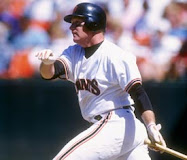
Prospect Highlight: Wendell Fairley, OF

With the recent news of former No. 1 overall pick Matt Bush being involved in another alcohol-induced incident, it got me thinking "Who are some high round picks in the Giants system that have really fallen off the past couple of seasons?" The two names that came to mind were Wendell Fairley and Michael Main (whom I'll be covering in another post). Bush has had serious makeup problems since he was drafted, and to be honest, while he has flashed good numbers as a converted pitcher (he used to play shortstop, but hit so poorly the Padres decided to switch him positions), I think his makeup problems (specifically alcohol issues) will prevent him from reaching even a modicum of his potential.

(On a side note: I don't understand why this guy has been given so many chances at this point in his career. This was a guy who was arrested at a high school because he showed up drunk, threatened high school kids and then was caught on video camera screaming and crying hysterically as police arrested him. Why would any team touch him, let alone two teams with very smart general managers in the driver's seats? (Though to be fair, Toronto booted him after he broke their zero-tolerance policy they agreed upon when he signed with the Jays; at this point, I think Tampa is probably going to follow suit, especially since they already have some heat on them from acquiring Josh Lueke, a pitcher who allegedly raped someone. Having Lueke, and a guy who apparently hit and run a 72-year-old man on a motorcycle while drunk on the same roster would be a PR nightmare, and Tampa has enough problems drawing fans to the park.)

But, to my knowledge, Fairley and Main's issues have simply been ineffectiveness at the professional level, so at least they have that going for them, unlike Bush. That being said, they did come as highly touted picks, and they have hardly lived up to their Draft Day press clippings during their minor league careers so far. Can 2012 be a break out for the both of them, where they finally capture at least SOME of the hype that made them such highly merited first round choices? Or are these two probably destined to be fringe prospects in the Billy Rowell-mold?

Let's take a look at Fairley in this post. I'll try to take a stab at Main in one of the next ones sometime this weekend.


Wendell Fairley, outfielder


Age: 24
Minor League service time: Three years.
Highest level played: Double-A (Richmond)
Career minor league stat line: .263 average, .347 OBP, .334 slugging, .681 OPS, 167 runs scored, eight home runs, 24 stolen bases in 367 games and 1,419 plate appearances. 
Overall Grade: C-/D+ (Leaning more toward latter grade though)
Projection: Backup outfielder; maybe career minor league player.


Why Has Fairley Been Disappointing?

When drafted in the Giants' pick-heavy 2007 draft, many felt that the Giants got a good steal with Fairley in the 29th slot. Keith Law remarked that Fairley had middle-of-the-first round potential in the draft, but went lower because of signability and some makeup issues (apparently, he had a kid when he was a senior in high school, which to be honest, isn't really all that uncommon with a lot of athletes). A lot of the reports on Fairley were very sterling, as scouts raved about his "five tool" potential as well his athleticism. According to OGC's draft day profile on Fairley, scouts remarked that he had "the ability to hit for average and plus power" and that he was a "plus runner" and had defensive skills "perfect for center field."

However, there were some concerns about Fairley's game from people, even on draft day. For starters, Fairley was a two sport athlete in high school who also concentrated heavily on football (he was widely recruited by colleges as a wide receiver), and hence, he wasn't as widely known by scouts because of his dual-sport commitments. Also, while sporting "five tool" potential, many experts and people in the Giants organization (even Brian Sabean) admitted that he was very raw and that it would take some time for him to develop into those tools. Still, despite some concerns, the vibe surrounding Fairley's selection was overall very positive, as said in OGC's post:

"He sounds like the best position prospect that we have had in ages (well, at least before Villalona; won't they make a nice pair of call-ups in 4-6 years, or less?) and he helps makes up for the fact that we passed up a few premier position talents in Dominguez, Heyward, and Mills, particularly Heyward since I've seen a number of descriptions of him being remniscent of Willie McCovey. He's noted as a Top 10-15 pick by talent so he's equivalent enough to them to satisfy me - and I do like Bumgarner and Alderson and the fact that Sabean and Tidrow both noted that they are on the fast track and could advance to the majors in as short as 2 years, so despite them not being college players, they could provide return to the Giants in perhaps even a shorter timeframe, few prospects make the majors in 6 years, let alone 2 years. And there's no way the Giants would have gotten anyone as good as Bumgarner in the 29th pick had they selected any of those three hitters."

Despite the lofty praise and excitement, Fairley's high point seemed to be draft day and it's been downhill since. He held his own in 52 games in the Arizona Rookie League in 2008, posting a .363 wOBA, but his wOBA was mostly helped by a .388 OBP and a BB/K ratio of 0.70. In terms of actually hitting the ball, his numbers were very mediocre, as he hit only .259 and posted a slugging of .337 with only two home runs in 238 plate appearances. So, while Fairley did show a good approach at the plate his first season in Rookie Ball, his lackluster ability to hit for average or show any power in Arizona was a bit of a warning sign.

All that came into fruition in his first two full years of professional ball. In Single-A Augusta in 2009, he posted a slash of .243/.323/.333 in 390 plate appearances. Not only did he show little ability to hit for average or power in the Sally (only one more home run despite 152 more plate appearances), but he didn't showcase any of the speed that made scouts grade him a "plus runner" on draft day (only two stolen bases on six attempts). While he did pick it up offensively in San Jose in 2010, improving his slash to .292/.362/.343 in 440 plate appearances, the complete lack of power (one home run all year) and questionable baserunning skills (10 stolen bases on 16 attempts) made him an afterthought in most Giants prospects lists.

The Giants had him repeat the year in San Jose in 2011, and though he struggled in his second Cal League campaign (he posted a .245/.329/.317 slash in 242 plate appearances), the Giants still promoted him to Richmond toward the end of the year. Despite the change to the pitcher-friendly environments of the Eastern League, Fairley actually performed a lot better in the EL in 2011 than in the CL, posting a slash of .265/.321/.337 with a .657 OPS in 109 plate appearances. Still though, 2011 provided more of the same: a lot of empty singles and not much extra on the basepaths (only five stolen bases the whole year).

When you look at him in person, Fairley seems to have an athletic presence, but he doesn't 'wow' you in the way a typical "five tool" type would. He's not blazing, his frame isn't incredibly strong looking, and his swing is very constricted and illustrates why he has never posted a slugging in the .400 range over his career. He has a slap hitter's swing that makes him a groundball machine. One would hope that management and instruction has tried to work with him on this, but after four years, one has to wonder how much has been taught and how much has changed. From what I've seen from when he first started playing professional ball, not a lot has progressed in terms of swing mechanics, which makes me think Fairley's power ceiling and ability to hit extra base hits will sort of stay where it is (i.e. very low).


Is There Still Hope for Fairley?

To be honest, Fairley is one of those prospects that's really hanging on the edge right now in terms of projection. If I have to guess where he ends up, I would probably say he's a career minor leaguer with maybe a backup or utility role in the outfield being his ceiling at this point. He doesn't hit for average, doesn't hit for power, doesn't steal bases, doesn't play excellent defense (he projects more as a corner infielder at this point) and doesn't exactly have the best eye at the plate (though he does seem to adjust with more exposure to pitching, as his BB/K ratio improved in his second year in San Jose). All those are factors that are heavily working against his potential and chances in terms of being a Major League player.

However, to be honest, his slash lines haven't been as bad as I initially thought, and Giants fans had to expect Fairley to struggle like this to start out his career. He was so raw when he was drafted that to expect him to come out and mash would be foolish.Yes, the power and speed hasn't developed as well as hoped, but the averages and OBP numbers still give glimmers of hope that he can have some kind of utility for the Giants organization in the future. The glimmer is small and unlikely to project into anything, but to say Fairley is done at 24 years old and after only four seasons (including only 34 games in Double-A) would be a bit rash at this point.

There is a lot for Fairley to overcome. To be honest, there are a lot more outfield prospects in the lower minors levels of the Giants system who are younger and with more upside than Fairley at this point, so he has to do a lot to hold them. Minor injuries have seemed to take its toll on Fairley over his career, as was the case last year where he was limited to only 95 games. So, if Fairley can stay healthy and be somewhat effective in Richmond again, there is hope that he can rebound his status as a prospect in 2012. He won't jump up on any Top 30 lists going into 2013, but if he can have a bounce back year where he can post a .270/.340/.380-esque slash, then Fairley will suddenly be an interesting prospect again in the Giants system and not just the "first round" bust he's been known as the past couple of seasons.

Saturday, April 23, 2011

OTF's 32 Most Interesting Prospects: No. 30, Wendell Fairley, OF


Wendell Fairley is probably a case of why you shouldn't rely on OTF for prospect rankings. On projection alone, Fairley probably doesn't crack the Top-40 of any Giants prospects list (more on that later). However, Fairley intrigues me for a variety of reasons, which is why I included him on this list.

First off, he was a first round pick (No. 29 overall in the 2007 draft), and there is always going to be hype and expectations surrounding a guy who is drafted in the first round. Of course, Fairley was probably a first round pick for financial reasons rather than talent ones. The Giants had multiple supplemental picks after Moises Alou left for free agency, and Fairley, one of four first round draft picks for the Giants in 2007 (along with Madison Bumgarner, Tim Alderson and Nick Noonan), was picked up by the Giants in the late first round mainly because he could be signed easily and at a low cost.

Many experts chided the Fairley pick as one that wouldn't amount too much. And so far, the experts have been right. Fairley, despite showing some raw athleticism and skills in high school, hasn't really excelled in any category since he broke in the minors in 2008. During his first year in Rookie Ball, Fairley struggled to hit for average (.252), but he showed strong plate patience in 238 plate appearances. His OBP was .388 and he had a BB/K ratio of 0.70 (helped by a 10.9 walk percentage), which produced some good advanced numbers (his wOBA in Rookie Ball was .363).

However, Fairley hasn't shown much as he's progressed through the Giants system. After a solid Rookie Ball campaign, Fairley took a big step back in 2009 in Augusta as he hit .243 with a .656 OPS. He didn't show power (three home runs in 390 plate appearances; 0.90 ISO), he struck out a lot (103 whiffs), and the one strength he did show as a rookie didn't translate to the South Atlantic league. He only had 10 more walks despite almost 160 plate appearances and his BB/K ratio fell to 0.35. Once a fringe prospect, Fairely fell totally off the radar after the 2009 season ended.

Despite the lackluster season in the South Atlantic League, the Giants promoted Fairley to San Jose after the organization got a pretty good look at him in Spring Training. Fairely in many ways bounced back a bit in High Single-A. He posted a much better average (.292) and he cut down his strikeouts (his K percentage went from 29.9 percent in 2009 to 22.1 percent in 2010). However, despite playing in a hitter's league, Fairley's power continued to dip. His ISO fell to .054 and he only hit one home run in 439 plate appearance. To compare, Fairely hitting one home run in Municipal Stadium is equivalent to Juan Pierre hitting only one home run in Coors Field (e.g. you must really not have any power).

Fairley is again starting the year in San Jose (predictably) and he is off to a better start. He is hitting .354 right now with an OPS of .853 in 58 plate appearances. Sure, he is still managing only to be a singles hitter (he has only three extra base hits), but his plate patience has been solid, as he has managed to bring back his BB/K ratio to a more respectable number (0.67) after slacking in that category a year ago (0.34). Of course, this year is just a small sample, but considering he has a year of High Single-A ball under his belt, it is expected that Fairley is capable of having a better year in San Jose in 2011 and may be capable of a promotion to Double-A if he can build upon on his good start in the California League.

Despite being athletic, Fairley isn't great on the basepaths. While he stole 10 bases last year, he was caught six times and he has only 19 stolen bases total in his minor league career. Additionally, he suffers from a lot of the same "Fred Lewis" problems: despite sporting some above average athleticism, he doesn't really get to balls as well as you would think (career 1.45 RF/G).

In many way, what intrigues me about Fairley is just the fact that he seems to be a "tools" player. He's got a lot of potential (or seems to have potential), and he could contribute to a team in a myriad of ways, but he's extremely undeveloped as a player overall. The one thing Fairley has going for him is the fact that he's young (he's only 23) and there doesn't seem to be any need to rush him through the system (the Giants are fine in the outfield with guys like Thomas Neal in Fresno).

The one guy I liken Fairley to is Fred Lewis, a "tools" player who showed above average plate patience in the minors. Of course, Lewis was a better base stealer than Fairley, and he also hit better as well in the lower levels (though much like Fairley, Lewis didn't show much power initially, as he hit only two home runs in his first two years in the minors). That being said, Lewis did have a year of college underneath his belt as he played for Southern University before getting drafted by the Giants in the second round of the 2002 draft. Hence, Lewis was a little more developed breaking into the minors than Fairley, who came in as a very raw outfielder out of high school.

Fairley is still developing, and unfortunately for him and the Giants, he is developing slower than expected. However, Fairley is one of those guys who could develop into something should he ever realize and build upon a certain skill set. Right now, it seems to be plate patience and drawing walks, but even then he's been inconsistent in that category over his minor league career. His ceiling may not be high, and he probably won't ever live up to his "first-round pick" billing, but Fairley is a guy Giants fans should pay some attention to. He could develop into a poor-man's Lewis, perhaps even a player on Lewis' level should he ever develop a modicum of power or adeptness on the basepaths.

Whether that's a good or bad thing for Fairley's future though is yet to be determined. Despite Lewis' solid minor league numbers and decent career with the Giants, he wasn't exactly a favorite with the Giants fans or management, as evidenced by him being jettisoned to Toronto last season.

Tuesday, May 25, 2010

Scarce Six: A Look at the African-American Players in the Giants Organization

I just realized this fact after I saw Emmanuel Burriss get transferred to the 60-day Disabled List on May 22 to make room for Santiago Casilla: the Giants haven't had one African-American player take the field for them this year. Burriss has been hurt and on the disabled list all season, and Fred Lewis, the only other African-American player on the 25-man active roster this Spring, was traded away to Toronto shortly after the season began.

In my mind, this is incredible, and may be the first year in a long time that the Giants have not had an African-American player take the field in a Giants uniform. I mean, this is a franchise that has housed great African-American players like Willie Mays, Monte Irvin, Hank Thompson, Willie McCovey, Bobby Bonds, Jeffrey Leonard, Kevin Mitchell, Ellis Burks, Reggie Sanders, Kenny Lofton (for a half-season anyways), Ray Durham, and of course, Barry Bonds.

Now, I don't think you can blame this one on the Giants organization or use the racism card on Bill Neukom or Brian Sabean (though I wish we could because it would get Sabean fired). The lack of African-American ballplayers on the Giants roster is simply a reality of the game nowadays. It's not just the Giants that lack African-American players, a lot of teams are. Last year, in a tweet, Bill Simmons joked that the Red Sox "had more Jewish guys on their team than African-Americans." Hence, anybody claiming the Giants as a "racist" organization  may have a hard argument to make.

That being said, the organization isn't completely bare of talented African American players. Let's take a look at the African-American players in the Giants organization and how soon (or if) they will see playing time in a San Francisco Giants uniform.


Emmanuel Burriss, 2B/SS

Stats this season: None (Has been on Disabled List all year due to a foot injury).

Burriss has plenty of experience on this Giants team and may be the only African-American player in the Giants organization that could play for the Giants this year. Burriss is coming off a foot injury this Spring, which is disheartening mainly because the strongest aspect of his game is his speed (he stole 11 bases last year in 61 games). Burriss doesn't have much power (.046 and .030 ISO the past two seasons), but he had a very strong BB/K ratio in 2008 (0.96) and he has a strong propensity to make contact at the plate (career 87.6 percent contact rate in the Majors). Burriss isn't a bad defender, but his UZR suggests that he may not be as good as advertised (minus-17.7 UZR/150 at shortstop in 2008; minus-3.9 UZR/150 at second base last year).

The biggest roadblock to Burriss' path in the Majors this year (other than his injury) may be the crowded Giants infield. With Juan Uribe, Freddy Sanchez, Edgar Renteria, and Matt Downs all vying for playing position at second base and shortstop, there just may not be any room for Burriss at the Major League level this season. In all likelihood, when he comes back, Burris will be playing most (if not all) of the year in Fresno, which isn't necessarily a bad thing considering he's only played 21 total games above the Advanced Single-A level.


Darren Ford, OF
Stats this season: .247 average, .319 OBP, .673 OPS, 19 R, 14 SB in 38 games in Richmond (Double-A).

Darren Ford turned some heads after a strong year in San Jose in 2009 (.384 wOBA, 81 runs scored, 35 stolen bases) and a surprising Spring Training (11 hits, 11 runs scored in 22 at-bats). While Ford did not make the active, 25-man roster (tough to justify that one when the highest level he played before Spring Training was Advanced Single-A), it was safe to say that Ford earned his spot on the Giants' 40-man roster after Spring Training ended.

So far in 2010, the results have been mixed for Ford. While he has stolen 14 bases, Ford hasn't hit particularly well in the Eastern League for the Flying Squirrels. Granted, this isn't necessarily too big a deal (the Eastern League is known to be a pitcher's league), but the 23.3 percent strikeout percentage and 9.1 walk percentage (he also sports a 0.42 BB/K ratio; almost a ten point dip from 2009) certainly don't make you as a Giants fan feel particularly hopeful that he will get a callup anytime soon.

Ford's speed definitely is attractive, especially considering the Giants' only legitimate stolen base threat is Andres Torres at this point. However, unless he's able to really turn it around, it's safe to say that the soonest Ford will be up with the Giants will be in 2011.


Thomas Neal, OF
Stats this season: .263 average, .332 OBP, .706 OPS, 3 HR, 23 RBI, 15 R, 5 SB in 44 games in Richmond (Double-A).

The hype around Thomas Neal amplified after a breakout year in San Jose last season. In the California League last year, Neal hit 22 HR, scored 102 runs and posted an OPS 1.010 and a wOBA .444 in 129 games. The performance had such an impact on the Giants brass and media that it earned him a non-roster invite to Spring Training, and a spot in the Top-Five of every Giants Prospect Rankings publication, blog or Web site.

However, this year has been anything but kind to Neal. After a disappointing, short Spring Training stint (Neal has only two hits in 11 at-bats), Neal hasn't necessarily been showing the power he displayed in the California League in 2009. This year, he has hit only three home runs and his slugging percentage sits at .374 (his slugging hasn't been under .444 since his first stint in the Northwest League).

The biggest concern with Neal though has to be his plate patience, which has been a bit questionable this season. After posting walk percentages over 9.5 percent the last three years, Neal currently has a walk percentage of 7.1 percent. This has affected his BB/K ratio, which currently sits at 0.37 (last year in San Jose it was 0.66).

Neal eventually is going to see more balls drop for hits. That's just the reality of the game and playing in the Eastern League. However, he has to improve his plate patience if he wants to live up to that billing of being a Top-Five prospect in the Giants organization.


Wendell Fairley, OF
Stats this season: .283 average, .367 OBP, .677 OPS, 15 RBI, 2 SB in 33 games in San Jose (Advanced Single-A).

Fairley was a first-round pick for the Giants in the 2007 first-year player draft. However, despite his draft position, many draft experts felt he was picked in the first round for cost reasons rather than his talent (the Giants had four first round picks in 2007).

Like many experts have predicted, Fairley has disappointed in his tenure in the Giants organization. While he posted a solid wOBA (.363) and BB/K ratio in (0.70) in Arizona Rookie League in 2008, he tumbled greatly in his first season in the South Atlantic League with the Greenjackets in 2009. Fairley went down in wOBA (.307), average (.243), stolen bases (only two stolen bases in six attempts), and BB/K ratio (0.35). And he did this with an improvement in BABIP (it jumped from .308 in 2008 to .338 in 2009).

However, things have turned around a little bit for Fairley in 2010. He started the year off well, holding his own in Spring Training as a non-roster invitee (he had two hits in five at-bats).  He has transitioned that strong impression to a pretty solid year so far in San Jose. While he may not hit for power (his slugging is very underwhelming at .310), his ability to get on-base (.367 OBP) has some Giants fans and management people turning their heads a little bit.

Fairley could use some more refinement at the plate (his BB/K ratio is 0.33). That being said, considering how well he has played lately (he is hitting .324 in his last 10 games), it isn't out of the question to think that Fairley can continue to progress in the California League, and improve in his power and plate patience categories. If he is able to build upon this recent hot streak, it will definitely help him shed that "Tumbler" label he's been tagged with since 2008.


James Simmons, OF
Stats this season: .227 average, .299 OBP, .670 OPS, 7 SB, 9 RBI in 33 games in San Jose (Advanced Single-A).

I really don't know much about Simmons, and I don't think many Giants fans do either. Simmons was a 24th round draft pick in the 2005 MLB amateur draft and came out of Vernon Junior College in Texas. He hasn't been listed in any of the Giants Top Prospects lists, and he has only played in the Arizona Rookie League and the South Atlantic League in addition to the California League (where he currently plays).

What can I tell you about Simmons? He has some athleticism, and has the ability to steal a base. In 2008, he stole 25 bases for Augusta. Last year, he stole 15 bases while doing another tour of duty for the Greenjackets, but he only got caught once. This year, he has been similarly effective, with seven stolen bases on eight tries.

Despite that solid baserunning ability however, Simmons hasn't showed much with the bat. This year he is hitting .227 in San Jose, and the same has been true throughout his four years in the minors. He really jumped onto the scene in 2006, posting a .360 wOBA in Rookie League, but for the next two years he didn't have a wOBA over .292 at any level (he bounced around from Augusta to San Jose). In 2009, he picked it up and posted a wOBA of .343, but considering that it was his third go-around in Augusta, those numbers have to be taken with a grain of salt.

So, what kind of hopes can Giants fans have for a guy like Simmons? Not much, really. But then again, he was a 24th round draft pick, so it makes sense why you can't expect too much from the guy.


Evan Crawford, OF
Stats this season: .273 average, .355 OBP, .718 OPS, 22 R, 9 SB in 42 games in San Jose (Single-A).

Crawford was the Giants' ninth round pick in the 2009 first year player draft. For some reason, I have a lot of hope for this kid (he seems to have a good head on his shoulders). He played three seasons at Indiana University, and had a solid campaign in 2009, posting an .847 OPS and 27 stolen bases. Immediately after he was drafted, Crawford head to Arizona Rookie League, where he hit .273, scored 14 runs and stole nine bases in 16 games. When he was promoted Salem Keizer of the Northwest League, Crawford played even better, posting a .316 average and a wOBA of .381.

Now, it's tough to tell how good Crawford's Volcanoes campaign really was. While his wOBA was high, as was his OBP (.375), there were some concerning numbers. For starters, his BABIP was .412, which is extremely high and probably means he was extremely luck when it came to finding hits (which isn't sustainable, especially as you advance through the minor league system). Second, his BB/K ratio wasn't exactly impressive at 0.30. A high strikeout percentage (26.3 percent) most likely happened to be the culprit of his mediocre BB/K ratio, though he seems to be a player that strikes out a lot in general (he had a 22.7 percent strikeout rate in Arizona Rookie League).

This year, he began the year in Augusta and for the most part, it has been solid.  He hasn't showed much power (.364 slugging), but that's been true since his college days (he hit only four home runs total at Indiana). Additionally, while he still shows a lot of speed (nine stolen bases) and he certainly can get on-base (.355 OBP), the strikeouts (37 in 165 at-bats, which is a 22.7 percent strikeout rate) still are a bit of a concern. To look at it on the bright side, at least Crawford is now getting better at drawing walks. This year, he has drawn 18 walks (9.8 percent walk percentage) and has a BB/K ratio of 0.49 (which is 19 points higher than his BB/K ratio in Salem-Keizer).

Crawford may be a year or two away from even sniffing the Giants roster. However, this kid certainly has under-the-radar talent, and considering his improvement in plate discipline this year with Greenjackets, I wouldn't be surprised if he continues to progress and surprise as a ballplayer as he moves up through the Giants farm system.

Tuesday, March 16, 2010

Neal, Kieschnick, Fairley: Which OF Prospects Are Primed for "Giants" Success?

With Spring Training beginning it's third week of play, a lot of interesting questions have sprung up around Giants camp in Scottsdale.

1.) Is Madison Bumgarner going to start the year in San Francisco or Fresno?
2.) Is Fred Lewis going to be traded or released considering he has no minor league options left on his contract?
3.) When will Buster Posey supplant Bengie Molina in the starting lineup next season?

While all those questions are interesting, I will be examining one question that is commonly lost in the shuffle of all the "big-name" Spring Training headlines:

Which prospects are making a name for themselves this Spring Training?

Granted, there are a lot of names: Nick Noonan, Brandon Crawford, Francisco Peguero, Darren Ford, Kevin Pucetas, Steve Edlefsen, etc. The list really could go on and on and on.

That being said, there are three outfield prospects that have gauged my interest since last season: Thomas Neal, Roger Kieschnick and Wendell Fairley.

All three prospects have come with some kind of reputation going into Spring Training (and they are all Non-Roster invitees by the way). Which guys are coming off solid seasons in 2009? Which guys are primed for success in 2010 and beyond? And which guys are making progress this Spring in Cactus League play?

Let's take a look at the outfielders and their profiles.


(Note: Spring Training stats are accumulated before today's game against  Cleveland.)


Thomas Neal (22, 36th round draft pick of the 2005 MLB Draft)
(Highest level reached: High-A San Jose)


How Did Neal Perform in 2009?

Though a later rounds pick, Neal has burst onto the scene in the San Francisco Giants organization. Last year, in San Jose, Neal put up unbelievable numbers in California League play. In 129 games, he hit .337 with 22 home runs, 90 RBI, scored 102 runs and put up a .431 OBP, a 1.010 OPS, and a wOBA (weighted on base average using linear weights) of .444. Additionally, Neal showed solid patience at the plate, as evidenced by his 11.6 walk rate and 0.66 BB/K ratio.

Neal was such a stud last year in the minors that Fangraphs writer Marc Hulet listed him as the No. 3 prospect in the Giants organization, behind only Buster Posey and Madison Bumgarner. To put this high ranking into context, Neal ranked ahead of Dan Runzler (no. 4), Waldis Joaquin (no. 10), and Francisco Peguero (no. 9), all players that are currently on the Giants 40-man roster going into the 2010 season.

How Good of a Player is Neal?

Neal has the potential to be a force on the offensive end. Though, his 2009 season was obviously his magnus opus so far of his Minor League career, Neal also showed excellent potential the last couple of seasons.

In 2007, before he got hurt, he hit .318 with an .875 OPS and a .419 wOBA in Arizona Rookie League (he only played 10 games before he was injured and missed the rest of the year). The most promising numbers of his short season were his walk percentages and BB/K ratios, which happened to be 10.9 and 0.71, respectively.

In 2008, Neal showed steady improvement, and proved that his injury was a thing of the past. In Single-A Augusta, he put up a .276 average, a .359 OBP, an .803 OPS and a .359 wOBA. Though his walk percentage fell to 9.6, and his BB/K ratio fell to 0.47 in 2008, his power numbers made up for the drop in his plate patience categories. In Augusta, Neal hit 15 home runs, 25 doubles, drove in 81 RBI and scored 69 runs.

As you can see, there is a lot Neal can offer to this Giants organization on the offensive end. His 37 homers the past couple of years show he has power potential, and his 171 runs scored and RBI the past two years in Augusta and San Jose show that he is capable of generating a lot of runs (something the Giants need after ranking 25th in the Majors in runs scored last season). Furthermore, Neal shows a lot of patience at the plate and is able to generate walks impressively at the Minor League level. In his four minor league stints in Salem-Keizer, Arizona, Augusta, and San Jose, Neal has only had a walk percentage under 9.6 once (3.7 his rookie year of professional ball in Salem-Keizer).

What Could Hold Neal Back?

While Neal has a tendency to draw a good amount of walks, he is also susceptible to striking out quite a bit too boot. In 2009, he struck out 20.6 percent of the time and in 2008, he struck out 24.1 percent of the time as well. In fact, in his four stints at the Minor League level, Neal has only had a strikeout percentage under 20 percent once (2007, where it was 17.9 percent, but that was only in 10 games).

Additionally, there have been a lot of questions about Neal's defensive ability. While he is a solid offensive player, many experts do not think Neal has the defensive ability to be a regular outfielder for the Giants in the future (especially considering AT&T Park's tough dimensions). Many believe that Neal should probably move to first base to hide his average defensive abilities. Do I agree with those critics? It's tough to say, but if you look at his range factor per game numbers (1.64 RF/G in LF in San Jose), perhaps a move to first base wouldn't be such a bad idea for Neal.

How's Neal Doing so Far in Spring Training?

He isn't getting a ton of playing time, so you have to take these numbers with a grain of salt. That being said, he hasn't wowed statistically at the plate so far in Cactus League play. In nine at-bats, Neal has only one hit, and has a .222 OBP, a .125 slugging percentage, and a .125 batting average. To make matters worse, he has also struck out three times, which doesn't bode well for him silencing those critics who say he strikes out too much at the Minor League level.


Prediction on Neal: A solid player, who will be either a star or at the very least, an above-average MLB player. It probably won't happen next year, but definitely expect Neal to be on the 40-man roster and competing for a spot on the 25-man active roster in 2011.


Roger Kieschnick (23, 3rd round draft pick of the 2008 MLB Draft)
(Highest level reached: High-A San Jose)


How Did Kieschnick Perform in 2009?

Kieschnick, a rookie out of Texas Tech University, came out and performed well in his first season in the minors. In San Jose, he hit 23 home runs, 37 doubles, 8 triples, drove in 110 RBI and scored 86 runs. Also, he posted a .296 average, a .345 OBP, a .876 OPS, and a wOBA of .381. Kieschnick also showed some speed and ability on the basepaths, as evidenced by his 9 stolen bases on 10 attempts.

For a player just one year removed from college, Kieschnick showed that he was well ahead of schedule offensively, which led to him being a Non-Roster invitee this Spring Training.

How Good of a Player is Kieschnick?

Offensively, there is a lot Kieschnick offers. He can hit for power and he can hit for average to boot. Furthermore, he's above average defensively in right field (he posted a 1.75 RF/G last year and had 11 outfield assists) and he has good speed for his size (he's six-foot, three-inches and weights 200 pounds).

If you have to compare Kieschnick to anybody on the Giants current roster, the best example may be Nate Schierholtz. That being said, Kieschnick may have more power potential than Schierholtz (Schierholtz never hit more than 18 home runs at any level in the Minor Leagues).

What Could Hold Kieschnick Back?

Kieschnick has only one Minor League season under his belt, but there were some alarming numbers in his plate patience categories. In San Jose last year, he only had a 6.4 walk percentage and a BB/K ratio of 0.28. Furthermore, his strikeout rate was uncomfortably high at 25.1 percent. Those numbers aren't exactly promising, especially considering they occurred at only High Single-A.

To make matters worse, Kieschnick proved to be extraordinarily lucky in terms of finding hits. His BABIP was .352 last year. While that number isn't incredibly high in general, his lack of ability to draw walks (and strikeout often) could mean that his stats could take a massive hit if his BABIP dips. Considering that the California League is widely known as a "hitter's league," it is unlikely that Kieschnick will be able to sustain a high BABIP again in Double-A or Triple-A in 2010.

How's Kieschnick Doing So Far in Spring Training?

He has two less at-bats than Neal, but Kieschnick has already put up good numbers. He has three hits, has scored one run and drove in one RBI. He also has one stolen base on one attempt.

Yet the best numbers for Kieschnick this Spring Training? He has zero strikeouts and one walk in seven games.

Prediction on Kieschnick: Kieschnick has a potential to be a Schierholtz with more pop on the bat. However, whether or not he lives up to that comparison is very tough, considering he has only one year of professional baseball underneath his belt. That being said, Kieschnick will be a very interesting player to watch as he makes a transition to Double-A this season.


Wendell Fairley (22 on March 17, 1st round pick of the 2007 MLB Draft)
(Highest level reached: Single-A)

How Did Fairley Perform in 2009?

To be honest, not very well. Fairley stats in Augusta were very disappointing across the board. He posted a .243 batting average, a .323 OBP, a .656 OPS, and a .307 wOBA for the Greenjackets last season. His plate patience numbers were atrocious as well, as he had a walk percentage of 9.2, a strikeout percentage of 29.9 and a BB/K ratio of 0.35 (a 35-point drop from his 2008 in Arizona Rookie League, where his BB/K ratio was 0.70).

Also, while Fairley was touted in 2007 for his "Five Tool" ability, Fairley didn't show much on the basepaths or out on the field. He only had two stolen bases on six attempts, he committed seven errors and only posted a RF/G of 1.36 in left field in 2009.

How Good of a Player is Fairley?

Obsessive Giants Compulsive gave a pretty good review of Fairly when he was drafted back in 2007, and after reading it, you feel some hope that the kid can turn it around after a slow start in the Minor Leagues so far.

Despite putting up pedestrian stats in average, stolen bases and slugging his first two years in Rookie and Single-A, Fairley showed some promising plate patience in 2008 in Arizona Rookie League. In 52 games, Fairley posted a a .388 OBP, a .363 wOBA and a 0.70 BB/K ratio (compounded by a 10.9 walk percentage). While he took a step back in Augusta in 2009, it isn't completely out of the question that 2009 was just an off-year for him. After all, while his strikeout rate inflated with the Greenjackets, his walk rate didn't regress all that much.

Another factor in Fairley's favor is the fact that he is still young and he has time to develop. He can afford to spend another year in Augusta to fine tune his game and approach at the plate.

What Could Hold Fairley Back?

Well...to put it kindly...a lot.

Fairley wasn't quite heralded when he was drafted (many felt he was drafted too high), and he was deemed a "tumbler" in the Giants minor league system after his ROOKIE year (that was before his atrocious season in Augusta in 2009).

In many ways, Fairely suffers from the same problems a lot of guys with "multiple tools" suffer from: high strikeout rates, not as much power as advertised, etc. However, the most concerning aspect of Fairley's game has to be his stolen base ability. He just isn't very good at swiping bags, and that may hurt his value and his projection as a player in general. In 2008, he had 7 stolen bases on 10 attempts. Then, he dipped to two the next season. What makes it worse? The fact that he played in 54 more games in 2009 than 2008, and he had five LESS stolen bases.

Darren Ford, another "multiple tools player," also struggled at the plate for a couple of years in Single-A in the Milwaukee Brewers' organization. Yet, Ford always posted solid stolen base numbers to combat his mediocre offensive averages and power numbers. Fairley doesn't even have the luxury of that. So, it makes you wonder: what does Fairley offer this Giants organization?


How's Fairley Doing So Far in Spring Training?

Amazingly, Fairley isn't doing all that bad. He does have two strikeouts in four at-bats, but he does have two hits, including a double, and has accumulated three total bases. Thus, Fairley's averages look great so far (.500 average and OBP, .750 slugging percentage). That being said, considering the sample is so small, his high offensive averages are probably a fluke, and if given more playing time, it is highly likely that his numbers this Spring will fall down to earth.

Prediction on Fairley: There's still some potential, but not a lot left after two sub-par seasons in the Minors. Unfortunately, Fairley doesn't offer the Giants much and doesn't seem to excel in any category, be it at the plate, defensively, or on the basepaths. From what it seems, he was drafted too high in 2007, and he'll never be able to live up to the expectations of being a first round pick.