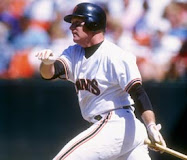
Bengie Molina is a fan favorite of the Giants. I admit that. When you have been as solid behind the backstop as he has been from 2007 through now, you have to like the guy a little bit.
Unfortunately, as likable as Molina is, this is certain: he doesn't offer much anymore as a starting Major League catcher.
This is amplified by the fact that Buster Posey, the Giants' No. 1 prospect according to Baseball America, is tearing up the Pacific Coast League with a .349 batting average and .955 OPS in Fresno.
Now, I know people will point to a few factors in defense of Molina. Here are a few things Molina supporters will bring up about the veteran catcher.
1.) Molina is still a good hitting catcher, and he has become more patient at the plate.
2.) Molina has traditionally been one of the better defensive catchers in the game.
3.) The Giants pitching staff feels comfortable with Molina behind the plate.
Those points are all nice, but they are refutable.
In terms of point number one, yes, Molina isn't a bad hitting catcher when you compare him to Jason Kendall or Eli Whiteside. However, when you look at he number overall, Molina really hasn't been that impressive this year.
For starters, his slugging percentage is way down, which accordingly, has affected his OPS numbers. If you look at his slugging numbers from 2007-2009, Molina posted percentages of .433, .445 and .442. This season? The number sits at a paltry .353, which has also resulted in a .691 OPS (the last time his OPS was under .700 was in 2002 with the Angels when it was .596).
In terms of his OBP numbers (.338 so far this year, which is a 29 point improvement over his .308 career OBP), while they are nice, there are two problems:
1.) They most likely aren't sustainable considering his track record.
2.) Getting on-base doesn't make much of a difference in Molina's value.
Point number one is easy. We're already starting to see a dramatic drop off in May (.292 OBP) from the crazy numbers he posted in April (.402 OBP). Sure, he's swinging at less pitches outside the strike zone (32.8 percent) than in years past (he had O-swing percentages over 40 percent the past two years), but it is still a high number nonetheless. Case in point, his O-swing percentage was 33.7 percent in 2007. What was his OBP? .298.
Now, is he going to dip under .300? Maybe not, but I think Giants fans should be prepared for Molina's OBP totals to be around, if not below the ZiPS rest of the season projection of .310.
Then again, even if Molina beats history and sustains this high OBP, it is a rather dubious honor for him. Why is that? Because even though he may get on-base, his severe lack of speed is an absolute killer in terms of scoring runs. In fact, I wouldn't be surprised if pitchers are more aggressive with Molina this year, knowing that even if he gets on base by walk, his slow-as-molasses base running won't hurt them in the runs department. Molina is strictly a station to station baserunner, and even that's putting it nicely.
Lastly in terms of offense, look at the pre-season ZiPS projections on Posey, and Molina's rest of the season ZiPS projections.
Posey: .282 average, .741 OPS, 64.8 wRC, 1.8 wRAA, .333 wOBA.
Molina: .272 average, .724 OPS, 36.7 wRC, minus-1.7 wRAA, .320 wOBA.
As you can see, Posey not only would be a serviceable replacement for Molina offensively, he might actually be an upgrade. Posey, if promoted and given the starting job, would add runs to a team that needs offense. Molina, at this point, only seems to be a detriment to the Giants offense when he is in the lineup.
In terms of point number two, Molina isn't a good defensive catcher anymore. I'm sorry to say it, but it's true. Check out this article from Beyond the Box Score, a sabermetrics blog, that ranks every catcher defensively according to various metrics.
Where does Bengie Molina rank? 74th. The only catchers of note that he is better than are Mike Napoli and Ryan Doumit, and nobody has pined in the past for those guys to win Gold Gloves. To make matters worse, Whiteside is ranked 28th, which only puts more salt in the wound of the "Molina is a serviceable Major League catcher" argument.
If you don't like the advanced defensive metrics of Beyond the Box Score (and believe me, it did take me a while to comprehend the rankings), just look at the steal rate between Molina and Posey. Baserunners have stolen 34 bases out of 39 attempts this season (a 12.8 percent CS rate). Baserunners have only stolen 15 bases out of 27 attempts on Posey this year (a 44 percent CS rate).
Sure, Molina is in the Majors and Posey is in the PCL. However, the difference is so disparaging that Posey couldn't be any worse than Molina in the Majors.
Lastly, I understand the pitching staff may like Molina. However, it's not as if Molina plays every day. Eli Whiteside has played in 21 games this year, and is usually the regular catcher for Jonathan Sanchez and sometimes Barry Zito. So, it's not as if EVERY member of the pitching staff needs Molina. Furthermore, with Molina's declining athleticism, how dependable do you think a pitcher like Tim Lincecum thinks Molina is when his control is off? I guarantee you the confidence Lincecum has in Molina now, isn't quite at the same level it was when Timmy started pitching full-time in 2008.
I understand the financial commitment that will be required if the Giants bring up Posey. I understand the financial loss the Giants would incur should they designate Molina for assignment. I'm not completely blind to the situation the Giants management have at hand.
However, Posey is a very special catcher, much like Matt Wieters and Joe Mauer before him. With those guys, when they were ready, the Orioles and Twins, respectively brought them up and took a chance on them, regardless of their status and who was holding the job before them. Sure, the Giants could move up Posey and have him split time at first and catcher, but Molina doesn't want to share the job, and Posey is a franchise-caliber player. He deserves to be playing in his future position, not messing around at other positions. This is the Major Leagues, not a high school summer league.
Who knows what Brian Sabean will do when he brings up Posey. This is certain though: Posey is an upgrade over Molina at this point, and if you don't believe me, just look at the numbers. Posey beats the pants off of Molina in every category.
Showing posts with label Projections. Show all posts
Showing posts with label Projections. Show all posts
Friday, May 28, 2010

Thursday, March 4, 2010
Arizona's Edwin Jackson or the Giants' Matt Cain? Who's the Better Pitcher?
I am very intrigued by new Arizona Diamondbacks pitcher Edwin Jackson, who arrived from Detroit in a massive three-way trade this off-season (the New York Yankees, the third team, received Curtis Granderson). Jackson should be more than a familiar face to Giants fans. Last year, he made the American League All-Star team for Detroit, and he spent his first five years in professional ball in the Dodgers organization.
In many ways, Jackson was sort of a revelation last year. While he had been touted as a solid prospects during his Dodger days, he never really lived up to the expectations prior to 2009. He didn't get much opportunity in Los Angeles (he only pitched in 19 games for the Dodgers), and when he was traded to Tampa Bay, he struggled immensely.
In his three years with the Rays (2006-2008), he posted ERA numbers of 5.45, 5.76 and 4.42 and WHIP numbers of 1.84, 1.76 and 1.51. Granted, Jackson wasn't as bad as his record (19-26) or his ERA indicated in Tampa (his FIP numbers were 4.52, 4.90 and 4.88 with the Rays), but it was safe to say he wasn't the top prospect that everybody imagined during his Dodger days (he was rated the No. 4 prospect by Baseball America prior to the 2004 season).
However, Jackson turned it around Detroit, and suddenly, he became one of the hottest pitchers in baseball. Jackson went 13-9 with a 3.62 ERA and a 1.26 WHIP. When the Diamondbacks acquired him this off-season to pitch along with Dan Haren and Brandon Webb, many people deemed the Diamondbacks to have one of the most underrated rotations in baseball in 2010.
So what's Jackson have to do with Matt Cain?
In many ways, Cain and Jackson had very similar 2009 seasons. They were both guys who were better than their last couple of years prior to 2009 indicated, and they both had some skeptical numbers or qualities that made baseball fans and experts question whether or not they were as good as they were in the first half of the season in 2009. Furthermore, both Cain and Jackson had drop offs down the stretch, and both their teams barely missed out on the playoffs.
With these similarities between Cain and Jackson evident (almost creepy too), who is due to have the better 2010? Who is the better pitcher in general?
If you look at their overall profiles, it's easy to see that Cain is the better pitcher and not only is he due for another solid season in 2010, but Jackson may be primed for a dropoff in his first season in Arizona.
First off, Cain has had a better history of control and command of his pitches than Jackson. Yes, Jackson posted a better walk rate than Cain last year (2.94 to Cain's 3.02), but Cain posted a better BB/K ratio than Jackson last year (2.34 to Jackson's 2.30). To make matters worse for the new Diamondbacks pitcher, Jackson has struggled immensely in the past with walking hitters.
In 2008, Jackson posted a walk rate of 3.78. The season before that, his first year as a full-time starter for the Rays, he had a walk rate of 4.92.
As for Cain? He posted a walk rate of 3.76 in 2008 and 3.56 in 2007. Furthermore, he posted BB/K ratios of 2.04 and 2.06 in 2008 and 2007. Until last year, Jackson never posted a BB/K ratio over two in his Major League career. Bill James and CHONE take this into great consideration, as they project Jackson to have a BB/K ratio of 1.63 (James) and 2.07 (CHONE) in 2010. James projects Cain to have a BB/K ratio of 2.43 and CHONE expects a 2.28 BB/K ratio for Cain.
Yet control is not the only area where Cain excels over Jackson. Cain is also a better strikeout artist than Jackson.
Last season, Cain had a strikeout rate of 7.07 percent while Jackson had a 6.77 percent strikeout rate. The funny thing about those strikeout numbers was that it happened to be a down year for Cain (he posted a 7.69 percent strikeout rate in 2008), and an up year for Jackson (he posted a 5.30 percent strikeout rate with the Rays in 2008). Additionally, Jackson has only posted a strikeout rate above seven once (in 2007 with the Rays), while Cain has only had a strikeout rate below seven once (2005, his rookie year).
Now, I know there were some red flags with Cain's 2009 season. His FIP didn't really correspond with his ERA (his ERA was 2.89 while his FIP was 3.89), he had a low BABIP (.268) and he had a high left-on-base percentage as well (81.6 percent). While Jackson did post a similar disparaging difference between ERA and FIP (3.62 ERA to 4.28 FIP), his numbers in BABIP (.281) and left-on-base percentage (76.7 percent) were closer to the league average than Cain.
Do those numbers mean Cain will be a frontline ace next year? Most likely not, since they will probably go up (in terms of BABIP) and go down (LOB percentage) in 2010. However, he should remain better than Jackson despite the changes in those respective categories.
For starters, Cain has a better variety of pitches than Jackson. In 2009, Cain threw his fastball 62.8 percent of the time, his slider 12.8 percent of the time, his curve 12.6 percent of the time, and his changeup 11.8 percent of the time. That's a pretty solid, four-pitch repertoire for a starting pitcher.
As for Jackson, he only threw two pitches last year: a fastball and slider. He threw his fastball 65.2 percent of the time and his slider 27.4 percent of the time. Jackson has two other pitches (a curve and change) but he only threw the pitches a combined 7.4 percent last year, which shows that he doesn't have a whole lot of confidence behind those third and fourth pitches, unlike Cain.
If Jackson only throws two pitches, he must be really effective with them, huh? Not exactly. Despite having a faster fastball than Cain (Jackson averaged 94.5 MPH on his fastball last year while Cain averaged 92.6 MPH), Cain was actually more effective with his fastball by leaps and bounds.
In 2009, Cain's fastball was valued at 28.6 runs above average. Jackson's? It was valued at -9.1 runs above average. Granted, Jackson's slider was very effective (it was valued at 17.7 runs above average), but considering he only has two pitches that he has confidence in, the negative value on his fastball (and it has never had positive value in his time in the Major Leagues) is a major warning sign for those who expect Jackson to duplicate his 2010 numbers in 2009.
Jackson did have an advantage in Cain in some areas (he had a lower contact rate than Cain) and some categories between the two were identical (both had 0.92 GB/FB rates), but for the most part, Cain looks better than Jackson on paper and it is no surprise to see why many projections are more skeptical of Jackson in 2010 than Cain.
Will one guy steal the National League Cy Young next year from Tim Lincecum? Probably not. Yet in terms of effectiveness, if you have to choose between these two pitchers (and you know you're not going to get both) in a fantasy draft (or pay money for them in a live auction draft), then Cain should be the guy to go with. He may or may not be an All-Star again in 2010 (unlike Jackson, who in my mind is for sure not), but he'll still be a solid, if not stellar complement to Lincecum in the Giants rotation.
Wednesday, January 20, 2010
"Panda" Fluke? A look at the Projections on Sandoval
After looking through some projections of some San Francisco Giants position players for next season, I was interested by some of the projections concerning the Giants' budding star, Pablo Sandoval.
On Fangraphs, the projections are varied concerning the "Kung Fu Panda". According to Bill James and 109 fan projections, the outlook for Sandoval in 2009 is quite optimistic. BJ projects the "Panda" to hit .327 with 24 home runs, 97 RBI, and have an OPS of .934 and BB/K ratio of 0.66 (a three point improvement in terms of the latter). The fans are equally generous, perhaps even more so on run production end. They project Sandoval to hit 26 home runs and drive in a 110 RBI along with a .323 batting average, .905 OPS and 0.63 BB/K ratio.
However, while those two projections are very comforting for Giants fans, two other projections on Fangraphs, CHONE and Marcel, are actually very pessimistic of Sandoval's future in 2010.
CHONE does project that his batting average will remain high (.323), but unfortunately, that's the only real good sign in their projections. They project that Sandoval will dip in his run production numbers and will only hit 17 home runs and drive in 71 RBI in 2010. Furthermore, they project his OPS to drop to .883 and his BB/K ratio to fall to 0.44.
(Granted, CHONE makes these projections on the thought that Sandoval will only play 138 games, which I think is preposterous due to the fact Sandoval is getting slimmer--or at least trying to--and is only 23-years-old)
As for Marcel, they don't give him much more slack. They only project two more home runs (19) and four more RBI (75) than CHONE. The BB/K ratio and OPS projections from Marcel are a little more generous than the ones from CHONE (0.59 and .918, respectively), but they still are low in comparison to what James and the fans project.
So why do CHONE and Marcel don't give Sandoval much slack? I think there are sticking a little TOO closely to some factors in terms of evaluating Sandoval.
Factor One: Sandoval is too wild a swinger
Sandoval doesn't walk an incredible amount (as evidenced by his 8.3 walk percentage a year ago) and does have a poor tendency to swing out of the strike zone (he swung at 41.5 percent of pitches thrown outside the strike zone, second only to Bengie Molina who had a percentage of 43.9). However, Sandoval's contact rate of pitches outside the zone is 75.2 percent, which goes to show that despite Sandoval's free-swinging nature, he is able to back it up somewhat because he can hit pitches that may be swinging strikes for other guys on the squad.
Furthermore, Sandoval did make some progress in terms of plate patience in the last two months of play. In the first two months, Sandoval had only eight walks combined. In August and September/October (seriously, you can't consider October a month; there is only a week of regular season play), Sandoval accumulated double-digit walk totals (10 in August, 16 in September and October), and drew 13 walks in the month of June before hitting a skid in July where he only had five. Granted, Sandoval won't be challenging Nick Johnson for the walks-leader any time soon. However, Sandoval is getting more selective at the plate, and we may see him more refined in terms of his plate patience in 2010, especially after those promising walk numbers in August, September/October.
Factor two: AT&T Park is a death trap for hitters
This is a true fact, and it takes a different kind of hitter to succeed in AT&T Park. Are you going to see guys put up Raul Ibanez-esque numbers like Ibanez did in Philadelphia last season? Of course not. However, good hitters will still succeed in AT&T despite its dimensions. After all, how do you explain Rich Aurilia's 2001 or Barry Bonds? (Well...probably steroids I guess, but let's just ignore that for now).
That point seems to be the case in Sandoval's favor. Despite AT&T Park's notorious "Pitcher-friendly" reputation, Sandoval put up better numbers offensively at home than on the road. While the numbers weren't that much different in a lot of categories (he hit only one more home and four more RBI at home), the numbers tell a different story in one big category: OPS. At AT&T Park in 2009, Sandoval had a 1.012 OPS. On the road, he only posted a .877 OPS.
Therefore, while AT&T won't exactly be the place for him to hit 40 home runs, the idea that the ballpark will keep him under the 20 home run mark is somewhat ridiculous. Sandoval is a proven hitter in San Francisco, and he will only get better as he continues to feel more comfortable at AT&T Park.
Factor three: Sandoval's supporting cast will kill his stats
This point I partially agree with. While the Giants upgraded offensively (that is of course if you consider Aubrey Huff, Mark Derosa and Freddy "Limp Away" Sanchez upgrades...I will concede and say 'yes' for the moment), the team is still far from being a Murderer's Row by any measure. Thus, Sandoval, much like last season, will have little support behind him, not to mention guys on base when he comes to the plate.
Therefore, I believe Sandoval will struggle in one category: RBI. I don't think he'll hit over 100 mainly because the Giants a.) still have a lineup that will accumulate one awful OBP (compounded even more by Bengie Molina's return) and b.) the Giants' leadoff spot is still undetermined (seriously, Aaron Rowand is a prime candidate...ouch).
So, anyone banking Sandoval to eclipse the century mark in RBI probably should think again. That being said, any of other Sandoval's categories, such as OPS, batting average, home runs, hits and BB/K ratio, shouldn't be affected by the Giants' mediocre lineup. If anything, Sandoval could help OTHER guys on the team because chances are pitchers will pitch around him come Opening Day, knowing that he is the Giants real only legitimate threat. Sandoval will get on base, and guys like Huff and Derosa will get the opportunities to drive him in (whether or not they DO drive him in of course is a different story).
There really is a lot to like about Sandoval next year, and in my mind, the CHONE and Marcel Projections underestimate his ability a little too much. Will Sandoval be the second-coming of Albert Pujols like Willie McCovey coyly implied last season? Probably not (or at least not by next season), but Sandoval will still prove in 2010 that 2009 was no fluke.
Subscribe to:
Posts (Atom)

 Posts